
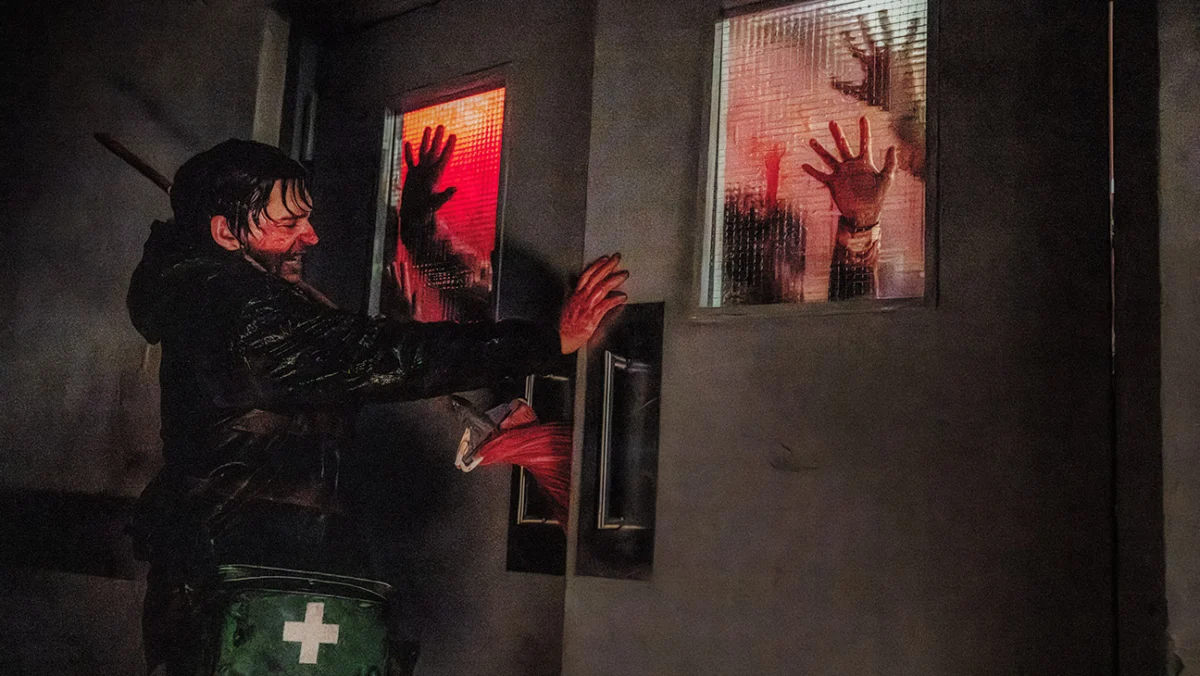
The theatrical release of Zach Cregger’s Resident Evil reboot has shattered box office expectations, pulling in an impressive $60 million during its domestic opening weekend while capturing some of the strongest critical reviews in the history of the cinematic franchise. Driven by a standout lead performance from Austin Abrams as the medical courier Bryan, the film has introduced a fresh narrative perspective to the survival-horror genre. Rather than following a seasoned, combat-ready hero from the games, Cregger and Abrams subvert audience expectations by focusing on an ordinary, reluctant courier caught entirely unprepared in the opening stages of the T-virus outbreak in Raccoon City.
The success of Resident Evil crowns a massive career milestone for Abrams, who also anchors Brian Duffield’s upcoming survival thriller Whalefall. Having worked in the industry since the age of 13, the 30-year-old actor has successfully transitioned into a premier leading man, following his acclaimed supporting turn in Cregger’s 2023 critical and commercial hit Weapons. In a detailed interview, Abrams reflects on the physical toll of back-to-back studio productions, the bold narrative risks taken by the director, and the tragic thematic resonance of the film’s unforgettable conclusion.
A Chronological Descent into Raccoon City

The narrative of Cregger’s Resident Evil unfolds with relentless pacing, tracking Bryan across a single, harrowing day. The story opens as Bryan juggles a high-priority organ delivery for a local medical facility with a tense phone call from his girlfriend, Michelle, who has just shared news of her unexpected pregnancy. Hesitant to embrace the realities of impending fatherhood, Bryan dodges the conversation by accepting a last-minute assignment to Raccoon City General Hospital.
En route, Bryan accidentally strikes a pedestrian in a sundress, setting off a chain reaction that introduces the lethal T-virus to his immediate surroundings. After a responding police officer’s vehicle tragically flips, revealing the true, infected nature of the pedestrian, Bryan is forced into survival mode. Utilizing the fallen officer’s sidearm, he navigates a series of escalating horrors, from infected local wildlife to a monstrous, fused amalgamation of the victims he encounters.
As he pushes toward his destination on foot and through dangerous tunnels, Bryan discovers a little girl on the verge of turning, who ultimately bites his arm before he is forced to put her down. Intercepted briefly by Umbrella Corporation operatives, he learns he is unknowingly carrying the neutralizing base required to synthesize an antidote. He races against time to reach the 28th-floor lab at Raccoon City General Hospital, only to succumb to his rapidly spreading infection moments before the scientists can finalize the cure. The film closes with the harrowing revelation that the audience has just witnessed the origin story of one of the franchise’s iconic monsters, reinforcing Cregger’s core thematic exploration of inevitable, unwanted change.
The Physical Demands of Back-to-Back Blockbusters

Transitioning immediately from the aquatic isolation of Whalefall to the freezing, high-octane night shoots of Resident Evil in Prague left Abrams with virtually no downtime between major studio productions. When comparing the two grueling shoots, Abrams notes the unique physical discomforts each role demanded.
"With Whalefall, I don’t know if you’ve ever worn a wetsuit all day long, but the incessant tightening on your skin is somewhat uncomfortable," Abrams explains. "With Resident Evil, the amount of running, mixed with the exactness needed to get the shot right, and night shoots makes it a hard competition. They’re both also filled with a lot of joy. Resident Evil generally had more laughs, just based on the nature of the comedy involved, so that helped lighten the load."
Production on the horror reboot was not without its hazards. During a complex sequence on "jumper street" in Prague, Abrams narrowly avoided being struck by a 150-pound blood bag that swung dangerously close to him on set. Despite the potential danger, the actor remained entirely focused on the realism of the take. "I kind of didn’t notice. It just happened, and then it was done. Personally, I wanted it to be close because that’s better for what we’re trying to make," Abrams notes, expressing excitement over the final visual result.
Subverting the Traditional Action Hero Archetype

One of the most praised elements of Abrams’ performance is his rejection of the stoic, unflappable action hero typically found in video game adaptations. Instead, Bryan screams, panics, and reacts with genuine terror to the horrific phenomena surrounding him, grounding the fantastical narrative in authentic human vulnerability.
"I wanted to look like the antithesis of the ‘cool action hero’ as much as I possibly could because that feels the most interesting. I haven’t seen it done as much," Abrams says, drawing parallels to foundational genre comedies like Shaun of the Dead. "There’s a joy in being able to see this guy react naturally to all this crazy shit, and it’s just really interesting to watch. I always thought, ‘How would this dude actually react to this?’ I just wanted it to feel really real-world."
This commitment to realism extends to the film’s humorous commentary on video games. Near the climax, after exhausting his ammunition, Bryan triumphantly shouts "Video games!"—a comedic nod to the survival vigilance and reflexes he developed through virtual play. While test screenings prompted Cregger to trim several overly comedic situational beats to maintain atmospheric tension, the final cut retains a distinct dark humor that balances the unrelenting dread.
The Tragedy of the Unsent Message

Perhaps the most daring narrative choice in Cregger’s film is its uncompromising conclusion. Rather than securing a traditional Hollywood salvation or allowing Bryan’s emotional voice memo to reach Michelle before the credits roll, the narrative leans heavily into profound tragedy. Trapped in the hospital lab without cellular service, Bryan records a heartfelt message expressing his deep regret for his initial dismissal of the pregnancy, stating he would love nothing more than to start a family and praising Michelle’s potential as a mother. Moments later, he loses his humanity entirely, transforming into the very creature that hunted him.
Michelle is left unaware of Bryan’s ultimate change of heart, holding onto her final memory of his panicked hesitation over their future. Abrams champions this narrative risk, praising the studio and director for avoiding a soft, comforting conclusion.
"That’s part of the tragedy of it all. It’s so damn sad when you really think about it. She thinks he doesn’t want to have this baby, when he actually does. He realizes, ‘No, I love her. Having a kid isn’t as scary as I thought, and I want to do it with her,’" Abrams reflects. "So the fact that she’ll never know that is pretty damn tragic. He changed and got better, but no one will ever know about it. There’s something really beautiful and tragic about that."
Broader Impact and Industry Implications

The commercial and critical triumph of Resident Evil marks a pivotal moment for both its director and its lead actor. By defying convention—killing off the protagonist, denying audiences a neat emotional resolution, and injecting dark situational comedy into a grim sci-fi landscape—Cregger has cemented his status as a premier voice in modern genre filmmaking. Meanwhile, Abrams’ back-to-back anchoring of Whalefall and Resident Evil solidifies his transition into a bankable, versatile leading man capable of carrying massive intellectual properties while maintaining critical credibility. As Resident Evil continues its strong theatrical run nationwide, the film’s willingness to embrace uncompromising tragedy ensures it will remain a memorable entry in the survival-horror canon.










Leave a Reply