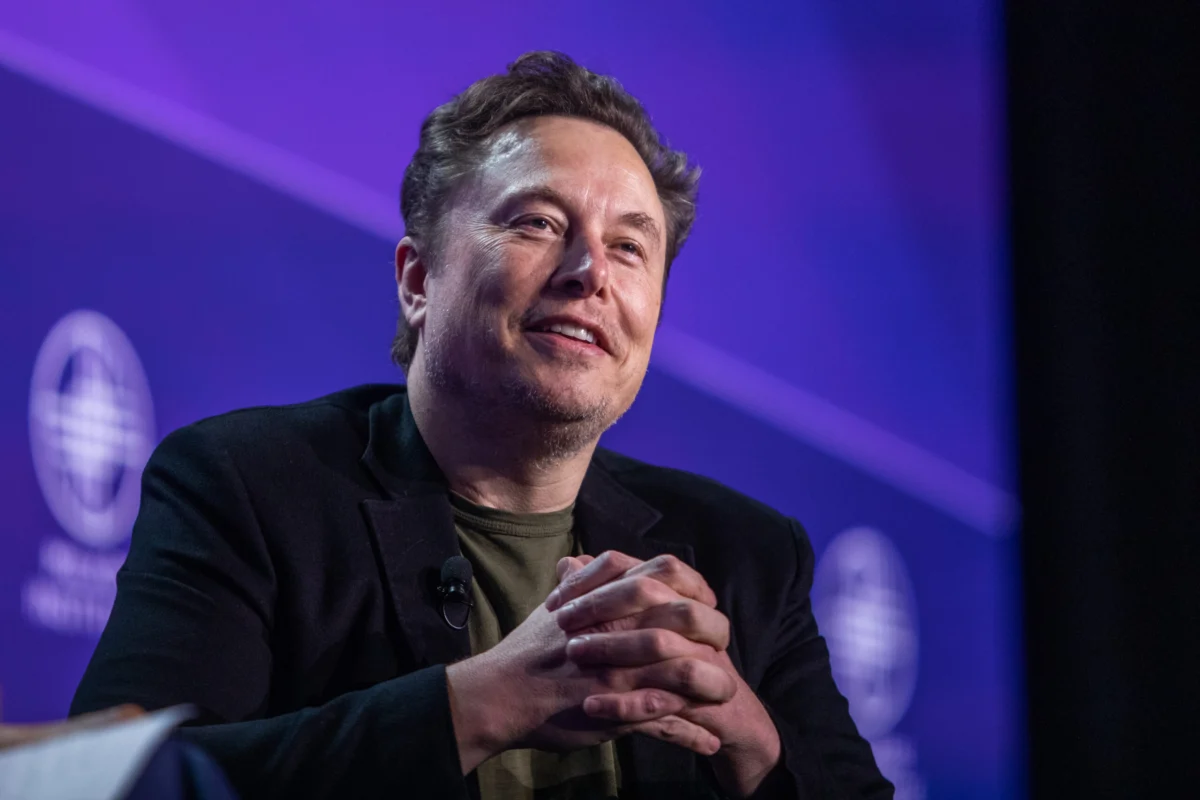
The political landscape of the United States shifted dramatically following the 2026 midterm elections, a cycle that saw the Republican Party suffer a comprehensive defeat, losing control of both the House of Representatives and the Senate to the Democratic Party. Central to the narrative of this electoral cycle was the unprecedented financial involvement of Elon Musk, the world’s wealthiest individual and the architect behind SpaceX and Tesla. Musk, who poured nearly $500 million into various Republican campaigns and PACs, appeared virtually at the New York Times 2026 DealBook Summit on Wednesday to address the results, admitting to a sense of disillusionment regarding his substantial investment.
Speaking via videoconference from China, where he is currently accompanying President Donald Trump’s official American delegation, Musk offered a candid, if somber, assessment of his political spending. When pressed on the effectiveness of his financial contributions—which included a high-profile $200 million effort to unseat Senator-elect James Talarico in Texas—Musk conceded that the returns were negligible. "I feel pretty foolish about having spent so much money and not seeing much for it," he remarked, though he left room for the possibility that the GOP’s losses might have been even more severe without his intervention.
A Chronology of Financial Engagement and Political Friction
The 2026 midterms marked the apex of Musk’s transition from a tech-centric executive to a significant political power broker. His involvement was not limited to direct campaign donations; it also included his tenure as the head of the Department of Government Efficiency (DOGE), a cost-cutting initiative under the Trump administration. This role, which Musk held for several months in 2025, ended abruptly following a publicized dispute with the president.
Musk’s political journey over the last twenty-four months has been marked by a series of contradictions. Despite being frequently photographed in "Make America Great Again" regalia and championing specific GOP policy platforms, Musk pushed back against the "MAGA" label during the summit. "I’m not sure what MAGA means," he stated. "If that means blind adherence to a set of policies by the Republican Party, then I certainly don’t have that." He characterized his political philosophy as one that seeks to identify "positives and negatives in both parties," while lamenting the "tribal" nature of modern American politics, which he compared to an uncompromising, irrational loyalty to a hometown sports team.
The Texas Factor and Local Governance
Despite the sweeping Democratic victories nationally, Musk expressed a surprising optimism regarding the political climate in his home state of Texas. Following the election of Governor Gina Hinojosa, Musk sought to temper concerns about a shift toward the far left. "I think she is going to be quite moderate," he told the DealBook audience. "I don’t think she’s a far-left governor, and based on everything I’ve heard about her, I think things will be fine in Texas."
This perspective underscores a nuanced approach to state-level politics, contrasting with his aggressive spending against federal candidates. Analysts suggest that Musk’s focus on Texas is rooted in the deep integration of his business operations—particularly the expansion of SpaceX’s Starbase and Tesla’s Gigafactory—within the state’s economy. His public endorsement of a moderate interpretation of the incoming administration suggests an attempt to maintain a pragmatic working relationship with local leadership, regardless of party affiliation.
Corporate Strategy: The Potential Convergence of Tesla and SpaceX
The conversation at the DealBook Summit also pivoted to the future of Musk’s industrial empire. Recent reports have indicated that SpaceX and Tesla are currently exploring a potential merger, a move that would consolidate two of the most significant companies in the aerospace and automotive sectors. Musk confirmed that the two entities are increasingly finding areas of overlap that were non-existent only a few years ago.
"If you had asked me five years ago, do I ever think there is any purpose in SpaceX and Tesla getting together? I would have said no," Musk noted. However, the current strategy revolves around the concept of executive synergy. "It’s a question of do SpaceX and Tesla execute better together and create more value than if they are apart? That would be up to the shareholders to decide." Should this merger proceed, it would represent one of the largest corporate consolidations in history, effectively creating a vertically integrated conglomerate with unprecedented control over energy, transportation, and satellite infrastructure.
Industry Turmoil and the Nvidia Leadership Crisis
Musk also addressed the recent executive shakeup at Nvidia, following the resignation of CEO Jensen Huang. Huang stepped down last week after revelations concerning his personal life, specifically regarding affairs with an Nvidia employee and an alleged foreign intelligence operative, sparked an internal and public relations crisis.
Musk, who has publicly advocated for Huang’s reinstatement, maintained that the removal of such a central figure was detrimental to the company’s trajectory. "It’s like kicking Michael Jordan off your team," Musk argued, while conceding that Huang’s personal actions were "certainly mistakes." His stance reflects a common sentiment among some tech-industry observers who prioritize technical and strategic leadership over the moral conduct of chief executives.
Starlink and the Geopolitics of Technology
The summit also provided a platform for Musk to address ongoing criticisms regarding Starlink’s operations in Ukraine. The satellite internet system, which has been vital for Ukrainian communication, faced scrutiny after Musk restricted its use for offensive drone operations.
"From the beginning, I’ve said that Starlink is a civilian system," Musk clarified. He emphasized that the system was never intended to facilitate offensive strikes that result in loss of life. He distinguished Starlink from "Starshield," the government-controlled variant designed for military and state-level security needs. "Do not ask me as a private individual to make kill decisions," Musk stated, highlighting the uncomfortable position of a tech entrepreneur finding himself at the center of international kinetic warfare.
Broader Implications and Future Outlook
The 2026 midterm results and Musk’s subsequent reflections highlight a broader shift in the relationship between Silicon Valley and Washington. For decades, the tech industry maintained a relatively neutral, if not Democratic-leaning, political stance. The rise of "techno-optimist" influence, embodied by Musk, has introduced a new brand of political involvement that is both highly capitalized and highly volatile.
The failure of a $500 million investment to secure a Republican victory suggests that, despite the massive influence of digital platforms like X, money does not always equate to political success in a climate defined by entrenched partisanship. As Musk moves forward, his strategy appears to be one of recalibration. Whether he continues to fund partisan efforts or pivots to a more centrist, issue-based advocacy remains to be seen.
Furthermore, his status as an investor in Skydance—the company formed by the merger of Paramount and Warner Bros. Discovery—places him at the heart of the media landscape, adding another layer to his already complex public profile. As the industry watches his next moves, the tension between his personal political views, his corporate interests, and his role as a global infrastructure provider will likely remain a defining feature of the American economic and political landscape for the remainder of the decade.