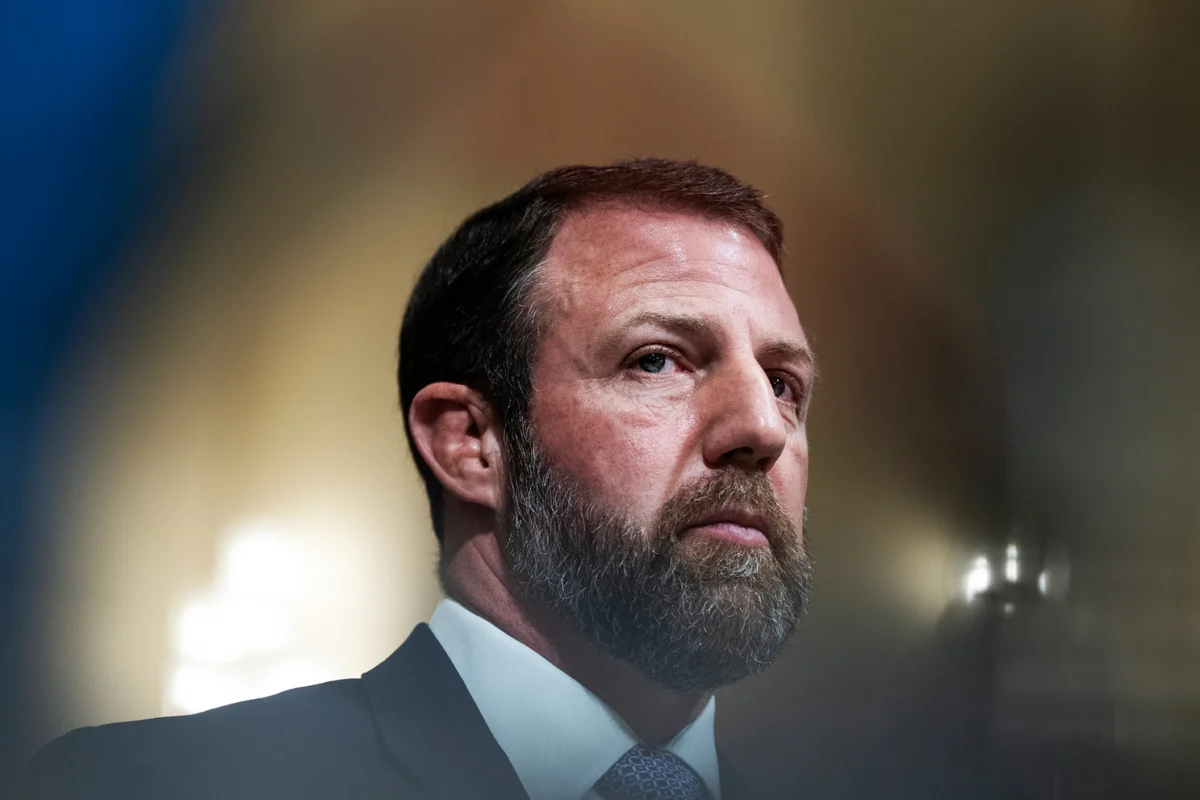
Homeland Security Secretary Markwayne Mullin found himself at the center of a contentious congressional hearing before the House Homeland Security Committee, where lawmakers demanded answers regarding a severe national aviation disruption and his subsequent travel choices. The hearing brought to light a confluence of logistical failures, technical vulnerabilities, and ethics questions surrounding the use of federal resources while thousands of civilian passengers remained stranded across American airports.
The controversy stems from a series of events that paralyzed the United States transportation infrastructure. A nationwide ground stop—only the third in modern American history and the first of its scale outside of the immediate aftermath of the September 11 terrorist attacks—left the airspace temporarily frozen. While commercial aviation operations ground to a halt and millions of travelers faced financial losses, missed connections, and indefinite airport delays, Secretary Mullin utilized a luxury government aircraft to travel to a collegiate football game in Louisiana.
Anatomy of an Aviation Crisis
The operational collapse that triggered the emergency response remains a subject of ongoing federal investigation. According to the Federal Aviation Administration (FAA) and Department of Transportation (DOT) officials, a widespread communications disruption forced air traffic controllers to implement emergency protocols to ensure public safety. However, more than a week after the incident, leadership across the involved agencies has struggled to provide a unified, definitive technical explanation for the failure.
Initial hypotheses floated by administration officials have varied widely, ranging from software router upgrades and artificial intelligence system anomalies to legacy infrastructure vulnerabilities. Transportation Secretary Sean Duffy and Secretary Mullin have faced sustained questioning from lawmakers seeking precise timelines and technical accountability. Investigators from the FAA, alongside independent cybersecurity and engineering experts, continue to comb through data logs to isolate the exact point of failure within the critical communication pathways.
Critics and industry analysts point out that the incident highlights systemic vulnerabilities in the nation’s aging civil aviation infrastructure. The disruption serves as a stark reminder of the delicate balance required to maintain safety margins in an increasingly digitized and interconnected national airspace system.
Chronology of Events and Executive Travel
The sequence of events leading up to the congressional testimony has drawn sharp criticism from both sides of the aisle regarding optics and decision-making at the highest levels of government.
- The Ground Stop: A critical communications failure prompts the FAA to order an unprecedented nationwide ground stop, halting thousands of scheduled flights and stranding passengers globally.
- Emergency Response Operations: Federal agencies manage the controlled descent and routing of airborne aircraft, ultimately landing over 4,000 planes without incident.
- The Travel Window: Within 24 hours of the crisis declaration, Secretary Mullin boards a federal jet to travel to Baton Rouge, Louisiana, to attend a Louisiana State University (LSU) football game.
- The Suite Controversy: Mullin watches the game from a private luxury box provided by a prominent federal contractor executive, raising immediate ethical and transparency concerns.
- Congressional Oversight: The House Homeland Security Committee convenes a formal hearing to review both the technical causes of the aviation halt and the conduct of department leadership during the emergency.
During the hearing, Mullin defended his travel decisions, arguing that cancelling personal plans after the airspace had technically reopened would have generated unnecessary public confusion. Furthermore, the secretary emphasized the successful execution of the emergency landing protocols, noting that thousands of aircraft were safely guided to their destinations without a single reported safety incident.
The Ethics of Federal Asset Utilization and Contractor Connections
Beyond the logistical optics of traveling during a national transit emergency, Secretary Mullin faced rigorous questioning regarding the provenance of the luxury suite tickets used during the Louisiana trip. Lawmakers pressed the secretary on his connections to prominent defense and homeland security contractors.
Mullin stated under oath that he had arranged the trip through state officials, intending to reimburse the appropriate entities, and maintained that he had no prior personal or professional relationship with Ben Bordelon, CEO of Bollinger Shipyards—the holder of multiple federal homeland security contracts whose private box hosted the secretary and his family. Mullin asserted that he was unaware whose suite had been allocated to him by local organizers at the time of the event.
Government accountability watchdogs and ethics experts have emphasized that regardless of direct intent, high-ranking cabinet officials must exercise heightened caution regarding the appearance of conflicts of interest, particularly when accepting hospitality from entities that derive significant revenue from federal procurement contracts.
Legislative Clashes and Infrastructure Hypocrisy
The hearing also served as a proxy battle over historical legislative actions and broader national infrastructure funding. Representative LaMonica McIver (D-N.J.) sharply criticized Secretary Mullin for attempting to shift blame for the systemic technical failures onto the previous presidential administration.
McIver highlighted a notable contradiction in the secretary’s legislative record: during his tenure as a U.S. Senator, Mullin voted against comprehensive federal infrastructure legislation designed to modernize and upgrade critical public works and transportation technologies—the very systems whose vulnerabilities are now under national scrutiny. The exchange underscored deep partisan divisions over how federal funds are allocated and who bears responsibility for deferred technological maintenance.
Conversely, Republican members of the committee rallied to defend the secretary’s performance during the emergency response. Representative Michael McCaul (R-Texas) commended Mullin for successfully managing a crisis of historic proportions without any loss of life, framing the safe ground management of tens of thousands of passengers as a primary operational victory that overshadowed administrative criticisms.
Broader Economic and Policy Implications
The fallout from the aviation ground stop and the subsequent congressional inquiry extends far beyond political posturing. The economic impact on commercial airlines, local tourism economies, and individual consumers is substantial. Millions of affected travelers faced cumulative losses totaling tens of millions of dollars in uncompensated expenses, including emergency hotel stays, alternative ground transportation, and perishable business opportunities.
As federal investigators work to finalize their technical findings regarding the root causes of the communication failure, pressure is mounting on Congress and the executive branch to accelerate modernization efforts across the national airspace system. Lawmakers from both parties have signaled an intent to introduce bipartisan oversight legislation aimed at hardening critical infrastructure against cyber vulnerabilities, router degradation, and single-point-of-failure risks.
Ultimately, the episode has exposed enduring vulnerabilities in America’s transit backbone while reigniting fierce debates over governmental accountability, the ethical boundaries of executive travel, and the ongoing challenge of securing the nation’s most vital public systems against unforeseen systemic collapse.