
The modern paradigm of productivity is often measured by tangible output—the metrics of physical goods, billable hours, or visible progress. Yet, a fundamental tension exists between this industrial definition of work and the cognitive processes required for intellectual and artistic creation. This disparity, often ignored in professional settings, is the subject of a persistent cultural dialogue regarding the nature of "invisible labor." From the theoretical calculations of physicists to the internal drafting of poets, the moments of stillness that appear to be idleness are frequently the most rigorous periods of creative production.
The Anatomy of Invisible Labor
The misconception that output is synonymous with visible exertion is a byproduct of a post-industrial work ethic. In reality, intellectual labor requires significant incubation. For a physicist, the act of staring blankly into space while physically present at a gym may constitute a complex, multi-variable problem-solving process involving non-linear dynamics. Similarly, a poet’s internal monologue—often dismissed by observers as a distraction or lack of engagement—is frequently the site of intense linguistic synthesis and structural planning.
This phenomenon is not merely a modern subjective experience but a documented aspect of cognitive psychology. Research into "incubation periods" suggests that creative breakthroughs are rarely the result of continuous, linear effort. Instead, they occur when the conscious mind steps back, allowing the subconscious to process information, make remote associations, and synthesize disparate data points. This "subterranean" work is essential for the advancement of both the arts and the sciences.

Historical Context and Philosophical Underpinnings
The tension between visible work and internal labor has been explored by thinkers throughout history. Theater director André Gregory, in a noted correspondence with photographer Richard Avedon, articulated this as an antidote to the "Cartesian myth" of work-life balance. He famously compared artists to "plants growing in winter," noting that the lack of visible fruit does not equate to a lack of development; rather, the process is taking root below the surface.
This perspective is central to Leo Lionni’s 1968 classic Frederick. While ostensibly a children’s book, Frederick functions as a philosophical treatise on the necessity of non-productive labor. Lionni, a Dutch-born artist and graphic designer who fled Europe during the Second World War, utilized his creative work to address existential questions. His arrival in the United States marked a shift in his focus toward the capacity for art to act as a buffer against harsh reality.

Chronology of a Creative Thesis
The evolution of Lionni’s work, and the cultural reception of the themes presented in Frederick, can be categorized as follows:
- 1959: Lionni publishes Little Blue and Little Yellow. Initially created to entertain his grandchildren, the book introduces a foundational understanding of color theory that influences pedagogical methods in design and art education.
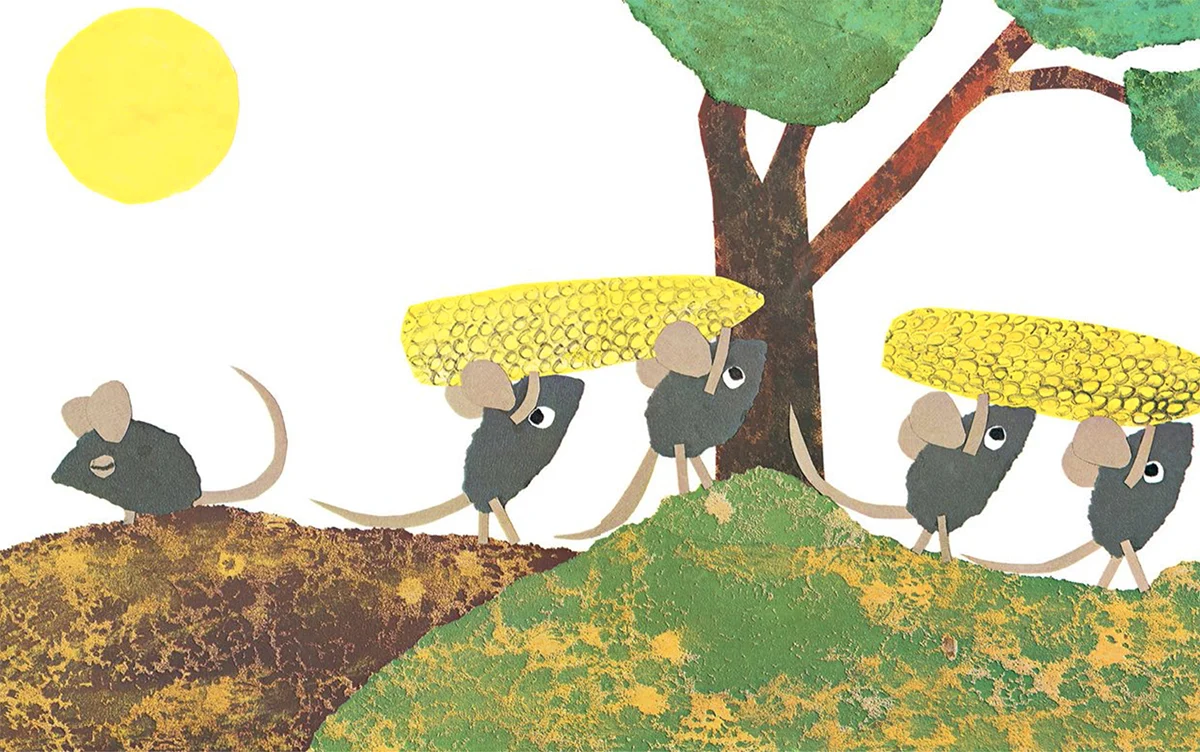
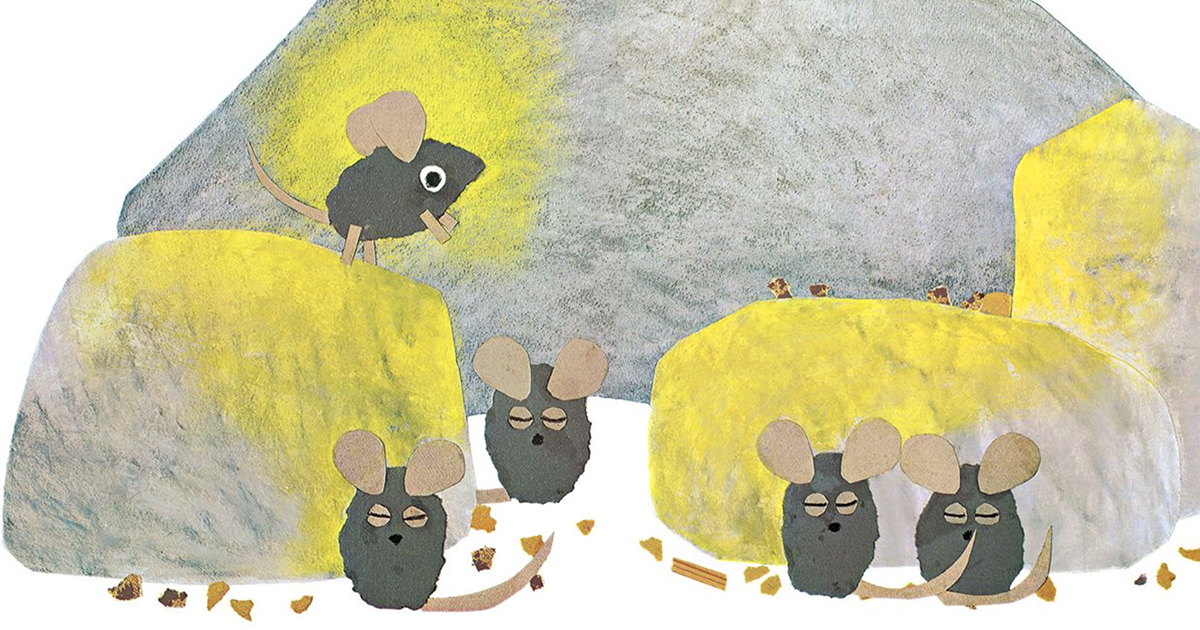
- 1968: Frederick is published. The narrative follows a group of mice gathering physical provisions for winter, while the character Frederick gathers "immaterial provisions"—colors, words, and memories.
- Late 20th Century: The text becomes a standard in early childhood literature, praised for its defense of the artist’s role in society.
- 2020s: Contemporary philosophical discourse, including the work of scholars like Bernard Suits, begins to re-evaluate the "grasshopper" archetype. Where once the grasshopper was viewed as a cautionary tale of laziness, contemporary analysis views the character—and by extension, Frederick—as a representation of the intrinsic value of play and non-instrumental labor.
Economic and Sociological Implications
The divide between labor and work has significant implications for how modern institutions manage human capital. The "gig economy" and the acceleration of digital communication have created a "culture of responsiveness," where individuals are expected to be in a constant state of visible output. Data from workplace productivity studies indicate that this constant pressure to perform "visible" tasks can lead to a decline in the quality of deep, creative work.

By contrast, organizations that allow for "unstructured time" report higher rates of innovation. The "Frederick model" suggests that for an organization to thrive, it must recognize that the periods of "gathering light and color"—or, in corporate terms, research, reflection, and strategy—are as vital as the harvest.
The Role of Combinatory Play
Albert Einstein once described his creative process as "combinatory play"—the act of taking various images, feelings, and concepts and arranging them in new, productive combinations. This aligns with the narrative arc of Frederick. When the physical food stores are exhausted, the mice are left in a state of depletion. It is only through Frederick’s "gatherings"—the stories, poems, and memories he has stored—that the group finds the psychological sustenance to survive the winter.

This is not a rejection of practical necessity but an assertion that human life requires both the caloric and the symbolic. The "invisible labor" of the creative individual provides the symbolic capital—the meaning, context, and aesthetic richness—that allows a society to persist through crises.
Critical Reception and Modern Relevance
The enduring legacy of Frederick lies in its ability to translate complex existential philosophy into a accessible narrative. Critics have noted that the book serves as a vital critique of the utilitarian obsession with productivity. In an era dominated by algorithmic efficiency, the story serves as a reminder that the most significant contributions to human knowledge—whether they be poems or mathematical theorems—are born in the "solitary place" of the human mind.

The "divine within" that Lionni explores is the capacity for the individual to synthesize the chaos of the world into a coherent structure. As Stephen Hawking posited in his inquiry into the nature of the universe—asking what "breathes fire into the equations"—the creative force remains an essential component of human existence.
Conclusion
The defense of invisible labor is, ultimately, a defense of the human capacity for reflection. Whether in the form of a mouse gathering sunlight to stave off the winter chill or a professional refining an idea in the quiet of a commute, the process of creation requires space. To treat all time as a commodity to be exploited for immediate, measurable output is to ignore the foundational processes that make life not just sustainable, but meaningful.

As the professional landscape continues to evolve, the distinction between "working" and "laboring" will likely become more pronounced. Recognizing that the silent, internal work of the artist and the thinker is a vital service to the collective is not merely a sentimental outlook; it is a pragmatic necessity for a culture that aims to remain both innovative and human. The "Frederick" in every professional setting is not a liability to the bottom line, but the architect of the future.









Leave a Reply