
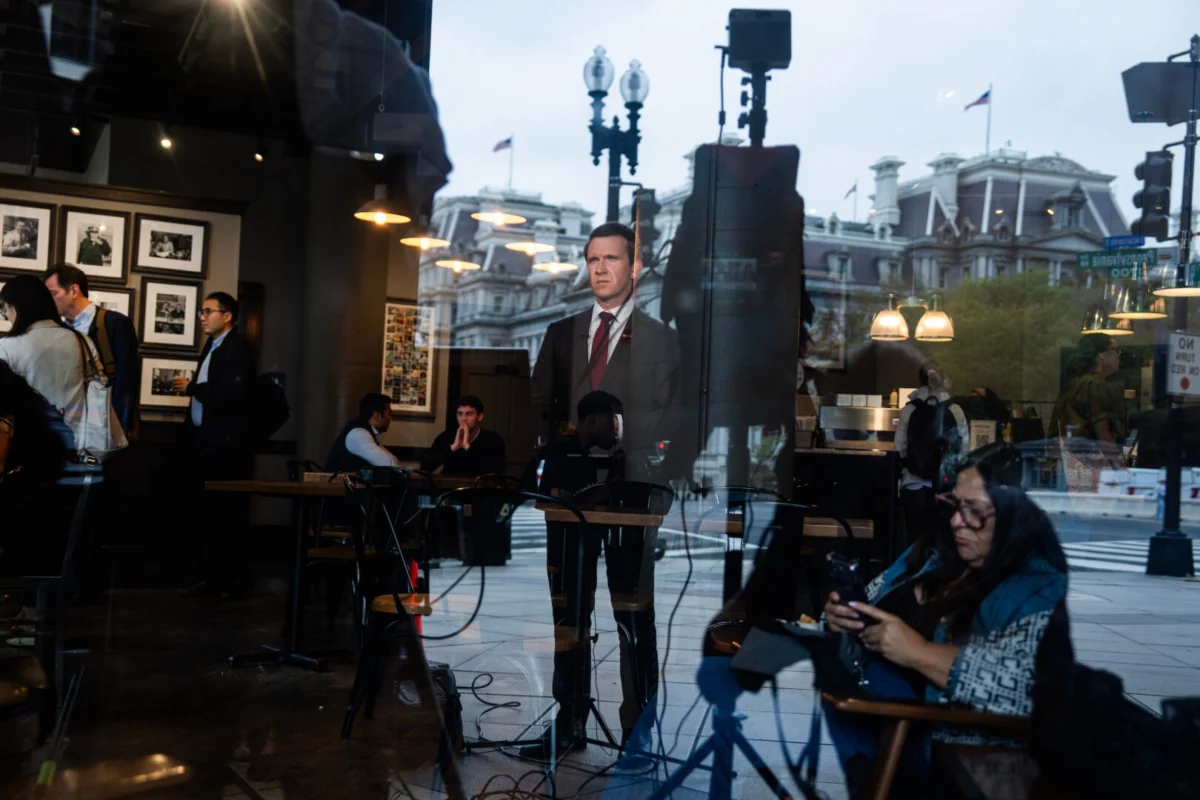
The visible manifestation of this standoff occurred on Monday, when Vaughn Hillyard, a senior White House correspondent for MS NOW, was forced to broadcast from the intersection of 17th Street and Pennsylvania Avenue Northwest. Rather than reporting from the traditional White House briefing room or the North Lawn, Hillyard’s presence on the periphery of the complex served as a stark visual representation of the current administration’s restrictive stance on media access.
Chronology of the Dispute
The events leading to the current litigation began late last week, following a series of contentious press briefings and heated exchanges between administration officials and reporters. According to court filings, the White House Press Office issued a formal notification to MS NOW, CNN, and Politico on Thursday afternoon, informing them that their permanent press passes had been suspended, effective immediately.
The administration cited “repeated disruptions” and a failure to adhere to established decorum as the primary drivers for the revocation. However, the affected outlets maintain that the timing and nature of the bans suggest a retaliatory motive tied to their coverage of recent administration policy shifts and internal management controversies. By Friday, legal teams for the three organizations had coordinated to prepare the current filing, arguing that the revocation of credentials without due process or a clear, objective standard constitutes an unconstitutional suppression of the press.
The Legal Framework of Press Access
The legal precedent governing White House press access is anchored in the 1977 case Sherrill v. Knight. In that ruling, the U.S. Court of Appeals for the District of Columbia Circuit held that the White House could not deny press credentials arbitrarily. The court established that while the government has legitimate security concerns, it must provide a clear process for journalists to contest the revocation of access, and any such action must be based on a compelling, non-discriminatory interest.
The plaintiffs in the current lawsuit argue that the Trump administration has failed to meet the Sherrill standard. They contend that the criteria for revocation were applied unevenly and that the administration failed to provide the news organizations with an adequate opportunity to respond to the allegations of misconduct before the bans were enacted. Legal experts suggest that the court will likely scrutinize whether the administration’s actions were a measured response to genuine security or behavioral concerns, or if they were an attempt to curate a favorable media environment by removing critical voices.
Impact on the White House Press Corps
The White House press corps operates on a system of tiered access, ranging from pool access to permanent credentials. The loss of these credentials effectively removes the affected journalists from the daily rhythm of the West Wing, hindering their ability to conduct impromptu interviews, monitor staff arrivals, and participate in the daily press briefing.
Data from the White House Correspondents’ Association (WHCA) indicates that while the number of credentialed journalists has fluctuated over the past decade, the administration’s recent move is unprecedented in its scope. By targeting three prominent organizations simultaneously, the administration has effectively signaled a departure from the historical norm of allowing a diverse array of media outlets to monitor executive activities.
Industry analysts note that this incident creates a chilling effect on investigative journalism. When news organizations are forced to fight for access, resources are diverted from reporting on policy, legislative maneuvers, and executive accountability to legal battles. Furthermore, the reliance on off-site reporting, as demonstrated by the MS NOW broadcast on 17th Street, limits the ability of the public to receive real-time, on-the-ground updates regarding the inner workings of the executive branch.
Reactions and Official Statements
In response to the lawsuit, a spokesperson for the White House issued a statement maintaining that the administration reserves the right to regulate the conduct of those within the White House complex. The statement emphasized that the decorum of the briefing room is essential for the effective operation of the press office and that the administration remains committed to a free press, provided that press members respect the security and logistical requirements of the facility.
Conversely, the leadership of the three news outlets has remained steadfast. In a joint press release, representatives from MS NOW, CNN, and Politico stated that the lawsuit is not merely about the credentials of individual reporters, but about the fundamental principle of transparency. "The role of the press is to hold power accountable," the statement read. "When an administration uses access as a tool of punishment, it undermines the very foundation of the democratic process."
Media watchdogs and civil liberties groups have also weighed in. The Reporters Committee for Freedom of the Press expressed “deep concern” regarding the administration’s actions, noting that the exclusion of specific outlets based on their coverage history is a dangerous precedent that could lead to further erosion of institutional norms.
Broader Implications for Democracy
The ongoing litigation brings to the forefront a critical question: to what extent does the executive branch have the authority to define the "rules of the road" for the media? If the court rules in favor of the administration, it could empower future presidents to systematically exclude organizations that are perceived as hostile or adversarial. Conversely, a ruling for the news organizations would reaffirm that the White House is a public institution where access should be governed by clear, constitutional, and non-partisan standards.
Beyond the courtroom, the incident has highlighted the deepening divide between the current administration and the mainstream media. The rise of alternative platforms and direct-to-consumer communication from the White House has led some officials to question the necessity of the traditional press corps. However, as the lawsuit progresses, it will serve as a definitive test of the institutional strength of the press and the judicial branch’s willingness to serve as a check on executive power.
As of Monday evening, the Justice Department has yet to file a formal response to the lawsuit. It is anticipated that the government will move for an expedited hearing, arguing that the regulation of the White House complex falls under the broad executive authority granted by the Constitution for national security and the protection of the President.
For now, the journalists from the affected outlets remain on the outside looking in. The reflection of Vaughn Hillyard on 17th Street serves as a visual metaphor for the current state of the relationship between the White House and the press—close enough to see the heart of the administration, yet separated by a barrier that is both physical and ideological. The resolution of this case will likely set the tone for the remainder of the administration’s tenure and redefine the boundaries of the adversarial relationship between the government and the fourth estate for years to come.
Observers are monitoring the case closely, noting that similar conflicts in the past have often resulted in settlements or administrative shifts rather than landmark Supreme Court rulings. However, given the current political climate and the high-profile nature of the litigants, many expect this case to reach the higher tiers of the federal court system, potentially resulting in a ruling that defines the rights of the press for the 21st century. The outcome will be watched not only by those in Washington, D.C., but by international observers concerned with the state of press freedom in the United States.





Leave a Reply