
The legislative machinery on Capitol Hill remains gridlocked as a pivotal supplemental funding request for the ongoing conflict in Iran continues to languish without a floor vote. First submitted to Congress by President Donald Trump in June 2026, the emergency appropriations package has become the focal point of a widening rift between the White House and a fragmented legislative branch. Despite the administration’s insistence that the resources are critical to national security and the stability of the Middle East, lawmakers have spent the last three months mired in partisan debate, procedural maneuvering, and intense negotiations over the fiscal scope of the request.
The delay, now entering its fourth month, has prompted growing concern among military analysts and defense hawks who argue that the funding gap is beginning to impact operational readiness. As the conflict with Iran—which escalated significantly in the early months of 2026—continues to draw deep resources, the absence of new appropriations threatens to force the Department of Defense into difficult budgetary decisions, including the potential diversion of funds from other global theaters.
A Chronology of the Supplemental Request
The origins of the current impasse trace back to the spring of 2026, when escalating maritime tensions in the Persian Gulf and increased proxy activity necessitated a robust U.S. response. By late May, the White House signaled that the costs of sustained naval patrols, increased intelligence, surveillance, and reconnaissance (ISR) operations, and the replenishment of precision-guided munitions were exceeding existing departmental budgets.
On June 12, 2026, the formal request was transmitted to Congress. The administration sought a multibillion-dollar infusion designed to cover both direct combat support and broader regional stabilization efforts. Initial expectations within the West Wing were that the funding would be processed as an emergency measure, potentially attached to a broader defense appropriations bill or handled via a fast-track supplemental process.
However, the summer months saw a cooling of bipartisan support. By July, fiscal conservatives in the House of Representatives began demanding more stringent oversight mechanisms, citing concerns over the lack of a clearly defined "end-state" for the conflict. The Senate, meanwhile, became bogged down in debates regarding whether the supplemental funding should be offset by cuts elsewhere in the federal budget—a move the White House has consistently rejected as a dangerous distraction during a period of active hostilities.
The Fiscal Landscape and Operational Impact
The financial stakes of the supplemental package are substantial. While the precise figures remain classified in their entirety, the public portions of the request emphasize the need to maintain an augmented carrier strike group presence in the Gulf, as well as the rapid deployment of advanced air defense systems to protect regional allies.
Defense budget analysts note that the Department of Defense typically operates on a fiscal year that ends September 30. As the government approaches the end of the 2026 fiscal year, the lack of new appropriations creates a "funding cliff." Without the supplemental, the military must rely on "Operation and Maintenance" (O&M) funds intended for training and infrastructure to bridge the gap. This "reprogramming" of funds—a standard practice that requires congressional notification—is widely considered a short-term solution that cannot sustain a high-tempo conflict over the long term.
"The risk here is not just the depletion of cash, but the depletion of readiness," said Sarah Jenkins, a senior fellow at the Institute for Global Security. "When you cannibalize training budgets to pay for active operations, you create a hollow force. Pilots stop flying as many hours, and maintenance cycles for naval vessels are deferred. That is a dangerous trajectory when you are staring down a sophisticated adversary."
Political Reactions and the Midterm Shadow
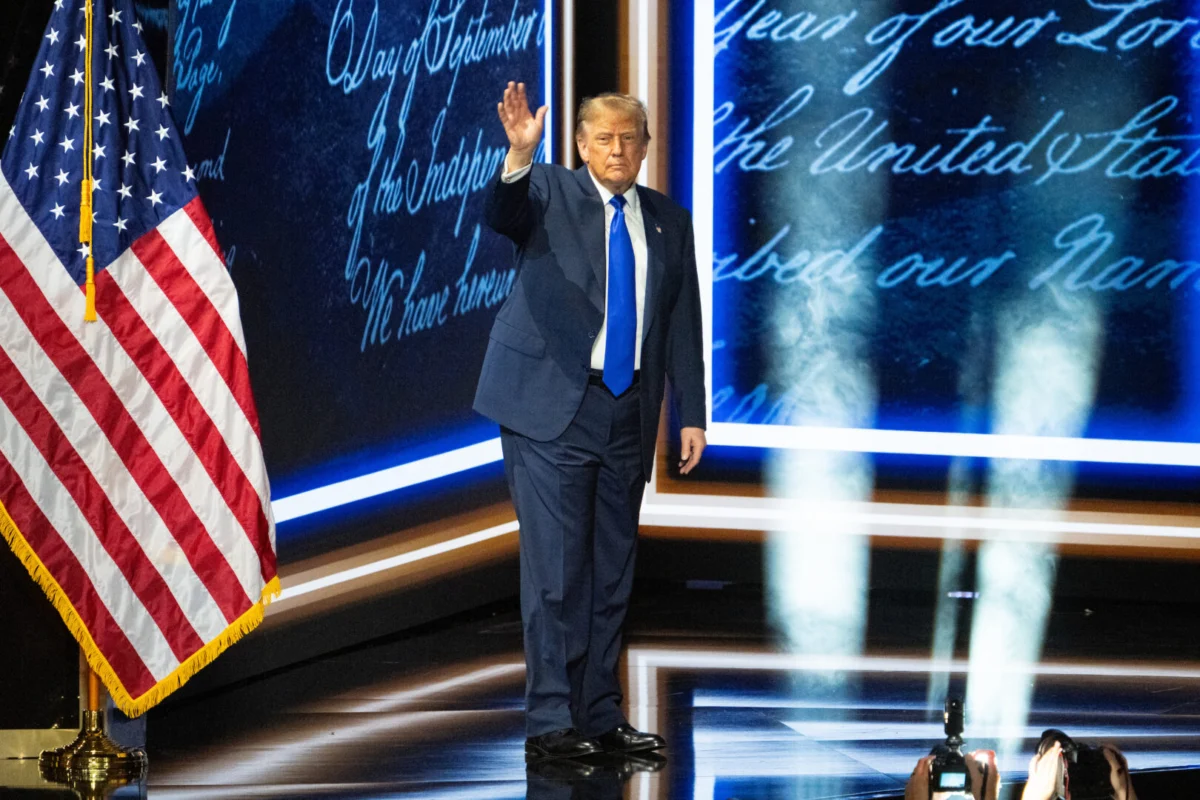
The political optics of the stalemate were on full display on September 9, 2026, during the Republican midterm convention in Dallas. President Trump, addressing a crowd of supporters, underscored the necessity of the funding, framing the delay as a failure of congressional leadership to support the troops in the field.
Democratic leadership, conversely, has remained hesitant to grant the administration a "blank check." In a press conference held late last week, the House Minority Leader emphasized that while there is broad agreement on the necessity of countering Iranian aggression, the White House has failed to provide a comprehensive strategy. "We are being asked to authorize billions of dollars without a roadmap for de-escalation," the leader stated. "Congress is a co-equal branch of government, and our duty is to ensure that taxpayer money is being directed toward a strategy that works, not just a policy of perpetual escalation."
The internal dynamics of the Republican Party have also played a role. A faction of members, largely aligned with the "America First" wing of the party, has grown increasingly vocal about their skepticism toward foreign intervention. Their refusal to coalesce around the administration’s request has effectively stripped the leadership of a reliable voting bloc, forcing a reliance on moderate Democrats that has proven difficult to secure.
Broader Implications for Global Security
The implications of the congressional paralysis extend well beyond Washington. Regional allies, including Israel and several Gulf Cooperation Council (GCC) states, are closely monitoring the debate. The perceived hesitation from the U.S. legislative branch is being interpreted by international observers as a sign of domestic political fragility, which potentially emboldens the Iranian government to maintain its current posture.
Furthermore, the delay impacts the defense industrial base. Many of the munitions requested in the supplemental are in high demand, and the lack of a clear, long-term funding commitment makes it difficult for defense contractors to plan production cycles. If the stalemate persists into the new fiscal year, the Department of Defense may be forced to initiate stop-gap measures that increase costs and slow down the delivery of critical technologies.
The Path Forward: Legislative Outlook
As October approaches, the pressure on lawmakers to reach a resolution is intensifying. The most likely path forward, according to senior staffers on the Hill, is a compromise that attaches the supplemental funding to a Continuing Resolution (CR) or a consolidated appropriations package. This would provide the necessary funding to avoid a shutdown of either the government or the specific operations in Iran, while simultaneously providing a face-saving mechanism for both parties to include oversight provisions.
However, the window for such a deal is closing. With the midterm elections looming, the political cost of appearing "soft" on national security—or, conversely, "wasteful" with taxpayer dollars—is high. Lawmakers are caught in a classic legislative trap: the immediate need for security funding versus the long-term desire to exert constitutional authority over executive war powers.
For now, the situation remains in flux. The White House has indicated that it remains open to discussions regarding oversight, provided that the core funding levels are preserved. Whether the two chambers of Congress can find the necessary votes to break the deadlock before the end of the month remains the single most pressing question in Washington.
The failure to resolve this issue would not only mark a significant defeat for the administration’s legislative agenda but would also represent a profound shift in how the United States manages its commitments in a volatile region. As the September 21, 2026, timestamp on this report indicates, the urgency is palpable, and the clock is ticking toward a fiscal and strategic deadline that the country can ill afford to miss. The debate, at its core, is a test of the American political system’s ability to maintain a coherent and effective foreign policy in an era of deep internal polarization.








Leave a Reply