
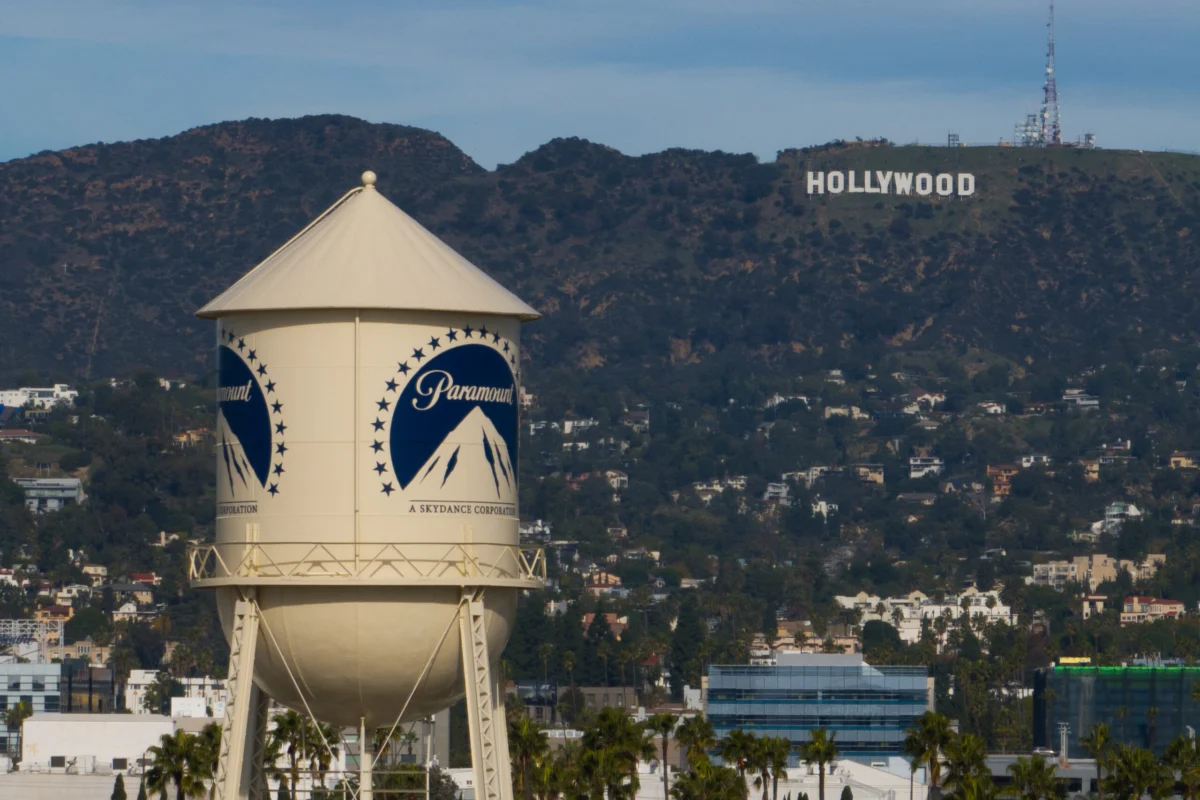
Entertainment industry consolidation reached a historic milestone on Monday as Hollywood studio Paramount reached a comprehensive antitrust settlement with a coalition of twelve state attorneys general. The agreement successfully dismantles the final major legal obstacle blocking Paramount’s monumental $81 billion acquisition of Warner Bros. Discovery. If granted final approval by a federal judge, the mega-merger will fundamentally reshape the global cinematic landscape, merging two of the oldest and most influential motion picture and television empires in human history.
While state regulators have championed the settlement as a necessary victory for domestic labor and localized film production, industry experts and consumer advocacy groups have voiced profound skepticism. Beneath the surface of structured job funds and mandated domestic shooting quotas lies a looming reality that financial analysts say could stifle market competition and inevitably force everyday consumers to absorb higher subscription, ticketing, and cable fees.
The Path to Consolidation: A Timeline of the Mega-Deal
The journey toward the Paramount and Warner Bros. Discovery merger has been characterized by intense corporate maneuvering, regulatory scrutiny, and high-stakes financial strategy. The genesis of the transaction began taking shape amid a broader macroeconomic squeeze on traditional media conglomerates, which have struggled for years to pivot successfully from legacy linear television to profitable streaming business models.
Months prior to Monday’s settlement, Paramount leadership—spearheaded by Chairman and CEO David Ellison—began laying the groundwork for a combined entity that could effectively rival tech giants and rival studios in the battle for consumer attention. The announcement of the $81 billion price tag sent immediate shockwaves through Wall Street, triggering an aggressive review by antitrust regulators concerned about the concentration of media power in fewer corporate hands.
As antitrust concerns intensified, a coalition of twelve state attorneys general stepped forward to challenge the transaction. The states argued that a merger of this magnitude would inevitably lead to massive corporate downsizing, a reduction in creative output, and a severe contraction of independent film distribution. Rather than pursuing a protracted, multi-year courtroom battle that could potentially derail the entire transaction, Paramount opted to negotiate a binding settlement. This agreement effectively trades regulatory concessions—such as guaranteed domestic spending and labor protections—for the green light to proceed with the historic acquisition.
Deconstructing the Settlement: Key Provisions and Mandates
The settlement framework negotiated between Paramount and the twelve state attorneys general contains a complex web of financial commitments, production quotas, and operational restrictions designed to mitigate the immediate fallout of the corporate marriage.
At the center of the agreement is a massive financial commitment to domestic movie production. Under the terms of the settlement, Paramount has agreed to inject $1.5 billion into domestic films over a five-year period. This translates to an additional $300 million annually dedicated specifically to filming within the United States, representing a dramatic shift for a studio that state officials note currently shoots only about 5% of its total production domestically. To bolster the independent film ecosystem, the studio will additionally establish a five-year, $25 million dedicated fund solely for the acquisition of independent cinematic projects.
Production volume is another critical pillar of the agreement. Paramount has formally committed to maintaining a robust theatrical release schedule, agreeing to produce 30 films annually during the first two years of the merger, followed by an increase to 32 films a year for the subsequent three years. Furthermore, the studio must guarantee the release of at least four independent films each year.
These stipulations closely mirror public statements previously made by CEO David Ellison regarding his vision to scale the combined company’s cinematic output past the 30-film threshold. However, these production targets carry heavy enforcement mechanisms. Should Paramount fail to meet the mandated output levels, the company faces severe legal penalties, including the forced divestiture of the iconic Miramax Studios and a mandatory $30 million cash payout directed into union health care and retirement trust funds.
Mitigating Workforce Disruption and Labor Realities
One of the most contentious aspects of modern media mergers is the inevitable corporate restructuring aimed at eliminating what executives euphemistically refer to as "duplicative operations." Paramount has previously acknowledged that the integration of Warner Bros. Discovery is projected to yield roughly $6 billion in cost synergies, a significant portion of which is expected to be achieved through massive workforce reductions and departmental consolidations.
To soften the blow for thousands of entertainment workers facing potential displacement, the antitrust settlement establishes a $47.5 million workforce fund. This capital will be utilized explicitly for specialized training and career development programs tailored to laid-off employees. Additionally, Paramount has formally agreed to honor all pre-existing collective bargaining agreements across the various guilds and unions, pledging to negotiate in good faith moving forward.
Labor advocates have offered a cautiously optimistic response to these provisions, noting that while job losses are an inherent casualty of corporate consolidation, the mandated funds provide a vital safety net that is rarely secured in modern antitrust settlements.
Navigating Cable Channels, Editorial Independence, and Antitrust Oversight
Beyond the silver screen, the merger carries immense implications for the television and cable broadcasting sectors. A primary concern for regulators was the potential monopolization of basic cable programming.
Under the terms of the newly minted agreement, Paramount will not be forced to divest its vast portfolio of cable networks immediately. However, the studio must navigate strict regulatory guardrails. Paramount is legally required to conduct basic cable channel negotiations for its own networks and those acquired from Warner Bros. Discovery completely separately for a period of five years. Failure to comply with this separation mandate could trigger forced channel sell-offs.
Furthermore, the settlement addresses deep-seated concerns regarding journalistic integrity and media bias. The combined corporate entity will house two of the most influential journalistic institutions in the Western world: Warner Bros. Discovery’s CNN and Paramount’s CBS. To protect these newsrooms from corporate interference, the agreement mandates the creation of an independent oversight board. This panel is specifically charged with safeguarding the editorial independence of both CNN and CBS, ensuring that corporate commercial interests do not compromise journalistic standards.
The Consumer Perspective: Convenience Versus Cost
While state attorneys general and corporate legal teams celebrate the settlement as a balanced compromise, independent market analysts and consumer advocates are sounding the alarm over the broader economic implications for the general public.
Forrester research director Mike Proulx highlighted the fundamental disconnect between what corporate regulators prioritize and what everyday consumers actually experience. "Where I’m looking at this is through the consumer’s point of view, and resoundingly, consumers are concerned about price hikes and they are preparing for price hikes," Proulx stated. He emphasized that average households struggling with inflation care very little about nuanced theatrical release quotas or corporate production pledges. "What they care about is how this is going to hit their wallets."
As streaming services continue to consolidate and traditional studio rivals merge into monolithic superpowers, market competition naturally diminishes. Economic theory dictates that reduced competition allows dominant market players greater pricing power. Analysts warn that consumers should anticipate steady increases across multiple entertainment touchpoints—ranging from rising subscription fees for flagship streaming platforms to higher ticket prices at local movie theaters and inflated bundles for cable television packages.
Broader Industry Implications and the Future of Hollywood
The successful navigation of this antitrust hurdle by Paramount and Warner Bros. Discovery marks a turning point for the modern entertainment industry. For years, Hollywood has operated in a hyper-fragmented streaming wars era characterized by unsustainable capital expenditures and aggressive subscriber acquisition strategies. The formation of this $81 billion behemoth signals a definitive return to consolidated studio power, reminiscent of the classic studio era, albeit adapted for the digital age.
As other media conglomerates observe how Paramount successfully managed state-level antitrust pushback through targeted investments and labor concessions, competing studios may feel emboldened to pursue their own aggressive consolidation strategies. Smaller independent production houses and up-and-coming filmmakers, meanwhile, will face an increasingly concentrated marketplace where two or three dominant corporate entities control the vast majority of distribution pipelines, financing, and theatrical screen space.
With the state-level antitrust lawsuit now settled, all eyes turn toward the federal judicial system. If the presiding judge grants final approval to the settlement agreement, Paramount and Warner Bros. Discovery will officially consummate their historic merger, permanently altering the economic and creative landscape of global entertainment for decades to come.








Leave a Reply