
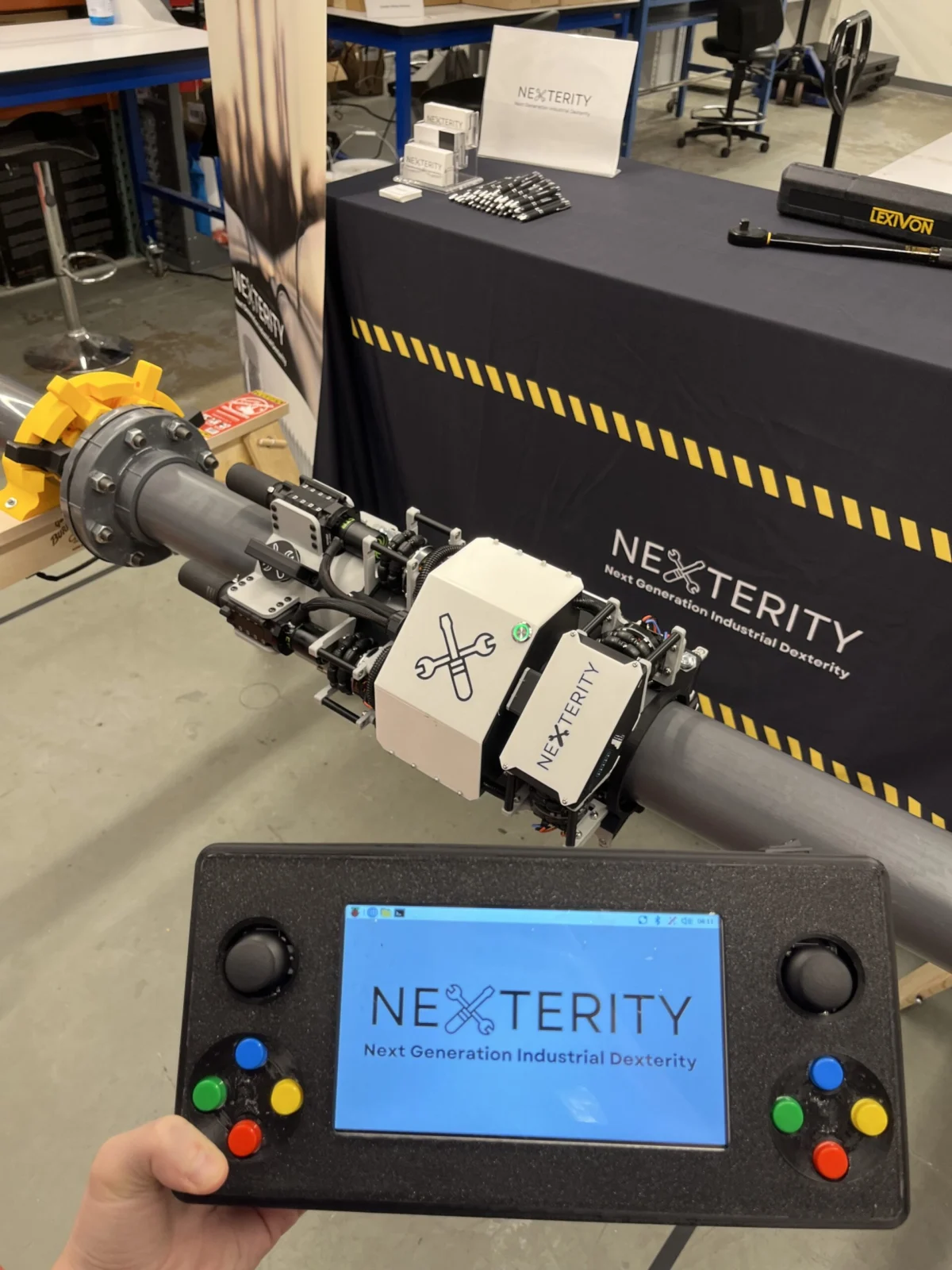
The industrial sector is currently facing a critical inflection point where the convergence of labor shortages and aging infrastructure necessitates a radical shift in maintenance protocols. At the heart of this transformation is Lindsey Elliott, founder of the startup Nexterity, who is leveraging robotic automation to address one of the most physically taxing and injury-prone tasks in the energy and manufacturing sectors: the manual bolting of flange joints. As one of the selected participants in the Startup Battlefield 200 at TechCrunch Disrupt, Nexterity represents a growing trend of high-tech intervention in blue-collar environments, aiming to trade the exhausting, repetitive torque of human labor for the precision and consistency of remote-controlled robotics.
The Anatomy of an Industrial Problem
The backbone of global industrial infrastructure—spanning oil and gas, petrochemicals, water treatment, nuclear power, and food and beverage manufacturing—is composed of vast networks of interconnected pipes. These pipes are held together by bolted flange joints, which must be loosened and tightened during routine maintenance, inspections, and equipment upgrades. For decades, this process has relied almost exclusively on manual labor.
Pipefitters are often required to work in confined, ergonomically challenging spaces, exerting significant physical force to tighten bolts to precise specifications. This work is not only labor-intensive but also physically punishing. Long shifts, often extending to 12 hours a day for months at a time, have led to high rates of musculoskeletal injuries and fatigue. Furthermore, the North American industrial sector has reported a persistent, industry-wide labor shortage, with skilled trade workers retiring at a rate faster than they can be replaced. According to data from the Bureau of Labor Statistics, the aging workforce in industrial maintenance is a primary concern for facility managers, as the loss of institutional knowledge is compounded by a lack of new talent entering the field.
From ExxonMobil to Entrepreneurship: A Journey of Innovation
Lindsey Elliott’s transition from a planner and engineer at ExxonMobil to the founder of Nexterity was driven by years of observation. During her tenure in the energy sector, Elliott noted that the most critical bottlenecks in plant maintenance were often the simplest tasks: the manual disassembly and reassembly of pipe joints.
Her professional journey involved deep engagement with industry organizations, most notably the American Society of Mechanical Engineers (ASME) and the annual Bolting Symposium. It was at these gatherings—where she jokingly engaged in "Bolting Bingo" with self-proclaimed "torque dorks"—that she realized the scope of the inefficiency. By analyzing the specifications of standard industrial piping, Elliott discovered a compelling statistic: approximately 80% of industrial piping falls within the Nominal Pipe Size (NPS) range of two to eight inches. This high degree of standardization made the process an ideal candidate for automation.
The Nexterity Solution: Robotics on the Pipe
The Nexterity robotic system is designed to be a force multiplier rather than a total replacement for the human workforce. The hardware consists of a modular two-piece device that clamps directly onto the circumference of a pipe. Once secured, the device utilizes an onboard battery system to navigate the flange, automatically loosening or tightening multiple bolts simultaneously.
The design philosophy behind the robot is rooted in portability and ease of deployment. Recognizing the logistical challenges of remote or expansive industrial sites, Elliott ensured the entire kit fits into a standard Pelican case. A single technician can transport the unit, attach it to a pipe section, and operate it via remote control. This rental-ready business model allows facility operators to deploy the technology on a project-by-project basis, minimizing the high capital expenditure typically associated with fixed-site industrial automation.
Industrial Productivity and the Labor Market
The implications of Nexterity’s technology extend far beyond the convenience of individual pipefitters. Productivity in the North American pipefitting industry has historically been viewed as low due to the reliance on manual processes and the physical toll on workers. By automating the most repetitive aspects of the job, companies can theoretically maintain higher standards of safety and consistency.
According to industry reports, improper bolt tightening—or "under-torqueing"—is a leading cause of flange leaks, which can lead to catastrophic environmental damage, production shutdowns, and significant financial losses. A robot that consistently applies the correct torque provides a level of repeatability that human workers, regardless of their skill level, struggle to maintain over a 12-hour shift. This improvement in quality control is a major selling point for industries operating under strict environmental and safety regulations.
The Broader Market and Economic Impact
While the oil and gas sector was the initial target for Nexterity, the addressable market is significantly broader. Infrastructure maintenance for water and wastewater treatment, mining operations, and green manufacturing facilities all rely on the same fundamental piping architecture. As the world transitions toward more sustainable energy sources and advanced manufacturing, the demand for reliable, automated maintenance solutions will only increase.
Analysts tracking the industrial internet of things (IIoT) and robotics suggest that the "cobot" (collaborative robot) market will see a compound annual growth rate (CAGR) exceeding 15% through 2030. Nexterity’s focus on a specific, high-frequency pain point—the bolted flange—positions it to capture a niche that larger, more generalized robotics firms have yet to address effectively. By keeping the technology modular and accessible, Nexterity addresses the primary barrier to entry for small-to-medium-sized industrial contractors: complexity.
Challenges and Future Outlook
Despite the technological promise, the road to widespread adoption is not without hurdles. The industrial sector is notoriously conservative regarding new technology, often requiring years of testing and certification before a new tool is accepted as a standard. Furthermore, there is the potential for friction between existing labor unions and the introduction of automation, although supporters argue that these tools actually protect workers from long-term injury and allow them to focus on more complex, value-added diagnostic tasks.
Elliott’s strategy for the coming years involves scaling production and expanding the configurations of the robot to cover the remaining 20% of pipe sizes outside the current NPS2 to NPS8 range. The company’s presence at TechCrunch Disrupt is a strategic move to secure the venture capital and partnership interest required to move from a prototype phase to full-scale commercialization.
Analysis: A Shift in Industrial Culture
The "more dork, less torque" ethos coined by Elliott captures the cultural shift currently underway in the industrial trades. For decades, the measure of a successful pipefitter was their physical endurance and ability to perform under harsh conditions. Today, the measure is increasingly shifting toward technical literacy and the ability to manage sophisticated automated systems.
By offloading the most hazardous and repetitive tasks to a battery-powered unit, Nexterity is helping to redefine the nature of blue-collar work. This evolution is vital for attracting a younger generation of workers who are accustomed to digital-first environments. If Nexterity succeeds in its mission, it will not only improve the bottom line for industrial facilities but will also elevate the safety standards and quality of life for the people tasked with maintaining the critical infrastructure that sustains the global economy.
As the industrial sector continues to grapple with the dual pressures of labor shortages and the need for higher operational efficiency, the success of startups like Nexterity will serve as a bellwether for the future of the trades. The integration of robotics into the physical fabric of our world is no longer a futuristic vision; it is a current necessity, and for those like Elliott, it is the only way forward.









Leave a Reply