
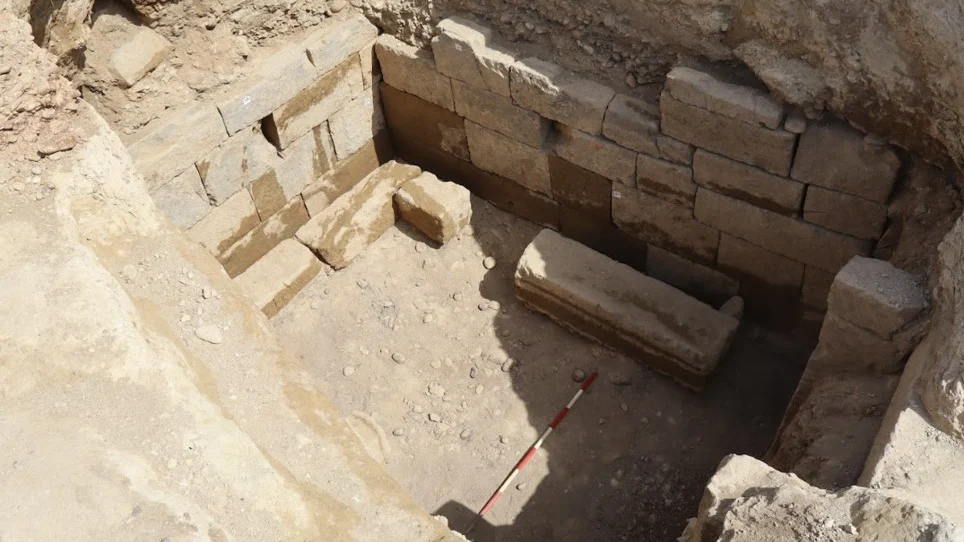
Archaeologists working in the historic necropolis of Vulci, an influential and wealthy city-state of the ancient Etruscan civilization located north of Rome, have made a breathtaking discovery: a monumental, undisturbed 2,700-year-old burial site containing an extraordinary trove of pristine artifacts. Dubbed the "Tomb of the Stone Chamber" by researchers, the subterranean sepulcher has survived centuries of systematic looting and agricultural encroachment. Excavated thoroughly over the course of the summer field season, the chamber yielded an astonishing collection of grave goods that includes weaponry, precious metals, ceremonial bronze vessels, the remains of an ancient chariot, a remarkably preserved pair of women’s shoes, and an intact banquet set designed for aristocratic rituals of the dead.
The announcement was detailed in an official translated statement released by the Italian Superintendency of Archaeology, Fine Arts, and Landscape for the Province of Viterbo and Southern Etruria (SABAP-VT-EM). This groundbreaking find not only sheds fresh light on the elite burial practices of early Etruscan society during the Orientalizing period but also redefines the historical mapping of the Polledrara necropolis, tying modern excavations directly to pioneering archaeological efforts conducted more than a century ago.
The Discovery and the Tomb of the Stone Chamber
The excavation project, spearheaded by regional heritage authorities, focused on a previously underexplored sector of the Polledrara necropolis at Vulci. The tomb itself is an architectural marvel of the early Iron Age, characterized by massive, meticulously cut stone blocks forming a secure subterranean chamber designed to withstand the test of time and protect the remains of high-ranking aristocrats.
Despite the best efforts of illicit tomb raiders who targeted the site across antiquity and subsequent eras, the architectural integrity of the inner chamber largely kept the main cache of funerary treasures hidden. When archaeologists finally breached the sealed threshold this summer, they encountered a time capsule of elite Etruscan life.
Among the standout artifacts recovered from the stone chamber is a complete bronze banquet set, highlighting the immense cultural importance of communal drinking, dining, and ritual feasting in the sociopolitical lives of the Etruscan elite. Banqueting services were essential components of high-status burials, symbolizing the deceased’s status in the afterlife and their ability to host lavish gatherings. Furthermore, the discovery of finely crafted weapons underscores the martial prestige of the tomb’s occupants, while rare luxury items—most notably a pair of women’s shoes preserved in remarkable detail—provide intimate insights into ancient fashion, textile preservation, and gender roles within the ruling class of Vulci.
Historical Background and the Chronology of Vulci
To understand the magnitude of the Tomb of the Stone Chamber, one must contextualize the site of Vulci within the broader landscape of ancient Etruria. Flourishing between the eighth and third centuries BCE, Vulci was one of the twelve major city-states forming the Etruscan League. Positioned strategically along the Fiora River, the city commanded a vast territory spanning parts of modern-day northern Lazio and southern Tuscany, serving as a powerful commercial hub that traded extensively throughout the Mediterranean basin.
The chronology of archaeological exploration at Vulci is deeply intertwined with the history of European antiquarianism and modern archaeology:
- Late 19th Century: French archaeologists and independent antiquarians initiated systematic excavations in the vast necropolises surrounding Vulci, such as Polledrara and Osteria. These early campaigns recovered breathtaking orientalizing treasures—including imported Phoenician artifacts, Egyptian faience, and exquisite Greek pottery—many of which now populate major museums across Europe and North America.
- Mid-20th Century: Italian state authorities assumed administrative and protective control over the site, transitioning the chaotic treasure-hunting environment of the 1800s into a controlled, scientific framework aimed at preserving the archaeological park of Vulci.
- Summer 2024: Modern state-led excavations at the Polledrara necropolis led to the identification and unsealing of the Tomb of the Stone Chamber, bridging a gap of over a century in targeted research at this specific sector.
The current discovery does not exist in a vacuum; rather, it builds directly upon the foundational work carried out by late 19th-century French researchers who first mapped and probed the boundaries of the Polledrara necropolis. By revisiting these historic zones with advanced non-invasive remote sensing and meticulous stratigraphic excavation techniques, contemporary Italian archaeologists have demonstrated that the necropolis still holds deeply buried secrets capable of rewriting our understanding of early Etruscan history.
Supporting Data and Material Culture Analysis
The wealth of material recovered from the Vulci tomb offers a rich dataset for archaeometric and anthropological analysis. Preliminary artifact inventories released by SABAP-VT-EM categorize the finds into several distinct functional groups:
- Weaponry: Bronze and iron spearheads, shield fragments, and tactical gear indicating military leadership.
- Precious Metals and Bronzeware: Elaborate gold ornaments, heavy bronze plates, cauldrons, and utilitarian vessels cast using advanced metallurgical techniques characteristic of the Orientalizing period (circa 750–600 BCE).
- Mobility and Status Symbols: Structural components of a dismantled chariot, highlighting the transport technology of the period and its symbolic value in ferrying the deceased to the netherworld.
- Organic and Rare Artifacts: The exceptionally rare preservation of organic material in the form of women’s footwear, which will undergo advanced conservation treatments to analyze textile composition, leather-working, and dyeing techniques of the seventh century BCE.
The coexistence of martial hardware alongside refined banquet services and feminine accessories strongly implies that the tomb was a communal or familial sepulcher, housing multiple high-status individuals—likely a ruling couple or members of a dominant aristocratic dynasty that controlled Vulci’s trade routes during its economic apex.
Official Responses and Institutional Perspectives
Representatives from the Italian Ministry of Culture and the SABAP-VT-EM have emphasized the critical importance of public-private vigilance in protecting Italy’s vast cultural heritage from illegal looting, colloquially known in Italy as tombaroli activity.
In an official statement, regional heritage directors underscored that the survival of the Tomb of the Stone Chamber—despite historical incursions—serves as a testament to the sophisticated architectural defensive measures employed by Etruscan architects. Officials praised the multidisciplinary team of field archaeologists, conservators, and forensic anthropologists who managed the delicate excavation process under strict environmental controls to ensure the fragile organic remains were not degraded upon exposure to modern air.
"This discovery confirms that Vulci remains an inexhaustible archive of antiquity," noted a leading supervisory archaeologist involved in the project. "Every season brings to light new evidence that refines our comprehension of how these ancient communities managed power, art, and death. The preservation of these objects, particularly the organic items like the women’s shoes, offers a microscopic window into daily life that monumental architecture alone cannot convey."
Broader Implications for Etruscans and Mediterranean Archaeology
The unearthing of the Tomb of the Stone Chamber carries profound implications for the study of the Etruscan civilization, a culture that famously predated and heavily influenced the rise of the Roman Republic, yet remains enigmatic due to its distinct, non-Indo-European language and the scarcity of surviving literary texts.
By analyzing the grave goods from Vulci, researchers can further trace the complex networks of Mediterranean trade that linked Etruria with Greece, the Near East, and North Africa during the Orientalizing period. The stylistic motifs found on the bronze plates and the craftsmanship of the banquet set reflect a period of intense cultural exchange, where local artisans adopted and reinterpreted foreign artistic idioms to reinforce their own political legitimacy at home.
Furthermore, the conservation and upcoming exhibition of these artifacts promise to boost cultural tourism in the Viterbo region. Plans are already underway by the Superintendency to secure, analyze, and eventually display the contents of the tomb in local museums, ensuring that the heritage of Vulci remains accessible to both academic researchers and the general public. As laboratory analysis of the metalwork, soil samples, and organic remains proceeds over the coming months, the Tomb of the Stone Chamber stands ready to yield even deeper secrets about the men and women who shaped the dawn of Italian history.









Leave a Reply