
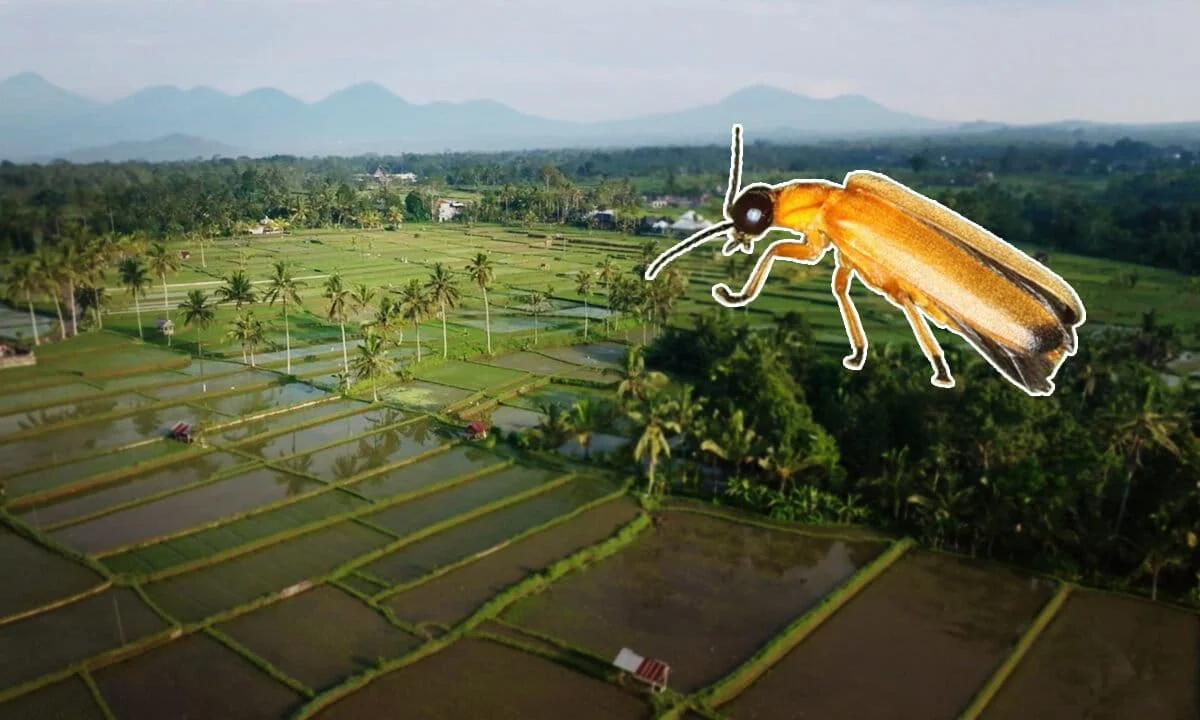
For generations, the rural landscape of Bali was illuminated nightly by what residents fondly describe as clouds of fireflies. Growing up among the island’s verdant rice fields before widespread electrification, Wayan Wardika routinely witnessed swarms of the luminescent beetles, sometimes even collecting them to serve as natural nightlights. However, as the decades passed, a stark transformation took place. Returning to his home village after forty years, Wayan observed a profound and unsettling silence in the dark: the fireflies had all but vanished.
This local disappearance is not an isolated phenomenon. Across Southeast Asia, firefly populations are in sharp decline, driven by an escalating convergence of habitat loss, light pollution, intensive pesticide use, and climate change. As Bali experiences rapid economic development, urbanization, and agricultural intensification, its nocturnal ecosystems are increasingly disrupted. Recognizing that these bioluminescent insects serve as critical bioindicators of environmental health, Wayan launched Indonesia’s first dedicated firefly conservation initiative in 2020. What began as a personal nostalgia project has since evolved into a comprehensive community-wide effort to regenerate local ecosystems, redefine agricultural practices, and restore the delicate balance between human development and biodiversity.
The Ecological and Cultural Significance of Fireflies
Fireflies, which belong to the beetle family Lampyridae, are far more than a source of aesthetic wonder; they play vital functional roles within their ecosystems. Adult fireflies contribute to the pollination of local plants and crops, while the predatory larvae of certain species act as natural pest control agents by feeding on destructive garden snails and slugs that otherwise damage rice yields. Beyond their direct ecological services, fireflies occupy a unique position as environmental barometers. Because these insects are exquisitely sensitive to changes in air, water, and soil quality, their presence or absence offers immediate insight into the overall health of an ecosystem. As Wayan frequently notes, the disappearance of fireflies is a warning sign that the broader environment is in distress.
In Southeast Asia, at least four distinct firefly species are currently considered close to extinction. The primary catalysts for this decline are multifaceted. First, rapid development introduces heavy light pollution. Fireflies rely on their bioluminescent displays to attract mates and communicate; artificial illumination at night effectively blinds them, disrupting their reproductive cycles. Second, the conversion of natural forests, streams, and traditional wetlands into concrete-heavy villages and intensified agricultural plots strips away the damp, sheltered microhabitats where fireflies breed and lay their eggs. Finally, the widespread adoption of synthetic chemical fertilizers and industrial pesticides degrades soil microbiology and systematically poisons the insects and their prey.
A Pioneering Chronology: The Birth of Bring Back the Light
Determined to reverse this alarming trend, Wayan established the "Bring Back the Light" initiative in 2020 on his family farm in Bali. Operating as Indonesia’s sole firefly conservation program, the initiative bridges the gap between grassroots activism and rigorous scientific methodology. Wayan assembled a small, dedicated team of researchers, including scientist Cindy, to pioneer breeding techniques in a region where virtually no prior data existed regarding captive firefly reproduction.
The conservation process is remarkably painstaking and demands immense patience. The lifecycle of a firefly unfolds across several distinct stages:
- Egg Stage: Female fireflies lay tiny eggs in damp soil or decaying vegetation, which hatch into larvae within a few weeks.
- Larval Stage: The larvae represent the longest phase of the lifecycle, spending up to two years feeding, growing, and navigating the soil.
- Pupal Stage: Once mature, the larvae transition into pupae, a transformation period lasting approximately a couple of weeks.
- Adult Stage: The resulting adult firefly emerges with a fleeting lifespan, dedicating a mere three weeks entirely to feeding and mating before perishing.
The research team must meticulously locate and count eggs, nurture the developing larvae through their lengthy underground phase, protect the pupae, and finally release the mature adults into protected wild habitats. Despite the steep learning curve and the absence of historical precedent in Indonesia, the program has achieved significant milestones. To date, Wayan and his team have successfully bred and released nearly 20,000 firefly larvae and adults back into the wild, yielding a gradual, measurable recovery in local populations.
Scaling Up: From Captive Breeding to Ecosystem Regeneration
As the conservation work progressed, Wayan realized that captive breeding alone could not provide a permanent solution. Without healthy soil, clean water, and unpolluted air, released fireflies struggle to survive. Consequently, four years after launching the initiative, Wayan expanded his vision from mere species preservation to comprehensive ecosystem regeneration.
Addressing the root causes of environmental degradation required tackling industrial agricultural inputs. Wayan identified synthetic chemical fertilizers and pesticides as the primary drivers of ecological collapse in the farming community. To offer a viable, sustainable alternative, he turned to traditional resources, starting with cow manure. Establishing a partnership with a local holy white cow conservation initiative, Wayan collects manure and processes it into nutrient-rich compost.
"We used to choose cow dung to make fertilizer because it already has earthworms and millions of microorganisms that live there, which is what the plants need," Wayan explains. "Our main goal is actually to regenerate the soil so that the plants have all the minerals and nutrition that they require."
In addition to organic compost, Wayan developed a homemade formula known as eco-enzyme to replace synthetic pesticides. By collecting discarded fruit and organic waste from local markets, his team ferments the produce into a potent concoction that effectively deters agricultural pests while simultaneously supplying vital nutrients back into the crops and soil. Operating an active organic demonstration farm on his property allows the team to lead by example, showcasing the tangible benefits of chemical-free agriculture to skeptical neighbors.
Economic Realities and Community Engagement
Transforming agricultural practices across a rural community presents formidable social and economic hurdles. Changing deeply ingrained farming habits is notoriously difficult, particularly when livelihoods depend on predictable crop yields. Farmers are frequently hesitant to abandon familiar chemical inputs due to fears of crop failure and financial loss.
To overcome this resistance, Wayan adopted a pragmatic, community-centered economic model. Rather than relying solely on abstract environmental appeals, he sought to address the immediate financial security of local farmers. Wayan distributes his organic compost and eco-enzyme formulas to participating farmers completely free of charge. Furthermore, to mitigate the perceived risks of transitioning away from synthetic chemicals, he personally compensates farmers for any temporary crop losses incurred during the adaptation phase.
"In the beginning, it was my personal journey to see fireflies again," Wayan reflects. "First I was trying to touch their hearts. So now I have to fill up the pockets, then we change the hearts."
This innovative approach aims to establish a localized circular economy where the conservation project provides all necessary agricultural materials while simultaneously supporting the producers. The operational costs of this ambitious outreach program are largely funded through revenue generated from educational firefly ecotourism tours and the sale of high-quality organic produce cultivated on Wayan’s demonstration farm.
As soil health improves under organic management, participating farms experience a simultaneous increase in crop vitality and market value. Healthier crops command higher prices, ultimately driving up farmer profits and proving that ecological restoration and economic viability can go hand in hand. Currently, four local farmers have integrated into the scheme—including neighbor Pak Nyoman—with Wayan setting his sights on eventually convincing all 35 farmers in the surrounding area to transition entirely to organic methods, thereby creating an expansive, pesticide-free sanctuary for the region’s returning fireflies.
Broader Implications and Future Outlook
The initiative spearheaded by Wayan Wardika offers a powerful case study in grassroots environmental stewardship, demonstrating how localized action can address global crises such as biodiversity loss and agricultural pollution. By intertwining the fate of a vulnerable insect with the economic survival of rural farmers, the project reframes conservation not as a restriction on human activity, but as a prerequisite for long-term prosperity.
Experts and environmental analysts note that as Southeast Asia faces accelerating land-use changes, community-led models of landscape management will become increasingly vital. Traditional conservation top-down approaches often fail when they neglect the socioeconomic realities of local populations. By subsidizing the transition to organic farming, reinvesting ecotourism revenues directly into the community, and prioritizing soil regeneration, the Bring Back the Light initiative offers a blueprint for sustainable coexistence.
Ultimately, Wayan’s mission transcends the physical return of insects to the evening skies of Bali. It serves as a stark reminder of humanity’s interconnectedness with the natural world and the shared responsibility of safeguarding ecosystems for future generations. As Wayan emphasizes, human beings do not inhabit the earth in isolation; maintaining the sustainability of nature is essential not only for the preservation of vulnerable biodiversity, but for the continued survival and well-being of mankind itself.






Leave a Reply