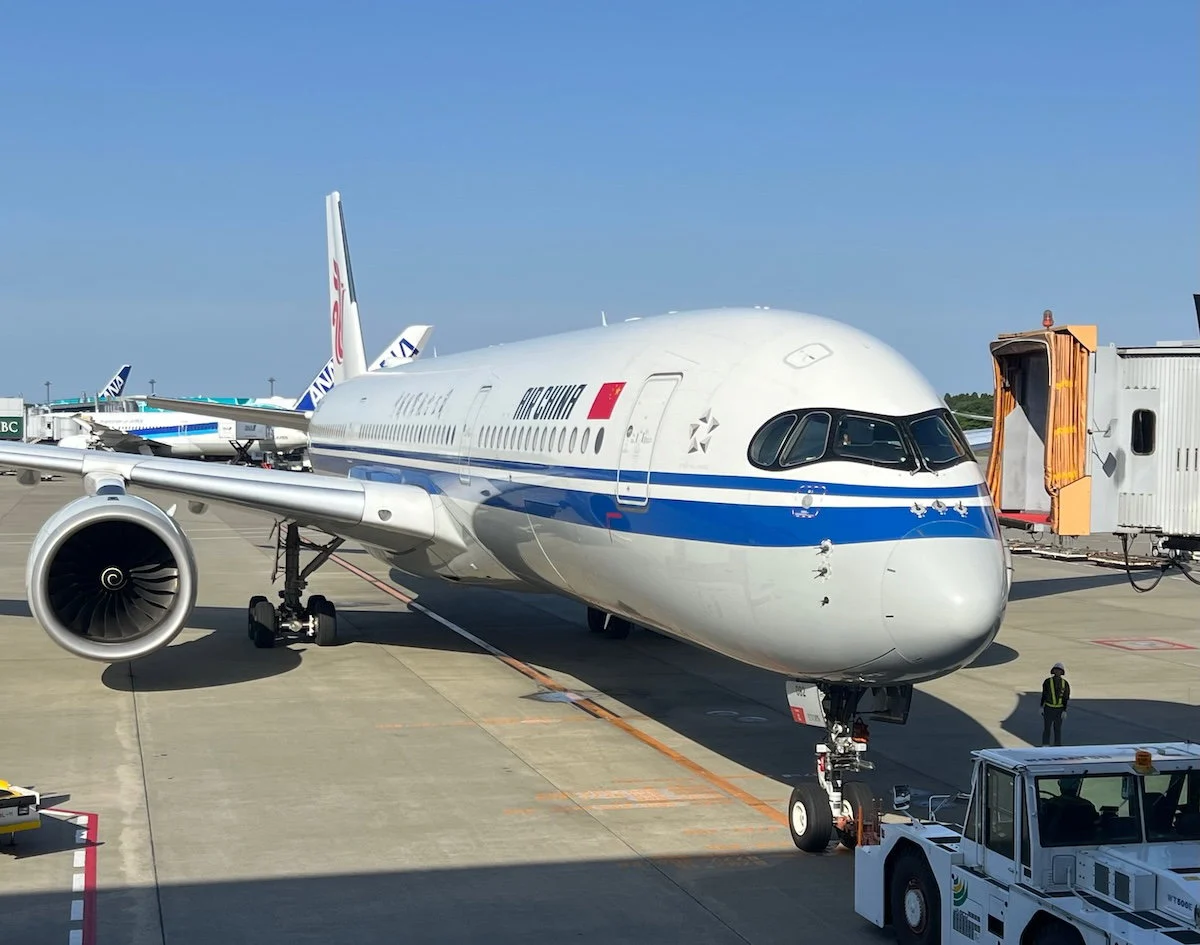
Air China has officially announced the commencement of scheduled services to Iceland, marking a historic milestone as the first airline from the Asian continent to establish a regular link to the North Atlantic island nation. Starting October 26, 2026, the Chinese flag carrier will operate a three-times-weekly service from Beijing Capital International Airport (PEK) to Keflavík International Airport (KEF). The route is structured as a "direct" service with an intermediate stop at Copenhagen Airport (CPH) in Denmark. This expansion represents a significant shift in the aviation landscape between Asia and the Nordic region, utilizing "fifth freedom" traffic rights that allow the airline to transport passengers exclusively between Copenhagen and Keflavík, independent of the Beijing leg.
Strategic Significance and the Fifth Freedom Mechanism
The introduction of the Beijing-Copenhagen-Keflavík route is a strategic maneuver by Air China to tap into the burgeoning tourism market in Iceland while optimizing its existing European network. By utilizing fifth freedom rights, Air China can sell tickets for the segment between Denmark and Iceland, effectively competing with local carriers such as Icelandair and Scandinavian Airlines (SAS).
A fifth freedom flight occurs when an airline carries passengers between two countries, neither of which is its home base, as part of a service that connects to its home country. For travelers, this often provides a unique opportunity to experience a long-haul aircraft—complete with lie-flat beds and enhanced amenities—on a relatively short intra-European flight. The 1,337-mile journey between Copenhagen and Keflavík typically takes approximately three hours, a duration usually served by narrow-body aircraft with standard seating. Air China’s entry into this specific corridor introduces a wide-body alternative that fundamentally alters the premium travel options available on the route.
Flight Schedule and Operational Logistics
The new service is scheduled to operate three times per week, providing a consistent link for both leisure and business travelers. The flight timings have been designed to facilitate connections in Beijing while offering convenient morning arrivals in both Copenhagen and Keflavík.
The outbound journey, designated as flight CA807, will follow this schedule:
- Beijing (PEK) to Copenhagen (CPH): Departs at 3:30 AM, arriving at 6:30 AM.
- Copenhagen (CPH) to Keflavík (KEF): Departs at 8:45 AM, arriving at 11:15 AM.
The return journey, designated as flight CA808, is scheduled as follows:
- Keflavík (KEF) to Copenhagen (CPH): Departs at 1:45 PM, arriving at 5:55 PM.
- Copenhagen (CPH) to Beijing (PEK): Departs at 8:30 PM, arriving at 12:20 PM the following day.
The 3:30 AM departure from Beijing is a common strategy for Chinese carriers, allowing for early morning arrivals in European hubs. This timing ensures that passengers bound for Iceland arrive just before noon, providing ample time for hotel check-ins and afternoon sightseeing. Conversely, the return flight from Keflavík offers a daylight crossing to Denmark and an overnight flight back to China, aligning with standard international travel patterns.
Fleet Specifications and Cabin Comfort
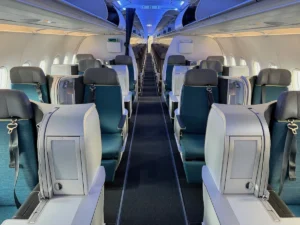
Air China will deploy the Airbus A330-300 on this route, a twin-aisle wide-body aircraft known for its reliability on medium-to-long-haul missions. The aircraft configured for this route features a total of 301 seats, divided into two classes:
- Business Class (30 Seats): Arranged in a 2-2-2 configuration, these seats transition into fully flat beds. While many modern airlines are moving toward 1-2-1 configurations with direct aisle access for all passengers, the 2-2-2 layout remains highly competitive on the Iceland route. Currently, Icelandair’s "Saga Class" offers a recliner-style seat similar to domestic first class in the United States. Air China’s inclusion of flat beds makes it the only carrier to offer year-round, lie-flat service to Iceland, a major selling point for high-end travelers and corporate clients.
- Economy Class (271 Seats): The economy cabin provides a standard long-haul experience with seat-back entertainment and full meal service, which contrasts with the buy-on-board models increasingly adopted by European regional carriers.
Context: The Growth of Chinese Tourism in Iceland
The decision to launch this route follows a decade of explosive growth in Chinese interest in the Nordic regions. Iceland, in particular, has become a "bucket list" destination for the Chinese middle and upper classes. According to data from the Icelandic Tourist Board, the number of Chinese visitors increased exponentially between 2010 and 2019. While the pandemic caused a temporary hiatus, the recovery of outbound Chinese tourism in 2024 and 2025 has shown a clear preference for nature-based, experiential travel.
Iceland’s unique geological features—including the Northern Lights, the Blue Lagoon, and its various glaciers and volcanoes—align perfectly with the current trends in the Chinese travel market, which is moving away from traditional group shopping tours toward independent, photography-centric exploration. Until now, travelers from China had to connect through major European hubs like London, Paris, or Frankfurt, often requiring multiple tickets or long layovers. The new "direct" service via Copenhagen streamlines this process significantly.
Market Impact and Competitive Landscape
The entry of Air China into the Keflavík market is expected to create ripples across the North Atlantic aviation sector.
Impact on Icelandair: As the national flag carrier, Icelandair has long dominated the premium market into KEF. However, their business model focuses on a "hybrid" service. While they offer excellent connectivity, their lack of a true lie-flat product on many routes has been a point of contention for luxury travelers. Air China’s A330 service will likely force Icelandair to evaluate its premium offerings, especially on its European feeder routes.
Impact on Scandinavian Airlines (SAS): Copenhagen is a primary hub for SAS. Historically, SAS and Air China were partners within the Star Alliance. However, with SAS’s recent transition to the SkyTeam alliance following its acquisition by the Air France-KLM group, the competitive dynamics in Copenhagen have changed. Air China’s fifth freedom flight allows it to maintain a strong presence in the Danish market, potentially siphoning off passengers who would otherwise fly SAS to Iceland.

The Luxury Gap: Historically, flat-bed service to Iceland has been seasonal, primarily offered by U.S. carriers like Delta, United, or American Airlines during the peak summer months. By committing to a year-round schedule, Air China is positioning itself as the premier choice for travelers seeking comfort during the winter months—the peak season for Aurora Borealis viewing.
Economic and Diplomatic Implications
Beyond tourism, the new flight route carries economic weight. Iceland and China have maintained a Free Trade Agreement since 2014, the first such agreement between China and a European country. Direct aviation links are expected to bolster trade in sectors such as fisheries and geothermal technology. Icelandic seafood, particularly fresh salmon and cod, stands to benefit from the increased belly cargo capacity of the A330, allowing for faster transit times to Asian markets.
From a diplomatic perspective, the route reinforces the "Polar Silk Road" initiative, a component of China’s broader Belt and Road Initiative aimed at developing shipping routes and infrastructure in the Arctic. As Iceland sits at a strategic crossroads in the North Atlantic, increased connectivity with Beijing is a clear indicator of China’s long-term interest in the region.
Chronology of Implementation
The rollout of the service is expected to follow a strict timeline:
- July 2026: Official filing of flight schedules with international aviation authorities and the commencement of ticket sales.
- September 2026: Finalization of ground handling agreements at Keflavík International Airport and recruitment of local Icelandic-speaking staff for airport operations.
- October 26, 2026: Inaugural flight CA807 departs Beijing Capital International Airport.
Conclusion and Future Outlook
Air China’s expansion into Iceland via a fifth freedom stop in Copenhagen is a bold move that addresses a clear gap in the market. It provides the first consistent, high-luxury connection between Asia and Iceland while offering European travelers a superior alternative for travel between Denmark and the North Atlantic.
As the aviation industry continues to recover and evolve, the success of this route will likely depend on the continued demand for high-end Icelandic tourism and the efficiency of the Copenhagen transit. If successful, it may pave the way for other Asian carriers, such as Hainan Airlines or Cathay Pacific, to explore similar creative routing to reach secondary European markets. For now, Air China has secured a first-mover advantage, transforming a journey that was once a logistical challenge into a streamlined, premium experience. Travelers can now look forward to a new era of connectivity where the glaciers of Iceland are just one flat-bed flight away from the capital of China.