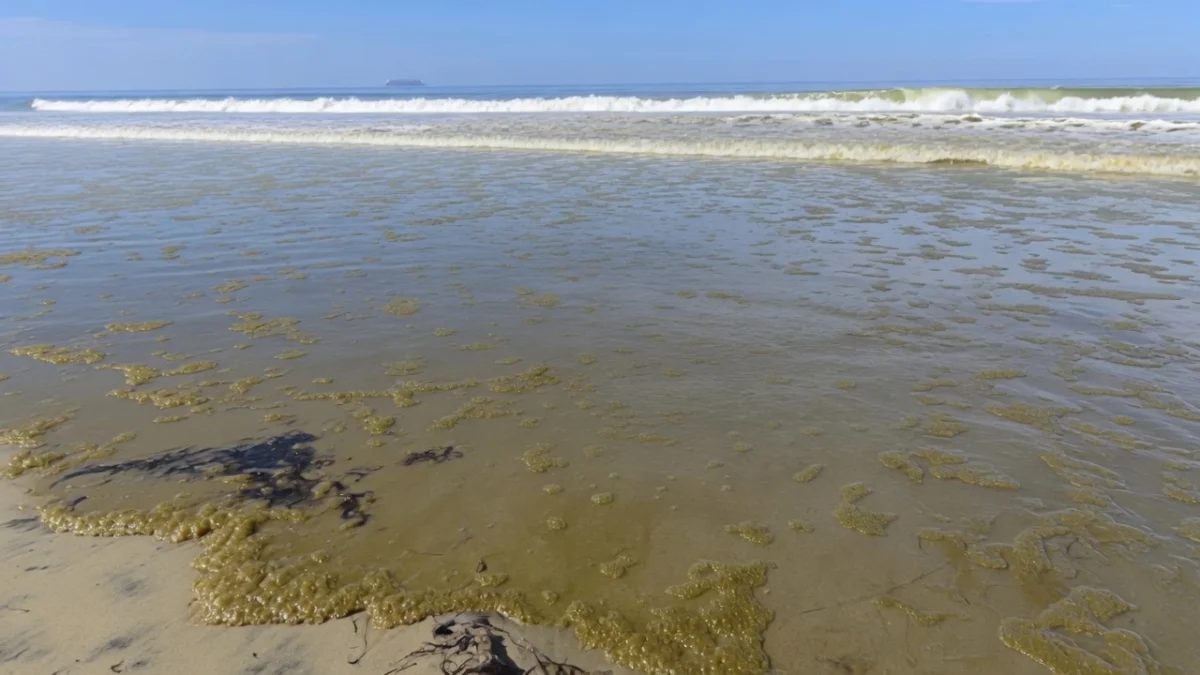
The juxtaposition of luxury and environmental catastrophe has reached a breaking point along the Southern California coastline, as the historic Hotel del Coronado continues to command rates exceeding $700 per night while the surrounding Pacific waters remain hazardous for human contact. This dichotomy serves as a stark illustration of the ongoing Tijuana sewage crisis, a transboundary disaster that has evolved from a seasonal coastal nuisance into a year-round public health emergency affecting both the water and the air. While tourists at the iconic "Del" are warned to stay out of the surf, residents just a few miles south in Imperial Beach and San Ysidro are being issued industrial-grade air purifiers to combat toxic levels of hydrogen sulfide gas emanating from stagnating waste.
The crisis, rooted in decades of infrastructure neglect and rapid urban expansion in Tijuana, Mexico, has forced San Diego County officials into unprecedented territory. For the first time in the region’s history, the government is treating the air quality in residential neighborhoods as a direct byproduct of sewage contamination, acknowledging that the crisis is no longer confined to the shoreline.
The Toxic Threshold: Water Contamination and Beach Closures
According to recent data from San Diego County health officials, the bacterial concentrations in the waters off Coronado and the Silver Strand have reached levels that defy historical norms. Testing conducted at Coronado North Beach, the Coronado Lifeguard Tower, and Avenida Lunar consistently shows enterococcus concentrations that make the water unsafe for swimming. In recent sampling periods following infrastructure failures in Tijuana, levels were recorded as high as 288,232 per 100 milliliters. To put this in perspective, the state health benchmark for safe recreational water contact is 1,413 per 100 milliliters.
The Silver Strand, a popular stretch of beach connecting Coronado to Imperial Beach, remains under a state of "imminent health threat" closure. This designation is reserved for situations involving known sewage or chemical spills where the risk of illness—ranging from gastrointestinal distress to skin infections and respiratory issues—is near-certain for those who enter the water.
The source of this contamination is the Tijuana River watershed, a 1,750-square-mile expanse that drains north across the international border. As Tijuana has grown into a metropolis of more than two million residents, its wastewater infrastructure has failed to keep pace. The result is a consistent flow of undiluted sewage, industrial chemicals, and heavy metals into the Tijuana River Valley and, ultimately, the Pacific Ocean.
From Water to Air: The Rise of Hydrogen Sulfide Pollution
While the beach closures have become a grim fixture of life in South County, a newer and perhaps more insidious threat has emerged: the aerosolization of sewage toxins. As contaminated water stagnates in the Tijuana River Valley, the decomposition of organic matter produces hydrogen sulfide (H2S), a gas characterized by its potent "rotten egg" smell.
A landmark study conducted by the Scripps Institution of Oceanography and the University of California, San Diego (UCSD) has quantified the severity of this airborne threat. Researchers recorded peak one-minute hydrogen sulfide levels of 4,500 parts per billion (ppb) near the river valley. Over a one-hour period, concentrations remained as high as 2,100 ppb. These figures are staggering when compared to California’s ambient air quality standard, which is set at 30 ppb.
In response, the San Diego County Air Pollution Control District (SDAPCD) launched the Air Improvement Relief Effort (AIRE) program. This initiative provides up to three free air purifiers and replacement filters to households in the most impacted ZIP codes, including Imperial Beach, San Ysidro, Otay Mesa West, Egger Highlands, Nestor, and the Tijuana River Valley. The purifiers are specifically equipped with activated carbon and potassium permanganate, materials required to filter out gaseous pollutants like hydrogen sulfide that standard HEPA filters cannot capture.
Public Outcry and Political Reaction
the implementation of the air purifier program has drawn sharp criticism from public figures and community advocates who view the move as a "Band-Aid" on a gaping wound. Chef Andrew Gruel, a prominent commentator on California policy, recently highlighted the absurdity of the situation, stating that when a government must hand out filters so citizens can breathe in their own homes, the situation has moved "far beyond an environmental nuisance."
The sentiment is echoed by local residents who feel the state and federal governments have been too slow to act. Social media discourse has increasingly targeted the disparity between the high-cost tourism industry in Coronado and the hazardous living conditions in the South Bay. Some critics have pointedly referred to the region as a "shit island," a crude but descriptive reference to the broken sewer systems that have fundamentally altered the local ecosystem.
The economic implications are also beginning to surface. The Hotel del Coronado, a cornerstone of the regional tourism economy, faces the challenge of maintaining its reputation as a premier destination while its primary draw—the ocean—is frequently off-limits. Industry analysts suggest that if the "resort fees" and high room rates continue alongside chronic beach closures, the long-term viability of the South County tourism sector could be at risk.
A Chronology of Infrastructure Failure and Recent Repairs
The current state of emergency is the result of a series of catastrophic infrastructure failures occurring over several years, exacerbated by record-breaking rainfall.
- May 2024: Two major sections of the Parallel Gravity Line, a critical sewer main in Tijuana, suffered structural failures. This led to millions of gallons of raw sewage bypassing treatment systems and flowing directly into the river.
- Early 2025: The United States completed an initial expansion of the South Bay International Wastewater Treatment Plant (SBIWTP), increasing its capacity from 25 million to 35 million gallons per day (MGD).
- Mid-2025: Mexico officially reopened the San Antonio de los Buenos treatment plant after years of delays, a move intended to reduce the volume of untreated effluent discharged into the surf zone south of the border.
- 2026 (Current): Despite these efforts, the volume of waste continues to overwhelm existing systems. A $26.8 million contract for 30,000 advanced air purifiers was awarded by San Diego County, though it has since become entangled in legal challenges from losing bidders who allege the county accepted unverified performance claims.
The International Boundary and Water Commission (IBWC) has outlined a multi-year plan to expand the SBIWTP further to a capacity of 50 MGD. However, officials admit that even with these expansions, the system remains vulnerable to "transboundary flows" during heavy rain events when Tijuana’s storm drains and sewer lines intermingle.
Administrative Challenges and the Air Purifier Controversy
The rollout of the air purifier program has not been without its own administrative hurdles. Early in the program, 400 units had to be recalled after it was discovered they lacked the specific chemical filtration components necessary to remove hydrogen sulfide. This error fueled public distrust and led to more rigorous oversight of subsequent contracts.
The current $26.8 million contract is under scrutiny in the courts. A losing bidder has filed a lawsuit against San Diego County, alleging that the selection process was flawed and that the chosen machines may not perform as advertised under extreme conditions. This legal battle threatens to delay the distribution of units to thousands of families who remain exposed to toxic air during the summer months when heat increases the rate of decomposition in the river valley.
Broader Environmental and Health Implications
The health implications of chronic exposure to sewage-contaminated water and air extend beyond immediate infections. Epidemiologists are concerned about the long-term effects of inhaling low-to-moderate levels of hydrogen sulfide, which can include chronic headaches, respiratory issues, and neurological symptoms. Furthermore, the presence of "forever chemicals" (PFAS) and industrial heavy metals in the sewage runoff poses a threat to the marine food chain and the biodiversity of the Tijuana River National Estuarine Research Reserve.
Environmental scientists point out that the "aerosolization" of these pollutants means that even those who do not go to the beach are at risk. Wind patterns can carry fine particles and gases several miles inland, affecting schools, parks, and residential areas that were previously thought to be buffered from the coastal crisis.
Analysis: The Path Forward
The Tijuana sewage crisis is no longer a localized environmental issue; it is a complex international humanitarian and economic challenge. The reliance on air purifiers is a tacit admission that the infrastructure solutions—while underway—are years, if not decades, away from providing a permanent fix.
For the residents of the South Bay, the focus remains on environmental justice. There is a growing demand for the federal government to declare a National Emergency, which would unlock additional funding and streamline the bureaucratic processes required for large-scale infrastructure projects.
Meanwhile, in Coronado, the luxury tourism industry remains in a precarious position. The contrast between the $700-a-night "Crown City" experience and the reality of contaminated tides is becoming harder to ignore. As the region waits for the planned expansion of treatment facilities to 50 million gallons per day, the "new normal" for San Diego’s coastline is one of caution, filtration, and a persistent, foul-smelling reminder of a broken system.
The resolution of this crisis will require sustained bilateral cooperation between the U.S. and Mexico, significant federal investment, and a move away from temporary mitigation strategies toward a total overhaul of the transboundary water management system. Until then, the air purifiers in San Ysidro and the "No Swimming" signs in Coronado remain the dual symbols of a region in distress.