
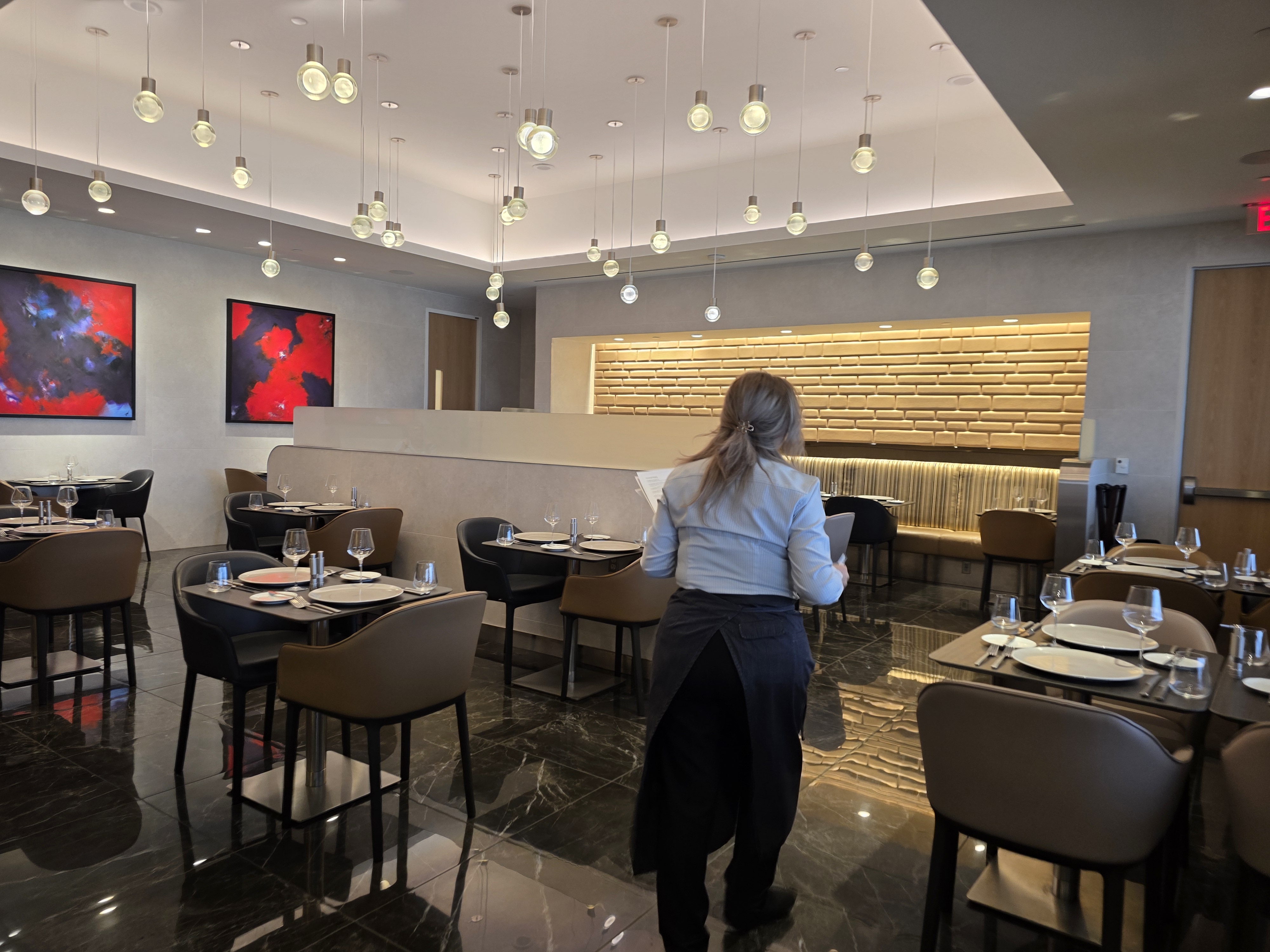
American Airlines has officially rebranded its exclusive Flagship First Dining program, removing the "First" designation and extending access to business class passengers on qualifying long-haul international, premium transcontinental, and Flagship Hawaii itineraries. This strategic shift, which began implementation on September 15, marks a significant departure from the carrier’s long-standing model of reserving its most intimate, high-end dining experiences exclusively for international first-class flyers. As the airline adapts to a changing market, the dining rooms at Dallas-Fort Worth (DFW) and Miami (MIA) are the first to transition, with Los Angeles (LAX) expected to follow suit once its facility, which has been shuttered since March 2020, reopens later this year.
The Evolution of the Flagship Experience
Historically, Flagship First Dining represented the pinnacle of airport hospitality within the United States. Designed as a sanctuary for passengers traveling in three-cabin international first class, these venues offered a level of privacy and personalized service that set them apart from the broader, often crowded, Flagship Lounges. By restricting entry to a very small demographic, the airline maintained a high-touch environment that catered to elite travelers seeking quietude and bespoke culinary offerings.

The decision to open these dining rooms to a broader base of business class passengers signals a broader industry trend. With the gradual phase-out of traditional international first-class cabins across many major carriers—including American’s own evolving fleet strategy—the airline is repositioning its premium ground services to better align with the needs of its most frequent business class patrons. While this expansion democratizes access to a superior product, industry observers note that it inevitably alters the "exclusive" nature of the experience. The transformation of these spaces from quiet, niche enclaves into higher-traffic dining rooms is a calculated trade-off between absolute privacy and improved value for a larger segment of premium travelers.
A New Culinary and Oenological Focus
The updated dining menu and wine program represent a concerted effort by American Airlines to maintain a high standard of quality despite the increased volume of diners. The wine list, in particular, has been bolstered with high-end selections that aim to compete with the top-tier offerings of global rivals.
Central to the new beverage strategy is a partnership with KHK Wines and chef Thomas Keller. The inclusion of KHK’s Hillside Cabernet Sauvignon, which retails for approximately $125, serves as a cornerstone of the new red wine rotation. Furthermore, the airline has introduced Bollinger La Grande Année, a prestige cuvée with a retail price point near $200, as a featured sparkling wine. The decision to feature such high-value bottles highlights the airline’s attempt to justify the premium nature of its business class product through tangible, luxury-oriented amenities.
However, the inclusion of premium spirits in mixed drinks—specifically a "cranberry orange spritz" featuring the aforementioned Bollinger—has drawn scrutiny. Culinary analysts note that integrating high-complexity, vintage-dated prestige champagne into a cocktail masks the nuanced flavor profiles, such as the brioche and toasted almond notes that define a prestige cuvée. This juxtaposition suggests a balancing act within the catering department: providing luxury products while ensuring they are accessible and approachable for a diverse range of traveler preferences.
Comparative Analysis: Industry Standards
When measured against competitors like Delta Air Lines and United Airlines, American’s new strategy reflects a different philosophical approach to the airport lounge experience. Delta, through its newly launched Delta One Lounges, has opted for highly distinct, location-specific culinary themes. For instance, the Delta One Lounge at JFK offers a brasserie-style environment with a diverse menu including hamachi crudo and steak tartare, emphasizing a sense of place. While American’s offering is arguably less ambitious in terms of geographic variety, it distinguishes itself through its beverage program.
Unlike Delta, which often implements supplemental charges for its most exclusive reserve wines and spirits, American’s model appears to include these high-value bottles within the standard dining experience. United Airlines, meanwhile, utilizes a model similar to American’s, relying on a compact, à la carte menu that includes signature items like their well-known burger. However, United continues to struggle with capacity management, with many of its Polaris dining facilities facing significant wait times during peak departure banks. American will likely encounter similar logistical challenges as it accommodates a larger volume of guests in the same physical footprints that were originally designed for much lower occupancy levels.

Operational Adjustments and Service Scalability
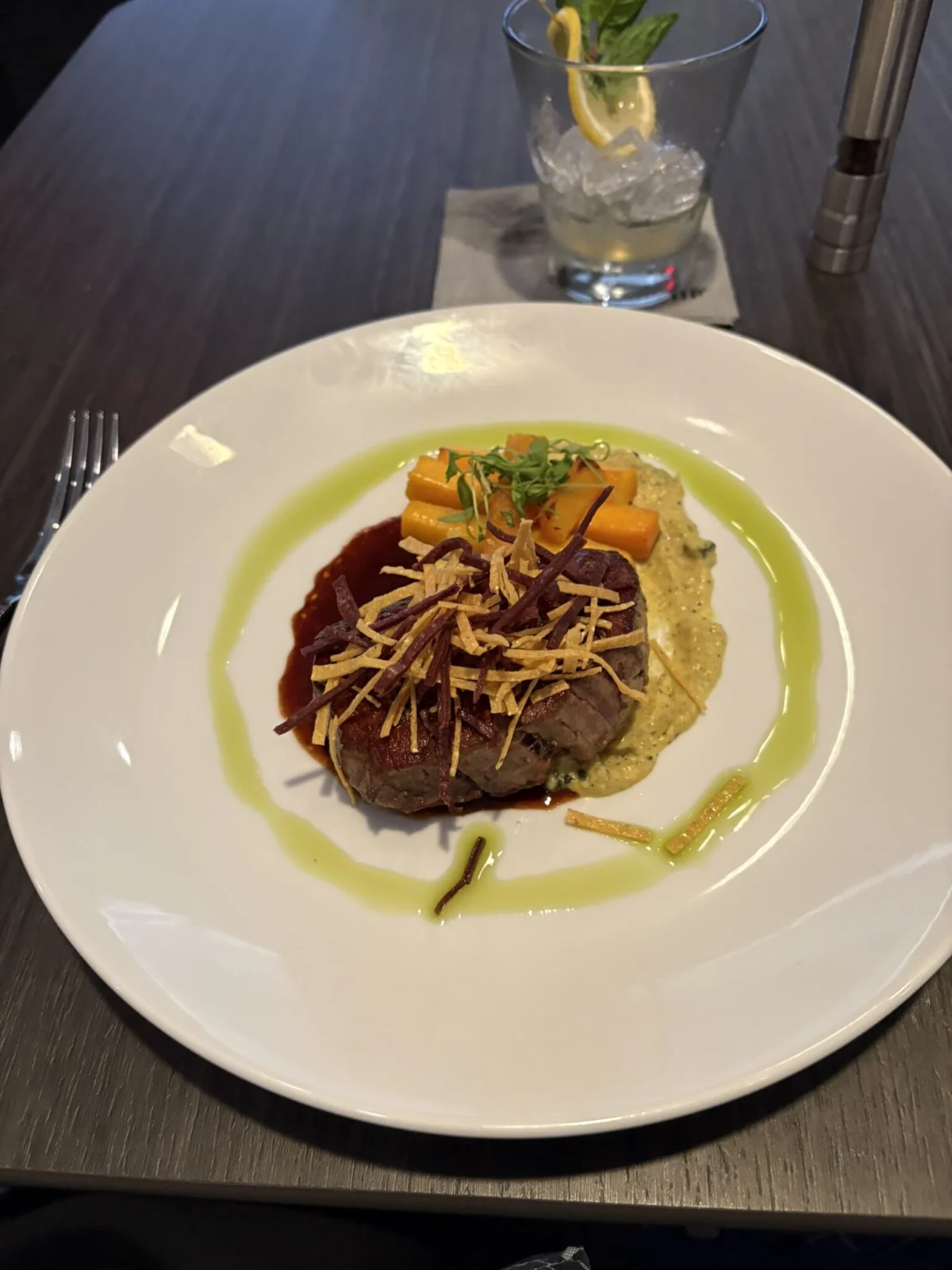
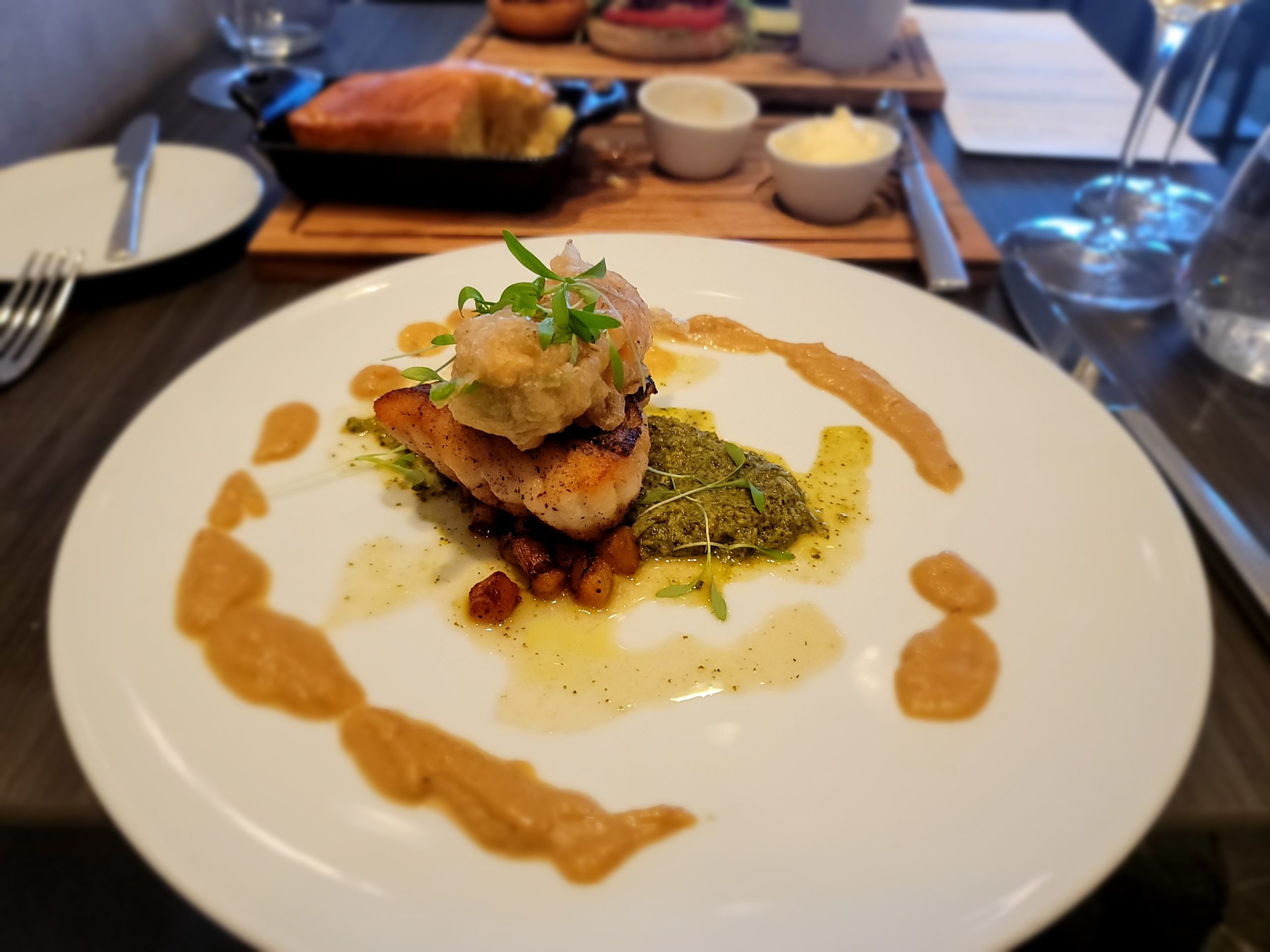
The transition from a low-volume, high-touch dining room to a high-volume service model requires significant operational shifts. The current menu includes four starters and five main courses, a selection carefully curated to ensure consistency and speed. Dishes such as the beef filet with ancho-red wine demi and sweet corn poblano purée demonstrate a focus on regional, Texas-inspired flavors, while the inclusion of staples like the signature burger and cornbread ensures a level of familiarity for regular passengers.
From a production standpoint, the menu relies on components—such as glazes, pickled onions, and purées—that can be prepared in advance. This allows the kitchen staff to maintain service velocity, which is critical when serving a larger cohort of business class passengers during the evening departure bank. The physical infrastructure at DFW, which has recently seen improvements in the main Flagship Lounge, such as staffed charcuterie stations and streamlined QR-code ordering, suggests that American is prioritizing efficiency alongside culinary quality.
Strategic Implications for the Future
The expansion of Flagship Dining to business class passengers is not merely a change in admission policy; it is a fundamental repositioning of the American Airlines brand. By standardizing access to these high-end amenities, the airline is seeking to differentiate its premium business class product in an increasingly competitive transatlantic and transpacific market.
The long-term success of this initiative will hinge on two primary factors: service consistency and capacity management. As the number of eligible travelers grows, the airline must ensure that the quality of the dining experience does not degrade. Furthermore, the ability to manage wait times—particularly at busy hubs like DFW and MIA—will be the true test of the model’s viability. If the dining rooms become overcrowded to the point where wait times mirror those of standard lounges, the value proposition of the "Flagship" brand could be diluted.
Conversely, if American can maintain the high caliber of its wine program and the quality of its culinary execution while managing the increased flow of passengers, the program could set a new benchmark for domestic lounge dining. The inclusion of storied labels like Chateau Montelena—an iconic name in American viticulture since the 1976 Judgment of Paris—alongside modern prestige cuvées indicates that the airline is investing heavily in the "perceived value" of the journey.
Conclusion
American Airlines has embarked on a bold effort to elevate its premium ground services by bridging the gap between its former first-class offerings and its current business-class reality. By folding its most exclusive dining experiences into the broader business-class travel category, the carrier is acknowledging the evolving nature of air travel. While the removal of the "First" moniker and the expansion of access may be viewed as a loss of exclusivity by some, for the majority of long-haul premium travelers, it represents a significant enhancement to the value proposition of a business class ticket. As the program rolls out to additional locations, the industry will be watching to see if this model of high-end, accessible luxury can withstand the pressures of scale in the modern aviation environment.







Leave a Reply