On July 21, 2026, an incident aboard American Airlines flight AA171 from New York’s John F. Kennedy International Airport (JFK) to Los Angeles International Airport (LAX) ignited a significant online debate regarding cabin etiquette, upgrade policies, and the rights of airline passengers. The confrontation, which was captured in a series of social media posts, centered on a dispute over a broken business class seat and the subsequent attempt by flight crew to reassign passengers. While the initial narrative presented by the passenger who filmed the event suggested he was a victim of a "trick" or a "robbery," a closer examination of airline protocols and the passenger’s own subsequent admissions reveals a complex situation involving the "Conditions of Carriage" and the hierarchy of seating priority in commercial aviation.
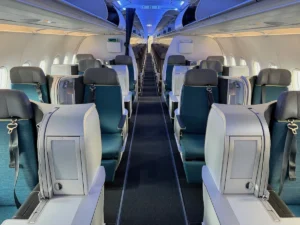
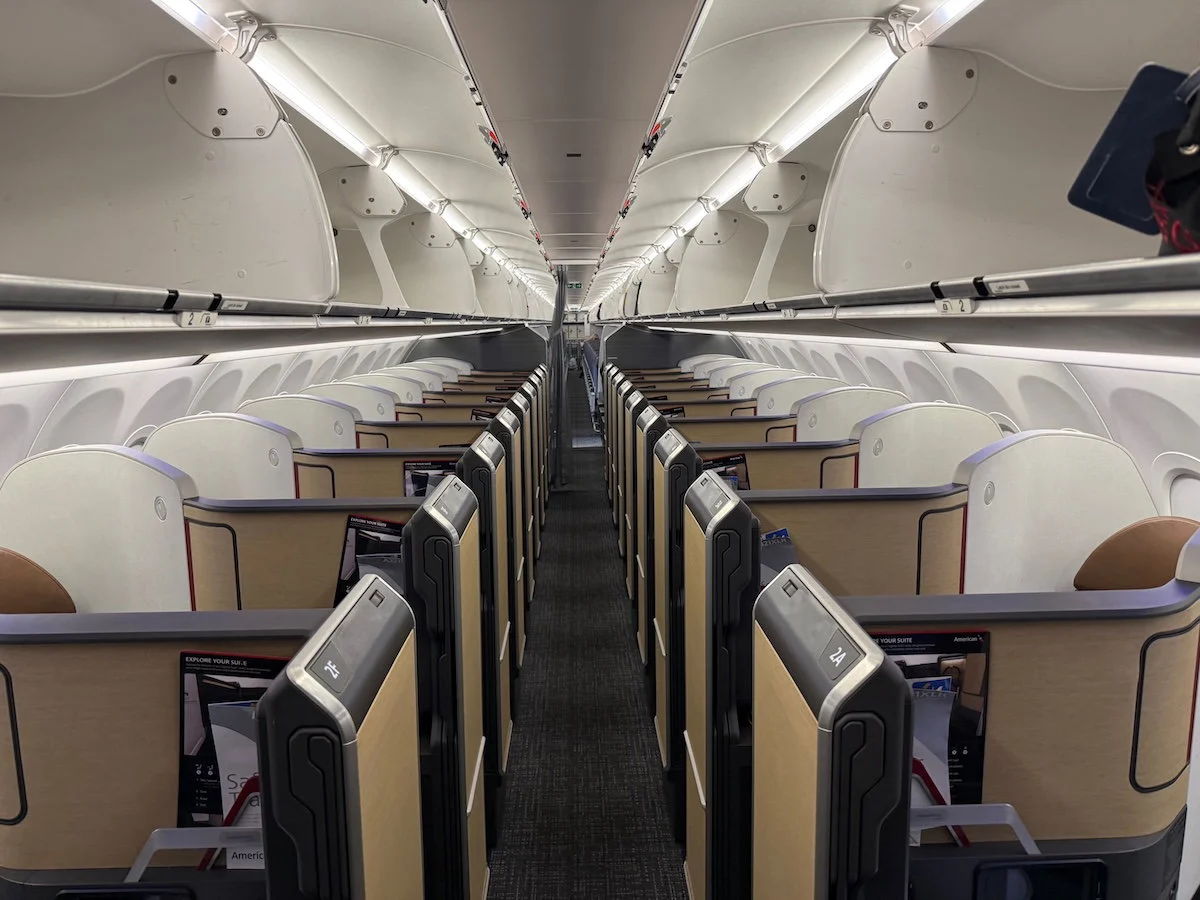
The incident occurred on a high-demand transcontinental route, typically served by American Airlines’ premium-heavy fleet. The aircraft in question, identified in reports as an Airbus A321XLR—a next-generation narrow-body aircraft designed for long-haul routes—features a sophisticated business class cabin with lie-flat seats. These seats are highly sought after by business travelers and elite loyalty members, often retailing for thousands of dollars or requiring significant miles and status for an upgrade.
Chronology of the Confrontation
The events began during the early morning boarding process for the 6:00 AM departure. According to the passenger in seat 6A, an elite-status frequent flyer who had received a complimentary upgrade from the main cabin, he had settled into his seat and was attempting to sleep before takeoff. He was approached by another passenger, a woman assigned to seat 3F, who requested a seat swap.
Initially, the passenger in 6A agreed to the swap, under the impression that the request was based on personal preference, such as a desire to sit near a companion or to have a specific window view. However, upon moving to seat 3F, he discovered that the seat’s recline mechanism was completely inoperable. Realizing he had traded a fully functional lie-flat seat for a broken one on a six-hour flight, he attempted to reclaim his original seat.
The situation escalated when the woman in 6A refused to vacate the seat, asserting that she had paid for a business class ticket while the man had merely been upgraded. The man began filming the encounter, a move that has become increasingly common in "air rage" or seating dispute scenarios. In the video, he can be heard telling the woman, "You gotta get out of my seat, this is crazy," to which she calmly replies, "You were moved, sir." The confrontation ended with the woman eventually returning to her original, broken seat after the man’s persistent demands and the intervention of surrounding passengers.
The Hidden Context: Airline Downgrade Protocols
While the initial video painted a picture of a passenger being "scammed" by a fellow traveler, a follow-up video posted by the same individual provided crucial context that shifted the perspective of many industry observers. In his second explanation, the passenger admitted that a flight attendant had intervened prior to the filming, presenting him with an ultimatum: he could either switch seats with the woman, be downgraded to his original seat in the economy cabin, or be removed from the flight entirely.
This revelation points to a standard operational procedure used by major carriers like American Airlines. When a premium cabin seat is identified as "INOP" (inoperable) before departure, the airline is obligated to provide a functional seat to the passenger who paid for the service. In the hierarchy of seating, "revenue passengers"—those who paid cash or high-value miles for their ticket—take precedence over "non-revenue" or "upgraded" passengers.
In this instance, the woman in 3F had reportedly paid for her business class seat. When it was discovered her seat would not recline—a core feature of the business class product—the gate agent and flight crew were required to find her a working seat. The standard protocol in such a situation is "last in, first out." Since the passenger in 6A was the last person to be upgraded into the cabin, his seat was the one designated for reassignment.
Legal and Regulatory Framework of Seating Assignments
The legal basis for such reassignments is found in an airline’s "Conditions of Carriage," a contract that every passenger agrees to upon purchasing a ticket. These documents explicitly state that the airline does not guarantee any specific seat and reserves the right to change seating for operational, safety, or security reasons.
Furthermore, Federal Aviation Administration (FAA) regulations play a role in how broken seats are handled. While a non-reclining seat is primarily a comfort issue, it can become a safety hazard if the seat fails to lock in the upright position required for taxi, takeoff, and landing. If a seat cannot be secured in the upright position, it cannot be occupied during these critical phases of flight. In the case of AA171, the issue appeared to be a failure to recline, which allowed the seat to be occupied but rendered the "business class experience" void for the paying customer.
Under Department of Transportation (DOT) guidelines, if a passenger is involuntarily downgraded from a higher class of service to a lower one, they are entitled to a refund of the price difference. However, airlines prefer to avoid the paperwork and customer dissatisfaction associated with downgrades by reassigning upgraded passengers first, as these individuals have not "lost" money on the transaction, only a benefit they received for free.
The Role of Social Media and Cabin Conduct Policies
The viral nature of this incident highlights the growing tension between personal privacy and the use of smartphones as "witness" tools in public spaces. The passenger in 6A recorded the woman without her consent and posted the footage to a global audience, characterizing her as a "thief" of his seat.
However, many major airlines, including American, have policies regarding the filming of other passengers or crew members. These policies are designed to maintain a "safe and comfortable environment." Filming someone in a way that is perceived as harassing or intimidating can be grounds for removal from a flight under the "interference with crew members" clause of the FAA.
The fact that the passenger was able to "bulldoze" his way back into the seat despite a direct instruction from the flight crew is a point of concern for aviation security experts. Generally, a failure to follow a crew member’s instruction—especially regarding seating assignments—can result in a passenger being met by law enforcement upon landing or being added to an internal "no-fly" list.
Financial and Operational Implications for American Airlines
For American Airlines, incidents like these represent a significant customer service challenge. The JFK-LAX route is one of the most competitive in the world, with American competing directly against JetBlue’s Mint, United’s Polaris, and Delta One. Maintaining the integrity of the premium cabin experience is vital for retaining high-value corporate accounts.
When a seat is broken, the airline faces several costs:
- Compensation: The paying passenger (the woman in 3F) likely received a significant amount of frequent flyer miles or a travel voucher as a "gesture of goodwill" for the inconvenience, even if she eventually sat in the broken seat.
- Maintenance: Taking a plane out of service or holding it at the gate to fix a seat is prohibitively expensive, often costing thousands of dollars per hour in lost utilization.
- Reputational Damage: Viral videos that portray the cabin as a place of conflict can deter premium travelers who seek a quiet, professional environment.
Data from the Bureau of Transportation Statistics suggests that "equipment-related" issues account for approximately 15-20% of domestic flight delays and passenger grievances. As aircraft fleets age and the complexity of lie-flat seats (which involve motors, wiring, and intricate mechanical parts) increases, the frequency of "INOP" seat incidents is expected to rise.
Analysis of Passenger Entitlement and Loyalty Programs
The psychology of airline loyalty programs also plays a role in this confrontation. The passenger in 6A emphasized his "high loyalty status" and his expectation of "90% free upgrades." This sense of ownership over an upgraded seat is a common phenomenon among frequent flyers. However, from the airline’s perspective, an upgrade is a discretionary perk, not a guaranteed right.
Industry analysts suggest that airlines need to be clearer in communicating the "conditional" nature of upgrades. Had the flight crew or gate agent explained the "revenue priority" rule more clearly to the passenger in 6A before he settled in, the confrontation might have been avoided. Conversely, the passenger’s refusal to accept the downgrade—and his subsequent use of social media to shame the paying passenger—reflects a shift in cabin culture where "viral justice" is often sought over adherence to airline policy.
Conclusion and Future Outlook
The American Airlines flight AA171 incident serves as a cautionary tale for modern travelers. It underscores the reality that in the world of commercial aviation, the "Conditions of Carriage" and the price paid for a ticket carry more weight than loyalty status or a boarding pass seat number.
As airlines continue to roll out more complex seating products like the A321XLR’s suites, the potential for mechanical failure will persist. Carriers must balance the technical maintenance of these seats with clear, firm communication regarding seating reassignments. For passengers, the incident is a reminder that the flight crew has the ultimate authority over cabin arrangements, and that "playing the victim" on social media does not always align with the operational realities of the sky.
In the long term, this event may prompt airlines to refine their boarding processes, ensuring that seat functionality is verified before upgrades are finalized, thereby preventing the "dazed" confusion and subsequent conflict that marred this transcontinental flight. For now, the debate continues over whether the "nicety" of a seat swap should ever be expected when the stakes involve the basic functionality of a multi-thousand-dollar travel product.