A bipartisan group of United States legislators has introduced the Quiet Skies Act, a piece of legislation designed to force the Department of Transportation (DOT) to finalize a long-delayed ban on in-flight voice communications. Although Congress passed a law in 2018 prohibiting passengers from making phone calls during scheduled flights, the federal government has yet to implement the specific regulations required to enforce the ban. The newly introduced bill seeks to close this regulatory loophole by mandating that the DOT issue a final rule within 180 days of the act’s passage, effectively silencing the cabin for millions of travelers.
The move comes at a time when technological advancements, specifically the rollout of high-speed satellite internet services like SpaceX’s Starlink, have made in-flight voice and video calling more technically feasible than ever before. While the 2018 law was intended to preserve the peace and safety of the aircraft cabin, the lack of administrative follow-through has left the industry in a state of self-regulated limbo. The Quiet Skies Act aims to transform that voluntary adherence into a federal requirement, addressing concerns ranging from passenger etiquette to airline safety and security.
Historical Context and the Regulatory Gap
The legislative journey to ban in-flight calls began over a decade ago. In 2014, the Department of Transportation issued a Notice of Proposed Rulemaking (NPRM) regarding the use of mobile devices for voice calls. At the time, the DOT expressed concerns that allowing passengers to talk on their phones would lead to increased cabin tension and potentially interfere with the crew’s ability to maintain order. However, the proposal faced significant pushback from various stakeholders, and the rulemaking process stalled.
In 2018, as part of the broader FAA Reauthorization Act, Congress officially enacted 49 U.S.C. § 41725. This statute directed the Secretary of Transportation to promulgate regulations prohibiting passengers from using personal mobile devices for voice communications during scheduled passenger flights. The law specifically exempted flight crews and federal law enforcement officers and allowed for the use of phones permanently installed in the aircraft—relics of the "Airfone" era. Despite this clear congressional mandate, the DOT never finalized the implementing regulations. Consequently, while many airlines have internal policies prohibiting voice calls, there is no formal federal regulation that flight attendants can point to as a legal mandate, leading to inconsistent enforcement and potential conflicts between passengers and crew.
The Quiet Skies Act: Specifics and Sponsorship
The Quiet Skies Act is a targeted legislative response to this administrative delay. Sponsored by a bipartisan coalition including Representatives Hillary Scholten (D-MI), Rick Crawford (R-AR), Greg Stanton (D-AZ), and Rob Bresnahan (R-PA), the bill is designed to provide the DOT with a strict deadline. By requiring action within 180 days, the sponsors hope to bypass the bureaucratic inertia that has characterized the issue since 2018.
Representative Greg Stanton, a key proponent of the bill, emphasized that the legislation is about maintaining the "quiet and safety" of the flying experience. The sponsors argue that the confined space of an airplane cabin is uniquely unsuitable for loud voice conversations, which can escalate into "air rage" incidents. The bill has been referred to the House Committee on Transportation and Infrastructure, where it awaits further deliberation.
Technological Evolution: The Impact of High-Speed Wi-Fi
One of the primary drivers behind the renewed urgency for the Quiet Skies Act is the rapid evolution of in-flight connectivity. In the past, the high cost and low bandwidth of satellite internet served as a natural barrier to voice-over-IP (VoIP) services like Skype, WhatsApp, or FaceTime. However, the entry of Starlink and upgraded Viasat systems into the aviation market has changed the landscape.
Airlines such as Hawaiian Airlines and Qatar Airways have already begun integrating Starlink, which offers low-latency, high-speed internet capable of supporting multiple simultaneous video calls. As Wi-Fi becomes faster and more reliable, the "technical impossibility" of making calls is vanishing. Lawmakers fear that without a federal ban, the sheer ease of making a call will lead to a proliferation of voice communications, fundamentally altering the passenger experience.
Defining "Voice Communications" in the Digital Age
A significant point of contention in the Quiet Skies Act—and the 2018 law it seeks to finalize—is the broad definition of "voice communications." The 2018 statute defines a "mobile communications device" as portable wireless equipment used to transmit or receive voice data. This definition is not limited to traditional cellular networks; it encompasses any device using Wi-Fi or data packets to facilitate speech.
This raises complex questions regarding modern workplace tools like Zoom, Microsoft Teams, and Google Meet. Under the proposed regulations, "engaging in voice communications" would likely be prohibited. However, the legal community and industry analysts are debating whether this includes "listen-only" participation. A decade ago, the DOT suggested that a final rule should ban both making and receiving calls, implying that even listening to a live call with headphones could be a violation. If the DOT adopts a strict interpretation, a passenger sitting silently with noise-canceling headphones while monitoring a corporate earnings call or a media briefing could technically be in breach of federal law. This ambiguity remains one of the most scrutinized aspects of the pending rulemaking.
Arguments for the Ban: Safety and Etiquette
Proponents of the ban, including several major flight attendant unions and consumer advocacy groups, argue that the regulation is essential for aviation safety. The primary concern is not electromagnetic interference with aircraft systems—which has largely been debunked for modern electronics—but rather the human element.
- Cabin Conflict and Air Rage: Flight attendants have reported a significant increase in unruly passenger behavior over the last five years. The FAA reported over 2,000 incidents of unruly passengers in 2023 alone. Proponents argue that the irritation caused by a seatmate talking loudly on a phone for hours could serve as a "flashpoint" for physical altercations.
- Emergency Instructions: In the event of an emergency, flight crews must be able to command the immediate attention of all passengers. If a significant portion of the cabin is engaged in phone conversations or wearing headsets for VoIP calls, the delay in response could be life-threatening.
- Privacy and Noise Pollution: Unlike trains or buses, passengers on a flight cannot simply move to another car or step outside. The forced proximity of air travel makes voice calls a form of noise pollution that many travelers find intolerable.
Arguments Against the Ban: Personal Freedom and Necessity
On the other side of the debate, critics of the Quiet Skies Act argue that the ban is an overreach of government authority into matters of social etiquette. They contend that airlines, not the federal government, should be responsible for setting policies that reflect the desires of their customers.
- The Necessity of Communication: Some argue that calls can be vital in emergency situations. A frequently cited example involves a passenger who received a text from a suicidal spouse during taxiing; under strict "airplane mode" enforcement, she was unable to make a final call that might have intervened in the tragedy.
- Business Productivity: For the modern business traveler, the ability to join a conference call—even in a listen-only capacity—is a major component of productivity. Critics argue that a blanket ban on "voice data" could unfairly penalize workers who are not causing any audible disturbance.
- Inconsistency with Other Transit: Opponents point out that voice calls are permitted on Amtrak, commuter rails, and buses without resulting in widespread chaos. They suggest that the "parade of horribles" predicted by proponents has not materialized in other modes of transport or on international carriers that allow such calls.
International Comparisons and Industry Standards
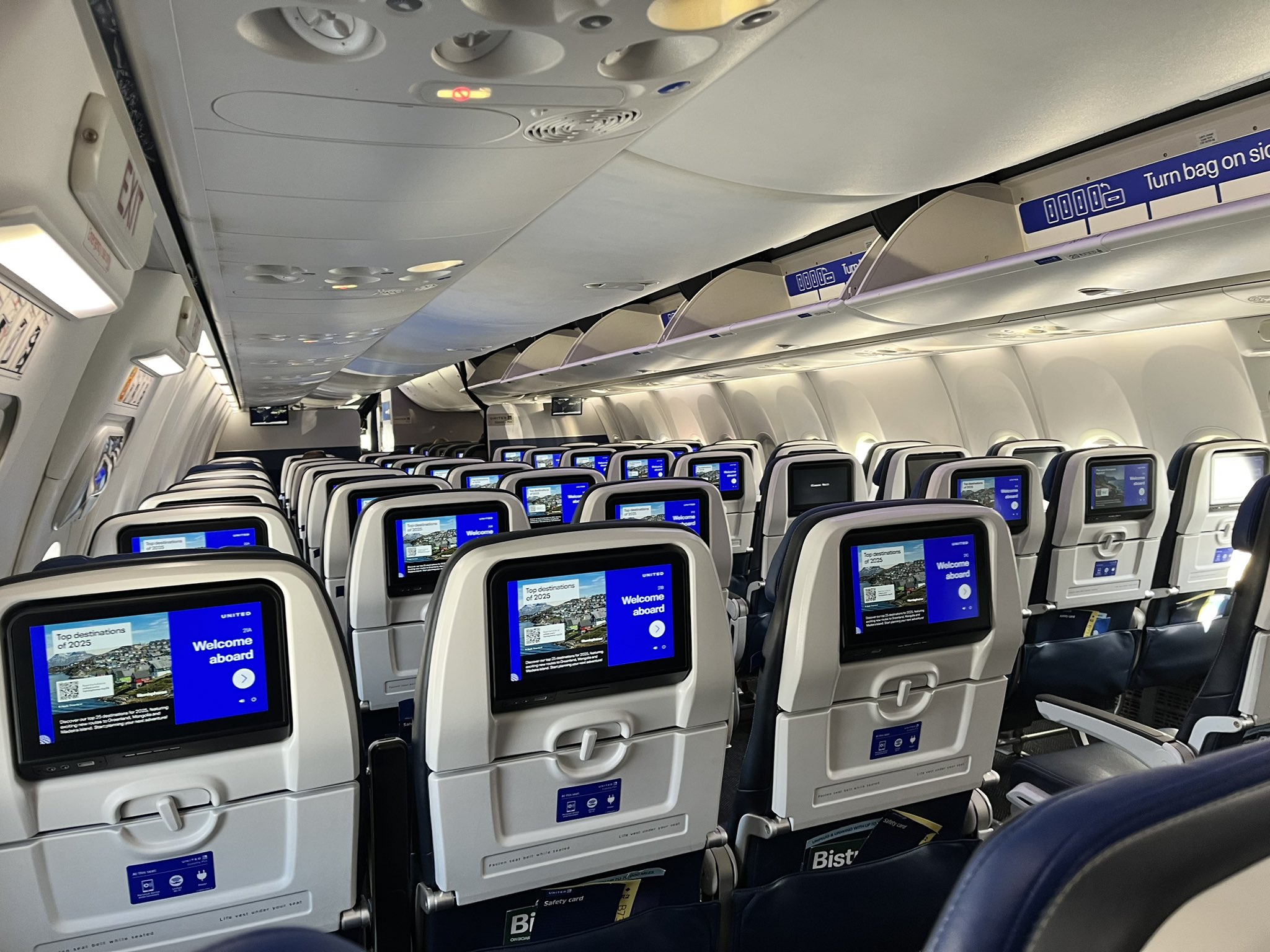
The global landscape for in-flight calls is a patchwork of different regulations. While many European and Middle Eastern carriers have the technical capability to allow cellular roaming or VoIP calls, they often restrict their use based on time of day or cabin class to minimize disruption. In the United States, however, the industry has largely converged on a voluntary ban. Major carriers like Delta, United, and American Airlines currently prohibit voice calls through their Wi-Fi terms of service.
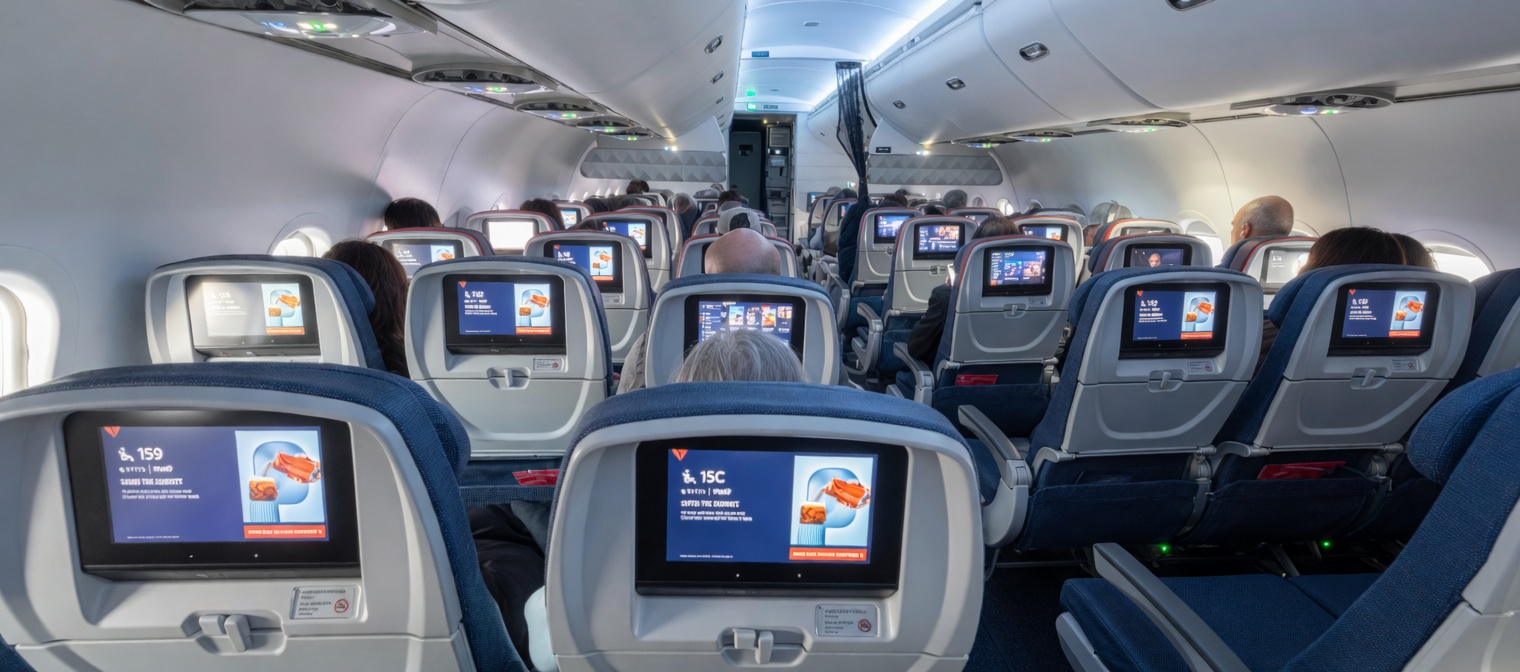
The Quiet Skies Act would codify this industry standard, ensuring that even as new, low-cost carriers enter the market, they cannot use "in-flight calling" as a competitive marketing tool. This uniformity is a key goal for the bill’s sponsors, who believe that a single federal standard is easier to enforce than a mosaic of individual airline policies.
Analysis of Potential Implications
If the Quiet Skies Act passes and the DOT finalizes its regulations, the implications for the aviation industry will be significant. Airlines will likely need to update their "Contract of Carriage" to reflect federal law, and flight attendant training programs will need to include specific protocols for handling voice communication violations.
From a consumer perspective, the ban may be welcomed by the majority of travelers who prioritize a quiet cabin. According to various travel sentiment surveys, in-flight calling consistently ranks as one of the most disliked potential "features" of modern aviation. However, the legal definition of "voice communication" will be the most critical factor to watch. If the DOT bans the act of "listening" to a live stream or a VoIP meeting, it could lead to a backlash from the business community and potentially trigger legal challenges regarding the scope of the DOT’s authority under consumer protection laws.
Conclusion and Path Forward
The Quiet Skies Act represents a final attempt by Congress to close a chapter of regulatory uncertainty that has lasted for nearly a decade. By forcing the Department of Transportation to act, lawmakers are seeking to prioritize cabin tranquility and crew safety over the technological capability for constant connectivity.
As the bill moves through the legislative process, it will serve as a battleground for competing visions of the modern flying experience: one that views the aircraft as a sanctuary of quiet, and another that views it as a mobile office where connectivity should be unrestricted. Regardless of the outcome, the debate highlights the ongoing struggle to balance technological progress with the fundamental human need for peace in confined spaces. The 180-day clock proposed by the act ensures that, one way or another, a final decision on the silence of the skies is on the horizon.