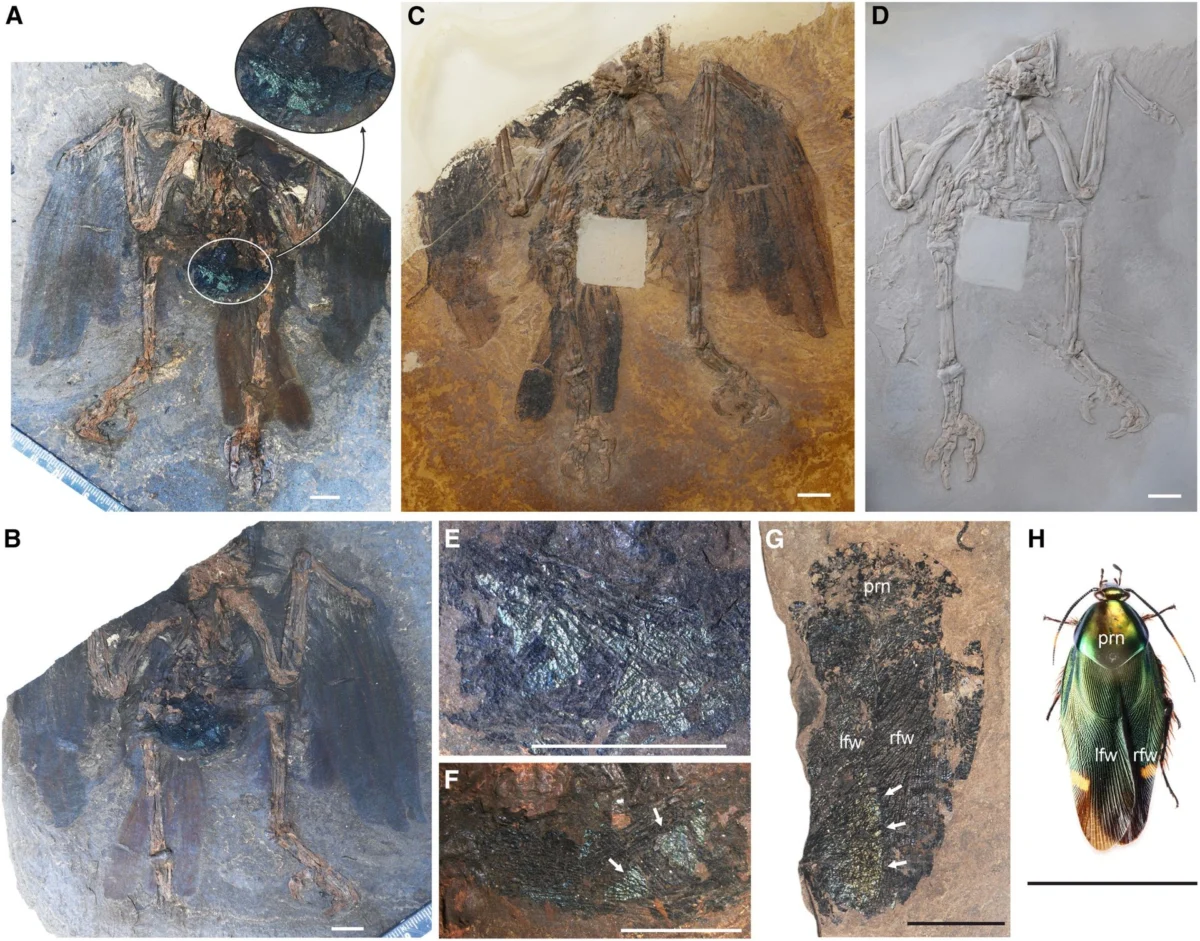
The discovery of an exceptionally preserved fledgling owl from 47 million years ago is shedding new light on the evolutionary history of strigiform birds and the timeline of when they adopted their characteristic nocturnal lifestyle. Unearthed at the renowned Messel Pit fossil site in Germany, the newly identified and described species, Masillastrix blattophaga, provides rare soft-tissue preservation and direct dietary evidence from the Eocene epoch. This momentous find bridges a crucial gap in paleontological understanding, offering researchers a clearer window into the early developmental stages, ecological roles, and behavioral habits of ancient raptors during a transformative period in Earth’s history.
Exceptional Preservation at the Messel Pit Fossil Site
The specimen was recovered in 2025 by a team of paleontologists excavating the Messel Pit, a former oil shale quarry near Darmstadt, Germany. Designated as a UNESCO World Heritage site, the Messel Pit is globally celebrated for its unparalleled preservation of Eocene flora and fauna, capturing life as it existed between 56 million and 34 million years ago. Due to the unique chemical conditions of the ancient volcanic lake—characterized by anoxic bottom waters and fine-grained oil shale sediment—organisms that sank to the lakebed were protected from scavengers and rapid decay.
This environment allowed for the extraordinary fossilization of soft tissues, stomach contents, and delicate skeletal structures. While the skull of the Masillastrix blattophaga specimen is missing, the remainder of the skeleton is nearly complete and remarkably intact. The preservation is so acute that researchers were able to identify the juvenile bird’s final meal resting within its fossilized digestive tract: the remains of an iridescent, greenish-blue cockroach. This rare dietary snapshot offers direct empirical evidence regarding the foraging habits of fledgling owls during the early stages of their life cycle.
Chronology of Owl Evolution and the Eocene Epoch
To understand the significance of Masillastrix blattophaga, scientists must place the discovery within the broader timeline of avian evolution. The Eocene epoch was a time of profound climatic and ecological shifts. Following the Paleocene-Eocene Thermal Maximum, the planet experienced a greenhouse climate characterized by dense, subtropical forests covering much of Europe. It was within these lush ecosystems that modern avian groups, including the order Strigiformes (owls), began to diversify significantly.
Historically, the fossil record for early owls has been plagued by fragmentary remains, making it difficult to determine whether ancestral species were diurnal (active during the day), nocturnal (active at night), or cathemeral (active intermittently throughout day and night). Most modern owls are strictly nocturnal, equipped with specialized visual and auditory adaptations such as asymmetrical ear openings and large, forward-facing eyes adapted for low-light hunting. However, the evolutionary timeline of these traits has long remained shrouded in mystery.
The discovery of Masillastrix blattophaga contributes vital data points to this evolutionary timeline. By analyzing the skeletal proportions, limb bones, and ecological context of the juvenile specimen, researchers are piecing together how and when ancestral owls transitioned away from a diurnal lifestyle—shared with most other birds of prey—into the specialized nocturnal niche they occupy today.
Supporting Data and Anatomical Analysis
While the absence of the skull prevents direct measurement of orbital cavities and inner ear structures—which are typically used to infer visual and auditory capabilities in extinct birds—other anatomical features of Masillastrix blattophaga provide compelling clues. The proportions of the wing and leg bones suggest that the bird was a fledgling, meaning it had recently left the nest but was still dependent on parental care or learning to forage independently.
The presence of the iridescent cockroach in the stomach offers a fascinating behavioral data point. Cockroaches are generally active at night or in dark, hidden microhabitats such as beneath leaf litter or inside rotting logs. The consumption of a nocturnal or crepuscular insect by a juvenile owl living in a dense Eocene forest supports the hypothesis that these ancient raptors were already beginning to exploit low-light ecological niches.
Comparative osteological analysis places Masillastrix blattophaga within the family Protostrigidae or closely related stem-group owl lineages. These early forms often exhibit limb proportions distinct from modern Strigidae and Tytonidae, reflecting a more generalized predatory lifestyle before the specialized adaptations for silent flight and nocturnal ambush fully evolved.
Scientific Community and Expert Perspectives
The formal description of Masillastrix blattophaga has generated considerable excitement within the international paleontological community. Evolutionary biologists and ornithologists have long debated the selective pressures that drove avian nocturnality.
"Finding a fossil with preserved stomach contents is always extraordinary, but discovering this level of detail in a juvenile owl from the Eocene is unprecedented," noted Dr. Elena Vance, a paleo-ornithologist unaffiliated with the initial excavation. "It gives us a direct window into the trophic interactions of these ancient ecosystems. We are not just looking at bones; we are looking at a specific moment in the life of a young animal 47 million years ago."
Other researchers emphasize the importance of the Messel Pit in answering broader questions about Cenozoic ecosystems. Dr. Marcus Berg, a stratigrapher specializing in Eocene lake deposits, remarked that the chemical makeup of the Messel shales continues to yield discoveries that reshape our understanding of vertebrate evolution. "Every excavation season at Messel refines our chronology. Masillastrix blattophaga is a testament to the preservation potential of this unique site and its capacity to resolve long-standing debates in evolutionary biology."
Broader Impact and Implications for Avian History
The implications of the Masillastrix blattophaga discovery extend far beyond the taxonomy of a single extinct species. By providing physical evidence of the dietary habits and developmental stages of early owls, the fossil helps researchers model the ecological pressures operating in Eocene forests.
During the Eocene, avian predators faced competition from a diverse array of arboreal mammals, reptiles, and other diurnal birds of prey. Shifting into a nocturnal or crepuscular niche would have allowed ancestral owls to access an untapped bounty of nocturnal insects, small mammals, and amphibians while minimizing direct competition with daytime raptors like diurnal hawks and falcons.
Furthermore, understanding the pace at which sensory adaptations—such as specialized facial disks and nocturnal vision—evolved helps scientists comprehend the resilience of modern ecosystems. As contemporary global climates change, studying how prehistoric animals adapted to shifting environmental conditions and restructured food webs provides valuable context for modern conservation biology.
As laboratory analysis of the Masillastrix blattophaga fossil continues—utilizing non-invasive imaging technologies such as micro-CT scanning to examine internal skeletal structures and feather impressions—researchers hope to extract even more data from the specimen. Ultimately, this tiny Eocene fledgling is helping to illuminate a vast evolutionary journey, bringing science one step closer to resolving the enduring mystery of when and how the masters of the night took flight.