On November 6, 1572, the German astronomer Wolfgang Schuler looked toward the constellation Cassiopeia and witnessed a celestial anomaly that would fundamentally alter the course of human understanding. A brilliant point of light, rivaling the luminosity of the planet Venus, had appeared in the night sky where none had existed before. In an era when the prevailing Aristotelian worldview dictated that the heavens were perfect, fixed, and eternal, this sudden "guest star" was not merely a curiosity; it was a profound scientific crisis. While Schuler was among the first to document the occurrence, it was the Danish nobleman and astronomer Tycho Brahe who would dedicate his life to the phenomenon, ultimately providing the empirical evidence necessary to dismantle the medieval perception of the cosmos.
A Chronology of the 1572 Event
The appearance of what is now known as SN 1572 began in the autumn of the 16th century. For weeks following its initial discovery in early November, the star remained so luminous that it was visible to the naked eye even during the daylight hours. As the months progressed, the object began a slow, steady decline in brightness, yet it remained detectable to the unaided observer for an astonishing 16 months.
By the spring of 1574, the object had faded entirely from view, leaving behind no trace of its former intensity. However, the legacy of this event was already cemented. Tycho Brahe, observing from his base in Denmark, meticulously tracked the star’s position night after night. He utilized his highly refined instruments—long before the invention of the telescope—to measure its parallax. His findings were revolutionary: the star exhibited no measurable parallax, meaning it was located far beyond the moon and the planets, firmly situated within the "sphere of fixed stars." This was a direct contradiction of the Aristotelian model, which posited that all change occurred only in the sublunary realm—the region below the moon—and that the celestial heavens were immutable.
The Scientific Significance of SN 1572
The implications of Tycho’s observations cannot be overstated. In his landmark 1573 publication, De Stella Nova (On the New Star), Brahe argued that the star was not an atmospheric phenomenon, as many contemporaries had suggested, but a true celestial object. This work served as a pivotal turning point in the history of science, contributing to the shift from a geocentric, unchanging universe toward a dynamic, observable cosmos.
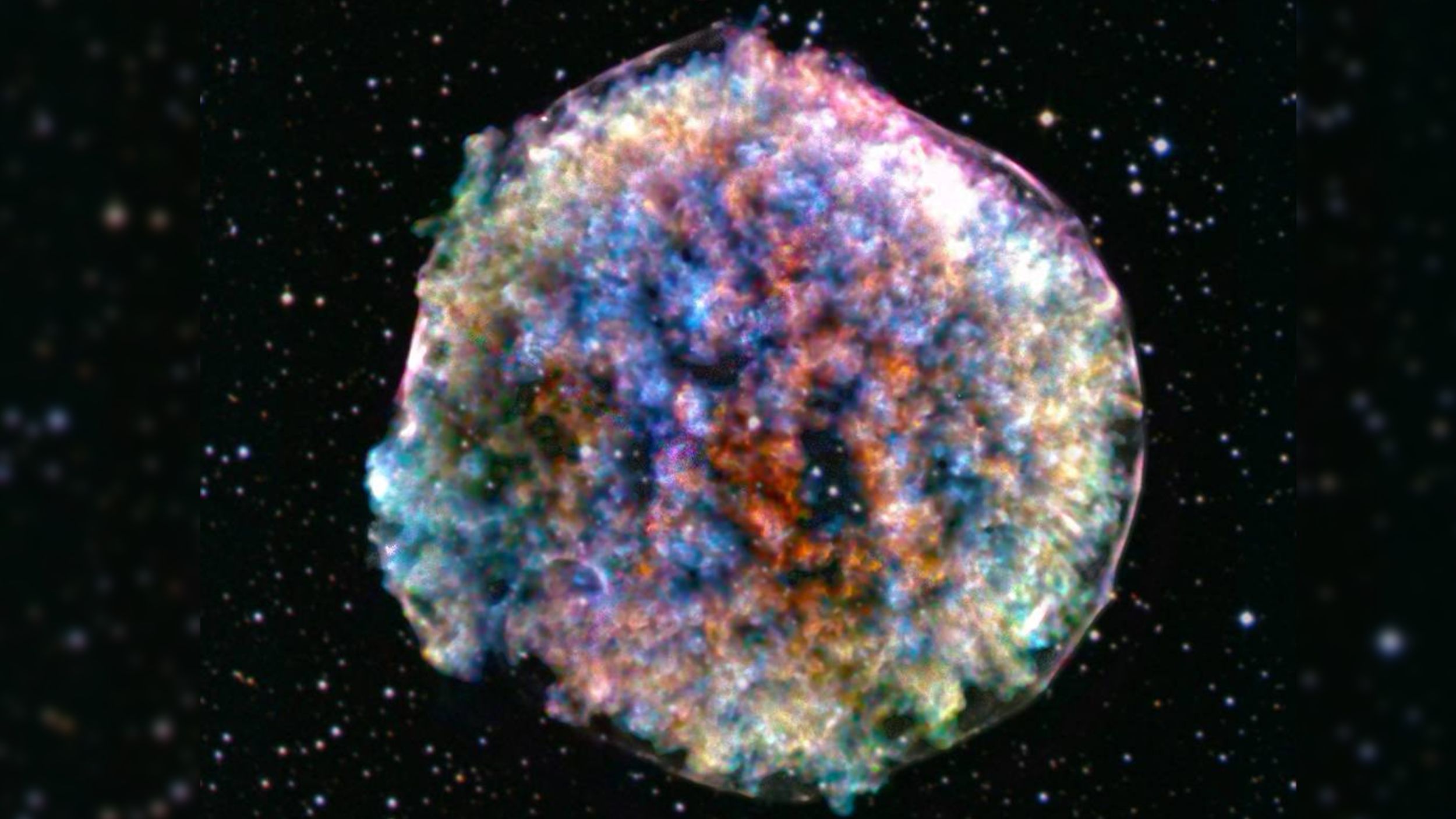
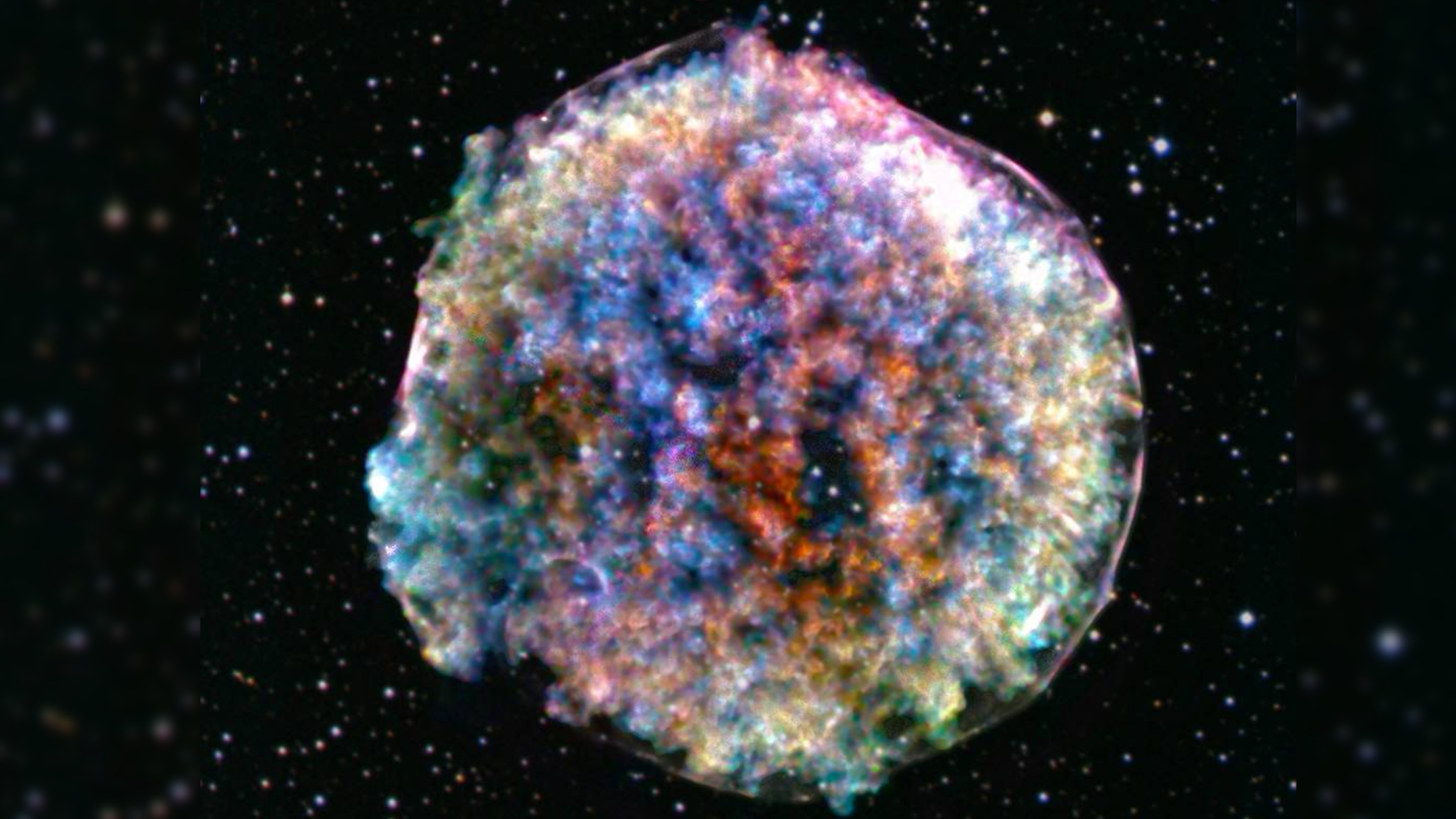
Modern astrophysical analysis has allowed researchers to peer back at this event with unprecedented clarity. Today, we classify the Tycho supernova as a Type Ia event. This specific category of supernova occurs within a binary star system, where a dense white dwarf—the remnant of a star like our sun—slowly siphons material from a companion star. As the white dwarf accumulates this matter, it eventually reaches a critical mass known as the Chandrasekhar limit. Once this threshold is crossed, the star undergoes a catastrophic thermonuclear explosion, obliterating itself and releasing an immense amount of energy.
The distance of SN 1572 is estimated at approximately 13,000 light-years from Earth. Given the finite speed of light, the explosion that Tycho observed in 1572 actually occurred 13,000 years prior to the observation. The light from this cataclysm traveled across the vastness of the Milky Way galaxy, finally reaching Earth at a moment when European science was poised to undergo its own intellectual revolution.
Data and Modern Observational Insights
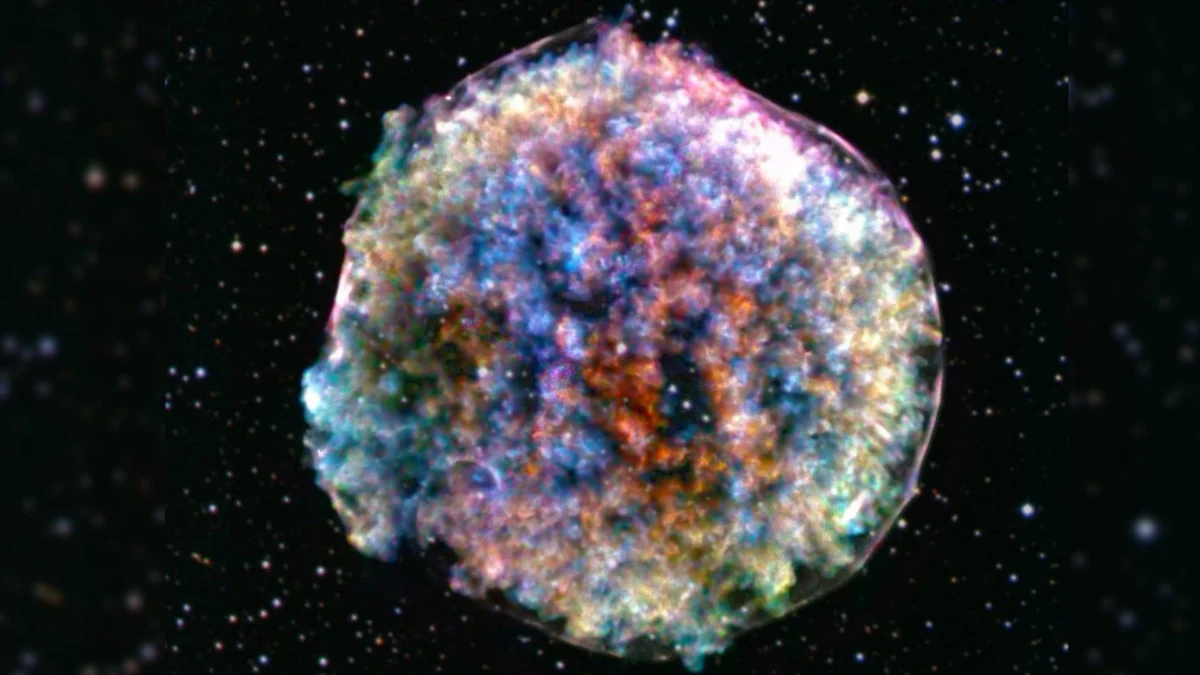
In the modern era, the remnants of this explosion have been extensively studied using advanced technology, such as NASA’s Chandra X-ray Observatory. These observations have provided high-resolution imagery of the expanding shock wave as it plows through the interstellar medium at thousands of kilometers per second.
The "light signature" of the 1572 event, reconstructed from Brahe’s detailed records of the star’s brightening and dimming, matches the light curves of other known Type Ia supernovae. This data has turned SN 1572 into a "standard candle" of sorts, helping astrophysicists calibrate their models of stellar evolution and galactic expansion. Astronomer Alex Filippenko, who led a significant 2004 study into the origins of the Tycho remnant, noted that the event was a primary piece of evidence used to prove that the heavens were not static. The observational data gathered by 16th-century astronomers provided the foundation for the eventual rejection of the geocentric model, paving the way for the work of Johannes Kepler and Isaac Newton.
The Immutable Heavens Challenged
The intellectual climate of the late 16th century was deeply conservative. The Church and the academic institutions of the time held firmly to the teachings of Aristotle and Ptolemy. When Brahe published his findings, he did so with the knowledge that he was challenging centuries of established dogma. The fact that a "new" star could appear in the sky suggested that the universe was not a finished, static creation, but a system capable of evolution, death, and transformation.
This transition of thought marked the beginning of the end of the "Dark Ages" in terms of astronomical theory. By providing quantitative data that could be verified by other observers across Europe, Brahe moved astronomy from a discipline of philosophical speculation to one of rigorous, data-driven observation. The "Tycho supernova" became the benchmark by which future astronomical transients would be measured.
Future Perspectives and Contemporary Parallels
The study of such historical events continues to inform our understanding of current celestial threats and opportunities. Astronomers are currently monitoring T Corona Borealis, commonly known as the "Blaze Star." Located in the constellation Corona Borealis, this system is a recurring nova that is expected to undergo an outburst in the near future. Unlike a Type Ia supernova, which destroys the white dwarf, a recurring nova involves a periodic ignition of hydrogen on the surface of the white dwarf, leading to a temporary surge in brightness.
T Corona Borealis is one of only 11 known stars that exhibit this behavior on a roughly 80-to-100-year cycle. By comparing the behavior of modern stars like the Blaze Star with the historical records of events like SN 1572, researchers are building a more comprehensive library of stellar behaviors. This comparative approach is essential for predicting the life cycles of stars and understanding the chemical enrichment of our galaxy, as supernovae are the primary engines for dispersing heavy elements—the building blocks of planets and life—into the cosmos.
Broader Implications for Science
The legacy of Tycho Brahe’s work on the 1572 supernova extends beyond the discovery itself. It underscores the critical importance of long-term data collection and the role of the individual observer in the progress of science. Brahe’s commitment to recording his findings in De Stella Nova provided the necessary evidence to change the trajectory of human thought.
As we look to the skies today with telescopes that can see across the electromagnetic spectrum—from radio waves to gamma rays—we stand on the shoulders of those who, like Schuler and Brahe, first dared to look up and recognize that the universe is not only vast but inherently dynamic. The Tycho supernova remains a symbol of the triumph of empirical evidence over tradition, serving as a reminder that even the most established truths must be subject to the scrutiny of observation. As technology continues to evolve, the study of such phenomena remains a core pillar of modern astrophysics, ensuring that the legacy of the "new star" of 1572 continues to guide the next generation of astronomers in their quest to map the infinite.