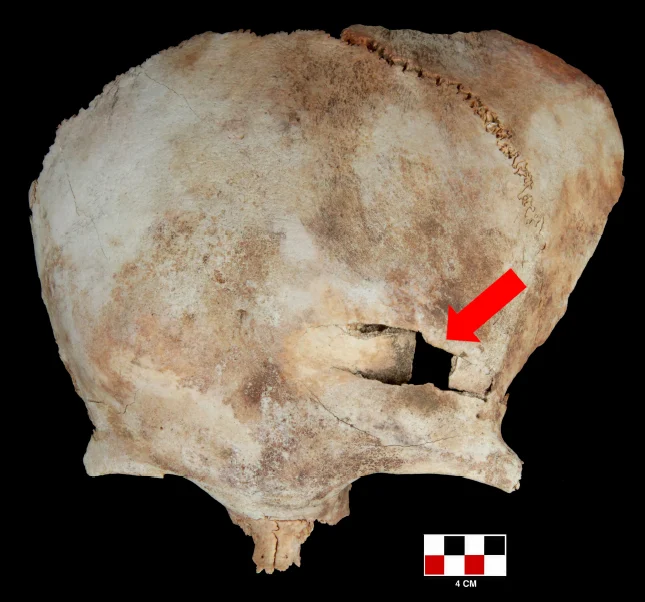
Recent bioarchaeological research conducted in the Lambayeque Valley of northern Peru has unveiled a striking paradox regarding the ancient civilizations that once thrived along the arid Andean coast. Despite well-documented archaeological evidence of large-scale human sacrifice—often interpreted as desperate ritualistic measures to appease angered deities during catastrophic climate events—osteological examinations of human remains from the region indicate that these ancient populations experienced remarkably low levels of everyday interpersonal violence.
The findings, which challenge modern assumptions linking institutionalized violence like ritual killing to a pervasive culture of brutality, offer a nuanced look at the societal dynamics of pre-Columbian Andean cultures. Researchers analyzed skeletal remains spanning centuries of occupation in the Lambayeque Valley, examining indicators of physical trauma such as cranial fractures, defensive wounds, and blunt-force injuries that typically signify interpersonal conflict, warfare, or domestic abuse. The results suggest that while these societies engaged in state-sanctioned or religiously mandated mass sacrifices, their daily lives were characterized by a high degree of internal peace and social cohesion.
Unraveling the Lambayeque Paradox: Ritual Sacrifice vs. Everyday Peace
The Lambayeque Valley, situated on the north coast of Peru, has long been recognized by archaeologists as a pivotal hub of cultural development in the ancient Andes. Spanning periods from the early complex societies through the rise and fall of the Sicán (Lambayeque) culture and the later Chimú and Inca empires, the region was an agricultural heartland sustained by complex canal irrigation systems. However, this productivity was perpetually threatened by the volatile nature of Andean weather patterns.
For decades, excavations across the valley have uncovered grim evidence of ritual killing. Archaeologists have unearthed mass graves containing the remains of dozens—and in some monumental sites, hundreds—of individuals, including children and young adults, who were systematically sacrificed. Historical and archaeological consensus suggests that these ceremonial killings were not born of routine bloodlust, but were rather deeply religious and political responses to existential crises. Specifically, researchers link many of these mass sacrifices to the catastrophic socio-ecological disruptions caused by El Niño events.
El Niño is a recurring climatic phenomenon characterized by the warming of surface waters in the central and eastern Pacific Ocean. For the coastal valleys of Peru, a severe El Niño translates into torrential downpours, devastating floods, mudslides, and the destruction of delicate irrigation networks, followed paradoxically by prolonged droughts in other regions. In agrarian societies heavily reliant on predictable water management, these climate shocks threatened mass starvation, social collapse, and political upheaval. To the ancient inhabitants of the Lambayeque Valley, such disasters were viewed as divine retribution. Consequently, state and religious leaders performed the ultimate sacrifice—offering human lives to the gods, particularly those associated with the sea, sky, and agriculture, to restore cosmic balance and secure the return of favorable weather.
Yet, a newly published bioarchaeological investigation into the skeletal assemblages of the valley’s general population reveals a stark contrast between these extraordinary ritual events and everyday life. When bioarchaeologists cataloged skeletal trauma across hundreds of non-sacrificial burials from the same era and geographical region, they discovered a notable scarcity of healed or perimortem injuries associated with interpersonal violence. Rates of cranial trauma and skeletal fractures resulting from physical altercations were significantly lower than those documented in contemporary or similarly complex ancient societies in other parts of the world, and even lower than those found in neighboring Andean valleys known for endemic warfare.
Chronology of Cultural Development and Climatic Pressures in Northern Peru
To fully understand the context of the Lambayeque findings, it is necessary to examine the chronological progression of human habitation and environmental interaction in northern Peru. The timeline of the Lambayeque Valley is marked by several distinct cultural phases, each adapting in unique ways to the pressures of their environment.
The Early Horizon and Early Intermediate Period (c. 1000 BCE – 600 CE) saw the gradual establishment of complex agrarian communities in the valley. As irrigation agriculture expanded, populations grew denser, necessitating more centralized forms of political and religious authority. It was during these foundational centuries that ritual practices, including early forms of animal and human sacrifice, began to be institutionalized as mechanisms of social integration and ideological control.
Following the collapse of the regional Moche civilization, the Middle Horizon and Late Intermediate Period (c. 900 – 1375 CE) witnessed the flourishing of the Sicán, or Lambayeque, culture. Renowned for their sophisticated metallurgy, particularly in gold and arsenic copper, the Sicán built monumental platform mounds and administrative centers such as Batan Grande and Sicán. This era also coincided with severe, multi-decadal mega-El Niño events that struck the northern coast of Peru around the 11th and 14th centuries. It is primarily within this chronological window that archaeologists have documented some of the largest mass sacrifices in the Americas, where dozens of individuals were simultaneously interred in elaborate, ritual contexts.
By the late 15th century, the Lambayeque Valley was absorbed into the rapidly expanding Chimú Empire, and shortly thereafter, into the Inca Empire. Both imperial powers brought their own administrative frameworks, yet the underlying agricultural strategies and religious traditions of the local populations persisted until the arrival of Spanish conquistadors in the 1530s. Throughout this entire chronological sweep, the environmental baseline remained precarious, ensuring that climate anxiety and the memory of El Niño-induced crises remained a potent cultural driver.
Supporting Data and Bioarchaeological Methodology
The recent study relies on rigorous bioarchaeological methodologies to separate the realities of daily life from the dramatic evidence of mass ceremonial events. Researchers examined osteological collections housed in regional museums and academic institutions, utilizing macroscopic analysis and radiological imaging to assess human remains recovered from standard residential cemeteries rather than elite tombs or sacrificial pits.
Key metrics tracked in the study include:
- Cranial Trauma Frequency: The presence or absence of blunt-force trauma to the skull, which serves as a primary indicator of interpersonal violence or warfare.
- Postcranial Fractures: Healed fractures of the arms, ribs, and legs (such as parry fractures), which often result from physical defense against blows or domestic abuse.
- Demographic Distribution of Trauma: Analyzing whether injuries were concentrated among specific age groups or sexes, which can point toward systemic domestic violence or institutionalized gender-based aggression.
The empirical data yielded unexpected results. While violent trauma is frequently ubiquitous in densely populated agricultural societies—where competition over arable land and water rights often precipitates armed conflict—the Lambayeque samples displayed minimal evidence of such strife. The frequency of cranial trauma among the general populace was exceptionally low, hovering well below the global median for sedentary agricultural communities of similar scale. Furthermore, the distribution of the few recorded injuries showed no clear pattern of targeted interpersonal aggression, suggesting that occasional accidents rather than systemic violence accounted for the trauma.
This statistical baseline provides critical context for interpreting the mass sacrifices. It demonstrates that the societies practicing ritual homicide were not inherently warlike, bloodthirsty, or plagued by high levels of domestic and community violence. Instead, violence in the Lambayeque Valley appears to have been strictly compartmentalized—restricted to highly formalized, rare, and religiously sanctioned state rituals rather than spilling over into everyday social interactions.
Expert Analysis and Scholarly Implications
The implications of these findings extend far beyond Andean archaeology, offering valuable insights into the sociology of ritual violence and human adaptability. Anthropologists and historians have long debated the psychological and social mechanisms that enable communities to participate in or condone extreme practices such as human sacrifice without fracturing their internal social fabric.
Dr. Elena Vasquez, a leading Andean archaeologist not directly involved in the study, noted that the research bridges a long-standing disconnect in archaeological interpretation. "For many years, scholars tended to view ancient societies through a monolithic lens," Vasquez explained. "If a culture practiced mass sacrifice, there was an implicit assumption that their entire social world was violent, coercive, and brutal. This study provides empirical proof that human behavior is far more compartmentalized. A society can maintain strong communal bonds, peaceful internal conflict-resolution mechanisms, and low rates of interpersonal crime, while simultaneously executing large-scale, state-mandated rituals during moments of existential dread."
From a sociological perspective, the low levels of everyday violence in the Lambayeque Valley suggest that internal social controls, community-based dispute resolution, and shared cultural values were highly effective at maintaining civil order. In an environment as unforgiving as the desert coast of Peru, where survival depended entirely on cooperative labor—particularly the construction, maintenance, and desilting of vast canal networks—internal harmony was a functional necessity. A community torn apart by constant interpersonal violence or feuding would have been incapable of sustaining the complex hydrological systems required to feed thousands of people.
Thus, the institutionalization of sacrifice may have acted as a psychological and political safety valve. By externalizing existential anxieties onto the divine sphere and channeling catastrophic collective fears into highly controlled, highly choreographed religious spectacles, leaders may have reinforced social solidarity without fostering a climate of generalized fear or internal brutality. The gods required blood to turn away the floods and droughts, but the community required peace to plant the harvest.
Broader Impact and Future Directions in Andean Research
As bioarchaeological techniques continue to advance—incorporating isotopic analysis, ancient DNA profiling, and micro-botanical studies—researchers in the Lambayeque Valley are poised to uncover even finer details regarding the lives of these ancient populations. Future investigations aim to determine whether the individuals chosen for sacrifice were local inhabitants or captured outsiders, a distinction that would further illuminate the geopolitical relationships between the valley’s centers and surrounding regions.
Furthermore, as modern global society faces its own unprecedented challenges related to climate change, extreme weather variability, and resource scarcity, the historical trajectory of the Lambayeque Valley holds a poignant contemporary relevance. The ancient inhabitants of northern Peru demonstrated an extraordinary capacity for social resilience in the face of environmental collapse, balancing the harsh demands of survival with an enduring internal commitment to community peace.
Ultimately, the revelation that the executioners of mass sacrifices were concurrently practitioners of domestic peace redefines our understanding of ancient Andean civilization. It portrays the peoples of the Lambayeque Valley not as agents of mindless terror, but as complex, deeply spiritual communities striving to navigate a fragile and volatile world.