Since the deployment of the James Webb Space Telescope (JWST), the scientific community has been forced to grapple with a series of cosmological revelations that challenge the established standard model of galaxy formation. Among the most perplexing of these discoveries are the so-called "Little Red Dots"—compact, intensely red, and luminous objects that appear to exist in the very early stages of the universe. New research now suggests these enigmatic entities may not be traditional galaxies at all, but rather the manifestation of primordial black holes, theoretical objects formed in the high-energy, chaotic environment of the universe’s first moments.
The Phenomenon of Little Red Dots
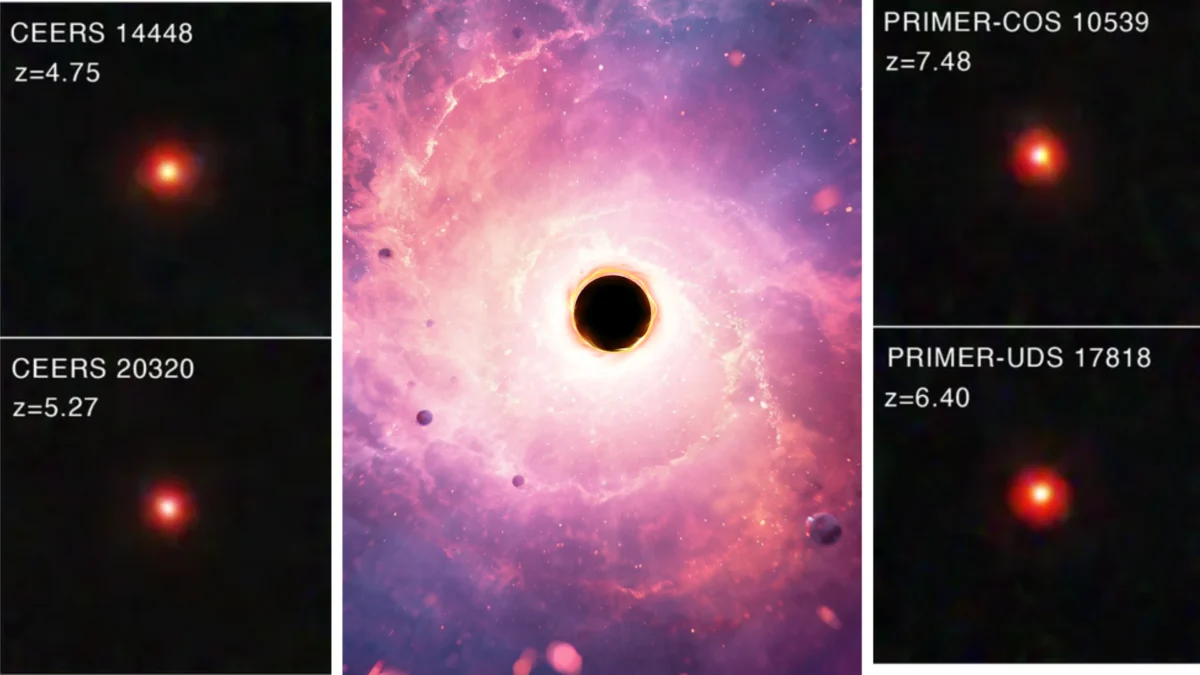
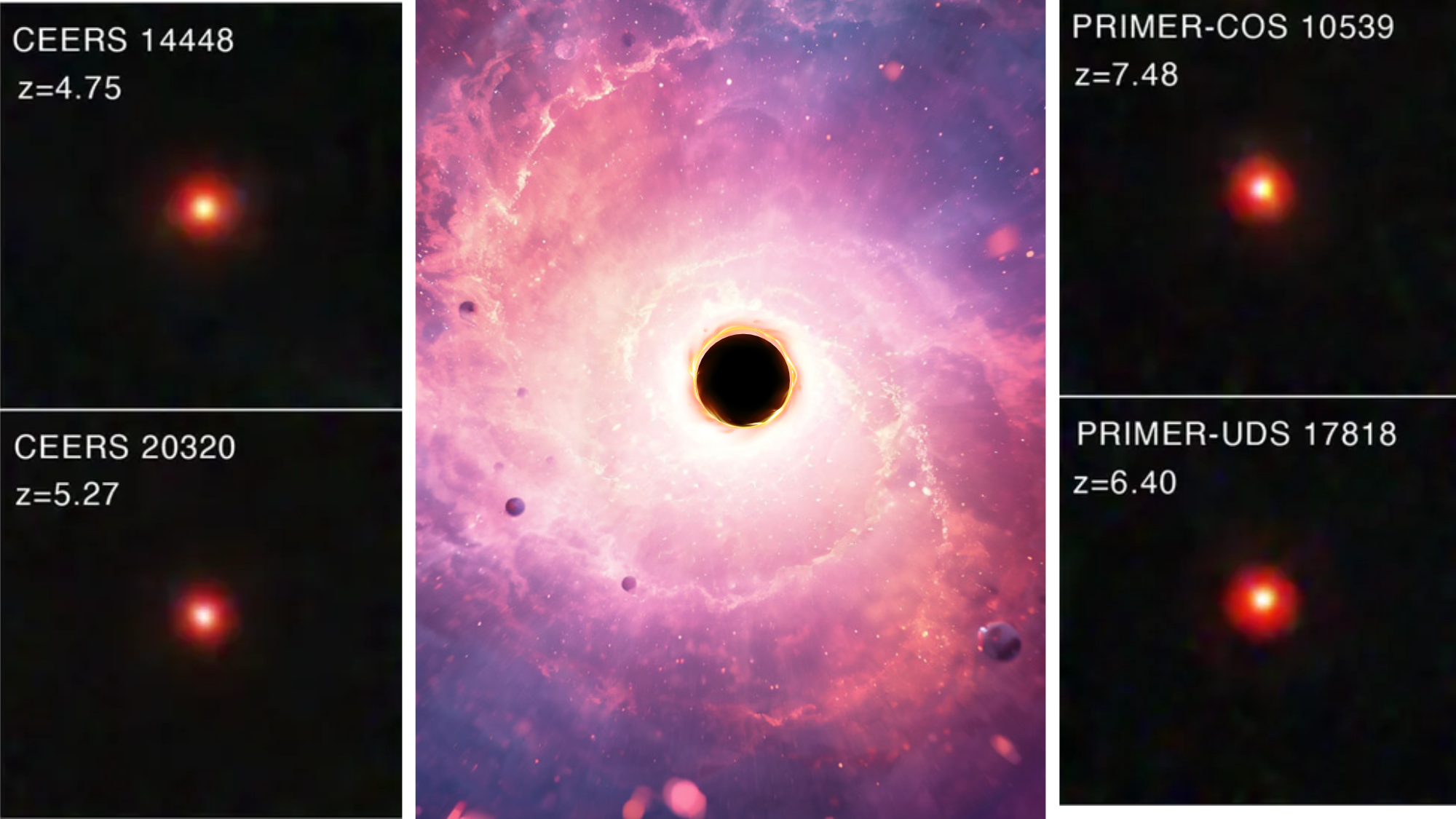
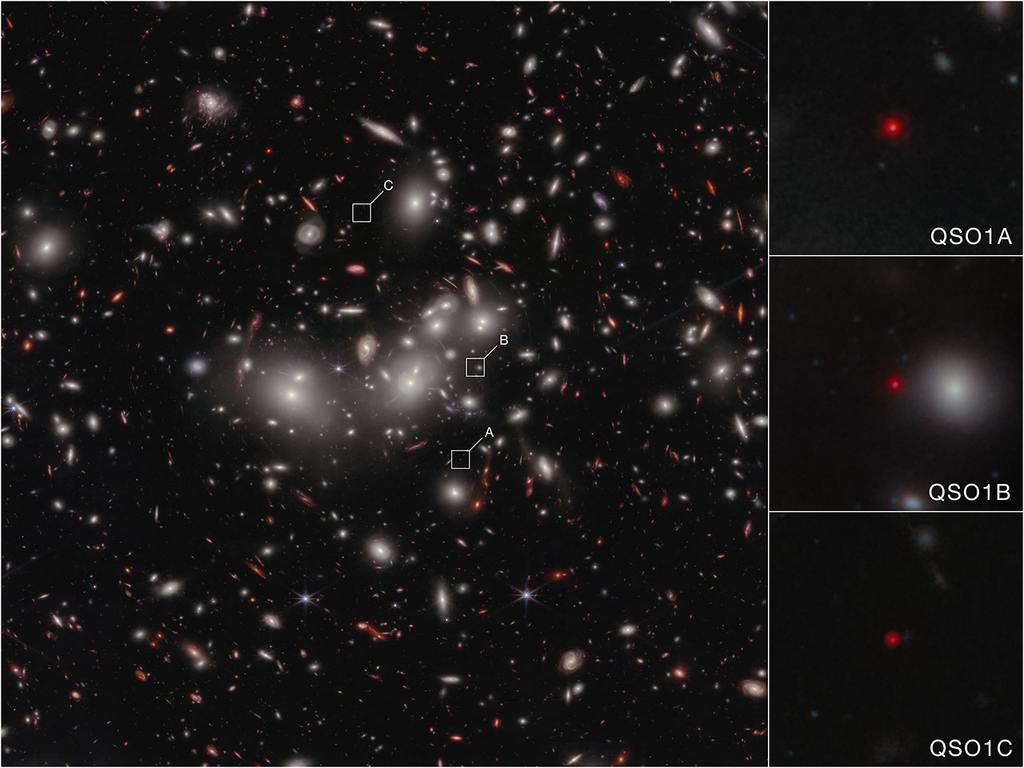
The Little Red Dots earned their moniker due to their distinct appearance in deep-field imaging. Unlike typical galaxies, which exhibit a wide range of shapes and spectral signatures, these objects appear as concentrated, reddish points of light. Data from the JWST’s Near Infrared Camera (NIRCam) suggests they are located at extreme redshifts, corresponding to a time less than two billion years after the Big Bang.
Their physical nature has remained a subject of intense debate. Initial observations showed these objects to be incredibly small, yet possessed of luminosity comparable to much larger, more mature galaxies. Standard models of stellar evolution struggle to explain how such concentrated, high-energy sources could emerge so rapidly after the cosmic dawn. If these objects are indeed galaxies, they appear to have matured far faster than current cosmological theories permit. However, if they are the result of primordial black holes—black holes born from density fluctuations in the early universe rather than the collapse of massive stars—the timeline of the early universe becomes significantly more compatible with observation.
Primordial Black Holes vs. Astrophysical Black Holes
To understand the significance of this hypothesis, one must distinguish between the two primary mechanisms for black hole formation. Astrophysical black holes, which are the most commonly observed type, are the remnants of stellar death. When a massive star exhausts its nuclear fuel, it undergoes a supernova, and its core collapses under its own gravity to form a black hole. This process, by definition, requires the prior existence of stars and the accumulation of heavy elements—components that were not present in the immediate aftermath of the Big Bang.
Primordial black holes, conversely, are hypothesized to have formed during the "inflationary" period, when the universe was expanding at an exponential rate. During this era, quantum fluctuations in the density of the early, hot, and dense "primordial soup" could have been so extreme that certain regions became gravitationally unstable. These regions would have collapsed into black holes long before the first stars ever ignited.
Because they predate stars, primordial black holes would consist primarily of the earliest, lightest elements: hydrogen and helium. The recent study, led by researchers at the Johns Hopkins University (JHU) Department of Physics and Astronomy, focused on a specific object known as Abell 2744-QSO1, which dates back to just 700 million years post-Big Bang. Its spectral composition, which is almost exclusively hydrogen and helium, makes it an ideal candidate for testing the primordial theory.
Chronology of the Discovery and Research
The investigation into the nature of these objects follows a logical progression of astronomical data acquisition:
- 2022–2023: The JWST completes its initial survey cycles, revealing the existence of "Little Red Dots" across various deep-field regions. Astronomers note that these objects are far more luminous and compact than anticipated for their redshift.
- Early 2024: Researchers perform detailed spectral analysis, confirming that these objects lack the "metallicity" (presence of heavy elements) expected in mature galaxies.
- June 2024: The study led by Valerio De Luca and Loris Del Grosso is published in Physical Review Letters. The team models three distinct growth scenarios for Abell 2744-QSO1, concluding that the most statistically likely scenario involves a seed primordial black hole that accreted surrounding primordial gas to reach its current size.
- Current Status: Astronomers are now cross-referencing the findings from QSO1 with over 100 other identified Little Red Dots to determine if a population-wide trend exists.
Scientific Analysis and Theoretical Constraints
The JHU team’s research relies on rigorous mathematical modeling. The primary challenge in confirming the existence of primordial black holes is that they must adhere to strict cosmological constraints. The universe cannot contain an infinite number of these objects without disrupting the cosmic microwave background (CMB) or altering the distribution of dark matter.
"There can only be so many primordial black holes in the universe, for example, and there cannot be too many of them in a given cluster," noted Loris Del Grosso. The team’s model suggests that if a small fraction of the mass of the early universe was converted into primordial black holes, they would naturally act as gravitational "seeds," pulling in surrounding gas. This accretion process would release massive amounts of energy, accounting for the "red" and "luminous" appearance of these dots as seen through the infrared lens of the JWST.
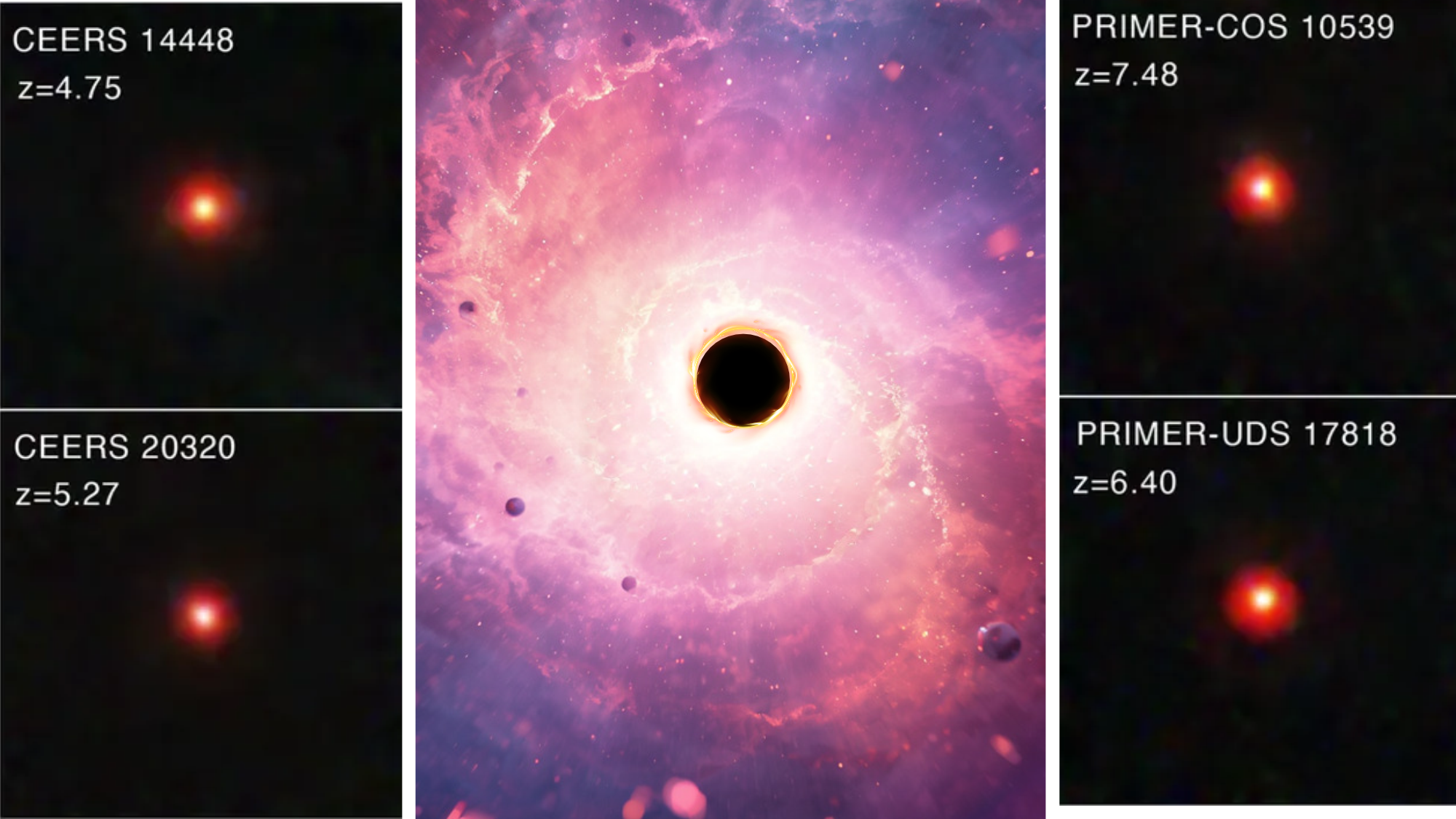
The implication is that these objects are not early-stage galaxies in the traditional sense, but rather "active" black holes that are creating the illusion of a galactic structure through the intense glow of the matter they are consuming.
Official Responses and Academic Context
While the findings have been welcomed as a significant step forward, the scientific community maintains a cautious stance. The existence of primordial black holes has been theorized since the 1970s, notably by Stephen Hawking, but remains unproven.
"A black hole is an object born from the gravitational death of a star. Primordial black holes are a very different story," says Valerio De Luca. "They come from the physics of the early universe that predates the first stars, when the universe was expanding exponentially in time and space."
The JHU team acknowledges that while the primordial black hole model is compelling, they are not yet ruling out other possibilities. Other researchers have suggested that these objects could be extremely dense, compact clusters of stars, or even a new, undocumented class of "heavy" galaxies. The ongoing debate highlights the necessity of further JWST observation cycles to obtain higher-resolution spectral data.
Broader Impact and Future Implications
The confirmation of primordial black holes would constitute a paradigm shift in modern physics. Beyond solving the mystery of the Little Red Dots, such a discovery would provide direct empirical evidence of the conditions during the first fraction of a second after the Big Bang. It would allow physicists to test theories of quantum gravity and inflation that are currently relegated to mathematical models.
Furthermore, if primordial black holes exist, they could account for a portion of the "dark matter" in the universe—a substance that remains one of the greatest mysteries in modern science. Since primordial black holes do not emit light and are massive, they possess the necessary characteristics to be a viable, if partial, candidate for dark matter.
As the JWST continues its mission, the focus will shift toward a census of the remaining Little Red Dots. By examining the distribution, density, and age of these objects, the team aims to establish a statistical probability for the existence of primordial black holes. If even a small percentage of these 100-plus candidates are confirmed to be primordial, the history of the cosmos will need to be rewritten, moving the timeline of structure formation significantly closer to the event of the Big Bang itself.
For now, the Little Red Dots serve as a beacon in the deep sky, signaling that the early universe was far more active, complex, and mysterious than previously imagined. The path from these flickering red points to a fundamental change in our understanding of physics is long, but for the first time, researchers have a concrete mechanism to test, potentially bridging the gap between theoretical cosmology and observable reality.