Astronomers have long grappled with a fundamental cosmic discrepancy: the existence of gargantuan black holes that appear to have matured far too quickly for conventional models of galactic evolution. According to standard astrophysical theory, supermassive black holes—those with masses millions or even billions of times that of our sun—should require billions of years of steady accretion and episodic mergers to reach their immense proportions. However, data returned by the James Webb Space Telescope (JWST) since its 2022 deployment has consistently challenged this timeline, revealing the presence of fully formed supermassive black holes in the universe when it was less than 1 billion years old.
New research, published on October 26 in The Astrophysical Journal, offers a compelling solution to this "early bloomer" paradox. By conducting sophisticated simulations of the high-energy environments present in the primordial cosmos, a research team led by scientists at the University of California, Los Angeles (UCLA), has identified a mechanism driven by chaotic stellar dynamics. The findings suggest that the early universe was not merely a collection of fledgling galaxies, but a violent, high-density environment where frequent stellar collisions served as the crucible for the first generation of massive black hole "seeds."
A Cosmic Crucible: The Mechanics of Stellar Mergers
The researchers focused on the extreme density of star clusters during the first epoch of the universe. In the modern cosmos, such as within the Milky Way, star clusters are relatively stable. However, the early universe was characterized by rapid, chaotic star formation, creating environments where stars were packed significantly closer together than they are today.
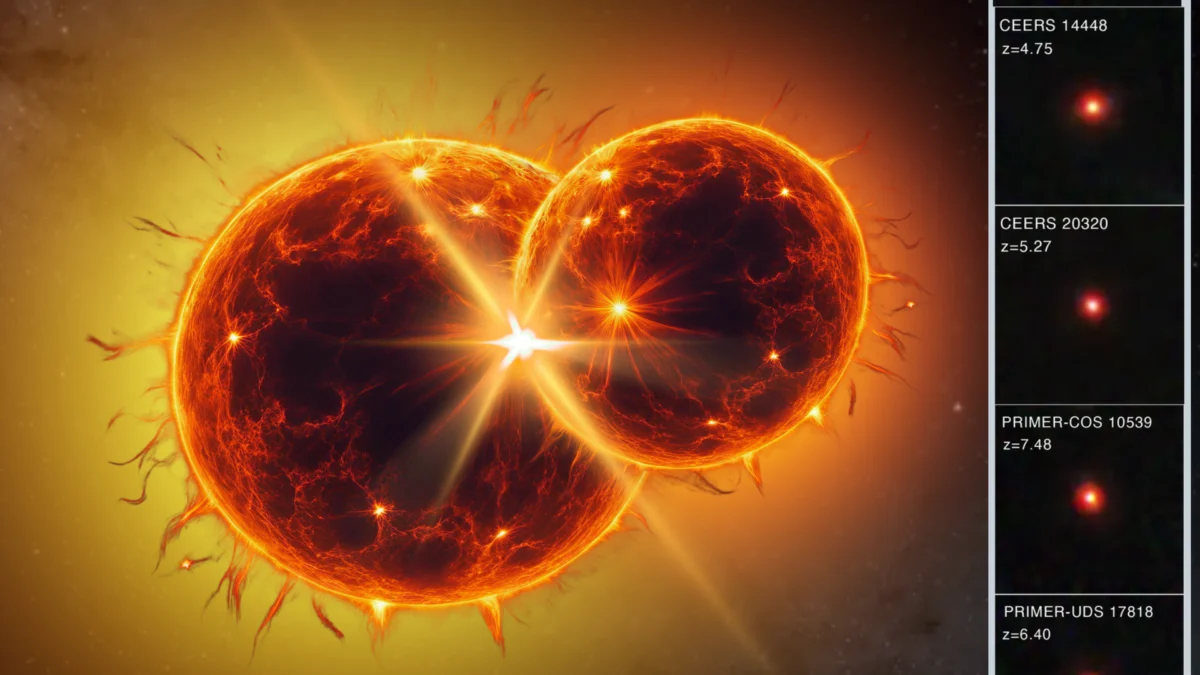
In these densely populated regions, the probability of stellar interaction increases exponentially. The simulations conducted by the UCLA team illustrate two distinct outcomes for these encounters: high-speed, destructive collisions, and low-speed, constructive mergers. While high-velocity impacts often result in the catastrophic destruction of the stars involved, slower, more controlled encounters lead to the coalescence of stellar matter. Over time, these repeated mergers within a cluster can produce a single, gargantuan star—sometimes possessing the total mass of an entire cluster.
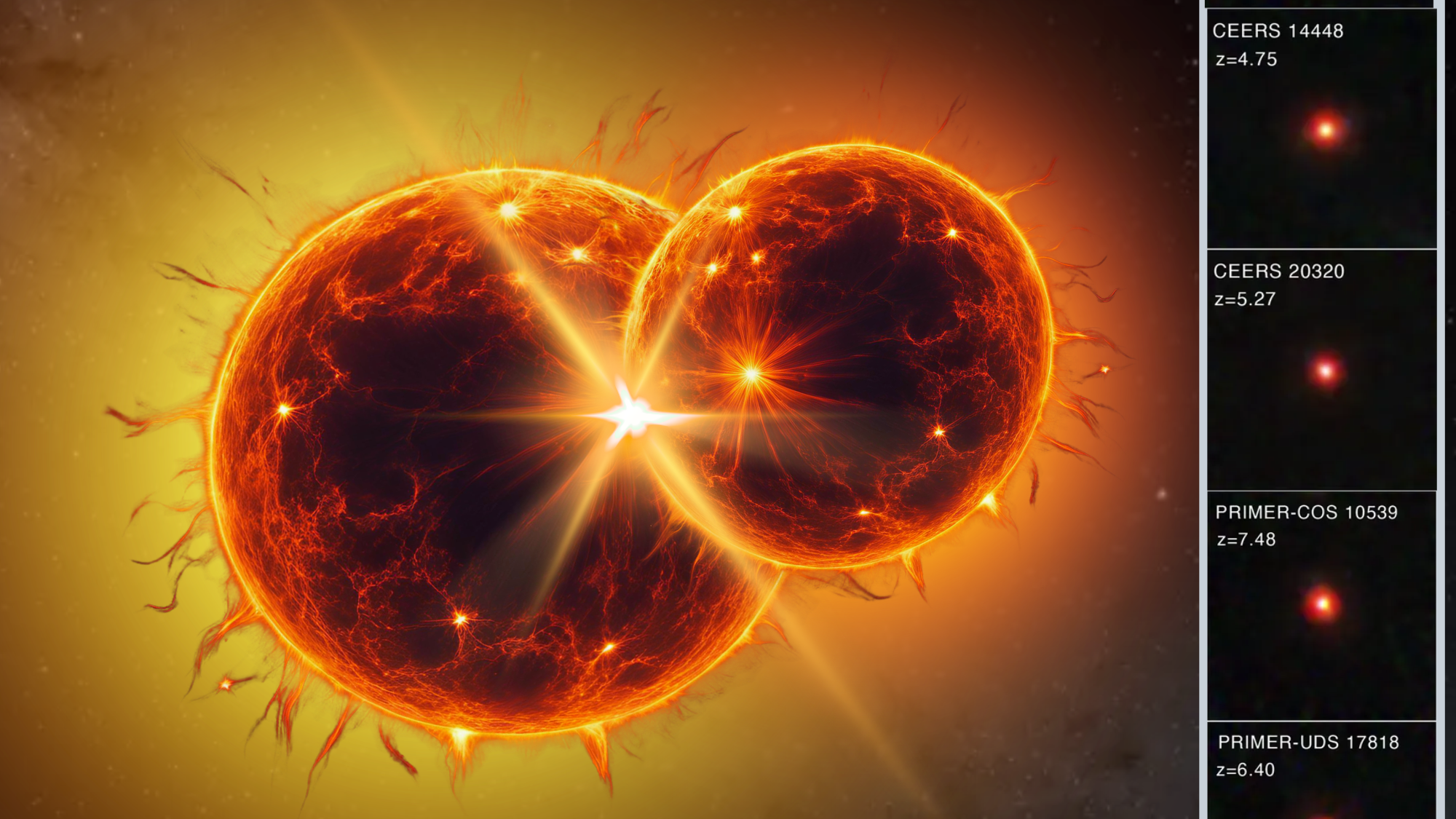
"Perhaps the strangest outcome of our simulations is that stars can merge repeatedly within the cluster until they form one gigantic star with a mass equal to that of an entire cluster," noted Claire Williams, a researcher at UCLA and co-author of the study. "When a star this huge reaches the end of its life, models suggest that it may have no option but to collapse into itself and form a massive black hole."
This process bypasses the traditional bottleneck of black hole growth. Typically, a massive star’s death results in a stellar-mass black hole, ranging from 10 to 100 solar masses. To reach "supermassive" status, these holes must feed on gas and merge with others over vast timescales. By creating an "intermediate-mass" black hole seed—an object ranging from 100 to 100,000 solar masses—from the outset, the universe effectively fast-tracked the creation of the cosmic titans observed by the JWST.
Little Red Dots: The Missing Link in Galactic Evolution
The study also addresses the enigma of "Little Red Dots," a class of compact, highly luminous objects discovered by the JWST that have perplexed the astronomical community. These objects are characterized by their extreme compactness and their distinct reddish hue, which suggests a high concentration of dust or intense accretion activity. Curiously, these objects appear to vanish from the observable record after the universe reached the 2-billion-year mark.
Smadar Naoz, a researcher at UCLA and team member, drew a parallel between the current scientific discourse on these objects and the classic parable of the blind men and the elephant. "Little Red Dots are a hot topic in astronomy. You can compare studies of people trying to understand Little Red Dots to the tale of blind people who are trying to describe an elephant by touching it, and each person describes it differently based on what part they’re touching," Naoz explained. "Our research connects several of those perspectives together and may help us see more of the elephant."
The team’s simulations provide a structural explanation for these dots. They propose that Little Red Dots are essentially the visual signatures of the dense, chaotic star clusters described in their model. In this scenario, the "redness" is a byproduct of the extreme, localized activity of stellar collisions and the subsequent formation of massive, short-lived stars.
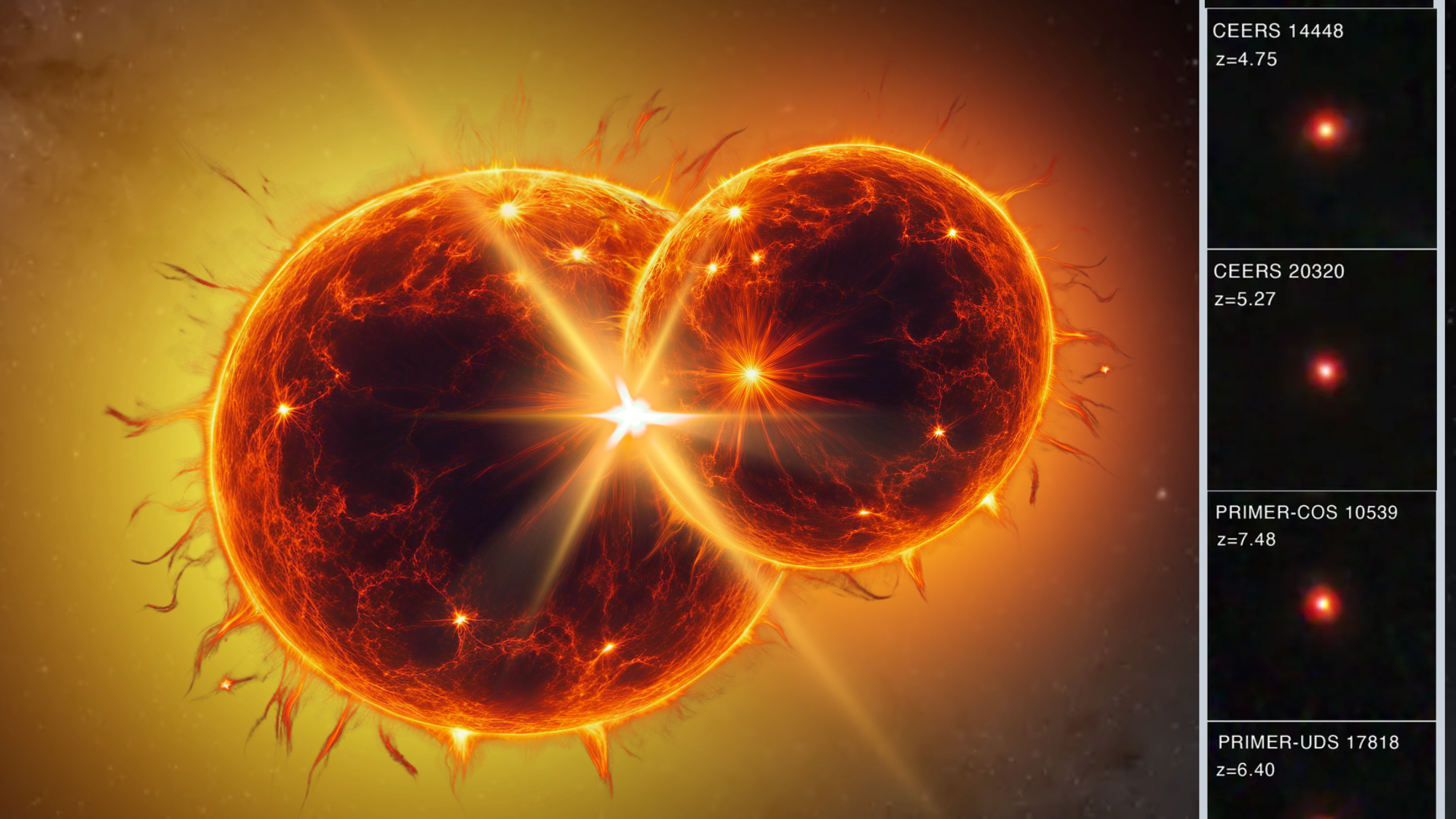
The disappearance of these dots after the first 2 billion years of cosmic history is, according to the researchers, a natural consequence of the universe’s evolution toward equilibrium. As the universe expanded and cooled, the intense, chaotic star-forming regions stabilized. The high-density conditions necessary to drive the continuous, mass-accumulating collisions dissipated, and the "engine" powering these Little Red Dots effectively turned off.
Implications for Modern Cosmology
The findings carry significant weight for our understanding of galactic structure. In the modern universe, the hearts of galaxies are already dominated by mature supermassive black holes. These black holes exert such intense gravitational influence that they accelerate surrounding stars to high velocities. Paradoxically, this creates a defensive mechanism; because stars in the galactic center move at such high speeds, any collisions that do occur are almost always high-energy, destructive events rather than the constructive mergers required to build more mass. This suggests that the "window of opportunity" for creating supermassive black hole seeds was limited to the primordial era, before the formation of these central gravitational anchors.
This research reinforces the concept of "hierarchical assembly," where the universe evolves from chaotic, high-energy states into more ordered, stable structures. By identifying these dense clusters as the natural nurseries for intermediate-mass black holes, the team has provided a logical bridge between the small-scale stellar dynamics of the early universe and the massive, galaxy-governing black holes seen in the contemporary cosmos.
Chronology of Discovery and Context
The discovery follows a rapid succession of JWST observations that have repeatedly forced astrophysicists to reconsider their models. In 2022, the JWST provided the first clear images of high-redshift galaxies, which appeared surprisingly luminous and mature for their age. By 2023, deeper analysis revealed that these galaxies often housed black holes of unexpected scale.
- 2022: Initial JWST deep-field images reveal galaxies existing at cosmic dawn (within 500 million years of the Big Bang) that are brighter and more massive than predicted.
- 2023: Spectroscopic analysis of "Little Red Dots" indicates that these objects contain active galactic nuclei, implying the presence of rapidly growing black holes.
- 2024: The UCLA study provides the first comprehensive numerical simulation that links the birth of these intermediate-mass black hole seeds directly to the observed characteristics of the Little Red Dots.
Broader Scientific Impact
The implications of this research extend beyond black hole formation; it provides a new diagnostic tool for interpreting the data streaming from the JWST. If the Little Red Dots are indeed markers of these primordial clusters, then their distribution and frequency in the early universe can serve as a map for where the first supermassive black holes were born.

Furthermore, this study highlights the importance of multi-scale modeling in astrophysics. By simulating individual stellar encounters and scaling them to the size of galactic clusters, the team has bridged a gap that has existed for decades. As the JWST continues its mission, providing higher-resolution data on the furthest reaches of the observable universe, these models will be put to the test. If future observations reveal evidence of the specific chemical signatures or structural patterns predicted by the "repeated merger" theory, it could lead to a paradigm shift in how we define the life cycle of galaxies.
The research suggests that the universe was born into a state of structural "ferment." Far from being a quiet, empty void, the early cosmos was a violent nursery. The transition from these chaotic, collision-prone environments to the serene, orderly galaxies of the present day represents one of the most critical transformations in natural history. Understanding this process does not just solve the mystery of the Little Red Dots or the size of black holes; it tells the story of how the universe grew up, shedding its chaotic infancy to become the vast, complex structure we observe today.