

Artificial intelligence laboratory Anthropic has officially announced the rollout of invisible watermarking technology across text generated by its family of Claude AI models. This strategic move represents a significant milestone in the broader technology sector’s ongoing efforts to comply with stringent new European Union regulatory frameworks that mandate the machine-readable identification of synthetic content. While designed with European compliance in mind, Anthropic has confirmed that these robust watermarking protocols will be applied globally across all supported versions of Claude, establishing a new operational benchmark for generative artificial intelligence providers worldwide.
The implementation of this technology highlights a critical turning point for the industry. As synthetic media becomes increasingly sophisticated, distinguishing between human-authored materials and machine-generated data has transformed from a technical novelty into a pressing legal and societal necessity. Anthropic’s adoption of advanced text watermarking underscores the rapid evolution of governance in the digital space, driven largely by landmark legislation such as the EU AI Act.
Technical Foundations: How SynthID-Text Operates
To achieve invisible watermarking for textual outputs, Anthropic has integrated a specialized version of SynthID-Text, an open-source watermarking framework originally developed by Google DeepMind. Unlike legacy methods that rely on visible disclaimers, metadata tags, or anomalous hidden characters—which can be easily stripped or corrupted—SynthID-Text operates at the architectural level of the large language model (LLM).
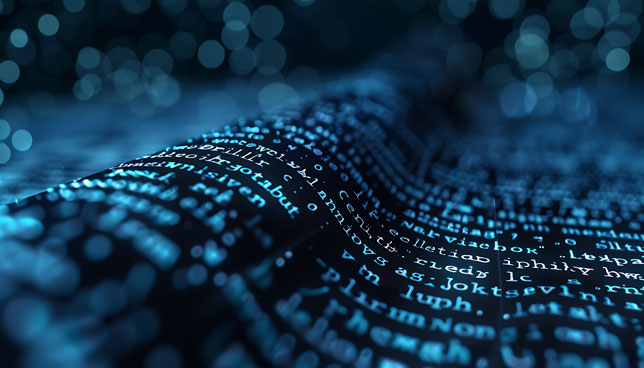
When an LLM generates a response, it evaluates multiple statistically plausible options for the next token, or word fragment, in a sequence. The watermarking system subtly and dynamically influences these choices. By introducing a complex, mathematically detectable statistical pattern across the generated tokens, the system embeds an invisible signature. Crucially, this process is engineered to preserve the overall semantic meaning, tone, readability, and factual accuracy of the text.
Anthropic’s internal testing and implementation metrics indicate that this sophisticated watermarking process has zero practical impact on the latency, cost, or quality of Claude’s outputs. Users experience the same functional performance, while platforms gain the underlying capability to identify the machine-generated origin of the text.
In addition to textual watermarking, Anthropic has addressed multi-modal outputs by updating its handling of images processed or generated by Claude. For image files, the company has adopted the Coalition for Content Provenance and Authenticity (C2PA) standard. This open technical standard allows cryptographic provenance data to be seamlessly attached to supported image files, ensuring that visual media carries a verifiable trail of its creation and editing history.
Regulatory Catalysts: The European Union Artificial Intelligence Act
The primary catalyst behind Anthropic’s swift deployment of these identification measures is the European Union’s landmark Artificial Intelligence Act, a sweeping piece of legislation designed to regulate AI systems according to their assessed level of risk.

Specifically, Article 50 of the EU AI Act imposes strict transparency obligations on providers of artificial intelligence systems that generate synthetic audio, images, video, or text. Under these provisions, developers are legally required to ensure that their artificial outputs are clearly marked in a machine-readable format. Furthermore, these outputs must be readily detectable as artificially generated or manipulated media.
Although the legislation originates from the European Union, global technology firms face immense logistical and economic incentives to apply these compliance standards universally. Maintaining separate regional versions of complex AI models is inefficient and technically burdensome. Consequently, Anthropic’s decision to deploy SynthID-Text globally reflects a broader trend: European regulatory standards are rapidly becoming the de facto global baseline for AI governance, compliance, and product development.
The Unique Complexities of Text Watermarking
While watermarking visual and auditory media has become a relatively established practice within the tech industry, applying similar techniques to text presents distinct, formidable technical challenges. Images and videos possess rich multidimensional data structures where subtle alterations can be hidden without altering human perception. Text, by contrast, is discrete, highly compressible, and subject to constant human manipulation.
Anthropic has been transparent about the inherent limitations of its new text watermarking system. Company leadership has emphasized that the SynthID-Text implementation is not intended to serve as a definitive, infallible proof of authorship. Several critical constraints define the technology’s current capabilities:

- Susceptibility to Editing: While the watermark is engineered to survive standard user behaviors such as copying, pasting, and minor grammatical edits, extensive rewriting, structural reorganization, or paraphrasing can effectively degrade or erase the statistical signature.
- Cross-Document Contamination: Because users frequently integrate AI-generated insights into larger, collaborative documents, quoted passages carrying the watermark could inadvertently transfer the signature into otherwise human-authored files.
- The Negative Inference Trap: Anthropic explicitly warns that the absence of a detectable watermark must never be interpreted as definitive proof that a piece of text was written by a human. Failure to detect a signature could simply be the result of heavy editing or processing limitations.
These technical realities have complicated the reception of the update among certain segments of Claude’s user base. Professionals who utilize the AI model for auxiliary tasks—such as copyediting, language translation, document formatting, or summarizing human-written notes—have expressed apprehension regarding how watermarked outputs might be misconstrued by automated detectors, academic institutions, or employers.
In response to these concerns, Anthropic has clarified that the presence of a watermark merely indicates that the text was processed or generated with the assistance of Claude, rather than certifying that the AI was solely responsible for the intellectual creation or authorship of the underlying ideas.
Industry-Wide Implications and Future Outlook
Anthropic’s integration of invisible text watermarks marks a major inflection point for the generative AI industry. As regulatory bodies across the globe monitor the implementation of the EU AI Act, other major market players—including OpenAI, Microsoft, Google, and Meta—are under mounting pressure to adopt standardized transparency mechanisms for their own proprietary models.
The broader implications of this shift extend across multiple professional sectors:

Academia and Publishing
Educational institutions and publishing houses, which have struggled to manage the influx of uncredited AI-generated essays, articles, and research papers, view watermarking as a potential countermeasure. However, the acknowledged fragility of text watermarks against heavy editing suggests that institutions will still need to rely on holistic evaluation methods rather than automated detection tools alone.
Legal and Compliance Sectors
Legal frameworks governing intellectual property, defamation, and corporate accountability are grappling with the proliferation of synthetic media. Verifiable provenance standards, such as C2PA for images and robust statistical watermarking for text, provide a necessary evidentiary foundation for tracking the lineage of digital content in legal proceedings.
Public Trust and Misinformation
In an era marked by concerns over deepfakes, automated disinformation campaigns, and synthetic propaganda, the ability to trace the origin of digital content is vital for safeguarding public discourse. While watermarks do not stop bad actors from attempting to generate deceptive content, they provide platforms, researchers, and journalists with tools to audit and verify the provenance of digital information at scale.
As generative AI continues its rapid integration into the daily workflows of millions of individuals and enterprises, the boundary between human and machine creation will remain a focal point of technological and regulatory debate. Anthropic’s deployment of invisible watermarking serves as an early blueprint for how the artificial intelligence industry intends to navigate the complex intersection of global innovation, user utility, and regulatory accountability in the years ahead.








Leave a Reply