Apple Inc. concluded its highly anticipated autumn hardware showcase with the debut of the iPhone Duo, marking the technology giant’s official entry into the rapidly expanding foldable smartphone market. Years of rigorous research, speculative industry reports, and shifting consumer preferences have finally culminated in a commercial device designed to challenge established competitors like Samsung and Google. Positioned at the pinnacle of Apple’s mobile portfolio, the iPhone Duo combines the portability of a traditional smartphone with the expansive screen estate of a compact tablet, bringing a fresh industrial design philosophy to a segment that has matured significantly over the past decade.
The announcement, delivered as the classic "One more thing" conclusion to the event, introduces a device that is simultaneously the most sophisticated and the most expensive smartphone Apple has ever produced. Starting at $1,999 for the baseline 256GB storage configuration, the iPhone Duo aligns closely with the prevailing market rates for high-end horizontal foldables, entering direct competition with devices such as the Samsung Galaxy Z Fold 8 and the Google Pixel 11 Pro Fold. Preorders are scheduled to commence on October 16, with official retail availability and shipping slated for October 23.
Chronology of Development and Industry Context
Apple’s journey toward a foldable device has been a subject of intense industry speculation since foldable screens first appeared on the commercial market in 2019. Initial market reactions to early foldable designs were mixed, plagued by structural durability concerns, prominent display creases, and awkward aspect ratios that compromised standard application compatibility.
Internal development reports indicate that Apple initiated serious prototyping and engineering work on foldable form factors around 2023, choosing to observe the market’s evolution rather than rushing out an unrefined first-generation product. While competitors like Samsung iterated through successive generations of the Galaxy Z Fold series—gradually refining hinge mechanisms and thinning out chassis designs—Apple focused heavily on materials science, display lamination, and software adaptation. By waiting until late 2026 to enter the sector, Apple has sought to bypass the foundational growing pains that historically hindered early foldable adoption, introducing an ecosystem-ready device optimized for durability and seamless multitasking.
Industrial Design and Display Engineering
The hardware architecture of the iPhone Duo breaks away from the square-aspect-ratio foldables that Apple explicitly critiqued during its keynote presentation. Company executives argued that square inner displays force single applications into awkward layouts and generate massive letterboxing when playing standard widescreen video content.
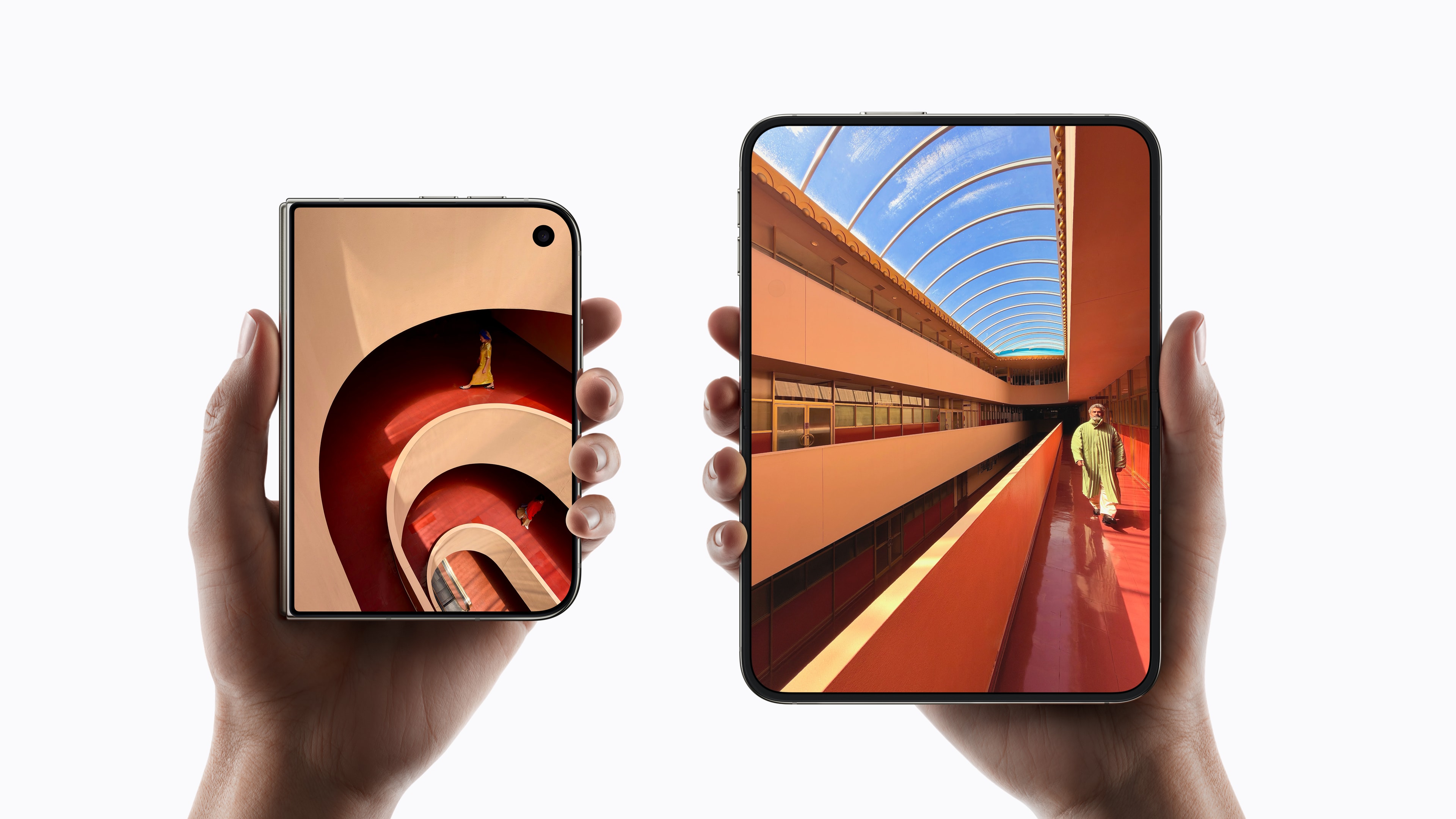
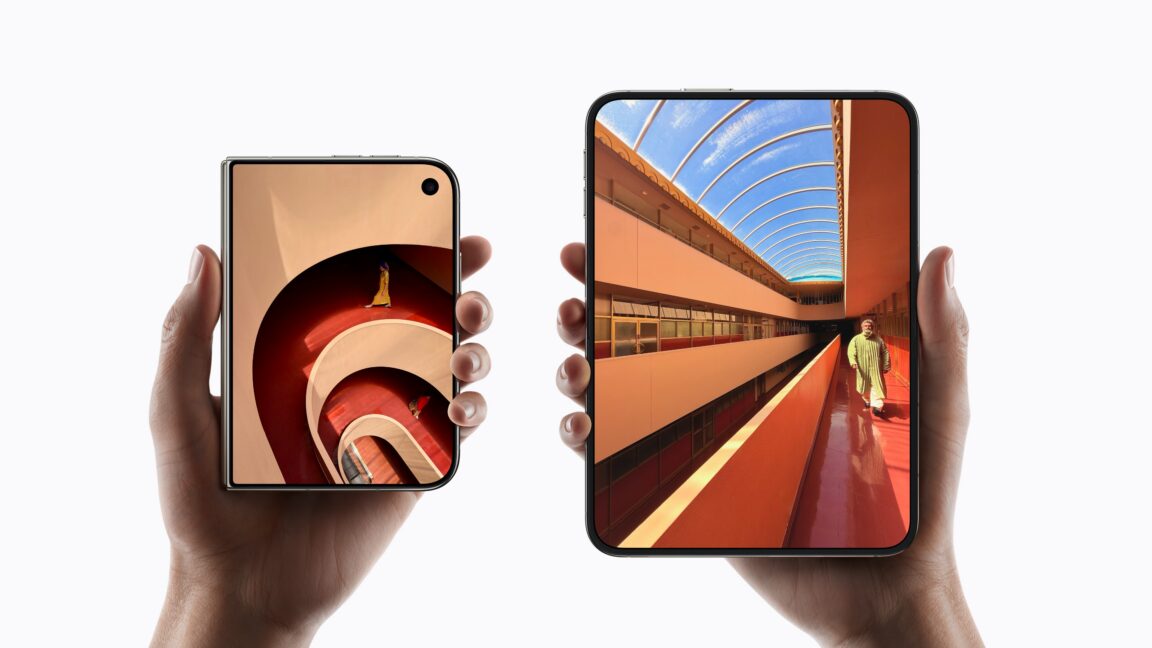
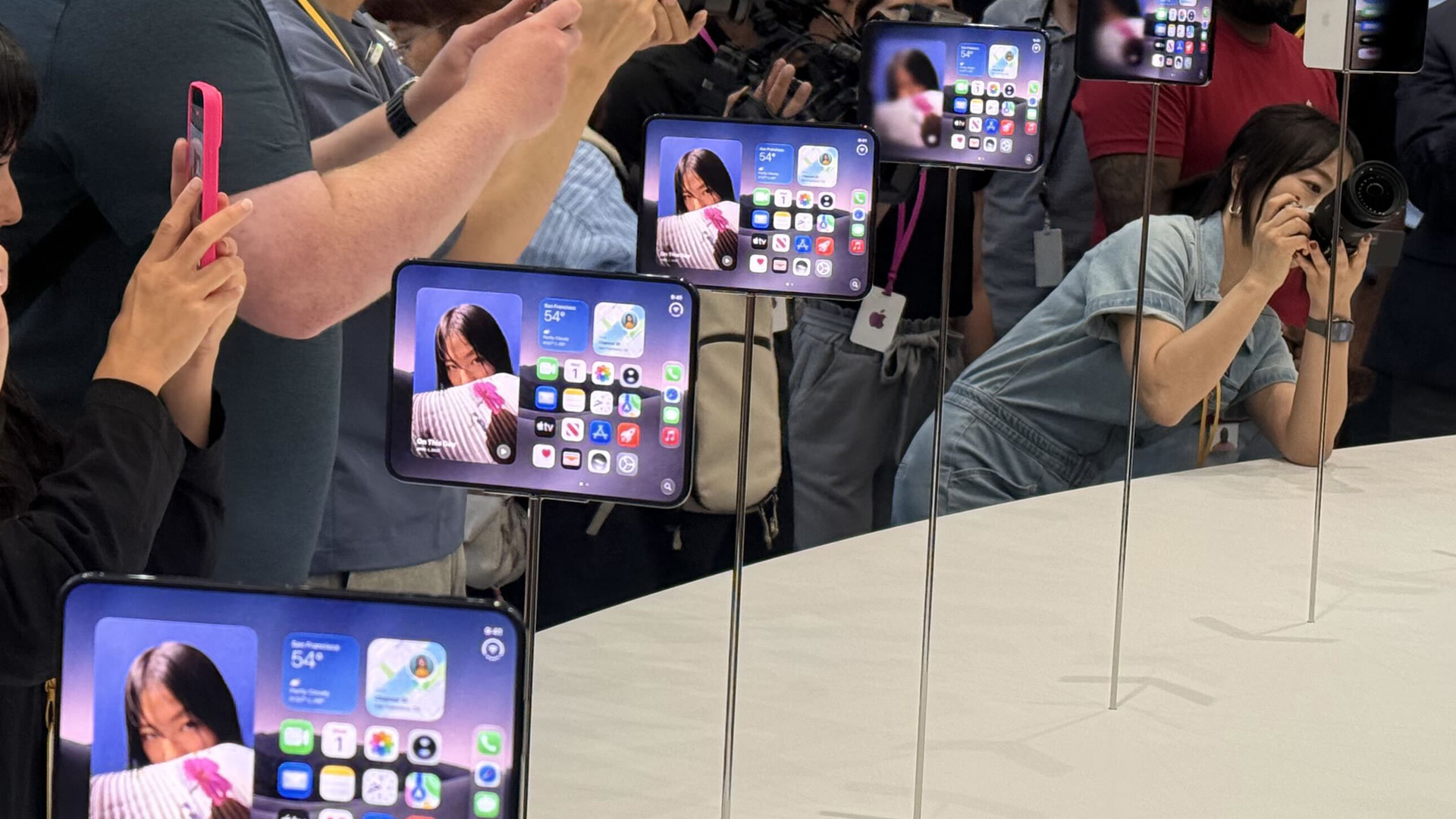
Instead, the iPhone Duo adopts a passport-like vertical form factor, featuring a uniform 1:1.4 aspect ratio whether the device is opened or closed. The exterior features a 5.4-inch outer screen engineered with an asymmetric design—incorporating angular, pointy corners along the hinge side and smoothly rounded contours on the outer edge, an aesthetic choice Apple describes as an invitation for users to unfold the device.
When opened, the internal workspace expands into a 7.6-inch Super Retina XDR foldable panel, offering an ultra-wide viewing area slightly broader than a conventional 4:3 monitor. To address the historical Achilles’ heel of foldable technology—the central crease—Apple has implemented a multi-layer composite structure. The display utilizes layers of flexible ultra-thin glass backed by a titanium support base, sealed with a custom high-stiffness polymer top layer treated with a nano-texture finish to minimize glare and enhance legibility under intense ambient lighting. Apple asserts that this proprietary lamination process prevents the formation of a permanent display crease over extended periods of daily opening and closing.
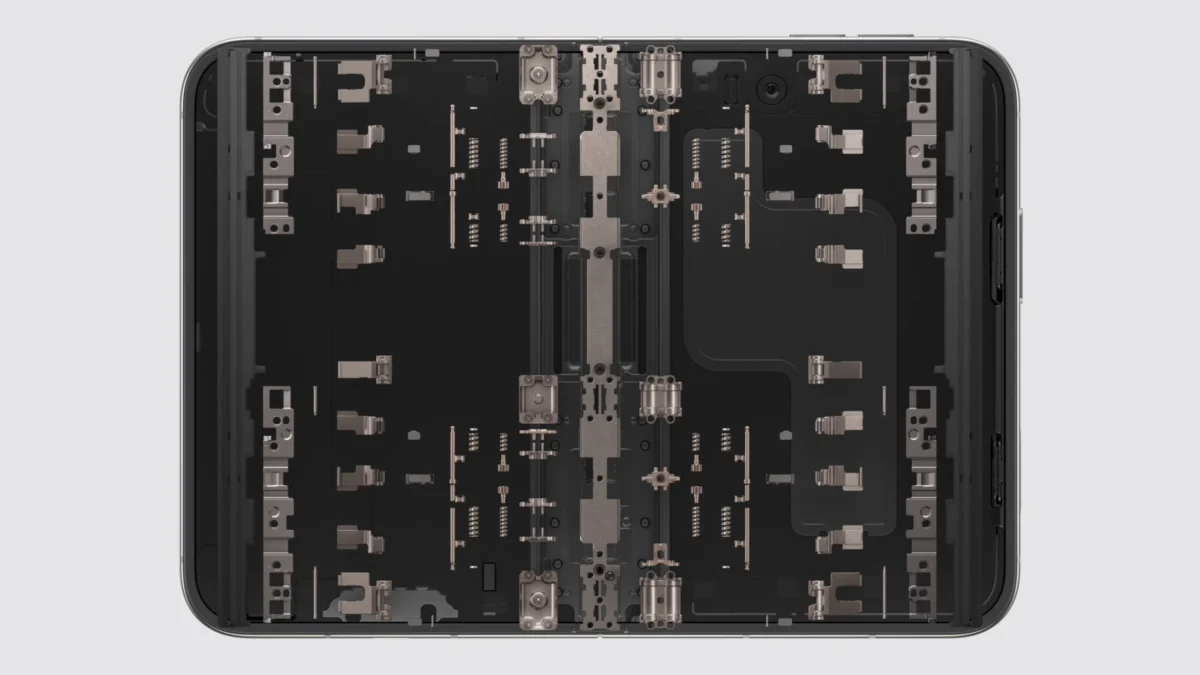
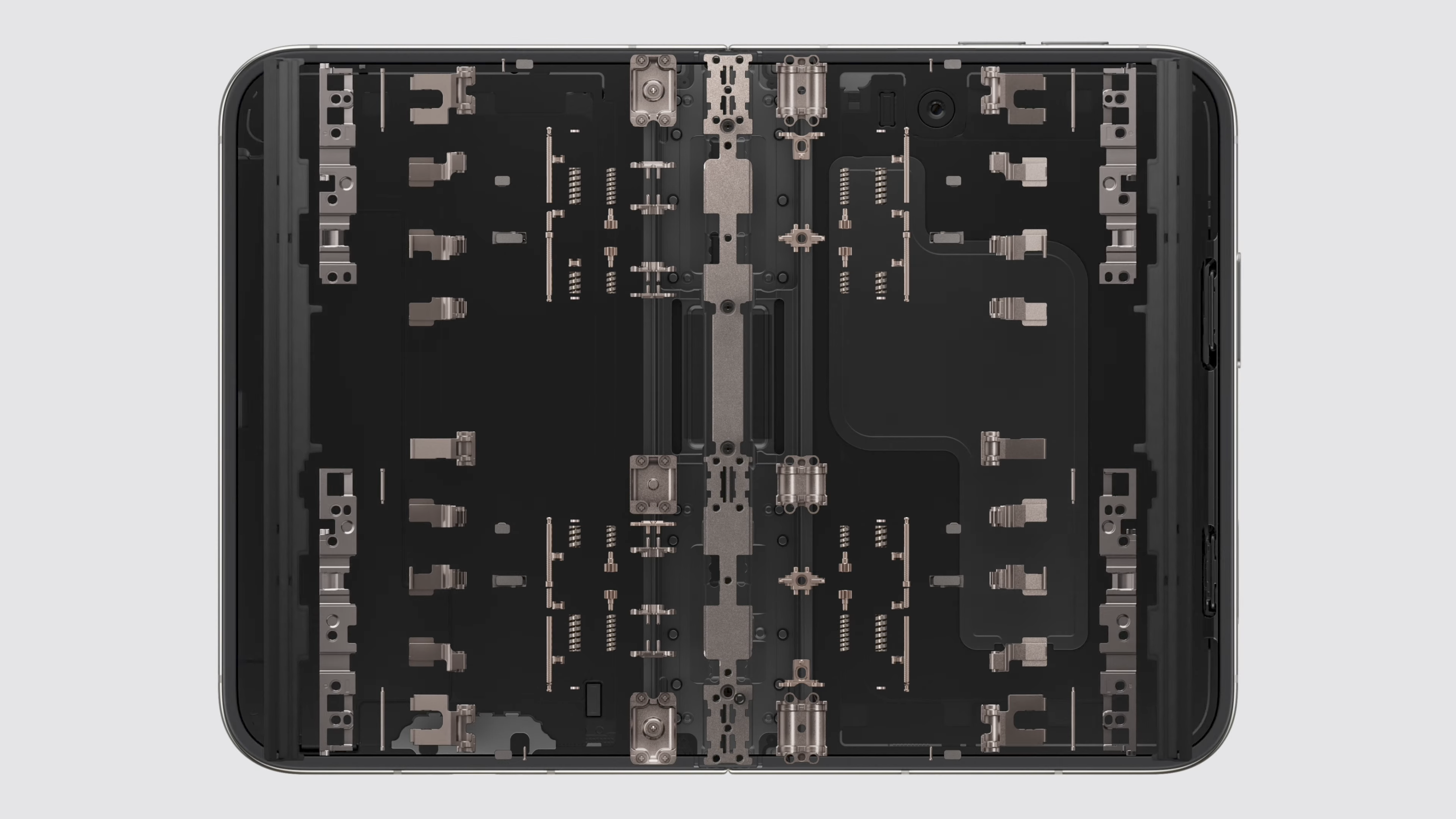
The chassis itself is constructed from aerospace-grade titanium infused with internal ceramic fibers to maximize structural integrity without introducing prohibitive weight. The complex internal hinge mechanism comprises more than 100 precision-engineered components utilizing custom variable torque to ensure smooth resistance throughout its range of motion. Embedded neodymium magnets along the frame facilitate a secure, satisfying snap when the device is folded shut. Furthermore, the iPhone Duo carries an IP68 certification for dust and water resistance, matching the durability standards of non-foldable flagship smartphones.
Performance, Optics, and Ecosystem Integration
Beneath the exterior, the iPhone Duo is powered by Apple’s high-performance A20 Pro silicon, ensuring that the demanding computational requirements of dual-screen multitasking and advanced neural processing are met efficiently. Despite powering two distinct displays, energy management optimizations enable substantial battery longevity, with Apple rating the inner screen for up to 31 hours of continuous video playback and the exterior display for up to 44 hours. Under mixed daily usage scenarios involving frequent transitions between both screens, users can anticipate approximately 24 hours of total operation on a single charge.
Camera capabilities on the iPhone Duo reflect the physical constraints inherent to ultra-thin foldable architectures. The rear camera module features a dual-sensor array comprising a primary 48-megapixel sensor—omitting the adjustable aperture found on the flat iPhone 18 Pro models—paired with a 12-megapixel sensor offering a 2x telephoto optical zoom. For biometric authentication and video calling, the device includes a 12-megapixel front-facing camera on the outer cover display alongside an advanced under-display camera embedded beneath the primary 7.6-inch folding panel, ensuring an uninterrupted viewing experience during media consumption.
To maximize the utility of the expanded canvas, Apple has substantially redesigned key user interface elements within iOS. System features such as the home screen dock and status bar have been repositioned to the right edge of the screen to improve thumb accessibility during one-handed use when the device is open. Applications can dynamically shift interface controls and action buttons to the right, preserving vertical space for core content. Additionally, the operating system introduces advanced split-screen multitasking controls and adaptive keyboard layouts that respond dynamically to the physical angle of the hinge. Apple has also confirmed that support for the Apple Pencil will be introduced via a software update later in the year, extending productivity capabilities to both inner and outer screens.
Market Implications and Pricing Strategy
Pricing remains a critical factor in determining the market trajectory of the iPhone Duo. While the baseline 256GB model starts at $1,999, costs escalate significantly for higher storage capacities, with the 512GB variant priced at $2,199 and the maximum 2TB configuration reaching $3,199.
Industry analysts observe that while these price points place the iPhone Duo firmly at the upper echelon of consumer electronics, they are competitively aligned with existing high-end foldable offerings. By pricing the device close to established rivals like Samsung’s Galaxy Z Fold 8 and Google’s Pixel 11 Pro Fold, Apple has removed price as an immediate barrier for consumers already invested in the iOS ecosystem who were previously hesitant to switch platforms to experience foldable technology.
Although the iPhone Duo is unlikely to cannibalize sales of standard entry-level or flagship slab smartphones due to its luxury pricing tier, its arrival legitimizes the foldable category for millions of mainstream consumers. By establishing a rigorous engineering benchmark for durability, display clarity, and software integration, Apple’s debut device is poised to accelerate the broader adoption of foldable form factors across the global mobile industry.