
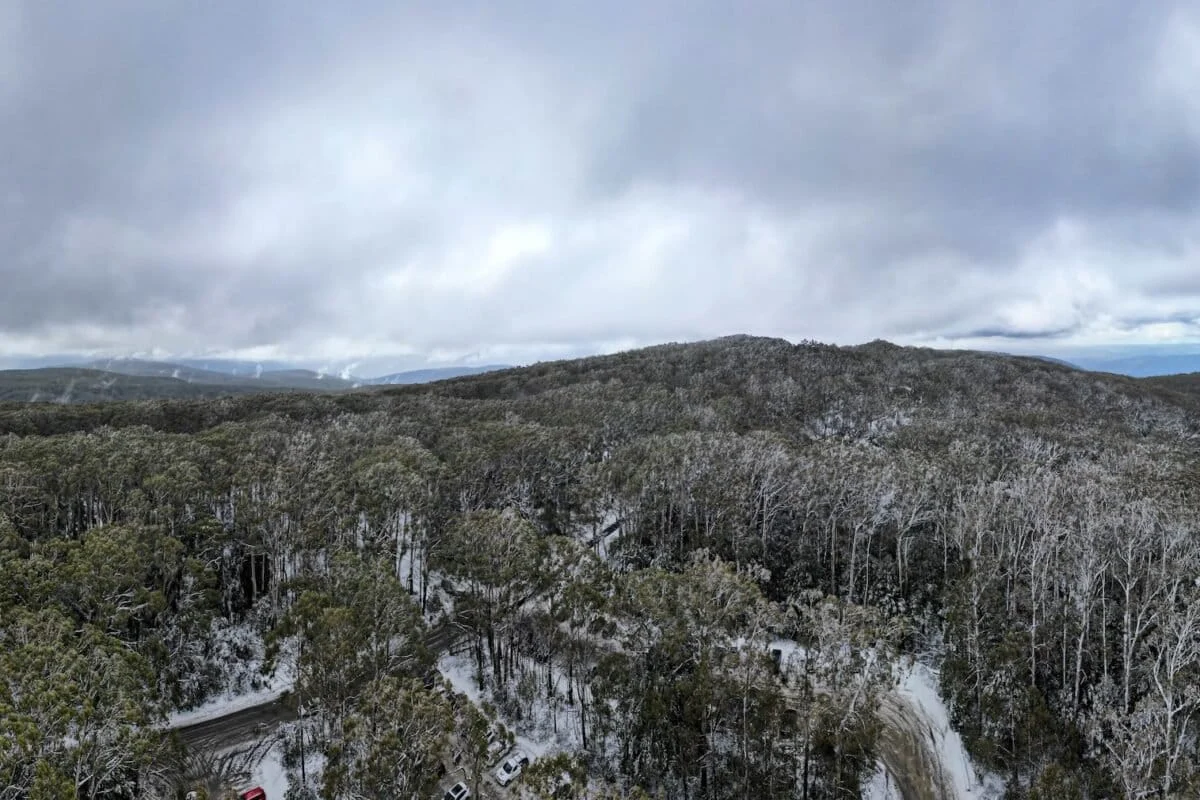
The Australian federal government has formally listed the alpine ash forests of mainland Australia as an endangered ecological community under national environmental law. This landmark decision, announced by the Department of Climate Change, Energy, the Environment and Water (DCCEEW), follows years of advocacy from conservationists and scientific warnings regarding the increasing frequency and severity of bushfires fueled by a changing climate. While the listing provides a new layer of legal protection for these iconic high-altitude ecosystems, it has sparked a sharp divide between environmental scientists and the timber industry, highlighting the complex tension between conservation efforts and commercial forestry interests in the nation’s southeastern highlands.
The alpine ash (Eucalyptus delegatensis), a majestic and tall eucalypt known for its menthol-scented foliage and straight, pale trunks, serves as the cornerstone of this ecological community. These forests are primarily located on the high-country slopes of Victoria, New South Wales, and the Australian Capital Territory, typically thriving at elevations between 900 and 1,500 meters (approximately 3,000 to 5,000 feet). Beyond their biological importance, these regions hold profound cultural significance, sitting within the traditional lands of numerous First Nations peoples who have maintained spiritual and physical connections to the high country for millennia.
A Biological Crisis: The Vulnerability of the Alpine Ash
Unlike many other Australian eucalyptus species that possess the ability to resprout from epicormic buds under their bark or from lignotubers following a fire, the alpine ash is an "obligate seeder." This means that if a fire is intense enough to kill the canopy of a mature tree, the tree itself dies, and the survival of the species depends entirely on the germination of seeds stored in the canopy. For these seeds to be viable and for the forest to successfully regenerate, the trees must reach reproductive maturity, a process that takes approximately 20 years.
This biological trait makes the alpine ash uniquely vulnerable to short-interval fires. If a second fire occurs before the regrowth from a previous fire has reached its 20-year maturity mark, the seed bank is exhausted, and the forest cannot naturally recover. According to a spokesperson for the DCCEEW, the National Threatened Species Scientific Committee conducted a rigorous assessment concluding that more than half of the alpine ash ecosystem is now "structurally immature." This demographic shift is a direct result of a compressed fire cycle that has seen massive blazes tear through the same regions multiple times in the last two decades.
The ecological stakes extend far beyond the trees themselves. Alpine ash forests support a complex web of biodiversity, including the superb lyrebird and the spotted-tailed quoll. Perhaps most critically, the hollows found in old-growth alpine ash trees provide essential nesting sites for the critically endangered Leadbeater’s possum (Gymnobelideus leadbeateri). As these old-growth stands vanish, the habitat for these specialized species shrinks, pushing them closer to the brink of extinction.
Chronology of Decline: From the 2003 Fires to the Black Summer
The path to this endangered listing is paved with twenty years of unprecedented fire activity in the Australian Alps. Historically, alpine ash forests were subject to major fires only once every 50 to 100 years, a frequency that allowed the forests ample time to mature and replenish their seed stocks. However, the 21st century has seen a dramatic acceleration of this cycle.
In 2003, massive fires swept through the Victorian Alps and the Snowy Mountains, incinerating hundreds of thousands of hectares. This was followed by significant fire events in 2006-2007, 2009 (Black Saturday), and 2013. The cumulative impact reached a breaking point during the 2019-2020 "Black Summer" bushfires. During this catastrophic season, more than 80,000 hectares (nearly 200,000 acres) of alpine ash forest were severely impacted. In many areas, this fire burned through regrowth that had only just begun to recover from the 2003 or 2006 blazes, effectively sterilizing the landscape of its natural regenerative capacity.
The DCCEEW spokesperson emphasized that the decision to list the community was not based on a total loss of geographic extent—which has remained relatively stable—but rather on a "severe and ongoing decline in condition and function." The committee’s assessment highlighted that while the trees may still stand in some form, the ecosystem’s ability to function as a self-sustaining habitat has been compromised by the loss of mature, seed-bearing individuals.
Industry Pushback and Scientific Consensus
The listing has not been met with universal approval. Forestry Australia, a non-profit association representing forest managers and professionals, expressed concern over the decision, labeling it an "unprecedented step." The organization argued that because a significant portion of the alpine ash forest is already located on public land managed for conservation, the listing might create unnecessary administrative hurdles without addressing the primary threat: fire management.
Similarly, the Australian Forest Products Association (AFPA) challenged the scientific basis of the listing. The AFPA pointed out that the geographic footprint of alpine ash forests has decreased by only an estimated 5% since European settlement in 1750. From their perspective, the ecosystem remains widespread and does not fit the traditional definition of "endangered," which usually implies a massive loss of area.

However, forest and fire scientists writing in The Conversation and other academic forums have countered these claims, arguing that "extent" is a poor metric for health in an era of climate-driven collapse. They maintain that the alpine ash is facing an "existential threat" because the climate has shifted faster than the trees can adapt. The scientists assert that the listing serves as a "clear warning" that even widespread, iconic species are no longer safe in the face of escalating global temperatures and more frequent dry-lightning events.
Legal Implications and the "Net Gain" Requirement
The inclusion of alpine ash forests as an endangered ecological community under the Environment Protection and Biodiversity Conservation (EPBC) Act carries significant legal weight. Under the new regulations, any proposed activity that may have a significant impact on these forests must undergo a more rigorous federal assessment process.
Proponents of development, infrastructure, or intensive resource extraction within these zones will now be required to demonstrate how they will fully avoid impacts. If damage is unavoidable, they must prove a "net gain" for the environment—a high bar that requires the ecological benefits of a project’s offsets to outweigh the localized destruction of the forest.
The government has opted not to mandate a formal "recovery plan" at this stage, choosing instead to rely on a comprehensive "Conservation Advice" document. This document provides a strategic framework for land managers, emphasizing the protection of remaining old-growth stands and the implementation of aggressive fire-mitigation strategies for vulnerable regrowth areas. This includes targeted seed collection and aerial sowing programs—measures that are increasingly necessary as natural regeneration fails.
Analysis: The Broader Impact on Australian Conservation
The listing of the alpine ash marks a significant shift in Australian environmental policy. It represents a move away from protecting only "rare" or "localized" species toward protecting widespread ecosystems that are being hollowed out by systemic climate pressures. This sets a precedent for how other broad-acre ecosystems, such as the Great Barrier Reef or the sprawling kelp forests of the southern coast, might be managed as they face similar functional declines.
From a practical standpoint, the listing will likely increase the costs and complexity of managing high-country lands. It may also lead to more friction between state-level forestry agencies and federal environmental regulators. In Victoria, where native forest logging has recently been phased out, the listing provides a secondary layer of protection against future policy reversals. In New South Wales, the implications for the timber industry may be more immediate, potentially restricting access to certain coupes that were previously slated for harvest.
Furthermore, the decision underscores the urgent need for a national strategy on fire management in the age of climate change. With the "fire window" expanding and the interval between fires shrinking, the traditional "wait and see" approach to forest regeneration is no longer viable. The government’s focus on "condition and function" suggests that future conservation efforts will need to be more interventionist, involving active restoration and perhaps even the assisted migration of species to more stable climates.
Looking Ahead: A Forest in Flux
The future of the alpine ash remains uncertain. While the endangered listing provides the legal tools to prevent further human-driven degradation, it cannot, by itself, stop the lightning strikes or the heatwaves that pose the greatest risk to the trees. The high country is warming at a rate faster than the global average, and the drying of the forest floor makes these ecosystems increasingly flammable.
For the First Nations communities who have long stewarded these lands, the listing is a recognition of the landscape’s fragility and its intrinsic value. For the scientific community, it is a call to action to find new ways to bolster the resilience of these forests. And for the timber industry, it is a signal that the "business as usual" approach to high-country resources is rapidly coming to an end.
As the Australian government moves forward with its Conservation Advice, the focus will turn to whether these protections can be translated into on-the-ground results. The survival of the alpine ash, the Leadbeater’s possum, and the unique biodiversity of the Australian Alps now depends on a delicate balance of legal protection, active management, and global efforts to mitigate the climate crisis that threatens to burn these forests out of existence.










Leave a Reply