
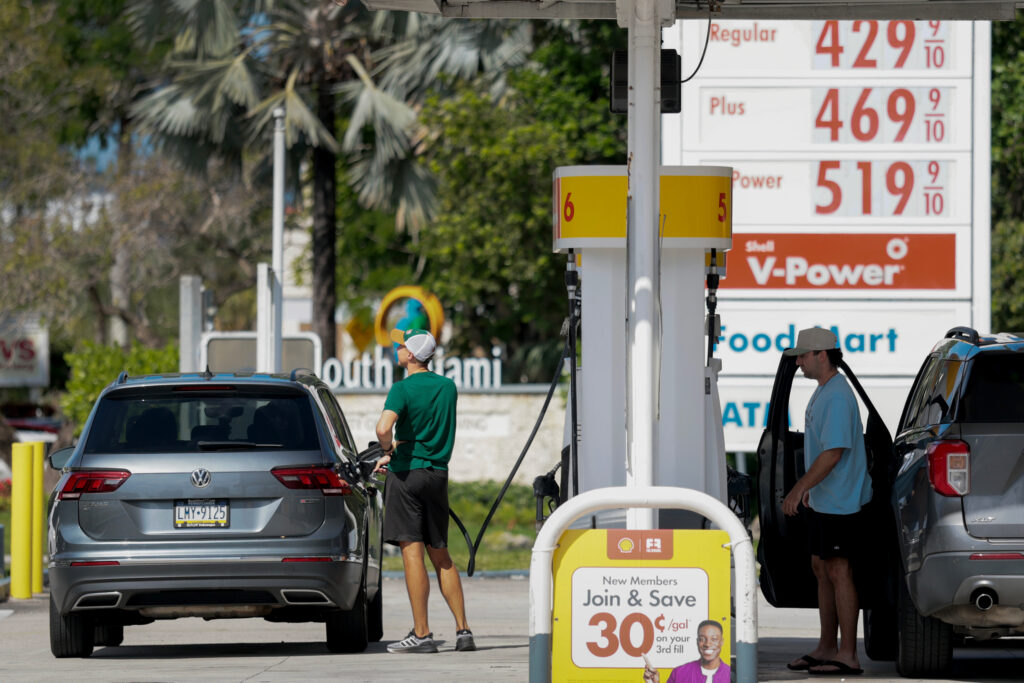
The recent surge in United States gasoline prices, with costs exceeding $4 per gallon in regions such as central Kentucky, has once again ignited a national conversation regarding the pace of the transition to electric vehicles. For many American motorists, the psychological and financial threshold of $4 gasoline serves as a painful reminder of the volatility inherent in a petroleum-based economy. However, despite the historical correlation between high fuel costs and increased interest in fuel-efficient alternatives, the current market landscape suggests that the shift toward electric vehicles (EVs) remains hampered by a complex web of policy reversals, manufacturing pivots, and consumer hesitation. While the economic incentive to move away from internal combustion engines (ICE) has perhaps never been clearer from a long-term perspective, the short-term reality is characterized by a significant cooling in the domestic EV sector.
The Economic Disconnect: Why High Gas Prices Aren’t Sparking an EV Boom
In previous decades, most notably during the 2008 global energy crisis, spikes in gasoline prices led to immediate and measurable shifts in consumer behavior. During that era, demand surged for compact, fuel-efficient vehicles and early-generation hybrids. However, as prices stabilized in the following years, American consumer preference drifted back toward larger, less efficient trucks and sport utility vehicles (SUVs). This cyclical behavior underscores a fundamental challenge in the current energy transition: short-term price volatility rarely dictates long-term capital investments, such as the purchase of a new vehicle.
Economists and researchers, including Joshua Linn of the University of Maryland and a senior fellow at Resources for the Future, have long studied the relationship between fuel costs and vehicle fleet efficiency. Linn’s research indicates that while consumers do shift toward more efficient models when gas prices rise, the net impact on the average miles-per-gallon (MPG) of the national fleet is relatively minor—often an increase of only about one mile per gallon for every dollar increase in the price of fuel. In the modern context, while the potential savings of switching from a gasoline vehicle to an EV are substantial, several barriers prevent consumers from making the leap during a temporary price spike.
For a meaningful shift to occur, experts suggest that gasoline prices would need to remain elevated—potentially above $5 per gallon—for a sustained period of six months or longer. Without this prolonged pressure, many consumers view the price hikes as temporary "blips" and choose to wait for the market to stabilize rather than committing to the higher upfront costs of an electric vehicle. Furthermore, because the average American replaces their vehicle only every few years, the window for capturing a consumer during a price spike is narrow, leading to what David Reichmuth of the Union of Concerned Scientists describes as an "unfortunate timing issue" for the economy.
A Chronology of Policy Shifts and Market Contraction
The trajectory of the U.S. EV market took a significant turn in late 2025. Following a change in federal priorities, Congress and the administration of President Donald Trump moved to eliminate the federal tax credits that had previously incentivized the adoption of clean energy vehicles. By October 2025, the $7,500 credit for new EVs and the $4,000 credit for used EVs were repealed. This policy shift removed a critical financial cushion for middle-class buyers, directly impacting the affordability of a technology that still carries a price premium over traditional gasoline models.
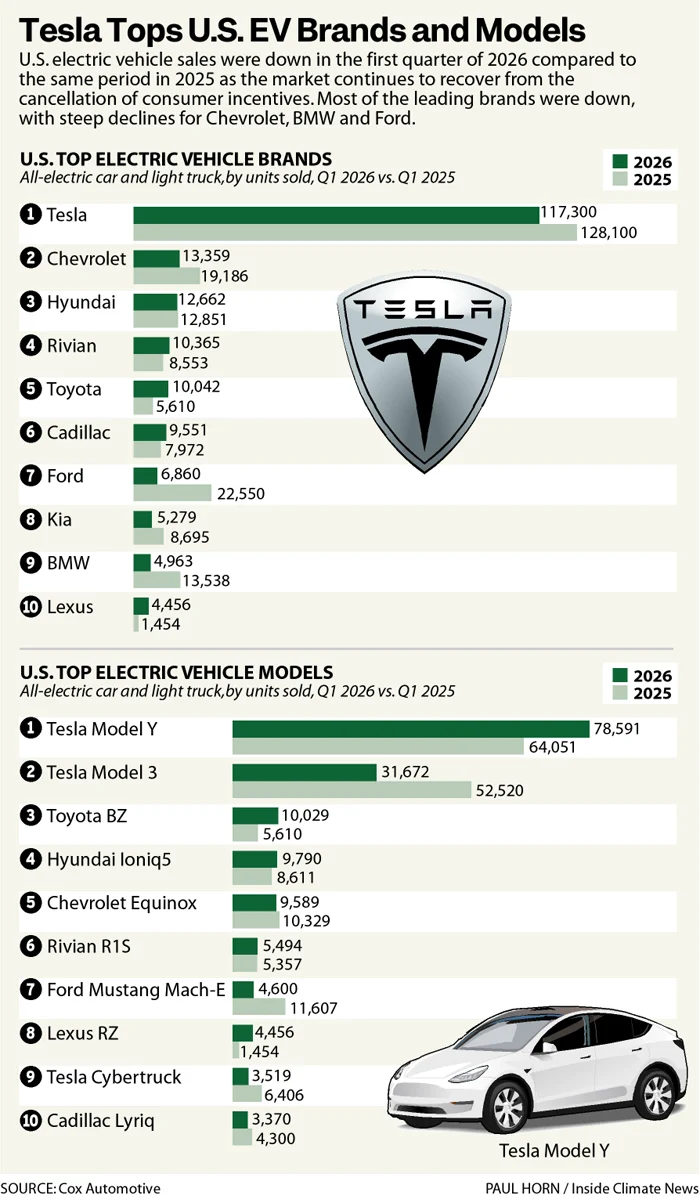
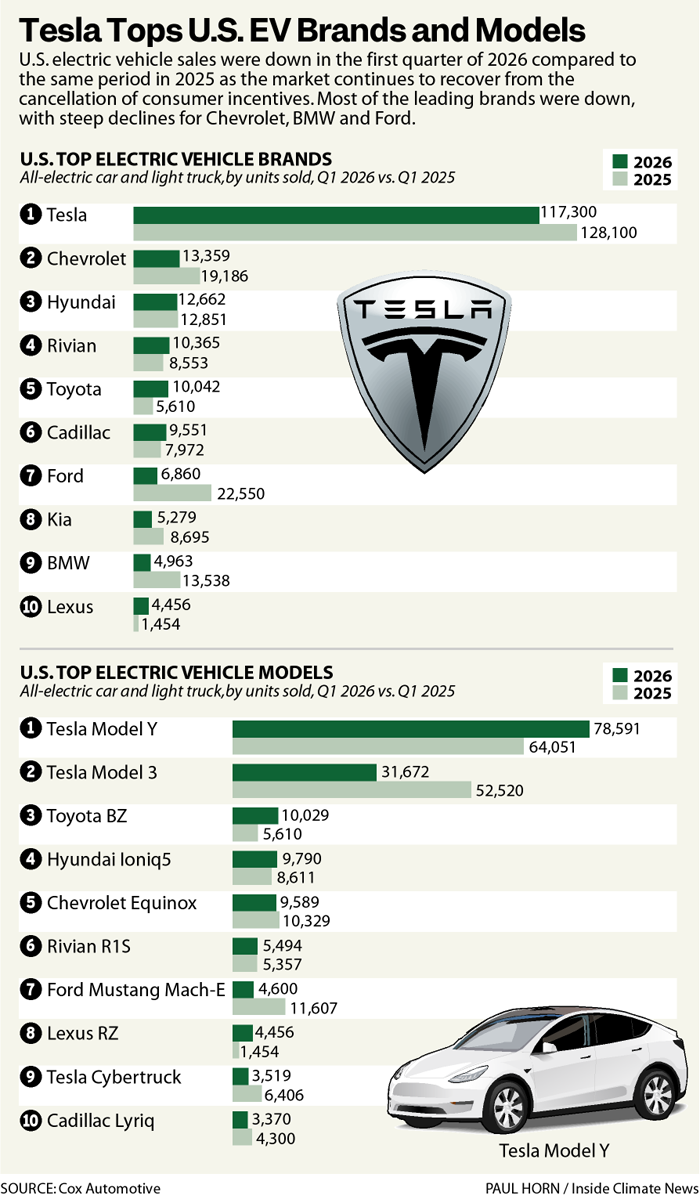
The fallout from these policy changes became evident in the first quarter of 2026. According to data from Cox Automotive, U.S. electric vehicle sales plummeted by 27 percent compared to the same period in 2025. Perhaps more tellingly, the EV market share of total U.S. vehicle sales fell to 5.8 percent, a sharp decline from the peak of 10.6 percent recorded the previous year. This contraction was not merely a result of waning consumer interest but also a strategic retreat by domestic automakers. Responding to the removal of incentives and perceived cooling demand, several major manufacturers scaled back their electrification plans to refocus on high-margin gasoline trucks and SUVs.
The Shrinking Pool of Affordable EV Options
As the market enters the second quarter of 2026, the selection of electric vehicles available to American consumers is becoming increasingly restricted, particularly at the lower end of the price spectrum. General Motors recently announced that its revamped Chevrolet Bolt EV—long considered one of the most accessible entry points into the EV market—will see a limited production run of approximately 18 months before ending production in 2027. Similarly, Volkswagen has moved to halt U.S. sales of the ID.4, a model that served as the cornerstone of its domestic electric strategy.
These withdrawals are part of a broader trend where automakers are canceling or delaying upcoming EV models. Honda, for instance, recently abandoned plans for three U.S.-made electric vehicles that were intended to showcase the brand’s next-generation technology. The result is a "paltry selection" for budget-conscious drivers, leaving a vacuum in the market that stands in stark contrast to global trends. While the U.S. market appears to be in a "sales swoon," the global EV market continues to expand. In Europe and various other regions, adoption rates remain robust. China, in particular, continues to produce millions of affordable EVs, though these vehicles are currently excluded from the U.S. market due to high tariffs and trade protections.
The Competitive Threat and the Rise of the Electrostate
The divergence between the U.S. and global markets has raised concerns about the long-term competitiveness of the American automotive industry. Ford CEO Jim Farley recently addressed these concerns, emphasizing that while tariffs currently protect U.S. manufacturers from an influx of low-cost Chinese exports, the domestic industry must eventually become "fully competitive" on its own merits. Farley noted that manufacturing remains the "heart and soul" of the American economy, and the failure to master the EV transition could have devastating consequences for the country’s industrial base.
This competition is playing out against a backdrop of shifting geopolitical power. The ongoing conflict involving Iran has highlighted the risks of oil dependency, prompting many nations to accelerate their transition to renewable energy. This shift inherently benefits China, which has positioned itself as the world’s leading "electrostate" by dominating the manufacturing of solar panels, wind turbine components, and lithium-ion batteries. As Meaghan Tobin and Keith Bradsher reported for the New York Times, China’s control over the clean energy supply chain ensures that it remains a primary beneficiary of the global move away from fossil fuels, regardless of the domestic challenges faced by the U.S. auto sector.
Broader Implications for the U.S. Energy Landscape
While the automotive sector faces headwinds, other areas of the U.S. energy transition are reaching historic milestones. In March 2026, the United States generated more electricity from renewable sources than from natural gas or any other single source for the first time in the history of the modern grid. This achievement, reported by Yale E360, was aided by seasonal factors—March typically sees lower overall demand, allowing grid operators to curtail coal and gas plants—but it nonetheless represents a symbolic shift toward a cleaner power mix.
However, the rapid growth of energy-intensive industries, such as AI-driven data centers, is creating new friction points. In Maine, the state legislature recently passed the nation’s first moratorium on large data centers, pausing new developments until October 2027. This move, intended to allow for the creation of environmental and consumer protection rules, reflects growing anxiety over the massive amounts of electricity and water required to sustain the digital economy. At least a dozen other states are reportedly considering similar measures as they struggle to balance economic growth with grid stability.
Political Friction and the Path Forward
The path toward a clean energy future also remains fraught with political tension at the state level. In California, traditionally the vanguard of U.S. climate policy, Governor Gavin Newsom has faced increasing criticism from clean energy activists. At a recent climate summit, advocates expressed frustration with what they perceive as the administration’s slowing momentum on the energy transition. As term limits approach for the Governor, many in the environmental community are looking toward new leadership to reinvigorate the state’s commitment to a rapid phase-out of fossil fuels.
Ultimately, the current spike in gasoline prices serves as a dual signal: it is a reminder of the financial burden of the status quo and a highlight of the systemic barriers preventing a swift transition to alternatives. For the U.S. EV market to rebound, analysts suggest that the industry cannot rely solely on the "sting" of high gas prices. Instead, a combination of stable, supportive policies, a broader array of affordable vehicle models, and a continued strengthening of the renewable energy grid will be required to move the needle. As Stephanie Valdez Streaty of Cox Automotive noted, the market’s future will increasingly be driven by "fundamentals" rather than policy alone. Whether American automakers can align those fundamentals to meet consumer needs in a volatile global economy remains the defining question for the remainder of the decade.










Leave a Reply