In a landmark policy shift aimed at balancing the rapid growth of artificial intelligence with national decarbonization goals, the Australian government has announced plans to implement a national framework requiring large-scale data centers to secure their own new sources of clean energy. Prime Minister Anthony Albanese, speaking at the University of Sydney on July 15, outlined a legislative roadmap intended to ensure that the massive energy appetite of the AI sector does not compromise the nation’s energy transition or increase costs for residential and small-business consumers. The proposed regulations, expected to be fully operational by early 2027, will require data center operators to become "net-generators," effectively contributing as much or more renewable energy to the national grid as they consume.
The announcement comes at a critical juncture for the global energy sector. As generative AI and high-performance computing (HPC) become integrated into the global economy, the electricity demand from data centers is projected to double by 2026. Australia, a global leader in per-capita rooftop solar adoption, is seeking to set a global precedent by codifying the responsibility of high-demand industrial users to expand the energy supply they intend to use, rather than drawing from existing resources.
The Core Mandate: Additionality and Grid Resilience
The primary pillar of the upcoming legislation is the concept of "additionality." Under the new framework, large-scale data center developers will no longer be permitted to meet their sustainability goals simply by purchasing existing Large-scale Generation Certificates (LGCs) or drawing from the current renewable pool. Instead, they will be legally obligated to underwrite the construction of new renewable energy projects, such as wind farms, solar arrays, and "firming" technologies like utility-scale battery storage or pumped hydro.
Prime Minister Albanese emphasized that this "common-sense" approach is designed to prevent data centers from "stealing" clean energy that would otherwise be available to the general public. By requiring these facilities to stimulate new power projects, the government aims to increase the total volume of renewable energy in the National Electricity Market (NEM). "We will create a legal obligation for the next generation of large-scale data centers to underwrite new power supply, to pay their full share of grid connection, so no costs are passed on to homes or businesses," Albanese stated. "To be net-generators, not net-users."
Furthermore, the legislation will address the physical impact of these facilities on the power grid. Data centers are notorious for their high "load factor," meaning they consume a steady, high volume of electricity 24 hours a day. This puts immense pressure on transmission infrastructure. The 2027 framework will require these operators to pay the full cost of their grid connections and, in certain high-demand scenarios, participate in demand-response programs to reduce their power intake when the grid is under stress.
Contextualizing the AI Energy Surge
The urgency of this legislation is underscored by the rapid evolution of data center technology. Traditional data centers primarily handle data storage and basic cloud services, but AI-ready facilities require significantly more power. According to the International Energy Agency (IEA), a single Google search requires approximately 0.3 watt-hours of electricity, whereas a request to ChatGPT requires roughly 2.9 watt-hours—nearly a tenfold increase.
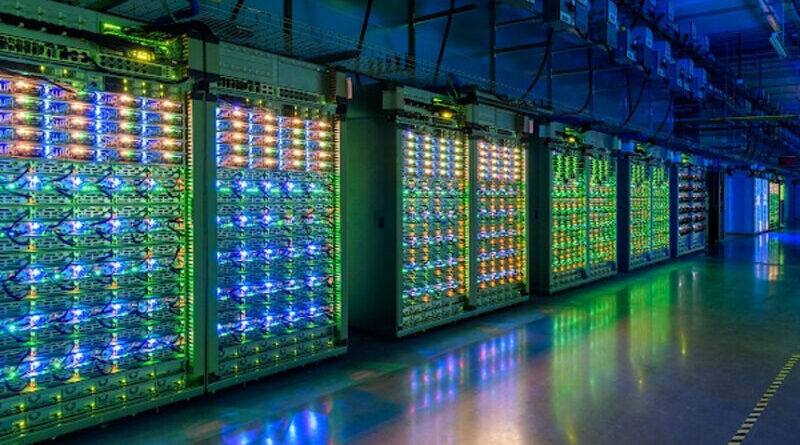
Globally, data centers, artificial intelligence, and the cryptocurrency sector consumed an estimated 460 terawatt-hours (TWh) of electricity in 2022. This figure is expected to rise to between 620 and 1,050 TWh by 2026, a demand roughly equivalent to the entire electricity consumption of Germany or Japan. In Australia, where the tech sector is expanding rapidly in cities like Sydney and Melbourne, the government’s proactive stance aims to decouple this industrial growth from carbon emissions.
Australia’s unique position as a solar powerhouse provides a foundation for this transition. The country currently boasts over 3.6 million rooftop solar installations, with more than 30% of suitable households utilizing solar PV. However, while residential solar has flourished, the integration of massive industrial loads requires a more structured, large-scale utility approach. The 2027 mandate ensures that the "AI boom" fuels the next wave of utility-scale investment rather than straining the progress made by individual households.
Timeline and Implementation Strategy
The Australian government has set a target date of early 2027 for the legislation to take effect. This timeline provides a "grace period" for the technology industry to adjust their investment strategies and for energy providers to align their project pipelines with the projected demand from data center developers.
Between 2024 and 2026, the government is expected to release a series of white papers and consultation drafts to define the specific thresholds for "large-scale" facilities. Industry experts anticipate that the regulations will target facilities with a capacity exceeding 5 or 10 megawatts (MW), though the final figures remain subject to departmental review.
The implementation strategy also includes:
- Grid Connection Reform: Streamlining the process for data centers to co-locate with renewable energy zones (REZs).
- Water Management Standards: New requirements for cooling efficiency. Data centers can consume millions of liters of water daily for evaporative cooling; the framework will likely mandate the use of recycled water or closed-loop air-cooling systems in water-stressed regions.
- National Framework Integration: Consolidating disparate state-level guidelines into a single, cohesive national policy to provide regulatory certainty for international investors.
Economic and Social Implications
One of the most significant aspects of the Albanese government’s proposal is the protection of retail electricity prices. In many jurisdictions, when a large industrial user connects to the grid, the costs of upgrading transformers and transmission lines are often socialized, meaning they are spread across the bills of all consumers. By shifting the "full share of grid connection" costs to the data center operators, the Australian government is shielding citizens from the hidden costs of the digital economy.
Economically, the mandate is expected to act as a catalyst for the domestic renewable energy industry. By providing a guaranteed "off-take" for new wind and solar projects, data centers will become the primary financiers of Australia’s clean energy transition. This shift reduces the reliance on government subsidies and puts the financial onus on the highly profitable technology sector.

From a social perspective, the move addresses growing concerns regarding "energy equity." As Australia moves toward its goal of 82% renewable energy by 2030, there is a public expectation that large corporations contribute proportionately to the infrastructure they utilize. The "net-generator" model ensures that the tech industry becomes a partner in national resilience rather than a drain on public resources.
Industry and Global Reactions
The reaction from the technology sector has been a mix of cautious optimism and logistical concern. Major players such as Microsoft, Google, and Amazon (AWS)—all of whom have significant operations in Australia—already have global commitments to reach 100% renewable energy. However, these companies often rely on "matching" their annual consumption with renewable purchases. The Australian mandate goes a step further by requiring physical additionality and grid firming.
Environmental advocacy groups have praised the move. "Australia is setting a global benchmark," said a representative from a leading clean energy think tank. "By making clean energy a prerequisite for data center permits, the government is ensuring that the digital future does not come at the expense of the climate."
International observers are also watching closely. Countries like Ireland and Singapore have previously faced "moratoriums" on new data centers due to grid capacity limits. Australia’s approach offers a middle ground: allowing growth to continue, provided the developers bring their own energy "luggage."
Conclusion: A Blueprint for the Digital Age
The proposed 2027 framework represents a sophisticated evolution in energy policy. It acknowledges that while AI is an essential tool for future economic productivity, its physical footprint cannot be ignored. By requiring data centers to underwrite their own clean energy, pay for their infrastructure, and manage their water use, Australia is attempting to create a sustainable ecosystem where technological advancement and environmental stewardship are mutually inclusive.
As Prime Minister Albanese noted, every country is currently grappling with the tension between high-tech growth and energy limits. By becoming the first nation to codify these requirements into a single, national framework, Australia is positioning itself not just as a leader in solar adoption, but as a pioneer in the responsible management of the AI era. The success of this policy will likely serve as a blueprint for other nations seeking to harness the power of artificial intelligence without sacrificing their climate commitments or the economic well-being of their citizens.