
In one of Denver’s most affluent suburbs, where median family incomes frequently exceed $150,000 and the cultural expectation of a four-year university degree is deeply ingrained, a quiet but profound shift is occurring. Students are increasingly bypassing the traditional "college-only" track in favor of trade certifications and technical training. This trend, once dismissed by academic elites as a regression, is now being championed by parents and educators alike as a pragmatic response to a changing economic landscape. For decades, the "college for all" mandate has dominated American educational policy, creating a narrow pipeline that assumes a bachelor’s degree is the only valid indicator of success. However, as student debt reaches record levels and underemployment among recent graduates remains stagnant, the fundamental premise of this movement is facing intense scrutiny.
The Failure of the "College for All" Paradigm
The "college for all" movement, which gained momentum in the 1990s and early 2000s, was designed to boost the economic mobility of the American middle class. The logic was straightforward: a four-year degree would guarantee entry into the professional workforce. Data from the Bureau of Labor Statistics and various independent research institutions suggest this model has faltered. While 88 percent of college freshmen identify career advancement as their primary motivation for enrollment, the reality for graduates is often stark.
According to research from the Burning Glass Institute, more than 50 percent of college graduates are underemployed within their first year of entering the workforce, meaning they occupy roles that do not require a bachelor’s degree. More concerning is the persistence of this trend; ten years after graduation, approximately 45 percent of these individuals remain in positions that fail to utilize their educational training. These statistics highlight a systemic disconnect between higher education curricula and the actual requirements of the labor market. The problem is not that higher education lacks value, but that it has become an prohibitively expensive "career exploration" exercise, often leaving students with significant debt and few marketable skills.
A Shifting Educational Model: The Cherry Creek Innovation Campus
The response to this crisis is manifesting in real-time within districts like Cherry Creek, Colorado. The Cherry Creek Innovation Campus (CCIC) serves as a blueprint for a new model of secondary education. Rather than forcing students to choose between college preparation and vocational training, the district has integrated both.
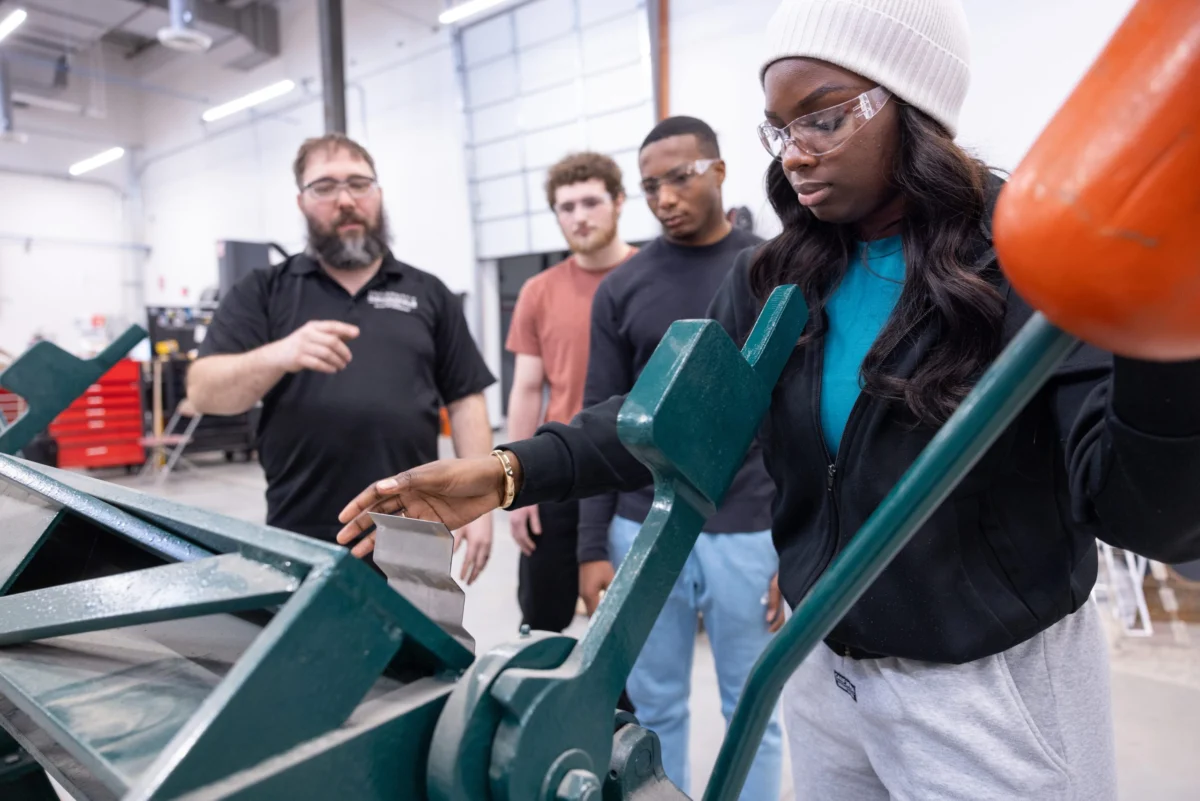
Students split their daily schedules between their home high school and the CCIC, where they gain access to specialized training in fields ranging from aerospace and computer science to health sciences and culinary arts. The program is designed to provide "exit ramps" and "on-ramps" to various professional futures. During recent observations at the campus, students were found pursuing diverse, high-value trajectories: one student aimed for a traditional engineering degree, another for an associate degree in construction management, and a third for an industry-recognized credential in culinary arts.
The common thread among these students is a sense of professional clarity. By engaging in industry-standard work during their high school years, these students enter higher education—if they choose to attend—with a specific purpose, reducing the likelihood of the "lost years" that plague many college dropouts.
The Economic Case for Vocational Pathways
The economic data supports a move toward diversified educational pathways. Georgetown University’s Center on Education and the Workforce (CEW) has identified a massive labor shortage in fields that do not strictly require a four-year degree. The United States currently faces an annual deficit of nearly 712,000 workers with specialized certificates or associate degrees. These roles, often in high-tech manufacturing, healthcare support, and infrastructure management, frequently offer starting salaries exceeding $55,000 annually.
Furthermore, the Return on Investment (ROI) data presents a nuance that is often overlooked in academic advising. While bachelor’s degrees often yield higher long-term earnings—typically pulling ahead in ROI metrics 15 to 20 years post-graduation—the initial 10-year period often favors those who earn shorter-term, high-demand credentials. For families concerned about the rising cost of tuition, the "trade-first" strategy provides immediate economic traction and the ability to self-fund future educational pursuits if desired.
Chronology of the Educational Pivot
- 1990s–2010: The height of the "College for All" movement, which effectively stigmatized vocational education and redirected funding toward four-year degree programs.
- 2015–2018: Early warning signs appear as student debt levels climb past $1.5 trillion and the "skills gap" between college graduates and employer needs widens.
- 2019–2021: The COVID-19 pandemic accelerates the decline in public confidence in traditional higher education, as remote learning highlights the perceived lack of practical value in some four-year curricula.
- 2022–Present: Wealthier districts, previously staunch proponents of the "Ivy League-or-bust" mentality, begin formalizing relationships with trade schools and industry partners, rebranding "vocational training" as "career and technical education" (CTE).
Case Study: The Cost of Misalignment
The human cost of the current system is best illustrated by those who navigate the "college-only" path without guidance. Consider the story of a student who enrolled in a Bachelor of Science program in nursing, motivated by a desire to help others and attain economic stability. Two years into her studies—and already burdened by student loans—she realized that the day-to-day realities of the nursing profession did not align with her skills or interests.
She eventually transferred to a community college and sought employment in the service sector, a transition she describes as a "lost phase." This is a recurring narrative: students are steered toward high-cost, high-intensity degree programs before they have had the opportunity to explore the actual mechanics of the industry. Had she been exposed to hands-on clinical work during high school, she could have pivoted her career plans without the heavy financial burden of a partial, unused degree.
Broader Implications and Institutional Responses
The stigma surrounding "shop class" is a relic of a time when vocational education was often a repository for underperforming students. Today, programs like the maritime career exploration initiative run by the nonprofit Ridgeline demonstrate a different reality. In the San Francisco Bay Area, students are gaining paid, hands-on experience in port management, ship engineering, and container logistics. These positions are highly technical, demand critical thinking, and lead to six-figure salaries.
The call for reform is growing louder among education policy experts. The proposal is simple: every high school should provide students with the opportunity to graduate with a high school diploma alongside an industry-recognized credential or a documented apprenticeship. This dual-track approach does not devalue the bachelor’s degree; rather, it forces universities to justify their cost by providing a more specialized, career-focused education.
Fact-Based Analysis of the Future Workforce
The labor market is currently experiencing a structural realignment. Employers are increasingly removing degree requirements for jobs that can be performed by individuals with the right technical skills. Companies such as Google, IBM, and various regional manufacturing firms have begun hiring based on competency rather than credentials.
The implications for the education sector are significant. If high schools and community colleges can successfully bridge the gap between abstract academic learning and applied vocational skills, the "college for all" movement will likely be replaced by a "skills for all" philosophy. This shift does not imply that universities will become obsolete; instead, it suggests that the university experience will shift from being an automatic next step to a strategic decision made by students who have already gained a foothold in their chosen profession.
In conclusion, the movement observed in districts like Cherry Creek is not an anomaly, but a necessary correction. By de-stigmatizing trade education and providing students with the tools to make informed decisions before they commit to tens of thousands of dollars in debt, the American education system can finally begin to align the aspirations of its youth with the realities of the 21st-century economy. Whether a student chooses to pursue an apprenticeship in a maritime facility or an engineering degree at a top-tier university, the goal remains the same: ensuring that every graduate possesses the skills and the clarity to thrive in a competitive, rapidly shifting global market.










Leave a Reply