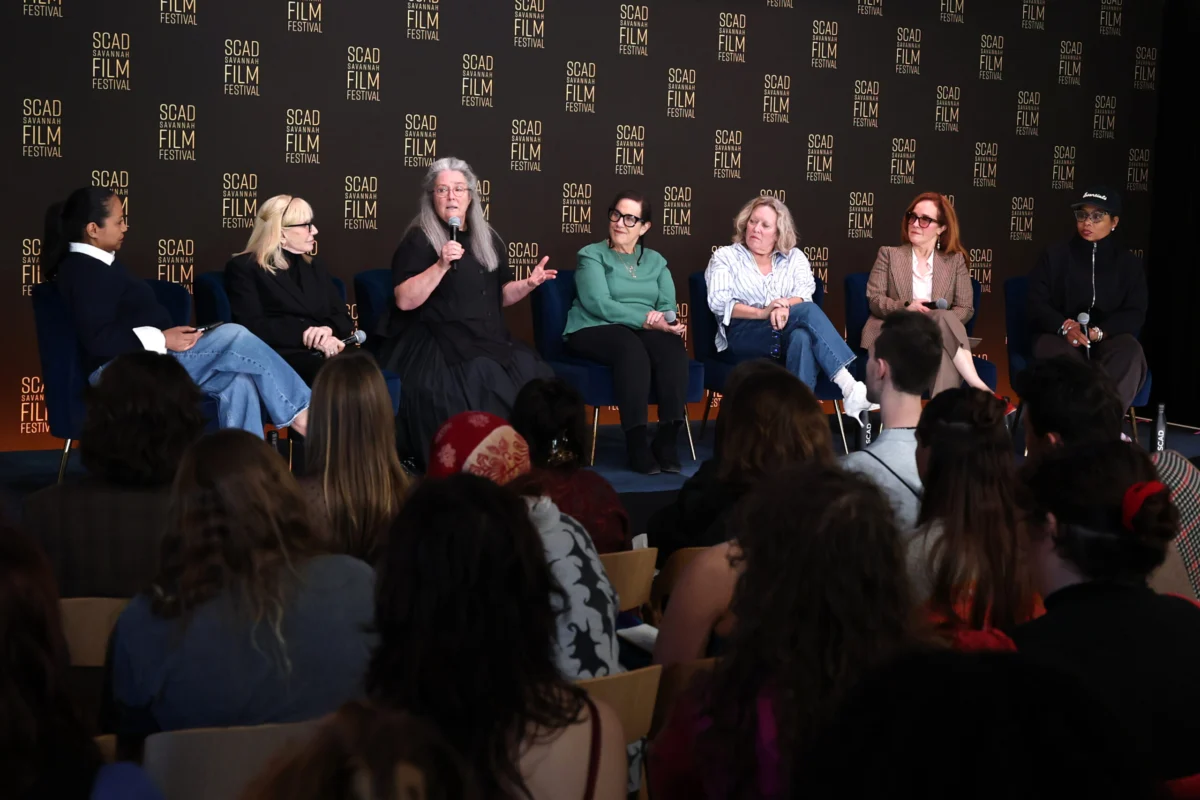
The common perception of film costume design as a mere extension of personal shopping is a misconception that ignores the profound narrative architecture required to bring a character to life on screen. At the recent Costume Design Roundtable held during the SCAD Savannah Film Festival, a panel of industry veterans—including Molly Rogers, Ellen Mirojnick, Arianne Phillips, Linda Muir, Amy Roth, and Marci Rodgers—converged to debunk the myth that their craft is rooted in retail therapy. Moderated by Variety’s Senior Artisans Editor Jazz Tangcay, the discussion illuminated the rigorous research, psychological profiling, and technical precision that define the work of contemporary costume designers.
The SCAD Savannah Film Festival, now a staple in the cinematic calendar, provides a platform for such artisans to pull back the curtain on the collaborative nature of filmmaking. By hosting these technical roundtables, the festival emphasizes the importance of below-the-line talent, whose contributions often dictate the visual language and emotional resonance of a project.
The Myth of Shopping and the Reality of Design
For many in the industry, the assumption that costume design is synonymous with shopping is not only inaccurate but serves as a professional red flag. Molly Rogers, the costume designer for the highly anticipated sequel to The Devil Wears Prada, was emphatic on this point. During the panel, she recounted how prospective assistants often approach her with a passion for shopping, only to be met with a swift rejection. According to Rogers, the job is not about acquiring fashion; it is about building a visual identity that aligns with a script’s internal logic.
This sentiment was echoed by Arianne Phillips, a veteran designer whose credits include Nocturnal Animals and The Invite. Phillips highlighted the inherent friction between designers and those in the executive suite who view costumes through a commercial lens. "I’ve been in rooms with studio executives who are experts because they have people who shop for them," Phillips noted. She explained that because many stakeholders possess high-level purchasing power, they often mistakenly believe they have the expertise to dictate character aesthetics, frequently undermining the designer’s authority in the process.
The Complexity of Contemporary Design
Contemporary costume design is widely considered one of the most challenging disciplines within the craft. Unlike period pieces, where designers can lean into historical research and established silhouettes, contemporary films require a designer to capture the zeitgeist while simultaneously elevating it to serve a narrative.
Ellen Mirojnick, whose illustrious career includes work on iconic films like Wall Street and Basic Instinct, articulated the dual nature of this work. "In the beginning of my career, I did a lot of contemporary costume, and I loved it," she stated. "I loved being able to document what New York was like at that period… it also documented the history of what we were like." Mirojnick argued that the best contemporary design serves as a visual document of the era, creating a tether between the audience’s reality and the film’s fictional world.
This difficulty is compounded by the evolving nature of film production. Marci Rodgers, who worked on Spike Lee’s She’s Gotta Have It, described the iterative process of character development. Recalling her time in Chicago, she emphasized that character designs are not static; they change in response to table reads, actor feedback, and shifting directorial visions. When working on Nola Darling, Rodgers bypassed high-end retailers in favor of thrift stores, ensuring that the character’s wardrobe felt earned and authentic to her background as a fan of Prince, using subtle pops of purple rather than overt branding.
The Intersection of Commerce and Creativity
A significant challenge facing modern costume designers is the rise of product placement and branded partnerships. As luxury brands play an increasingly large role in film financing, designers are frequently pressured to incorporate specific products into their characters’ wardrobes, regardless of whether those items serve the story.
Phillips warned that this trend threatens the integrity of character development. "We’re told by producers, ‘You have to use that product,’" she explained. "You have to choose directors who support staying true to the story, as this is only going to get more complicated with how films are financed." The implication for the future of the industry is clear: as films rely more on corporate sponsorships, designers must become increasingly adept at negotiating the space between artistic vision and commercial mandates.
Technical Precision in Period and Biopic Reconstruction
The roundtable also highlighted the extreme technical rigor required for period pieces and high-stakes biopics. Linda Muir, who collaborated with Robert Eggers on The Northman and Werwulf, provided a masterclass in the intersection of economics and textiles. Muir’s research into the historical value of wool in Viking society—which served as a primary indicator of wealth—informed her approach to costume texture and scarcity. "The challenge with these films is finding people who can create wool fabrics, hats, jewelry, buttons, belts—all the things that make the whole picture when you have so few styles and elements to work with," she explained.
Similarly, Amy Roth’s work on the Rocky biopic, I Play Rocky, required a deep dive into collective memory. Because the original Rocky film lacked a dedicated costume designer, Roth had to reverse-engineer an iconic look that existed in the public consciousness rather than in an archive. Her search for the original leather jacket on eBay and her collaboration with actor Anthony Ippolito underscored the lengths to which designers go to ensure authenticity. Ippolito’s commitment to matching Sylvester Stallone’s physical mannerisms required Roth to adapt the wardrobe to fit his performance, proving that the costume is an active participant in the actor’s transformation.
Marci Rodgers provided further insight into this process during her discussion on the film Michael, specifically regarding the recreation of Michael Jackson’s iconic Thriller aesthetic. Relying on an 800-page research book, Rodgers collaborated with Deborah Landis to ensure that every shade of red on the beaded jacket was accurate. She also noted the surprising detail that the original Levi’s jeans used in the video were white before being hand-dyed red—a nuance that speaks to the obsessive attention to detail that defines top-tier costume design.
Implications for the Future of Filmmaking
The insights shared at the SCAD Savannah Film Festival point to a critical juncture for the craft. As the industry faces pressures from budget constraints, corporate product placement, and the rise of digital production, the role of the costume designer is becoming more vital, yet arguably more vulnerable.
The "curse of the sequel," as Molly Rogers put it while discussing The Devil Wears Prada 2, is the pressure to satisfy audience nostalgia while moving the character forward. Her decision to repurpose the iconic cerulean sweater into a vest for Anne Hathaway’s character is a perfect case study in how designers balance legacy with character evolution. By transforming an item of the past into a garment for the present, Rogers maintained the emotional thread of the story while acknowledging the passage of time.
Ultimately, the takeaway from this panel is that costume design is not an accessory to the filmmaking process; it is a fundamental pillar of storytelling. Whether it is using a blue dress as armor in a retelling of The Odyssey or selecting specific thrifted garments to ground a character like Nola Darling, the designer’s work is to translate the internal life of a character into a physical, visible reality. As the lines between advertising and art continue to blur, the advocacy of these designers for creative autonomy and narrative integrity will remain essential to the health and quality of the cinematic medium. Their work serves as a reminder that every stitch, every color choice, and every fabric selection is a deliberate narrative decision—one that, when executed correctly, can define the legacy of a film for generations to come.