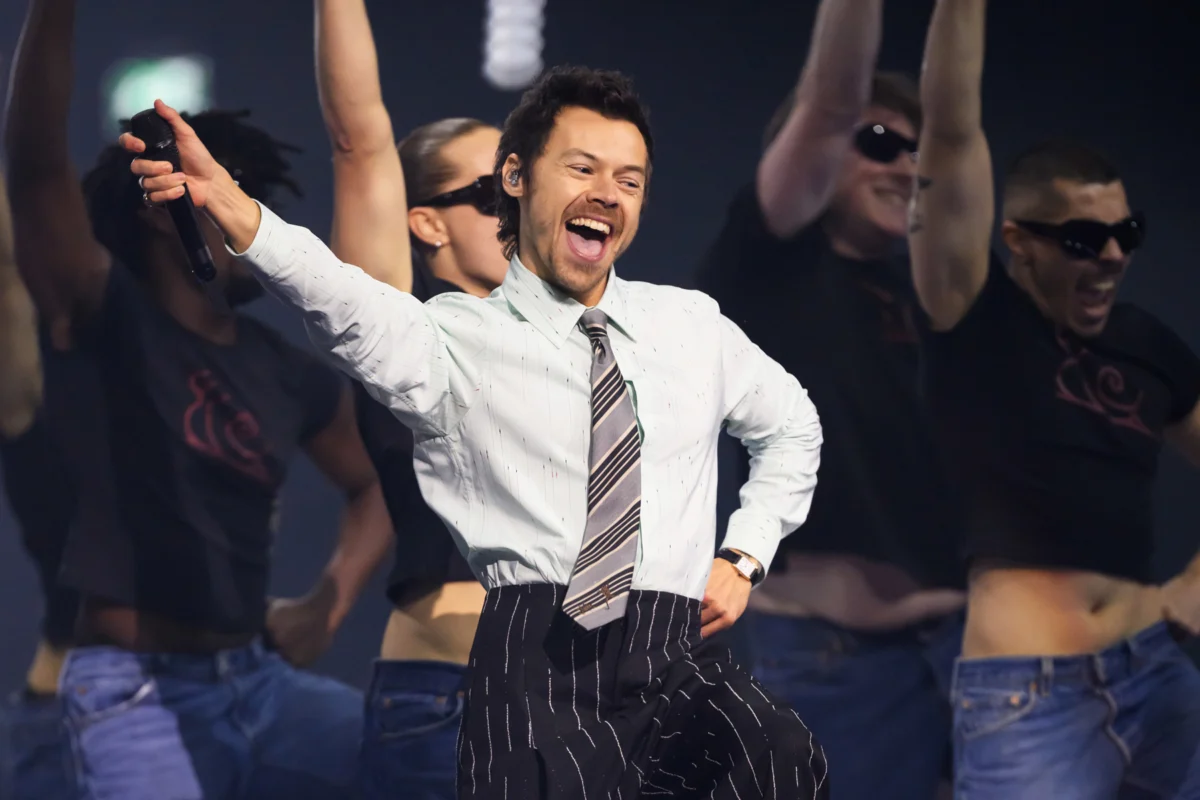
The termination of Harry Styles’s unprecedented 30-night residency at Madison Square Garden marks a watershed moment not only in the pop star’s decade-long solo career, but in contemporary live performance at large. Spanning ten weeks in the heart of New York City, the engagement served as the intimate, anchoring heartbeat of his sprawling "Together, Together" tour. While the massive stadium legs of the tour dwarf the iconic arena in sheer capacity—often welcoming audiences three to four times the size—the New York run offered a concentrated laboratory for Styles to interrogate the mechanics of modern stardom. Amid theatrical flourishes, ranging from satirical rodent costumes to nostalgic outfit homages that nodded to his 2010 X Factor audition, the residency found its emotional anchor in a singular, hypnotic composition: the bass-driven, existential centerpiece "Season 2 Weight Loss," from his fourth studio album, Kiss All the Time. Disco, Occasionally.
Chronology of the Historic Residency and the Final Night Spectacle
The ten-week New York engagement transformed Madison Square Garden into a crucible of shared vulnerability. Throughout the 30-night run, the arena functioned as a pressure cooker of fan devotion and artist introspection. The culmination arrived on a Saturday night, drawing a capacity crowd of 20,000 attendees who witnessed the definitive closing chapter of the residency.
The evening was punctuated by high-profile acknowledgments and emotional milestones. Mid-way through the final performance, New York Knicks point guard Jalen Brunson took the stage to present Styles with a commemorative banner celebrating the historic 30-night achievement, an honor typically reserved for sports legends and franchise cornerstones. Overcome by the reception, Styles visibly wept before retreating to his microphone stand. In a characteristic blend of self-deprecation and theatrical endurance, he remarked to the crowd that he was seeking the safety of the mic because he felt vulnerable and was unsure what to do with his hands.
The night concluded with an exhaustive, defiant celebration. Styles extended the final performance well past standard set times, closing the evening with an extended dance mix of his track "Aperture" while casually consuming slices of pizza on stage. This marathon display of endurance mirrored the physical and emotional demands he placed on himself across the entirety of the 30-night undertaking.
Anatomy of a Breakdown: The Centrality of "Season 2 Weight Loss"
Musically and theatrically, the residency was defined by the stark staging of "Season 2 Weight Loss." Placed deliberately within a darkened arena dominated exclusively by piercing red and blue strobes, the four-minute track stripped away the kinetic stagecraft that otherwise defined the show. Where Styles typically utilized the perimeter of the stage as a dynamic playground, dancefloor, and treadmill, this song rooted him firmly to the center.
Surrounded by near-total darkness, Styles engaged in a visceral, full-bodied physical interpretation of the track’s pounding percussion. He thrashed and stumbled with calculated abandon, acting out the physical manifestations of performance anxiety and public scrutiny before an audience of thousands. The song’s repeated lyrical interrogations—asking the crowd, “Do you love me now? Do you? Do you? Do I let you down?”—formulated the core thesis of the residency: the painful, persistent dissonance between public projection and private reality.
This performative anxiety is mirrored in the album’s broader lyrical themes. In lines such as, “It’s kind of sad, but there’s something I know/Too many things for you to analyze,” Styles directly confronts the invasive culture of celebrity analysis that has shadowed his career since he entered the public eye at age 16. Industry analysts and music critics have noted that this direct confrontation represents a significant maturation in how pop artists negotiate parasocial relationships with their fan bases.
Contextualizing Stardom: From One Direction to Solo Autonomy
To understand the weight of the Madison Square Garden residency, one must examine the trajectory of Styles’s career arc. Having risen to global prominence as a teenager in the Simon Cowell-orchestrated boy band One Direction, Styles spent his formative years performing inside vast arenas under tightly managed industry parameters. His subsequent solo endeavors—encompassing three previous studio albums and massive global outings like the 169-show "Love on Tour"—gradually dismantled the pristine, manufactured pop idol archetype in favor of a mercurial, seventies-inflected rock and pop hybrid.
During a recent installment of Rolling Stone’s "Musicians on Musicians" series, in conversation with Radiohead frontman Thom Yorke, Styles reflected on the emotional evolution of his live performances. He identified his previous tour as a turning point where he finally felt genuinely supported by his audience, not merely for the nostalgic hits of his past, but for his ongoing artistic risks.
This evolution found full expression during the penultimate and final nights of the New York residency. In a nod to his origins, Styles recreated the exact outfit he wore to his fateful X Factor audition sixteen years prior, flanked by band members dressed as various historical iterations of Styles himself. This self-referential staging underscored a career built in real-time under the unyielding gaze of the public.
Future Implications and the Next Phase of the "Together, Together" Tour
Despite the triumphant conclusion of the New York residency, the overarching future of Styles’s career has become a subject of intense speculation among fans and industry observers. In September, a letter penned by Styles to his dedicated fanbase sent ripples through digital communities. While confirming that the "Together, Together" tour would officially extend into the following calendar year with expanded stadium dates, the artist included a contemplative reflection on his longevity: “Being an artist is the only life I’ve ever known really, I have been doing this since I was 16 years old… After that, I don’t know what comes next for me, but I know that I’m excited to find out.”
This sentiment echoes recurring themes from his recent press engagements, including a candid interview with Zane Lowe in which Styles questioned the conditional nature of pop stardom. By posing the fundamental question of whether his audience appreciates his evolving artistic identity or merely desires a fixed historical iteration of his persona, Styles has deliberately tested the boundaries of artist-audience loyalty.
Data and Analytics of the Live Music Phenomenon
The commercial and cultural footprint of the Madison Square Garden residency underscores the enduring viability of extended-stay engagements for elite touring acts. By anchoring a major tour phase in a single venue for 30 consecutive or semi-consecutive nights, artists can drastically reduce carbon emissions and logistical overhead associated with constant transit, while creating a localized economic boom for hospitality and tourism sectors. For Madison Square Garden, hosting a run of this magnitude cements its status as the premier cultural venue in North America, capable of sustaining high-ticket-demand residencies typically reserved for Las Vegas strip venues.
Furthermore, the economic impact of Styles’s touring model relies heavily on physical merchandise sales, bespoke fashion integration, and direct-to-consumer engagement via interactive fan communities. The distinct visual themes of each show—such as the tongue-in-cheek "Rat" apparel worn during the final weeks—demonstrate a masterclass in modern merchandising, turning inside jokes and stage antics into immediate cultural currency across social media platforms like TikTok and X.
Critical Analysis of the Artist-Audience Contract
The brilliance of the "Together, Together" residency lies in its willingness to court discomfort. Mainstream pop performance typically prioritizes frictionless escapism, bombastic visual spectacle, and unwavering audience validation. Styles subverted this expectation by introducing moments of genuine emotional exposure, alienation, and self-doubt into the arena ecosystem.
By forcing 20,000 people to sit in silence while he navigated the anxious cadence of "Season 2 Weight Loss," Styles redefined the emotional contract between headliner and concertgoer. He posits that true community is not built on blind adulation, but on a shared acknowledgment of human frailty. As he articulated to his audience, the ultimate takeaway of the residency is an invitation toward collective introspection: the realization that while time inexorably alters everyone, individuals retain absolute responsibility for how they choose to navigate those transformations.
As the "Together, Together" tour prepares to transition into its next phase across larger international stadiums, the New York residency will likely be remembered as the crucible wherein Harry Styles solidified his transition from a generational pop star into a fiercely autonomous, critically engaged auteur. Whether he chooses to step away from the relentless touring cycle following this album campaign remains to be seen; however, the standard he has established for vulnerability in live performance has permanently altered the landscape of modern pop music.