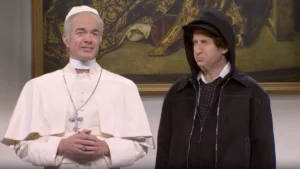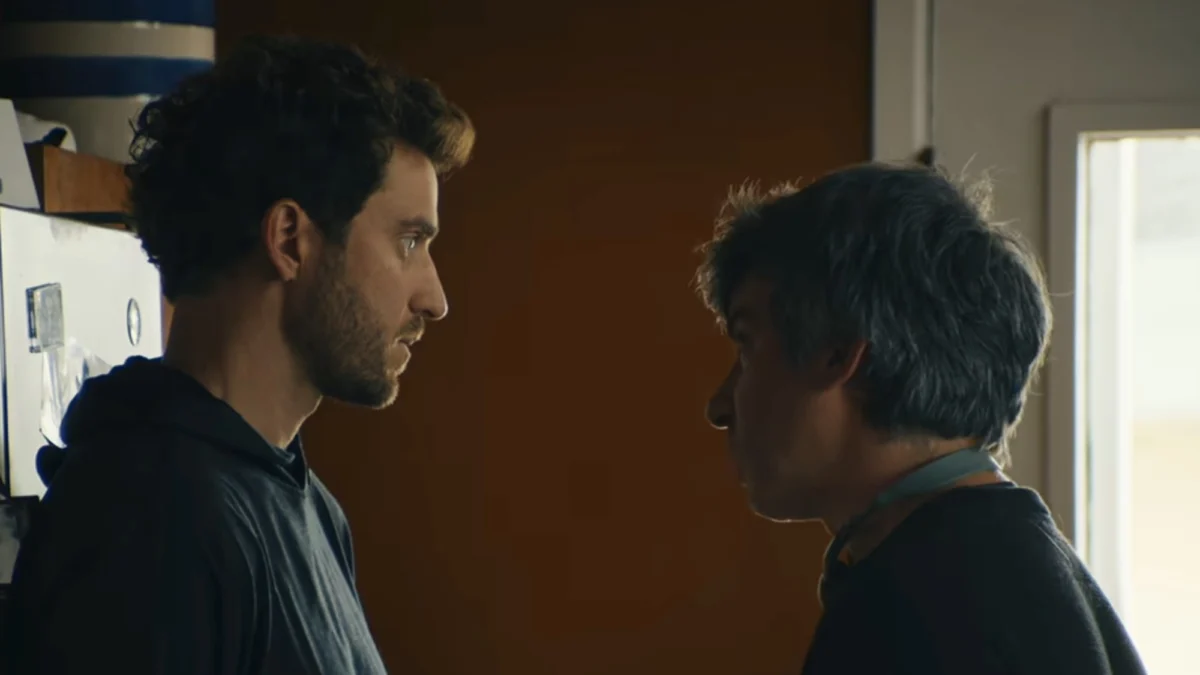
The controversy surrounding the documentary has sparked a broader debate regarding the ethics of fly-on-the-wall filmmaking and the degree to which subjects—particularly those caught in the orbit of high-profile legal scandals—can effectively revoke consent once filming has concluded.
A Chronology of the Conflict
The friction between Billy Evans and the creative team behind You Can See Everything stems from a fundamental disagreement regarding the filming conditions during the high-stakes period leading up to Elizabeth Holmes’ incarceration.
According to reports, the production team, which included the acclaimed filmmaker Nathan Fielder, spent significant time documenting the domestic life of Holmes and Evans. During this period, the crew was granted near-total access to their private residence. The shower scene in question was captured during a routine moment in the household’s daily schedule.
Evans claims that while he was aware of the camera’s presence, the nature of the footage—specifically the full-frontal nudity—was beyond his expectation. Following early screenings of the film, word reached Evans that the scene had been included in the final cut. According to his account, he immediately engaged in a series of communications with the production team, including outreach from both his personal representatives and his legal counsel, requesting that the filmmakers either pixelate the footage or excise it entirely. Despite these requests, the producers declined to alter the film, which was eventually distributed by A24.
Conflicting Narratives on Consent
The tension between the documentary’s creators and its subject centers on the definition of consent in a documentary context. Lance Oppenheim, the director of the film, provided a starkly different account of the encounter in a recent interview with GQ.
Oppenheim recalled that he had explicitly offered to film Evans in a manner that would preserve his modesty. "I offered to film him in a way that could avoid seeing his genitals," Oppenheim stated, adding that Evans had allegedly dismissed the concern, stating he did not care about being seen naked. This narrative suggests that the filmmaker took precautions that the subject later claimed were never offered or agreed upon.
Evans, however, characterizes the filming environment as one of exhaustion and high-pressure transparency. He notes that the crew would film for up to 16 hours a day, creating an environment where subjects might become desensitized to the camera’s presence. Evans maintains that his surprise at seeing the final edit was genuine and that the "assurances" made during production did not extend to the public exhibition of his private anatomy.
The Ethical Implications of Modern Documentary Filmmaking
The inclusion of such intimate footage in a documentary about a public figure’s downfall raises complex questions regarding journalistic integrity and the ethics of non-fiction media. In the era of "hyper-real" documentaries, where directors often seek to capture the mundane, uncomfortable, or shocking aspects of a subject’s life to provide a "definitive" portrait, the line between public interest and personal exploitation often blurs.
Legal experts note that in most jurisdictions, the standard for a documentary filmmaker is high when it comes to "implied consent." If a subject is aware that they are being filmed, continues the activity, and does not actively obstruct the camera, courts often view this as tacit permission for the usage of that footage. However, this legal standard does not necessarily align with the ethical standards of the film industry, which often relies on the long-term cooperation of subjects.
The case of Billy Evans is particularly complicated because he is a "secondary" subject—a partner of a disgraced CEO rather than a public official or the primary focus of a criminal investigation. This status complicates the public interest argument. While the documentary claims to provide an unfiltered look at the life of Elizabeth Holmes, critics argue that the inclusion of the shower scene serves little narrative purpose beyond voyeurism, potentially damaging the personal and professional reputation of an individual who is not the primary subject of public scrutiny.
The Impact on Personal Life and Public Perception
For Evans, the fallout from the film has been deeply personal. In his interview with CBS Sunday Morning’s Matt Gutman, Evans expressed that the primary concern is the impact on his social and familial life, including interactions with his children’s teachers and other members of his community.
"It’s been an awkward experience having your kids’ teachers see that," Evans said. He emphasized that the perception of him as a man who is "confident" enough to show the world his private life is inaccurate. He described the experience as "embarrassing" and went as far as to criticize the technical execution of the shot, noting that the color grading in the scene was, in his estimation, "way off."
This critique highlights a common grievance among documentary subjects: the lack of control over the final "product." Once a documentary is sold to a distributor like A24, the subject’s ability to influence the final cut is almost non-existent, unless they have signed a specific contract granting them "final cut" approval—a rarity in documentary filmmaking.
Institutional Silence and Industry Precedent
As of this writing, A24 has declined to comment on the matter. The silence from the distributor and the production team suggests a commitment to the artistic vision of the directors over the personal concerns of the subject.
Industry analysts observe that this conflict may set a precedent for how documentary subjects negotiate their contracts in the future. As the market for "access-driven" documentaries continues to grow, subjects may become increasingly litigious or insist on strict "morality clauses" or explicit consent forms for specific types of footage.
Furthermore, the backlash against the film could lead to a tightening of ethical guidelines among documentary filmmakers. Organizations such as the International Documentary Association (IDA) have long debated the responsibilities filmmakers owe to their subjects. This incident serves as a high-profile case study for the risks involved when the pursuit of "truth" or "authenticity" infringes upon the basic dignity of the participants.
Conclusion: The Unresolved Tension
The dispute between Billy Evans and the producers of You Can See Everything remains a stark example of the friction inherent in modern documentary filmmaking. On one side stands the director’s right to capture reality as it unfolds, believing that transparency is the ultimate goal of the medium. On the other stands the subject’s right to privacy and the expectation of dignity, even when they have agreed to be filmed.
While the film continues to draw viewers, the human cost of its production has become a focal point of the discourse surrounding it. Whether the inclusion of the shower scene was a necessary artistic choice or an unnecessary intrusion, the case of Billy Evans underscores the need for clearer communication and a more robust ethical framework in the production of high-stakes non-fiction content. As the industry moves forward, the demand for greater transparency in the filmmaking process, and a higher standard of care for those in front of the lens, will likely become a central issue for producers, distributors, and the audience alike.