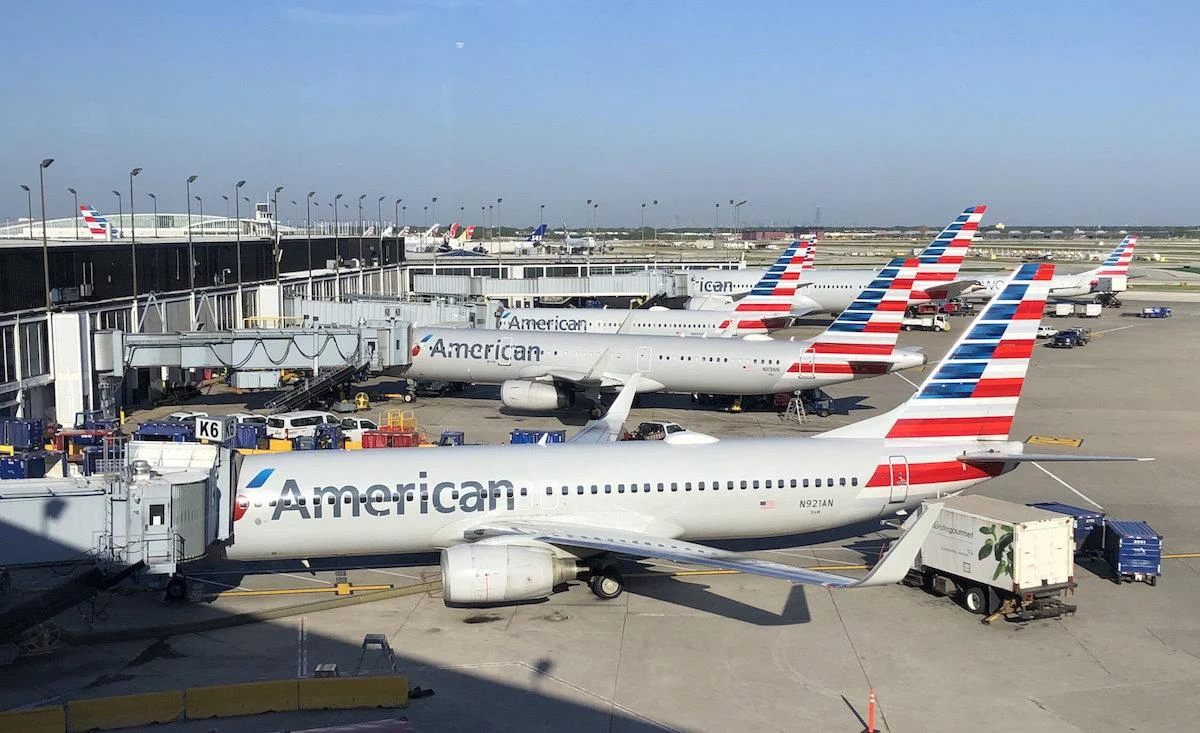
The Federal Aviation Administration enacted an unprecedented nationwide ground stop affecting all domestic departures across the United States, creating the most severe and widespread aviation disruption experienced in the country since the events of September 11, 2001. The emergency directive, triggered by catastrophic telecommunications failures spanning multiple Air Route Traffic Control Centers, brought commercial and private aviation to a virtual standstill, stranding tens of thousands of passengers and paralyzing logistics networks at airports nationwide.
Main Facts of the Emergency Directive
At approximately 3:54 PM Eastern Time on Friday, November 13, 2026, the Federal Aviation Administration (FAA) command center issued a mandatory ground stop directive to all aircraft operators. The emergency order mandated that all departing traffic remain grounded indefinitely, while inbound international flights were subjected to individual case-by-case management.
The text of the emergency transmission sent to pilots underscored the severity of the situation: "DUE TO EXTRAORDINARY CIRCUMSTANCES AND FOR REASONS OF SAFETY. ATTENTION ALL AIRCRAFT OPERATORS, BY ORDER OF THE FEDERAL AVIATION COMMAND CENTER ALL AIRPORTS ARE GROUND STOPPED. ALL DEPARTING TRAFFIC SHOULD REMAIN GROUND STOPPED UNTIL FURTHER NOTICE."
The disruption was not caused by severe weather or a physical security breach, but rather by sudden, widespread communication failures affecting critical infrastructure required to safely manage air traffic across multiple regions simultaneously. Aviation authorities initially slated the ground stop to remain in effect through 11:30 PM Eastern Time, though logistical recovery and cascading schedule impacts were projected to disrupt air travel well into the weekend.
Chronology of the Disruption
The crisis unfolded rapidly on Friday afternoon, catching aviation experts, airline dispatchers, and air traffic controllers off guard.
- 3:15 PM ET: Initial reports emerge from aviation monitors and specialized tracking networks indicating that major regional air traffic facilities—including Boston Center, New York Center, Chicago Center, and New York Approach—had suffered sudden and catastrophic losses of radio frequencies. Facilities quickly transitioned to Air Traffic Control Alert status as sectors within key airspace hubs lost the ability to communicate with aircraft.
- 3:45 PM ET: Air traffic facilities begin preparing for "ATC Zero" operations, a protocol implemented when a facility completely loses its capability to manage airspace. Unconfirmed reports indicate airspace sterilization procedures are initiated, though airborne aircraft are not universally ordered to immediately land at the nearest available airport, differentiating the event from post-9/11 protocols.
- 3:54 PM ET: The Federal Aviation Administration officially issues a formal nationwide ground stop directive, halting all departures across every U.S. commercial and general aviation airport.
- 4:30 PM ET: Transportation Secretary Sean Duffy releases the first official government confirmation, acknowledging that communication issues had impacted all Air Route Traffic Control Centers and confirming that technical teams were actively investigating the root cause.
- 5:15 PM ET: Department of Homeland Security leadership publicly addresses potential security concerns, explicitly stating that preliminary investigations revealed no indications of a cyberattack or deliberate terrorist threat, attributing the crisis instead to a profound telecommunications infrastructure failure.
Supporting Data and Technical Analysis
The sudden loss of nationwide communication channels highlights vulnerabilities in the technological backbone supporting the National Airspace System (NAS). Air Route Traffic Control Centers (ARTCCs) rely on complex, integrated networks of voice communication systems, radar feeds, and data links to track and guide aircraft flying at high altitudes between major metropolitan areas.
When these primary voice and data frequencies fail simultaneously across multiple geographically diverse centers, the entire system’s redundancy protocols are severely tested. Industry analysts noted that while localized telecommunications outages are managed routinely through backup landlines, satellite links, and neighboring sector support, a simultaneous nationwide failure points to a foundational system-wide vulnerability.
Coincidentally, the aviation sector was already parsing the rollout of new technological initiatives. Earlier in the week, the FAA commenced the nationwide deployment of its SMART (Strategic Management of Airspace, Routes and Trajectories) artificial intelligence tool designed to optimize traffic management at ARTCCs. While aviation journalists and technology reporters immediately analyzed the timing, federal officials and technical experts emphasized that there was no immediate evidence linking the AI rollout to the telecommunications failure, noting that the incident appeared localized within established operational equipment rather than the newly deployed software modules.
Official Responses and Government Statements
Federal agencies mobilized quickly to manage public messaging and coordinate emergency technical investigations.
Transportation Secretary Sean Duffy utilized public communication channels to apprise the public of the unfolding situation, stating that the agency was working around the clock to diagnose the telecommunications failure. "The FAA issued a nationwide ground stop for all U.S. airports following a communication issue impacting all Air Route Traffic Control Centers," Duffy stated. "FAA technicians are investigating the issue. We will provide immediate updates as we have them."
Concurrently, Secretary of Homeland Security Markwayne Mullin addressed mounting public speculation regarding the possibility of hostile cyber interference or state-sponsored disruption. Mullin asserted that federal intelligence and cybersecurity agencies had found no indications tying the outages to a cyberattack or national security threat, characterizing the event strictly as a telecommunications outage. Despite these assurances, aviation safety experts and congressional oversight committees signaled intentions to launch rigorous inquiries into why redundant telecommunications pathways failed to prevent a nationwide operational shutdown.
Broader Impact and Operational Implications
The operational fallout of a nationwide ground stop of this magnitude extends far beyond the immediate hours of the directive. Modern commercial airline scheduling is built on strict, highly optimized aircraft and crew rotations. When departures are halted while flights already en route are permitted to land, airports quickly experience severe gate congestion. Arriving aircraft occupy physical parking positions, preventing outbound aircraft from pushing back even if clearance is eventually granted.
Airlines face massive logistical hurdles in repositioning displaced flight crews who find themselves stranded out of base, leading to compounding delays and flight cancellations that inevitably stretch across multiple days. Passengers traveling for business or leisure experienced immediate disruptions, with thousands stranded at terminals across the country.
As the aviation industry works to restore normal scheduling parameters, the incident serves as a stark reminder of the delicate balance underlying modern transportation networks. The 2026 nationwide ground stop will undoubtedly prompt a comprehensive re-evaluation of critical infrastructure resilience, redundancy standards, and technological security within the United States civil aviation framework for years to come.