

Indigenous territories spanning from the remote taiga of Canada to the tropical basin of Ecuador and the high-altitude rugged terrain of Nepal are increasingly subjected to catastrophic weather patterns, including intensifying storms, sweeping wildfires, and devastating floods. Compounding these individual hazards is a disturbing modern trend: these climate-induced disasters rarely arrive as isolated, manageable incidents. Instead, they manifest as overlapping, compounding crises that strain local infrastructure, disrupt food supplies, and threaten traditional ways of life. Despite bearing the brunt of these compounding environmental shocks, Indigenous populations consistently demonstrate an advanced capacity for local response and ecological management—provided that global powers, national governments, and international financing bodies remove administrative barriers and grant them the autonomy to act.
While modern scientists and international policymakers increasingly acknowledge the intrinsic value of Indigenous ecological knowledge in combating global climate change, a critical blind spot persists. The indispensable role that Indigenous governance systems play in operationalizing and protecting that knowledge remains largely undervalued and underfunded.
A comprehensive global report published by Land Is Life, an international nonprofit organization dedicated to advancing Indigenous self-determination, sheds light on this disparity. The report details the widespread success of Indigenous-led climate adaptation and resilience strategies amidst escalating environmental crises. Furthermore, the publication asserts that bolstering Indigenous governance through robust legal recognition, equitable direct financing, and respectful institutional partnerships represents the single most effective methodology for mitigating climate disaster risk on a global scale.
The Imperative of Proven Solutions Over New Bureaucracy
According to Luisa Castañeda Quintana, executive director of Land Is Life, the global community must shift its perspective regarding Indigenous populations, moving past the narrow narrative of victimhood to recognize active leadership.
"We show that it’s not that they are only the most impacted, but they are already implementing effective solutions," Castañeda Quintana stated. "When it comes to adaptation, we don’t really need to create new structures or systems. We just need to see what is working."
This finding aligns with a growing body of academic and environmental research demonstrating that Indigenous self-determination, traditional land stewardship, and localized cultural practices constitute some of the most reliable, time-tested climate solutions available. The newly released report compiles dozens of empirical examples from diverse geographical regions. For instance, in Kenya, Indigenous Endorois and Tugen women successfully cultivated resilient, drought-resistant varieties of staple foods such as sorghum and millet. During periods of severe drought that decimated conventional agricultural yields across the region, these traditional crops provided some of the area’s only successful harvests.
Similarly, in South America, the Coordination of Indigenous Organizations of the Brazilian Amazon—the nation’s largest regional Indigenous network—coordinates community-led fire management protocols, provides emergency training, and mobilizes rapid-response teams to combat the rampant deforestation and deliberate fires plaguing the Amazon basin.
A Global Crisis Transcending National Borders
The empirical foundation of the Land Is Life report is derived from detailed case studies and more than 200 survey responses gathered across 46 countries. The research encompasses six primary global ecosystems: forests, mountains, drylands, freshwater systems, grasslands, and coastal zones.
Castañeda Quintana emphasized that a broad, transnational study was essential to underscore a fundamental reality: contemporary environmental disasters respect neither national borders nor ecological boundaries. Consequently, human responses must similarly transcend geopolitical divisions.
The data further highlights the compounding nature of modern ecological threats. More than 80 percent of survey respondents indicated that they currently confront two or more climate-related crises simultaneously. Moreover, over 90 percent reported a steady, alarming increase in the frequency of these overlapping disasters over the past decade.
Case Study: The Kichwa People of Sarayaku
The reality of compounding crises is vividly illustrated by the experience of the Kichwa People of Sarayaku, who inhabit more than 500 square miles of the Ecuadorian Amazon. In 2019, the community of roughly 1,600 residents faced catastrophic flooding along the Bobonaza River, which wiped out local crops and destroyed numerous homes.
Daniel Santi, president of the Sarayaku community, explained that his people weathered the disaster and mounted an effective recovery precisely because robust governance structures were already deeply established. For the Kichwa, self-determination provides the institutional autonomy required to formulate and execute pre-disaster preparation and emergency response plans.
"This organization makes it possible to confront any problem and any threat," Santi noted.
The synergy between Indigenous governance and traditional knowledge is what renders these adaptation strategies exceptionally effective. Environmental knowledge rooted deeply in local ecosystems can be deployed immediately during an emergency. For example, Sarayaku elders recognized specific, subtle alterations in rain and lightning patterns near the river’s headwaters—early warning signs that signaled an imminent flood—and promptly alerted the broader community.
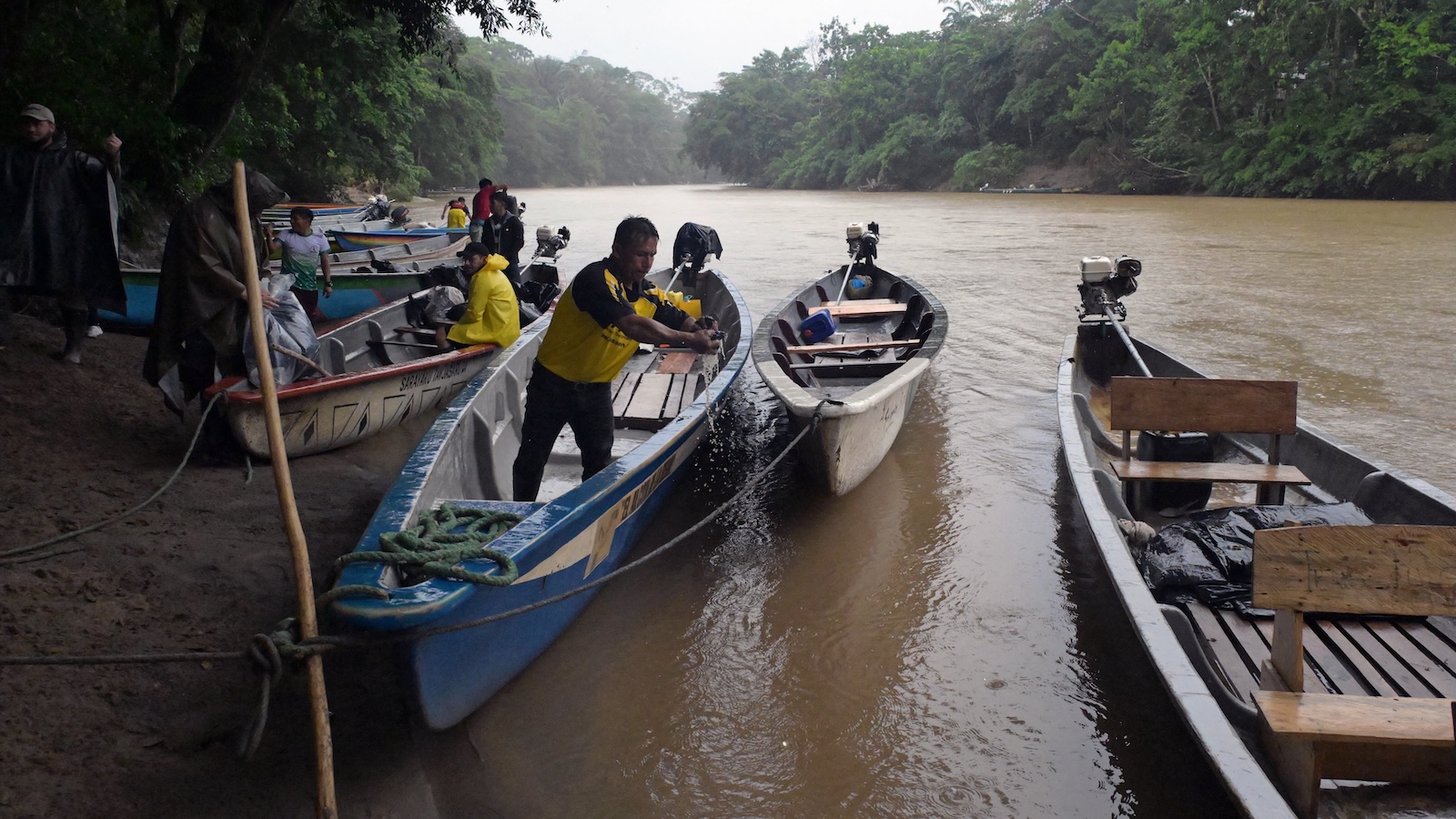
Furthermore, the administrative framework of Sarayaku incorporates transparent decision-making processes, established mechanisms to address urgent humanitarian needs (such as temporary housing for displaced families), and designated representatives tasked with communicating community status updates and resource requirements to external authorities. Santi attributes these organized responses to minga, a foundational Kichwa concept emphasizing solidarity, collective responsibility, and mutual aid.
Institutional Roadblocks and the Finance Gap
Despite the proven efficacy of Indigenous land stewardship, numerous national governments refuse to grant formal legal recognition to Indigenous territories or their governing bodies. In many regions, authorities actively suppress Indigenous languages—omitting them from emergency alert systems—and continue to criminalize traditional cultural practices. These systemic conditions severely undermine the practical implementation of Indigenous knowledge and governance.
Santi argues that while Indigenous communities have substantial wisdom to share with the international community regarding sustainable adaptation, communities requiring urgent assistance are continuously under-resourced as climate change accelerates. He advocates for expanded legal protections for Indigenous land rights, institutional authority, and genuine partnerships that prioritize Indigenous decision-making frameworks.
Similar collaborative models have yielded positive results elsewhere. In Peru’s Ausangate Regional Conservation Area, local Quechua communities partnered with an established conservation organization to document environmental indicators, enhance community-based monitoring programs, and pursue resilience-building initiatives that successfully integrated traditional knowledge with contemporary Western scientific research.
Conversely, the report identifies systemic shortcomings within many mainstream international climate mitigation and adaptation strategies. Common pitfalls include an over-reliance on short-term funding initiatives, the active rejection of Indigenous self-governance in favor of top-down bureaucratic control, and the appropriation of Indigenous ecological knowledge by external entities without adequate financial or political support for the source communities.
The Funding Disconnect: Billions Pledged, Little Reached
Despite mounting scientific consensus that Indigenous stewardship successfully mitigates environmental degradation and that direct financing yields high returns in global adaptation, adequate funding and legal security remain elusive.
"It’s always the lack of resources and the lack of access to funding that makes it so difficult for us to work, especially when climate change makes us the most vulnerable," said Anisha Buda, a member of the Kaike Magar community and program officer at the Indigenous Women Forum in Nepal.
Rather than prescribing a rigid template for Indigenous governance, the report urges world governments, philanthropic foundations, and global policymakers to cultivate socio-political conditions that empower Indigenous communities. Providing flexible, unrestrictive, and direct funding is cited as a vital prerequisite.
Land Is Life deliberately released its findings during New York Climate Week to highlight the urgent necessity for direct financial support. Although international donors and wealthy nations have pledged billions of dollars toward global climate initiatives, only a fraction of those funds ever reaches Indigenous communities. Even when specific allocations are formally designated for Indigenous populations, grassroots leaders report that bureaucratic gatekeeping often diverts the money elsewhere.
"It’s also so frustrating, right?" Buda remarked. "Because there are so many projects that are supposed to be for Indigenous peoples, but they are implemented by non-Indigenous organizations and non-Indigenous peoples."
This chronic underfunding is further exacerbated by shifting geopolitical priorities. With the United States and various European nations scaling back multi-billion-dollar international climate finance commitments, and prolonged conflicts in Eastern Europe and the Middle East straining global economic resources, Indigenous leaders express growing concern that their communities will be marginalized entirely.
Maximizing Efficiency Through Proven Models
Gisela Hurtado, the primary author of the report, emphasized the strategic importance of investing in functional frameworks during a period of constrained global resources.
"We are in a moment where resources are scarce," Hurtado said. "Where can we put the little money that we have? Where can we put it to make it much more effective? And for me, for the report, the idea is put it into what already is working."
As global temperatures continue to rise and the frequency of extreme weather events escalates, Hurtado maintains that the community-led strategies documented in the report provide an essential roadmap for humanity’s collective future.
"What they are seeing in the territories, we’re going to see it also in the future," Hurtado concluded. "They are the ones that are much more connected with the Earth to know what is going to happen in the future."





Leave a Reply