
The Hashemite Kingdom of Jordan has long occupied a unique and vital geopolitical position in the Middle East, acting not only as a stabilizing diplomatic force but also as a primary sanctuary for millions of displaced individuals fleeing regional conflicts. Against this complex backdrop, World Health Organization (WHO) Director-General Dr. Tedros Adhanom Ghebreyesus arrived in Amman to commence a high-profile, two-day State visit. The mission is designed to underscore the deep-rooted partnership between the global health agency and the Jordanian government, focusing heavily on universal health coverage (UHC), mental health integration, and resilient humanitarian health action in times of acute crisis.
From high-level diplomatic engagements with the nation’s monarch to bedside visits with evacuated pediatric patients from the Gaza Strip, the Director-General’s itinerary serves as a powerful testament to the intersection of public health diplomacy and compassionate leadership. Accompanied by prominent international advocates—including Prince Harry, Duke of Sussex, and Meghan, Duchess of Sussex, in their capacities as founders of Archewell Philanthropies—the delegation’s presence has brought global visibility to systemic health challenges, regional resource strains, and innovative models of care operating under extraordinary pressures.
King Abdullah II and the Imperative of Regional Health Security
The cornerstone of the first day’s agenda was a formal audience between Dr. Tedros and His Majesty King Abdullah II at the royal palace in Amman. This high-level dialogue placed health security firmly at the forefront of national and international agendas, emphasizing the indispensable role Jordan plays in maintaining regional stability through humanitarian outreach.
Discussions between the WHO chief and the Jordanian monarch centered on three critical pillars: strengthening national health systems, expanding equitable access to primary and specialized care, and sustaining international support for emergency medical responses across the region. Particular attention was devoted to the protracted refugee crisis within Jordan’s borders, as well as the immediate medical needs of Palestinian populations, including patients evacuated directly from the besieged Gaza Strip for urgent, life-saving interventions.
Jordan currently hosts more than three million registered refugees, predominantly from neighboring Syria and the occupied Palestinian territories. Despite enduring severe economic headwinds, resource scarcity, and systemic infrastructural pressures, the kingdom has steadfastly maintained an open-door policy, granting refugees access to public health infrastructure, immunization programs, and essential medical treatments.
Expressing his profound gratitude, Dr. Tedros praised the monarch’s visionary leadership. "I wish to express my appreciation to His Majesty King Abdullah II for his commitment to advancing universal health coverage," Dr. Tedros stated during the proceedings. "I also extend my thanks to His Majesty and the people of Jordan for their solidarity and generosity in providing health services to more than three million refugees, primarily from Gaza and Syria, who are living in the country."
The Director-General explicitly highlighted the kingdom’s pioneering humanitarian initiatives, drawing specific attention to the royal-backed Medical Corridor. This strategic framework facilitates the transit and treatment of severely ill and injured children from Gaza who would otherwise face insurmountable barriers to care due to the collapse of local medical infrastructure. "Jordan continues to show the world what it truly means to put health and humanity first," Dr. Tedros added.
Frontline Realities: Witnessing the Impact of Medical Evacuations
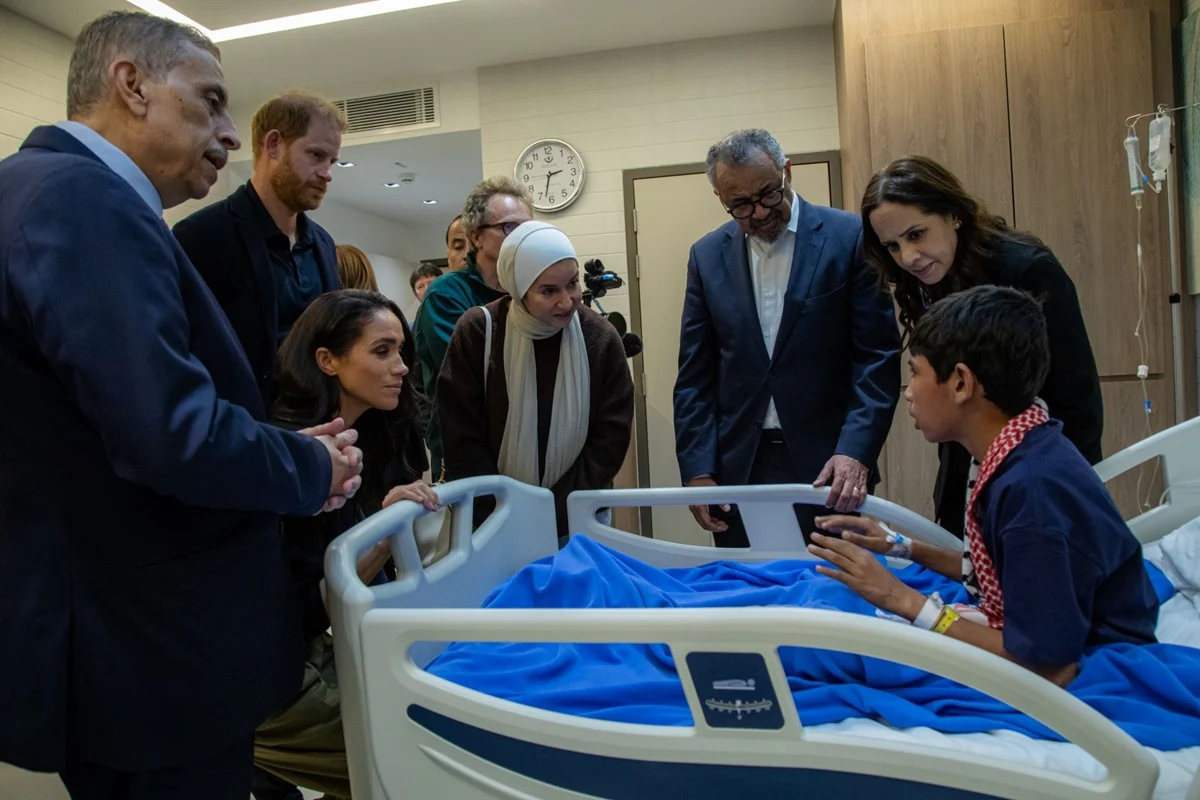
Moving from high-level statecraft to grassroots humanitarian realities, Dr. Tedros spent a portion of the opening day touring a specialized, WHO-supported hospital facility in Amman dedicated to treating pediatric patients evacuated from conflict zones.
During the hospital tour, the WHO Director-General engaged directly with young patients, their families, and the multidisciplinary teams of doctors, nurses, and allied health professionals operating on the front lines of emergency medicine. These practitioners provide comprehensive, life-saving care for severe trauma injuries, advanced oncological conditions, and other catastrophic illnesses that require long-term institutional support.
The visit starkly illuminated the logistical and humanitarian importance of the medical evacuation corridor through Jordan. Public health experts note that as conflicts prolong and regional health infrastructure deteriorates, the capacity of transit nations like Jordan to absorb, triage, and treat critical care patients becomes an indispensable safety valve for the entire international health architecture. However, WHO officials have continually stressed that these national systems cannot bear the financial and operational weight indefinitely without robust, predictable, and sustained international donor support.
Mobilizing Resources: High-Level Partner and Donor Consultations
Recognizing the immense fiscal pressures placed upon host nations, Dr. Tedros convened a strategic, high-level roundtable meeting later in the day. The gathering brought together key health partners, international donor governments, United Nations agencies, and philanthropic foundations to map out sustainable financing priorities for Jordan’s health sector.
The dialogue addressed two interconnected financial imperatives: bolstering the resilience of Jordan’s domestic health system to withstand chronic caseloads, and scaling up funding for active humanitarian health operations. A primary focus of the funding discussions was the expansion of integrated mental health services—an area where Jordan has made significant legislative and structural strides—and the ongoing subsidization of healthcare access for large-scale refugee communities.
Participants analyzed existing funding gaps and explored innovative financing mechanisms designed to protect public health budgets from sudden shocks caused by regional instability. Dr. Tedros welcomed the strong collaboration demonstrated by international partners, emphasizing that sustained investment in Jordan yields dividends not only for the kingdom’s citizens and refugees but for regional security as a whole.
Advancing Universal Health Coverage and Mental Health Integration
In separate bilateral talks with Jordan’s Minister of Health, Dr. Tedros reviewed the nation’s ongoing trajectory toward achieving comprehensive universal health coverage. Jordan has increasingly emerged as a global model for embedding primary health care at the community level, ensuring that health facilities are accessible, well-resourced, and capable of addressing preventative and curative needs alike.
A notable achievement in Jordan’s public health evolution is the successful integration of mental health services into routine primary care clinics. Historically, mental healthcare in many parts of the developing world has been siloed, stigmatized, and chronically underfunded. Jordan, however, has systematically worked to decentralize psychological support, training primary care physicians and community health workers to identify and treat common mental health disorders, thereby reducing stigma and expanding treatment reach.
This structural reform aligns closely with the Director-General’s Special Initiative for Mental Health, a flagship WHO program aimed at ensuring millions of people in underserved or crisis-affected regions gain access to quality, affordable mental healthcare. WHO technical teams continue to work alongside the Jordanian Ministry of Health to refine these integration models, establishing a blueprint that can be replicated in other middle-income and refugee-hosting nations.
The Role of Philanthropy and International Advocacy
A distinctive dimension of the state visit was the active participation of Prince Harry, Duke of Sussex, and Meghan, Duchess of Sussex, who joined Dr. Tedros for several key engagements. Operating through their foundation, Archewell Philanthropies, the Duke and Duchess have maintained a multi-year partnership with the World Health Organization, championing equitable access to medical interventions, vaccine equity initiatives, emergency medical responses, and global mental health awareness.
Prince Harry’s involvement focused heavily on his ongoing advocacy as an international ally for mental health reform. Throughout the engagements, he underscored the critical necessity of investing in psychological resilience across communities fractured by conflict and economic deprivation, drawing special attention to the vulnerability of men, adolescents, and children caught in humanitarian crises.
Reflecting on the collaborative mission, Dr. Tedros expressed profound gratitude for the enduring support of the foundation. "I want to thank our partners, including Prince Harry, Duke of Sussex, and Meghan, Duchess of Sussex, whose commitment to mental health and humanitarian action has helped bring visibility, resources, and hope to some of the world’s most vulnerable communities. Their collaboration is helping to advance WHO’s mission to ensure health for all."
Adding his perspective on the ground in Amman, Prince Harry shared his observations regarding the resilience of the Jordanian people and the tangible impact of international solidarity. "It is an honour to join the Director-General of the World Health Organization in Jordan, a country that is leading by example in compassion, resilience, and innovation," the Duke of Sussex remarked.
"Through our work with Archewell Philanthropies, my wife and I have seen first-hand the impact of WHO’s efforts to support mental health and deliver life-saving care in emergencies," Prince Harry continued. "We remain deeply committed to advancing awareness, reducing stigma, and expanding access to mental health support for all those affected by conflict and crisis. Mental health is fundamental to recovery, dignity, and long-term peace, and we are proud to stand with WHO and partners around the world to make it a global priority."
Looking Ahead: Day Two Itinerary and Comprehensive Agenda
As the first day of the state visit drew to a close, preparations were finalized for a comprehensive second-day schedule designed to examine specialized areas of public health infrastructure, community empowerment, and advanced clinical care within Jordan.
The itinerary for the second day includes:
- A targeted visit to Jordan’s National Center for Rehabilitation of Addicts, an institution supported by the WHO that delivers integrated medical, psychological, and social rehabilitation services to individuals struggling with substance use disorders, treating addiction as a public health issue rather than a purely punitive challenge.
- Collaborative sessions with prominent community leaders and women’s empowerment groups, highlighted by engagements with the Jordanian Hashemite Fund for Human Development (JOHUD), which plays a pivotal role in grassroots community development, gender equality, and local health promotion.
- A strategic site visit to the internationally renowned King Hussein Cancer Center (KHCC), where Dr. Tedros and the delegation will review state-of-the-art advancements in oncological care, research methodologies, and regional medical partnerships aimed at improving cancer survival rates across the Middle East.
- Final bilateral wrap-up sessions with international humanitarian partners and operational coordinators, reinforcing Jordan’s indispensable status as a logistical and humanitarian hub for emergency medical evacuations and regional health resilience.
Broader Implications and Analytical Outlook
Public health analysts observing the high-profile visit note that Jordan’s healthcare system operates under structural pressures that serve as a microcosm of global health vulnerabilities. The convergence of chronic non-communicable diseases, recurring regional displacement crises, and fiscal constraints places extraordinary demands on the kingdom’s institutional capacity.
By centering international attention on Jordan, the WHO aims to achieve two strategic objectives. First, the visit acts as a diplomatic catalyst to mobilize predictable, multi-year donor funding to support refugee-hosting nations, mitigating the risk of donor fatigue as protracted crises stretch into decades. Second, it validates and reinforces primary health care and mental health integration as cost-effective, scalable interventions that can withstand systemic shocks.
Furthermore, the integration of high-profile philanthropic advocacy—exemplified by the participation of Archewell Philanthropies—demonstrates the evolving nature of global health governance. By leveraging public-private partnerships and media visibility, international health agencies can transcend traditional diplomatic channels, engaging broader public audiences and elevating urgent mental health and humanitarian mandates onto the global stage.
As Dr. Tedros concludes his state visit, the enduring message from Amman remains clear: the preservation of human dignity through accessible healthcare is not merely a technical challenge of resource distribution, but a profound moral imperative requiring unwavering international solidarity, financial commitment, and visionary leadership.







Leave a Reply