
The Daily Commute Beneath Capitol Hill
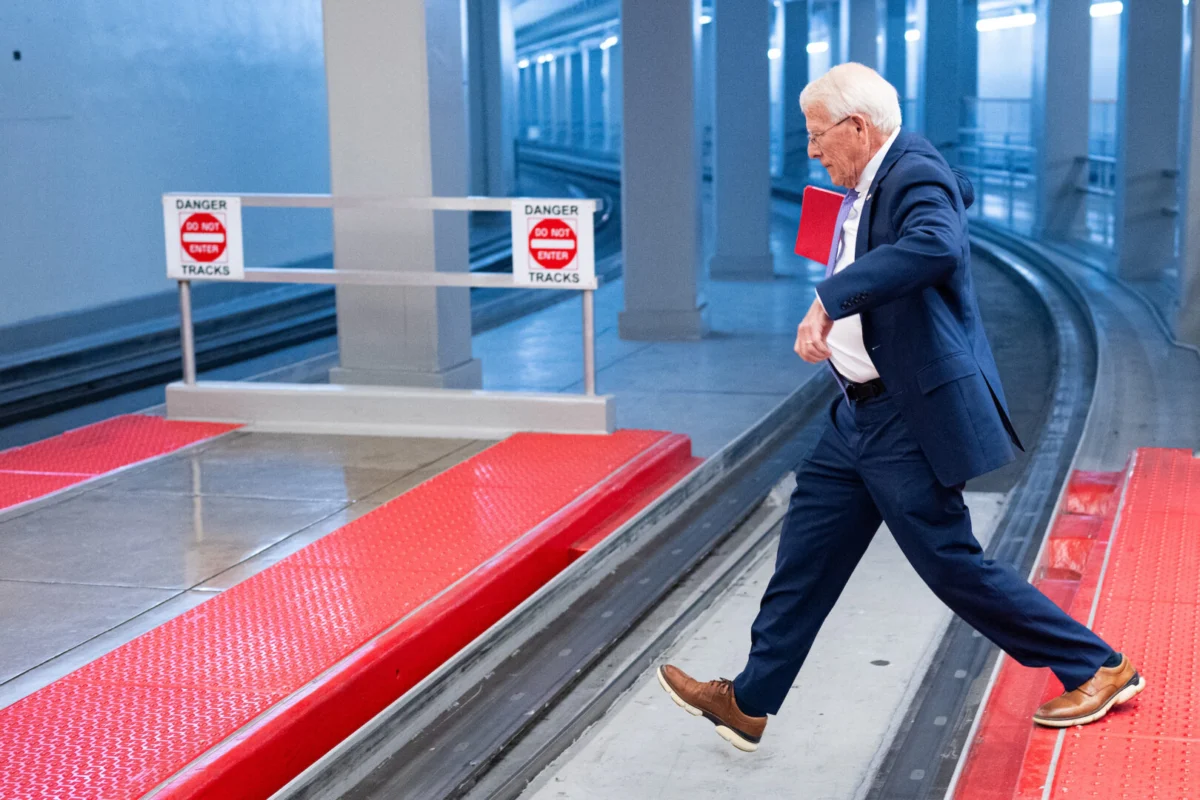
On Tuesday, September 15, 2026, Sen. Roger Wicker, a Republican representing Mississippi and a pivotal figure in the Senate Armed Services Committee, was captured in a moment of candid interaction while utilizing the Capitol’s iconic subway system. The senator, who has served in the upper chamber since 2007, was observed waiting for a rail car before momentarily stepping onto the tracks to engage with an acquaintance situated on the opposite side of the transit line.
This brief pause in his schedule highlights the unique intersection of professional duty and social interaction that defines the life of a U.S. Senator. The Russell Senate subway, which connects the Russell building to the Capitol, is one of three such lines operating beneath the complex, serving as a primary artery for members of Congress to reach the Senate floor in time for crucial votes. The system, which underwent significant modernization efforts in recent years to address infrastructure aging, remains a vital piece of the Capitol’s operational puzzle.
Contextualizing the Legislative Environment
The week of September 15, 2026, proved to be a particularly high-tempo period for the Senate. As the fiscal year-end approached, lawmakers were embroiled in complex negotiations regarding appropriations bills and defense spending. Senator Wicker, known for his hawkish stance on national security and his consistent advocacy for increased military modernization, has been at the forefront of debates regarding the Fiscal Year 2027 National Defense Authorization Act (NDAA).
The atmosphere on Capitol Hill during mid-September is historically characterized by intense legislative pressure. With the looming October 1 deadline for federal funding, the subterranean transit system often becomes a pressure cooker where senators, staff, and journalists cross paths, leading to the kind of impromptu meetings witnessed on Tuesday. These interactions, while seemingly trivial, are often where the legislative gears are greased, allowing for informal consensus-building away from the formal constraints of committee hearing rooms or the Senate floor.
A Chronology of Capitol Transit Infrastructure
The Capitol subway system has evolved significantly since its inception in 1909. Initially a simple electric monorail, the system was expanded and updated to include automated vehicles that currently shuttle senators between the Russell, Dirksen, and Hart office buildings and the Capitol.
- 1909: The first subway line opened between the Capitol and the Russell Senate Office Building.
- 1960: The system was expanded to connect to the Dirksen Senate Office Building.
- 1993: The current fleet of automated rail cars began operation, replacing the human-operated shuttles of the mid-20th century.
- 2024-2026: Recent upgrades to the signaling and electrical systems were implemented to ensure the reliability of the aging infrastructure, which now transports thousands of staff members and lawmakers daily.
For Senator Wicker, navigating this system is a routine requirement of his office. His presence on the tracks—a common sight for those who work within the complex—underscores the physical proximity required for effective governance. In an era where digital communication dominates, the necessity of face-to-face interaction in the halls of Congress remains an enduring aspect of the democratic process.
Supporting Data and Legislative Impact
As a senior member of the Senate, Wicker’s legislative influence extends across several policy domains. His focus on maritime security, defense procurement, and rural development in Mississippi requires constant coordination with various Senate offices. Data from the Senate’s legislative tracking services indicate that Wicker has been a primary sponsor of over 15 major pieces of legislation in the current session, ranging from infrastructure funding to aerospace policy.
The transit system’s efficiency is more than a matter of convenience; it is a matter of legislative continuity. In instances where the Senate is operating under "cloture" or conducting "vote-a-ramas," the ability to transit quickly between the office buildings and the chamber is critical. A delay of even a few minutes can, in theory, impact a senator’s ability to participate in procedural votes.
Broader Implications of Congressional Connectivity
The brief interaction captured between Senator Wicker and an acquaintance serves as a microcosm of the political ecosystem. Critics and supporters alike often debate the "bubble" of Washington D.C., yet the subterranean interactions between senators and their colleagues, staff, and the press corps facilitate a level of interpersonal diplomacy that is often lost in more rigid, partisan environments.
While the primary function of the subway is logistical, its social utility is undeniable. It provides a rare, semi-private space where members of opposite parties may find themselves waiting for the same train, leading to spontaneous conversations that can bridge legislative divides. Political scientists have long noted that as congressional work becomes more polarized, these "soft" spaces for interaction become increasingly important for maintaining the institutional decorum of the Senate.
Official Responses and Institutional Perspective
While there was no official statement from the Senator’s office regarding the transit interaction, sources familiar with Senate operations noted that such occurrences are commonplace. The Architect of the Capitol, the office responsible for maintaining the subway system, has frequently emphasized that while the tracks are strictly restricted areas, members of Congress occasionally step across during downtime when the system is stationary.
The incident also highlights the role of the press in covering the daily life of lawmakers. The presence of photographers from outlets like CQ Roll Call provides the public with a window into the reality of the legislative process—a process that is often obscured by jargon and partisan posturing. By documenting the mundane—the walking, the waiting, and the brief greetings—these visual records humanize the figures responsible for shaping national policy.
Conclusion: The Human Element in Governance
As Senator Wicker continues his work in the Senate, the image of him traversing the Russell subway tracks remains a potent symbol of the dual nature of his role: the high-level policy strategist and the physical occupant of a historic, albeit aging, institution. As the 119th Congress moves into its final months of the 2026 calendar year, the pressures of the legislative calendar will only intensify.
The logistical challenges of the Capitol, including its subways, staircases, and historic tunnels, serve as the stage upon which the nation’s business is conducted. Senator Wicker’s moment on the tracks is not merely a photograph of a politician in transit; it is a reflection of the persistence and constant movement required to maintain the functionality of the United States government. As the Senate prepares for the final push on appropriations and policy reforms, the sight of members navigating these subterranean paths remains a testament to the enduring, if often physically demanding, nature of public service.
Ultimately, the connectivity of the Capitol complex is essential to the legislative efficiency that the American public expects from its elected representatives. Whether navigating the Senate subway or the complex currents of partisan debate, the ability of lawmakers like Senator Wicker to bridge gaps—physical and ideological—remains a cornerstone of the legislative institution.




Leave a Reply