This elemental mystery of the creative spirit was a central focus for Swiss psychiatrist Carl Jung, particularly in his seminal 1939 work, Modern Man in Search of a Soul. Writing during a period of unprecedented global upheaval—the onset of World War II—Jung sought to reconcile the ancient understanding of creativity as a divine gift with the emerging scientific rigor of the 20th century. Jung’s perspective rejected the reductionism that sought to "microscopize" the soul, instead arguing that the human psyche is the primary "womb" of all arts and sciences.
The Historical Context of Jung’s Inquiry
Carl Jung’s exploration of creativity occurred at a critical juncture in intellectual history. The early 20th century was marked by a transition from the age of mysticism—where creativity was often attributed to muses or external spiritual forces—to the age of empirical science. While the burgeoning field of neurology began looking for the physical seats of imagination in the brain, Jung maintained that the creative imagination was the "only primordial phenomenon" accessible to humanity.
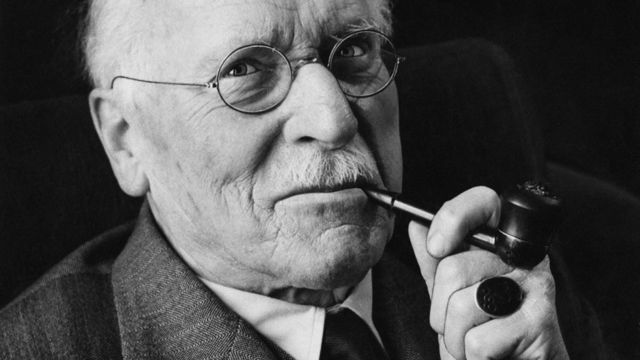
In 1939, as Europe descended into the most destructive conflict in human history, Jung’s focus on the "soul" of the modern individual was both a psychological and a philosophical necessity. He believed that the chaos of the external world was a reflection of the internal state of the collective human psyche. To understand the "warp and weft of the mind" through art was, for Jung, a way to understand the very mechanisms of human survival and evolution.
The Two Modes of Artistic Creation
A cornerstone of Jung’s theory is the distinction between two primary modes of artistic creation: the psychological and the visionary. These modes represent different ways in which the psyche processes reality and translates it into form.
The Psychological Mode
The psychological mode of creation draws its material from the realm of conscious human experience. This includes the lessons of life, emotional shocks, the experience of passion, and the crises of human destiny. In this mode, the artist—often referred to by Jung as "the poet"—assimilates common human experiences and raises them to a level of poetic clarity.

According to Jung, works produced in this mode do not require psychological interpretation because they are, by nature, self-explanatory. They reflect the "eternally recurrent sorrow and joy" of human life. The artist’s role here is to illuminate what the average person might evade or sense only as a "dull discomfort." By bringing these conscious contents into sharp focus, the artist provides the reader or viewer with a greater depth of human insight.
The Visionary Mode
In contrast, the visionary mode of creation reverses these conditions. The material for such art does not come from the familiar world of conscious experience but from the "hinterland" of the mind. Jung describes this as a "primordial experience" that surpasses human understanding. This mode evokes the "abyss of time" or a "super-human world of contrasting light and darkness."
Visionary art often bewilders the audience. It does not reflect the ordered world of daily life but instead "rends the curtain" to allow a glimpse into the unfathomed depths of the unconscious. Jung noted that while psychological art deals with the known, visionary art points to the unknown and the hidden. This mode is closely related to the realm of dreams, which Jung famously described as "eclipses of consciousness." Like a dream, a great work of visionary art does not explain itself; it presents an image and leaves the viewer to draw their own conclusions.

The Collective Unconscious and the Divergence from Freud
Jung’s theories on creativity marked a radical departure from those of his former mentor, Sigmund Freud. Freud’s conception of creativity was largely reductive, viewing art as a byproduct of an artist’s personal neuroses or early childhood traumas. Jung, however, viewed such "reductive analysis" as detrimental to the understanding of the creative person.
While Jung acknowledged that personal experience informs art, he insisted that the raw material of great art is impersonal. He introduced the concept of the "collective unconscious"—a reservoir of shared human experiences and archetypes that transcend the individual.
Jung argued that great poetry and art draw strength from the life of mankind, not just the life of the artist. He believed that every era has its own "psychic ailment" or bias, and the collective unconscious acts as a compensatory mechanism. The artist, acting as a "seer" or "leader," allows themselves to be guided by the unexpressed desires of their time, producing work that provides a "message to generations."

The Paradox of the Creative Person
Jung’s analysis highlights a fundamental duality within the artist. He posits that every creative person is a synthesis of contradictory aptitudes. On one side, they are a human being with a personal life and a desire for happiness and security. On the other, they are an "impersonal, creative process"—an instrument through which art realizes its own purpose.
This duality often results in inherent suffering. Jung rejected the "myth of the tortured genius" as a necessary condition for art, but he recognized that the "creative fire" requires a heavy expenditure of energy. This energy is often drained from other aspects of the artist’s life, leading to personal conflicts and a sense of being swept along by a "subterranean current" of the unconscious.
In Jung’s view, the artist is "collective man"—one who carries and shapes the unconscious psychic life of humanity. Because the creative force is often ruthless, it can override personal desires, leaving the conscious ego as a "helpless observer."

Implications for Modern Criticism and the "Cancelled" Artist
Jung’s perspective offers a significant counterpoint to contemporary debates regarding the moral evaluation of art based on the artist’s personal life. In recent years, there has been an increasing trend toward renouncing works of art if the creator’s personal conduct is found wanting by modern standards.
However, Jung argued that the secret of artistic effectiveness lies in a return to a level of experience where "it is man who lives, and not the individual." Because great art is objective and impersonal, Jung maintained that the personal life of the artist is essentially irrelevant to the quality and impact of the work. He suggested that the personal life might be a "help or a hindrance" to the creative task, but it does not constitute the essence of the art itself. This objective view suggests that the "weal or woe" of a single human being—even the artist—counts for little compared to the "human existence" expressed through the work.
Chronology of Jung’s Thought on Creativity
- 1913: Jung’s formal break with Sigmund Freud, leading to the development of analytical psychology.
- 1920s: Jung publishes early essays on the relationship between psychology and literature, beginning to distinguish between personal and collective factors in art.
- 1933: The first English edition of Modern Man in Search of a Soul is published, introducing his theories on the "visionary" and "psychological" modes to a broader audience.
- 1939: Jung publishes a revised and expanded version of his thoughts on creativity within the context of a world at war, emphasizing the role of the artist as a compensatory figure for society.
- Post-1945: Jung’s concepts of archetypes and the collective unconscious become foundational in both psychological circles and the field of humanities, influencing literary criticism and art theory for decades.
Broader Impact and Future Considerations
Jung’s legacy continues to influence how we understand the creative process today. While modern neuroscience uses fMRI scans to map the brain’s "Default Mode Network"—often associated with imagination and "mind-wandering"—Jung’s work reminds us of the qualitative, "acausal" mystery of creativity that eludes purely rational formation.

His belief that the psyche is a "door that opens upon the human world from a world beyond" remains a compelling framework for artists and thinkers who sense that their work comes from a source deeper than their own conscious ego. As society navigates an era of "noise" and rapid information turnover, Jung’s assurance that the voice of the individual visionary can "bellow into the centuries" provides a lasting testament to the power of the creative spirit.
In the final analysis, Jung’s work suggests that art is not merely a form of entertainment or personal expression, but a vital psychological function—a means of healing the "psychic ailment" of an epoch and reconnecting modern man with the timeless depths of the soul.