
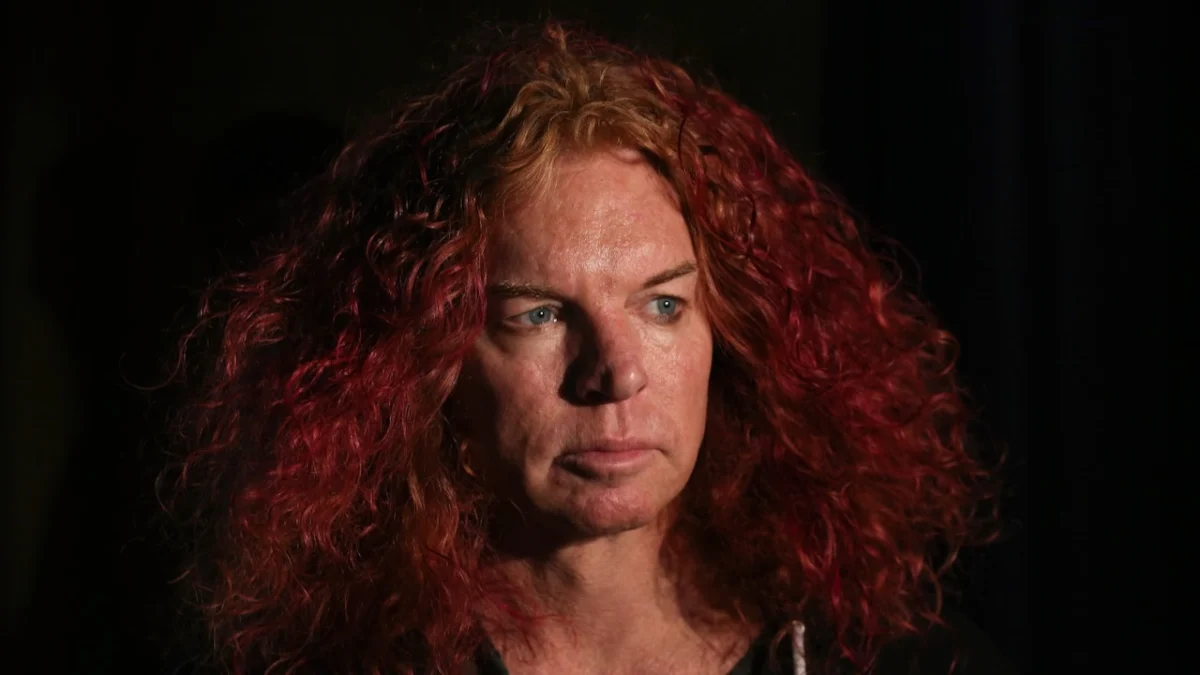
Scott Thompson, the veteran comedian and performer globally recognized by his stage persona Carrot Top, was hospitalized in Las Vegas on Friday night following an apparent suicide attempt. The incident, which occurred ahead of his scheduled performance at the Luxor Hotel and Casino, has sent shockwaves through the entertainment industry, prompting an immediate cancellation of his ongoing residency and sparking a broader conversation regarding the mental health challenges often faced by long-term performers in the high-pressure environment of the Las Vegas strip.
A representative for the 61-year-old comedian confirmed the development to media outlets on Saturday morning. In a brief but poignant statement, the representative noted that Thompson is currently receiving medical attention and the necessary support services required for his recovery. “Scott is recovering in the hospital and is receiving the care and support he needs,” the statement read. “His family and those closest to him expressed gratitude for the concern and support while respectfully asking for privacy during this difficult time.”
Chronology of Events
The events of Friday evening unfolded rapidly, disrupting the typical operations of the Luxor’s Atrium Showroom. Thompson, who has maintained a consistent and highly successful residency at the property for nearly two decades, was slated to take the stage for his nightly performance.
According to reports, emergency services were dispatched to the location following a distress call. While specific details regarding the nature of the incident remain protected under medical privacy laws, officials confirmed that Thompson was transported to a local medical facility for urgent stabilization. By late Friday evening, the Luxor had issued a notification to ticket holders, citing “unforeseen circumstances” as the reason for the show’s cancellation. As of Saturday, there has been no official word on when his residency will resume, though industry experts anticipate an extended hiatus to allow for his recovery and mental health evaluation.
The Career and Persona of Scott Thompson
To understand the magnitude of this event, one must consider the unique position Scott Thompson holds in the annals of American comedy. Born in Rockledge, Florida, Thompson rose to prominence in the late 1980s and early 1990s. His act—characterized by high-energy prop comedy, a frenetic delivery, and his distinctive physical appearance—made him a staple of late-night television, particularly The Tonight Show with Jay Leno, where he appeared dozens of times.
In 2005, Thompson pivoted from touring to a permanent residency at the Luxor. This move was initially viewed as a gamble, as the landscape of Las Vegas entertainment was shifting toward large-scale Cirque du Soleil-style productions. However, Thompson defied expectations. His show became a fixture of the Las Vegas entertainment scene, earning him a dedicated fan base and a reputation for being one of the hardest-working performers in the city. Over the last 20 years, he has performed thousands of shows, maintaining a level of physical and creative output that is demanding even for performers half his age.
Mental Health in the Entertainment Industry
The hospitalization of a high-profile figure like Carrot Top highlights the pervasive, often invisible, struggles of those in the entertainment spotlight. Performing night after night in a city like Las Vegas—a place defined by a “the show must go on” culture—can exert immense pressure on the mental well-being of artists.
Mental health professionals have long noted that performers who rely on a consistent, high-energy stage persona are particularly susceptible to burnout, isolation, and depression. The dichotomy between the public face of a comedian—whose job is to provoke laughter and joy—and the internal reality of their personal lives can create a significant psychological burden. Dr. Aris Thorne, a clinical psychologist specializing in performance-based mental health, explains that the "clown’s paradox" is a well-documented phenomenon. “When a performer’s identity is inextricably linked to a character that must be perpetually upbeat, the performer often feels unable to express genuine distress, fearing that vulnerability will shatter the illusion or disappoint their audience,” Thorne stated.
Furthermore, the isolation of living in a transient city, combined with the loss of anonymity, often exacerbates these feelings. For Thompson, who has spent the better part of two decades in the localized vacuum of the Las Vegas residency system, the pressures are multifaceted.
Industry Implications and Public Response
The entertainment community has responded with an outpouring of support for Thompson. Fellow comedians, many of whom have worked alongside him on the circuit, have taken to social media to express their shock and to emphasize the importance of destigmatizing mental health issues.
From an economic standpoint, the incident has highlighted the fragility of the Las Vegas residency model. While these residencies provide stability for performers, they also create a singular point of failure. The sudden suspension of a show of this size impacts not only the performer but the entire support staff, stage crew, and hotel operations. MGM Resorts International, which operates the Luxor, has not provided specific details regarding the impact on future bookings, but they have signaled full cooperation with Thompson’s team, prioritizing his health over contractual obligations.
The Need for Proactive Support Systems
This incident serves as a grim reminder of the necessity for robust mental health resources within the entertainment industry. Major unions and talent agencies have, in recent years, begun to implement better mental health support programs, but advocates argue that more needs to be done.
The suicide attempt has reignited a discussion about whether venues and production companies should be required to provide mandatory counseling or mental health check-ins for performers in long-term residencies. Such a system could provide a safety net for artists who might otherwise suffer in silence until a crisis point is reached.
“Mental health is not a private matter when it reaches the point of a public emergency,” says labor activist Sarah Jenkins. “The industry has a responsibility to recognize when a performer is nearing burnout and to provide the space and resources to prevent these tragedies before they occur. We celebrate the laughter they provide, but we must also be willing to protect the people behind the masks.”
Moving Forward
As Scott Thompson continues his recovery, the primary focus of his inner circle remains his long-term health and well-being. The road to recovery following a mental health crisis is complex and non-linear, requiring professional intervention, family support, and time away from the pressures of public performance.
The public interest in this story reflects a broader shift in how society views mental health. Where such events might have once been whispered about or minimized, there is now an increasing demand for transparency and a collective acknowledgment that high-profile success does not immunize individuals against human suffering.
For now, the Luxor’s showroom remains quiet, and the focus remains on the man behind the props. As the industry watches and waits, the conversation about the human cost of entertainment continues to evolve.
If you or someone you know is experiencing a mental health crisis or having thoughts of suicide, call or text 988 to reach the Suicide & Crisis Lifeline, available 24/7. The service is free, confidential, and available to anyone in the United States and Canada.








Leave a Reply