
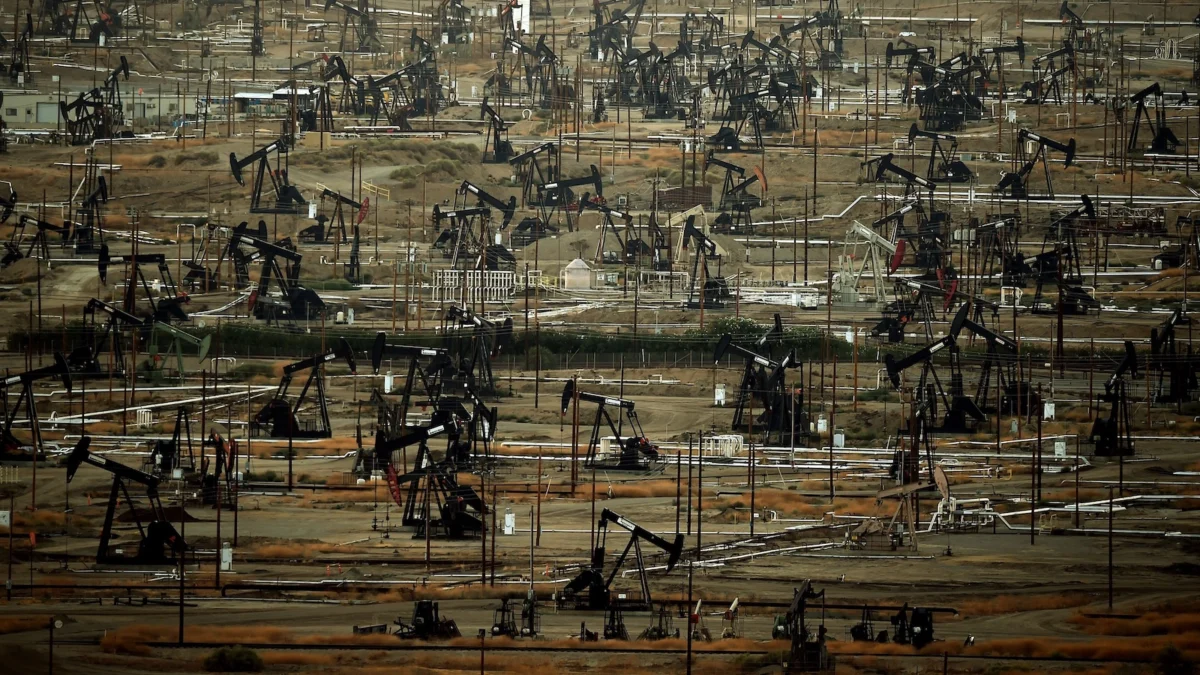
The trajectory of California’s climate policy and its economic stability is currently being debated not just on campaign stages, but in the corporate boardrooms of Houston and the control rooms of aging refineries along the Pacific Coast. As the state approaches a pivotal primary on June 2, the most influential entity in the race for the next governor is arguably not a politician, but a multinational corporation: Chevron. Founded in California over a century ago, Chevron remains a titan of the state’s economy even as it relocates its headquarters and clashes with the very regulators tasked with phasing out its primary products.
The 2026 gubernatorial election arrives at a moment of unprecedented transition. California, the world’s fifth-largest economy as of 2025, is attempting a feat never before accomplished by a sub-national entity of its size: a managed decline of the fossil fuel industry while simultaneously scaling a massive green energy infrastructure. This transition has placed the leading candidates in a difficult position, forced to choose between the aggressive decarbonization goals set by outgoing Governor Gavin Newsom and the immediate economic reality of high gas prices and a fragile energy supply chain.
The Chevron Controversy and the Becerra Campaign
The role of "Big Oil" in California politics reached a boiling point last month during a high-profile interview with Xavier Becerra, the leading Democratic candidate and former U.S. Secretary of Health and Human Services. When questioned about campaign contributions from Chevron, Becerra provided a response that has since become a centerpiece of the primary’s advertising wars. Becerra noted that despite the state’s shift toward electric vehicles (EVs), the vast majority of Californians still rely on petroleum.
"Chevron, that’s the problem with politics. They’re not the bad guy," Becerra stated. "Does everybody here drive an electric vehicle? You need Chevron. I need Chevron. My people of the state of California need Chevron." He further defended his acceptance of campaign funds, stating that it was the company’s "prerogative" to support his candidacy.
The fallout was immediate. Climate activists, led by figures such as Jane Fonda, quickly released videos framing the "I need Chevron" quote as evidence of corporate capture. Progressive billionaire Tom Steyer, Becerra’s primary Democratic rival, called for the return of the funds, accusing Becerra of doing the bidding of the oil industry. Representative Katie Porter, also in the race, distanced herself by emphasizing her record of refusing oil industry checks.
Despite the political backlash, Becerra’s statement reflects a stark logistical reality. California consumes approximately 13 billion gallons of gasoline annually. Due to the state’s unique and stringent clean air standards, this fuel must be a specific "California blend" that is not produced in significant quantities elsewhere in the United States. This specialized market is served by only six major refineries, two of which are owned by Chevron. These two facilities alone account for one-third of the state’s total gasoline production, giving the company immense leverage over the state’s energy security.
A Decades-Long Shift: The Data Behind the Transition
The tension between the state and the oil industry is rooted in a long-term decline in demand. Gasoline consumption in California peaked in 2004 and has since dropped by approximately 15 percent. This decline is attributed to a combination of more fuel-efficient internal combustion engines and the rapid adoption of zero-emission vehicles (ZEVs). Recent data from the California Energy Commission (CEC) indicates that the state has surpassed 2.5 million ZEV sales, and market share for electric and hybrid vehicles continues to climb.
Projections suggest that gasoline demand could fall by as much as 50 percent over the next two decades. For refiners like Chevron, Phillips 66, and Valero, this creates a "death spiral" scenario: as demand drops, the per-unit cost of maintaining aging infrastructure rises, making it less profitable to operate in a high-regulation environment.
The Regulatory Battleground and Newsom’s Legacy
Governor Gavin Newsom’s tenure has been marked by a combative relationship with the petroleum sector. Following a spike in gas prices linked to the war in Ukraine, Newsom and the State Legislature passed a series of "price gouging" laws. These measures empowered a new watchdog agency to monitor refinery margins and established a mechanism for imposing profit caps. Furthermore, the state has moved to restrict hydraulic fracturing (fracking) in Kern County and has maintained high carbon taxes through its cap-and-trade program.
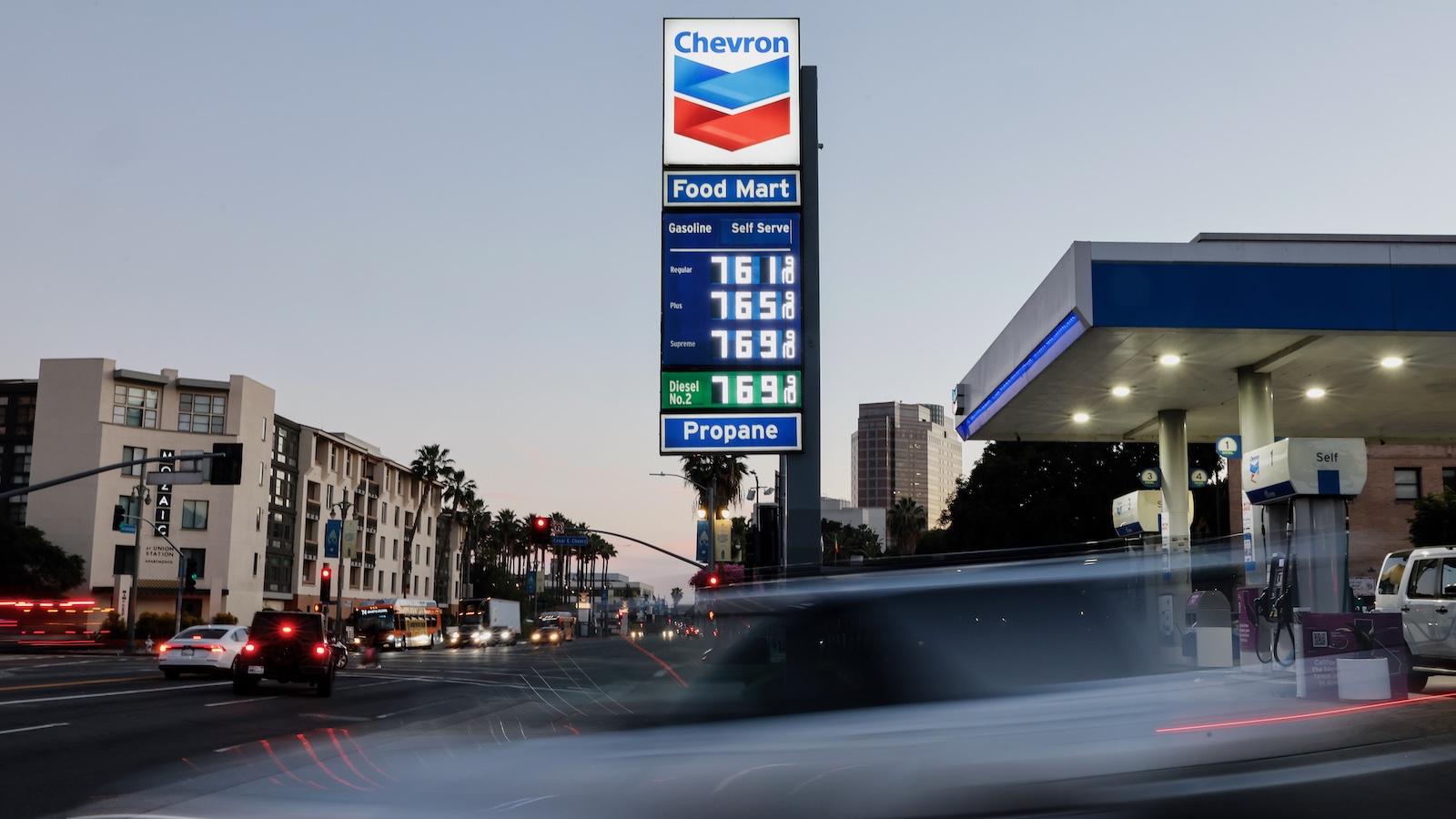
The industry has responded with warnings of a total exodus. In 2024, Chevron moved its corporate headquarters from San Ramon, California, to Houston, Texas, citing a "difficult" regulatory environment. Other major players have already begun scaling back; refiners in Wilmington and Benicia announced plans to shutter operations last year. Because California lacks pipelines connecting it to the refining hubs of the Gulf Coast, the state already imports 60 percent of its crude oil. The closure of local refineries would force the state to rely on finished gasoline imported from Asia, a move that experts warn would lead to even higher prices and increased supply chain vulnerability.
The "Mystery Surcharge" and Market Power
A central point of contention in the governor’s race is the "mystery gasoline surcharge." Since 2015, following a major refinery fire in Torrance, California drivers have paid an average of $1 more per gallon than the rest of the country, even after accounting for higher state taxes and environmental fees.
A state regulator’s report concluded last fall that the monopoly power of the remaining refiners is the likely cause of this price gap. The limited number of players in the California market allows companies to maintain high margins during supply disruptions. This has fueled the campaign rhetoric of Tom Steyer, who has promised to activate the refining profit caps that Newsom has so far declined to trigger. Steyer’s plan also includes a tax on private jet fuel and the creation of a state-managed oil reserve to buffer against price spikes.
Chronology of California’s Energy Conflict
- 2004: California gasoline consumption reaches its historical peak.
- 2012: Tom Steyer leaves Farallon Capital to focus on climate activism.
- 2015: A refinery fire in Torrance leads to the emergence of the "mystery surcharge" on gas prices.
- 2023: Governor Newsom signs SB X1-2, creating the Division of Petroleum Market Oversight to investigate price gouging.
- 2024: Chevron announces the relocation of its headquarters to Houston. Phillips 66 and Valero announce plans to close or convert California facilities.
- 2025: The California Energy Commission releases a report suggesting state ownership of refineries may be necessary for a stable transition.
- 2026 (April): Xavier Becerra receives maximum campaign contributions from Chevron, sparking a debate on oil influence.
- 2026 (June 2): The California Primary election to determine the top two candidates for Governor.
Geopolitical Pressures and the Strait of Hormuz
The domestic debate is further complicated by international instability. The ongoing conflict involving Iran has threatened to close the Strait of Hormuz, a critical transit point for global oil supplies. For California, which is isolated from the national pipeline grid and relies heavily on tankers, a disruption in the Middle East would be catastrophic. Experts have warned that if the strait remains closed for more than a few weeks, California could face actual physical shortages of gasoline, regardless of the state’s climate policies.
This geopolitical risk has forced the state government to seek a "grand bargain" with the oil industry. In 2025, the Legislature eased some rules on drilling in the Kern River Oil Field to ensure a stable supply of local crude to remaining refineries. Additionally, the state has considered providing refineries with free allowances under the cap-and-trade system to prevent them from closing prematurely.
The Path Forward: State Ownership or Market Bully Pulpit?
The next governor will face a choice between two radically different philosophies of transition management. One approach, advocated by experts like Emily Grubert of Notre Dame, suggests that the state may eventually need to take direct ownership or management of refineries. "You actually can’t have a smooth and safe and effective transition without some form of coordinating function for that decline," Grubert noted. This would prevent companies from using the threat of closure to "extort" the state for subsidies.
The CEC’s recent assessment echoed this, suggesting that "legal obligations to operate" and "centralized planning of closures" might be the only way to avoid repeated crisis interventions.
On the political front, the "jungle primary" system—where the top two vote-getters advance regardless of party—means the general election could feature two Democrats with vastly different views on this issue. Current polling shows Becerra in a tight race with Republican Steve Hilton, with Steyer following closely.
Political Implications and Voter Demographics
The strategy of the candidates is also a reflection of California’s shifting demographics. While attacking "Big Oil" resonates with the progressive base, veteran political analysts like Mike Madrid suggest that Becerra’s focus on affordability and the practical reality of gas prices may appeal more to working-class Latino voters. This demographic is often the most sensitive to fluctuations at the pump and may view the immediate cost of living as a higher priority than long-term climate targets.
As the primary approaches, the influence of Chevron remains the central tension. The company has poured hundreds of thousands of dollars into independent expenditure committees supporting Becerra and opposing Steyer. For Chevron, the goal is clear: a governor who views the industry as a necessary partner rather than a "bad guy." For California, the stakes are nothing less than the stability of its economy and the credibility of its global leadership on climate change. Whether the state can successfully manage the decline of its oldest industrial titan without triggering an economic crisis remains the defining question of the 2026 race.









Leave a Reply