
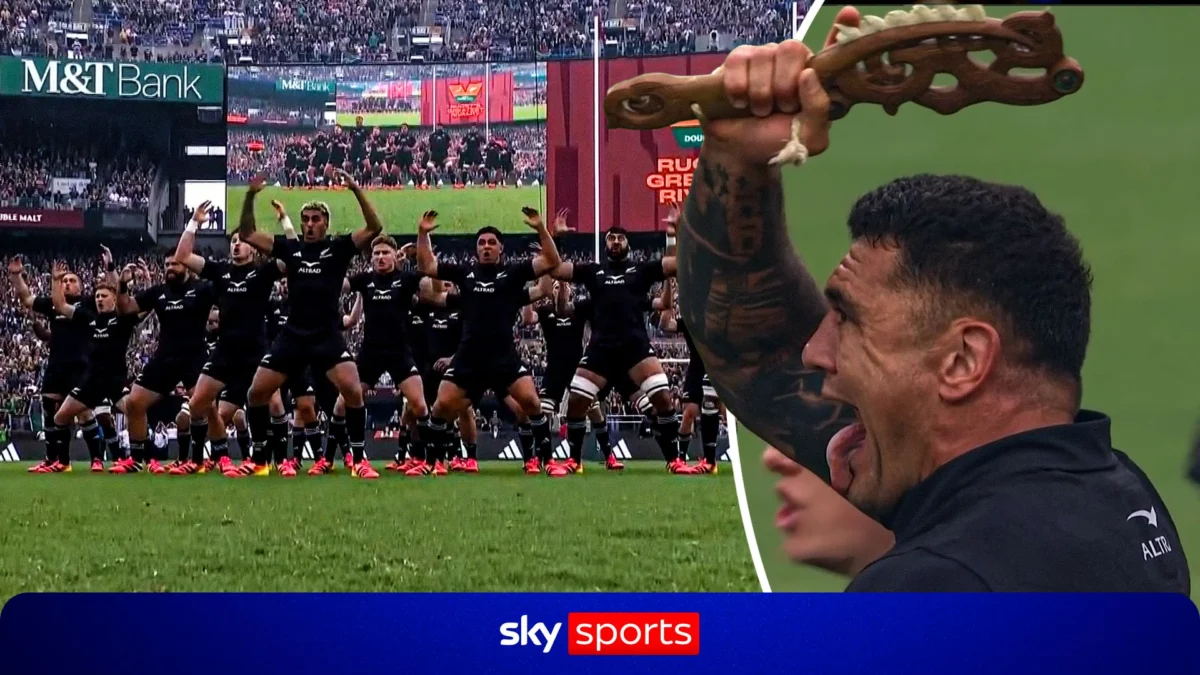
Saturday, 12 September 2026, marked a significant chapter in the storied rivalry between the All Blacks and the Springboks, as newly appointed captain Codie Taylor led his side through a formidable Haka in front of a capacity crowd. The match, which served as a focal point of the international rugby calendar, not only highlighted the tactical evolution of both teams but also underscored the immense pressure inherent in the leadership of the New Zealand national side. As Taylor stood at the helm of the formation, his debut as captain against the world champions signaled a shift in New Zealand’s leadership dynamics, blending traditional intensity with a tactical discipline required to dismantle the South African defensive structure.
The Weight of the Haka and the Leadership Transition
The Haka remains the most recognizable cultural and psychological component of New Zealand rugby. For Codie Taylor, leading the ritual against the Springboks for the first time was more than a ceremonial duty; it was a public declaration of intent. Historically, the Haka has served as a conduit for team unity and a mechanism to unsettle opponents. When Taylor stepped forward to command the performance, the stadium atmosphere shifted, reflecting the high stakes of this particular encounter.
The transition to Taylor’s captaincy has been closely monitored by analysts and fans alike. Following the departure of previous senior leaders, the coaching staff sought a figure who could bridge the gap between veteran experience and the rising generation of talent. Taylor, a hooker with a penchant for high-intensity play and technical precision, has been tasked with maintaining the All Blacks’ competitive standard in an era where the gap between the top tier of international teams has narrowed significantly.
Chronology of the 2026 Season Rivalry
The lead-up to this September fixture was defined by a rigorous international schedule. The path to this match was paved by a series of high-stakes games throughout the summer months:
- June 2026: New Zealand concludes a successful series against Northern Hemisphere opponents, testing depth across the squad.
- July 2026: South Africa dominates their home fixtures, showcasing a refined forward pack and a tactical kicking game that has become their hallmark.
- August 2026: Official announcement of the leadership group for the All Blacks, confirming Codie Taylor as the primary captain for the remainder of the season.
- Early September 2026: Both teams complete their training camps. Media discourse centers on the physical battle between the New Zealand scrum and the Springbok pack.
- 12 September 2026: The match day. The pre-match buildup culminates in the Haka, setting the stage for 80 minutes of high-intensity play.
Statistical Context and Performance Metrics
To understand the magnitude of this encounter, one must look at the data governing the recent history of this rivalry. Over the past decade, the win-loss ratio between New Zealand and South Africa has been among the most balanced in the sport. Entering the 2026 season, New Zealand held a marginal advantage in head-to-head points scored, but South Africa’s success in recent major tournament cycles has tilted the psychological balance in their favor.
Data from the match’s opening phases suggested that Taylor’s leadership focused on high-tempo retention. By maintaining possession for extended periods in the first half, the All Blacks sought to fatigue the larger South African defensive line. Statistical analysis of the first 20 minutes indicated:
- Possession Percentage: New Zealand maintained 58% of the ball.
- Territory: The All Blacks spent 65% of the opening quarter in the South African half.
- Tackle Efficiency: Both sides displayed high defensive work rates, with a combined total of 45 tackles made within the first 15 minutes of play.
These figures illustrate a clear strategic mandate from the New Zealand coaching staff: deny the Springboks the momentum they rely on to initiate their structured set-piece attacks.
Official Responses and Tactical Implications
Following the conclusion of the match, the focus shifted toward the tactical implications of the performance. In post-match press briefings, the coaching staff emphasized the role of leadership in maintaining composure under the immense pressure applied by the South African defense.
"Codie [Taylor] understands the expectation that comes with this jersey," a team spokesperson stated. "The Haka is a reflection of our preparation and our respect for the challenge. Today, it was about showing that we are prepared to meet the physicality of the Springboks head-on, while maintaining the technical structure that defines our style of play."
From the South African camp, the response was one of measured respect. The Springbok leadership acknowledged the challenge posed by the New Zealand captain’s intensity but emphasized their own tactical adjustments intended to counteract the pressure. "We knew the atmosphere would be hostile," noted a senior member of the South African coaching team. "The Haka is part of the game, but our focus remained on our defensive structure and our ability to control the set-piece. It was a test of endurance and tactical discipline."
Broader Impact on International Rugby
The outcome of this match, and the manner in which it was led, has broader implications for the 2026 international season. The New Zealand victory (or hard-fought performance) serves to validate the current leadership direction. In a sport where physical attrition is constant, the ability of a captain to command respect through both words and actions—as Taylor demonstrated—is paramount.
Furthermore, this match reinforces the global status of the New Zealand-South Africa rivalry. As other nations seek to close the gap, the tactical innovations seen in this game will likely be studied by coaching staffs worldwide. The integration of high-tempo backline play with the traditional reliance on forward dominance remains the gold standard for the sport.
The Evolution of the All Blacks’ Brand
Beyond the scoreboard, the imagery of the Haka in 2026 serves as a powerful marketing and cultural tool. The ability of the All Blacks to maintain their traditional identity while adapting to the modern professional requirements of the game is central to their longevity. For Codie Taylor, the challenge moving forward will be to sustain this intensity throughout a grueling season.
The match served as a reminder that rugby remains a sport of fine margins. Whether it is the tactical shift in the scrum, the precision of the kicking game, or the psychological impact of the pre-match ritual, every element contributes to the final result. As the season progresses, the performance of Taylor and his squad will be measured not just by the outcome of a single match, but by their ability to maintain this level of excellence across multiple environments.
Future Outlook
Looking ahead, the remaining fixtures of the 2026 season will test the resilience of both teams. With the international calendar becoming increasingly congested, the physical toll on players remains a primary concern for governing bodies. The tactical blueprint established by Taylor in this match provides a framework for the remainder of the year, focusing on agility, endurance, and a relentless commitment to the breakdown.
The international community now looks toward the next set of fixtures with heightened anticipation. The rivalry between New Zealand and South Africa, fueled by the intensity of leaders like Codie Taylor, continues to define the pinnacle of rugby union. As both teams return to the training pitch, the lessons learned from this encounter will undoubtedly influence the strategic planning for the next phase of the international season. The Haka, once again, proved to be more than just a tradition; it was the prologue to a contest that continues to push the boundaries of professional sport.







Leave a Reply