
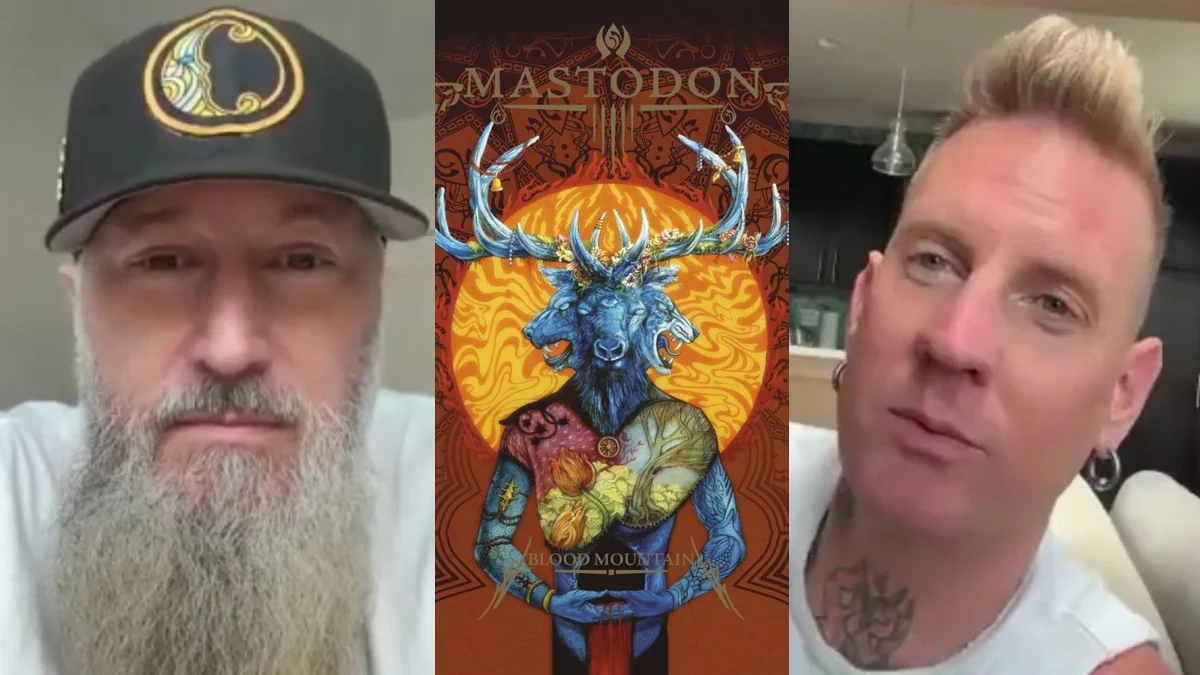
September 12, 2026, marks the twentieth anniversary of the release of Blood Mountain, the seminal third studio album by the Atlanta-based progressive metal powerhouse Mastodon. Released in 2006, the record represents a watershed moment in the band’s career, serving as their debut on a major label—Warner Bros./Reprise—and cementing their status as the vanguard of the burgeoning "New Wave of American Heavy Metal" during the mid-2000s. To commemorate the two-decade milestone, band members Troy Sanders and Brann Dailor sat down for an exclusive interview, offering a retrospective look at the creative chaos, professional pressures, and musical evolution that defined this era.
The Path to Blood Mountain: A Historical Chronology
To understand the significance of Blood Mountain, one must view it within the trajectory of Mastodon’s early discography. Formed in 2000, the band quickly garnered critical acclaim with their debut, Remission (2002), followed by the sprawling, conceptual Leviathan (2004). If Leviathan was an exploration of the element of water—a sonic tribute to Herman Melville’s Moby-Dick—Blood Mountain shifted the band’s thematic focus toward the earth and the struggle for survival in a hostile, high-altitude environment.
The recording sessions, which took place in Seattle, Washington, under the watchful eye of producer Matt Bayles, were characterized by a transition from independent underground darlings to major-label artists. The transition brought with it both anxiety and an unbridled sense of creative license. By 2006, the band’s reputation for technical proficiency and unconventional song structures had already drawn the attention of industry executives, leading to a contract that allowed them to maintain their creative trajectory while navigating the demands of a larger corporate infrastructure.
The Sonic Architecture of a Progressive Masterpiece
Blood Mountain did not merely replicate the success of its predecessors; it expanded upon them. Tracks such as "The Wolf Is Loose," "Crystal Skull," and "Colony of Birchmen" showcased a band increasingly interested in the intersection of technical thrash, sludge metal, and psychedelic progressive rock.
The songwriting process during this period was highly collaborative, albeit volatile. Guitarist Brent Hinds was in the midst of a particularly experimental phase, contributing complex, dissonant riffs that challenged the boundaries of traditional metal composition. Meanwhile, drummer Brann Dailor’s performance on the album is frequently cited by critics as a benchmark for modern metal percussion, characterized by intricate, jazz-inflected fills that anchored the band’s shifting time signatures.
"I remember being nervous that this was a major label debut with Warner Bros.," bassist and vocalist Troy Sanders reflected during the anniversary interview. "Brann was playing drums like a madman. Brent was writing some of the most bizarre and awesome music ever written. Bill Kelliher was crushing it. I was like, ‘Wow, this is really cool.’"
Extracurricular Influences and Studio Lore
The atmosphere in Seattle during the recording of Blood Mountain became the subject of band legend. According to Dailor, the band’s environment was defined by a mix of intense focus and youthful indulgence. "Recording in Seattle was so awesome, but this time behind the studio they had recently opened a Belgian beer bar, and they had over 100 beers on tap," Dailor recalled. "I remember Brent being like, ‘We’re gonna try every single one of the beers on tap, all 100,’ and by God, we did it. We were a little bit Mötley Crüe ’82 back then."
This anecdote underscores the dual nature of the band at the time: a group of musicians balanced between the disciplined pursuit of technical perfection and the lifestyle excesses commonly associated with the rock-and-roll archetype. Despite the distractions, the final product remains one of the most cohesive and "wildly adventurous" works in their catalog, as Dailor noted, stating that the album feels as deliberate and layered as the mountain it describes.
Supporting Data: Impact and Sales
Upon its release in 2006, Blood Mountain peaked at number 32 on the Billboard 200 chart, a significant achievement for a band rooted in the extreme metal subgenre. The album’s commercial success provided a blueprint for other metal bands looking to bridge the gap between niche underground appeal and mainstream accessibility.
Furthermore, the track "Colony of Birchmen" earned the band a Grammy nomination for Best Metal Performance in 2007, marking a pivotal moment in the band’s recognition by the broader music industry. The album’s enduring influence is evidenced by its consistent presence on "best-of" lists for metal albums of the 2000s, often praised for its refusal to adhere to the standard verse-chorus-verse structure of contemporary heavy music.
The Broader Implications for Modern Metal
The legacy of Blood Mountain is not just in its sales or chart performance, but in its influence on the evolution of progressive metal. By blending elements of sludge, stoner rock, and technical death metal, Mastodon proved that extreme music could be conceptually deep and commercially viable.
The shift toward the major-label environment allowed the band to experiment with higher production values, which in turn paved the way for the lush, atmospheric soundscapes found on later albums such as Crack the Skye (2009) and their most recent 2026 release, Marrow Deep. The band’s ability to retain their core identity while expanding their sonic palette has been a subject of study for musicologists and industry analysts alike.
In the broader context of the mid-2000s, Mastodon stood in stark contrast to the "nu-metal" trends that were beginning to fade, offering instead a return to virtuosity and complex storytelling. The album’s concept—a hiker lost on a mountain, hallucinating, and searching for the "Crystal Skull"—offered a narrative depth that resonated with a fan base eager for more than simple, aggressive tropes.
Current Activity and Looking Ahead
Twenty years later, the band continues to operate at the top of their field. As they prepare for a fall 2026 headlining North American tour—supported by Deafheaven and Alcest—the band is currently focusing on their latest studio effort, Marrow Deep. The reception of their newest work has been overwhelmingly positive, with many critics drawing parallels between the band’s current maturity and the experimental spark that defined the Blood Mountain era.
While the industry landscape has shifted dramatically since 2006—moving away from physical album sales and toward the digital streaming model—Mastodon’s commitment to the album-as-a-cohesive-unit remains steadfast. The anniversary of Blood Mountain serves as a reminder that the band’s success was built on a foundation of genuine camaraderie, technical ambition, and a willingness to embrace the unconventional.
As fans reflect on the twentieth anniversary, they are also looking forward to the future. With the band set to embark on their upcoming tour, the celebration of the past serves as a bridge to the present, proving that even after two decades of intense touring and recording, the "wildly adventurous" spirit of Mastodon remains as vital as ever. Whether through the lens of their early days in Seattle or their current trajectory with Marrow Deep, the story of Mastodon is one of consistent evolution, cementing their place in the pantheon of modern musical history.










Leave a Reply