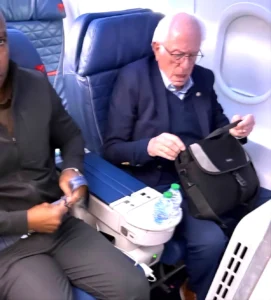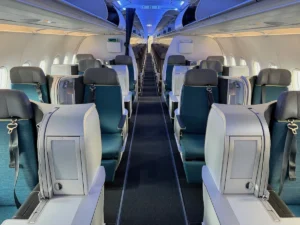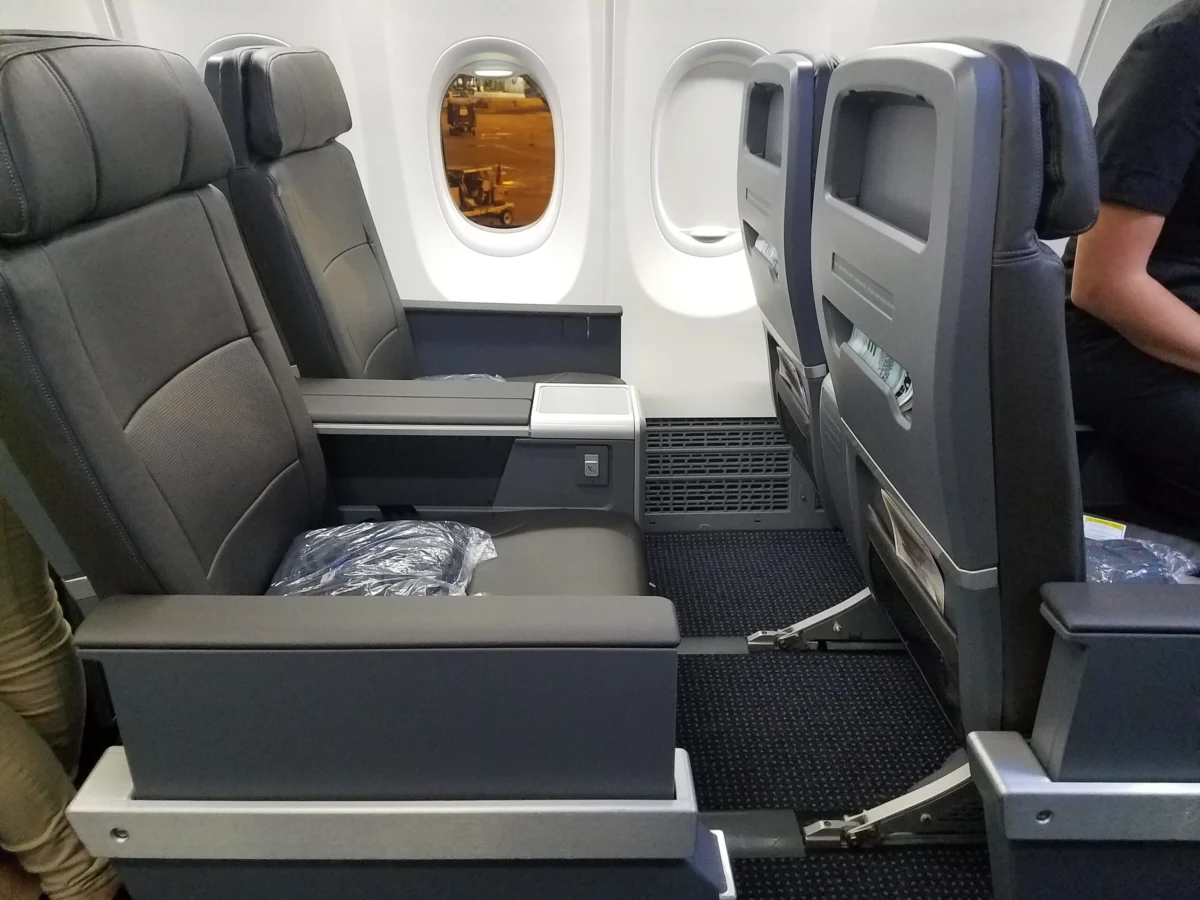
The landscape of commercial aviation etiquette has been thrust into the spotlight once again following a highly unusual incident reported on October 11, 2024, involving a five-hour domestic flight. In a departure from the frequently debated scenario where parents enjoy the luxuries of first class while their children remain in economy, a father reportedly booked his two young daughters in the premium cabin while securing a seat for himself in the economy section. The situation escalated when the father allegedly approached passengers in first class, requesting they trade their premium accommodations for his economy seat so he could sit with his children.
The incident, which gained significant traction on social media platforms including X (formerly Twitter), has ignited a broader discussion regarding airline seating policies, the ethics of seat-swapping requests, and the evolving expectations of parental responsibility in shared public spaces. Observers and industry experts are analyzing the event not only as a lapse in travel etiquette but also as a complex challenge for airline cabin crews who must balance passenger comfort with safety regulations and contractual seating arrangements.
Chronology of the Incident and Immediate Reactions
On the morning of October 11, 2024, an eyewitness traveler using the handle @the_P_God documented the unfolding event during a scheduled five-hour flight, a duration typical of transcontinental routes in the United States. According to the account, the father escorted his daughters to their seats in the first-class cabin before retreating to his assigned seat in the economy section. Shortly thereafter, the father returned to the premium cabin to solicit passengers for a seat exchange.
The request was met with immediate scrutiny by fellow travelers. In the economy-to-first-class swap, the financial discrepancy is substantial. On a standard five-hour domestic flight, the price difference between a last-minute economy ticket and a first-class seat can range from $600 to over $2,000, depending on the carrier and the level of service. The expectation that a stranger would forfeit a high-value asset for a lower-value seat—essentially subsidizing the father’s proximity to his children—was characterized by many online commentators as "audacious."
While the specific airline was not named in the initial report, the five-hour duration suggests a major carrier such as Delta, United, or American Airlines, all of which have strict policies regarding cabin-class integrity. Flight attendants reportedly had to manage the situation to ensure that the father did not remain in the premium cabin without a valid ticket, highlighting the operational strain such requests place on aircrew.
The Economics and Ethics of Seat Swapping
Seat swapping has become one of the most contentious issues in modern air travel. According to a 2023 survey by travel platform Kayak, approximately 54% of travelers believe it is acceptable to ask for a seat swap, but only if the seats are of equal value (e.g., window for window in the same cabin). The consensus shifts dramatically when the swap involves different cabin classes.
In this specific case, the father’s strategy appeared to be an attempt to secure the benefits of first-class travel for his children—perhaps for their comfort or to ensure they received more attentive service—while attempting to circumvent the cost of a third premium ticket through social engineering. Industry analysts point out that this behavior exploits the "social contract" of flying, where passengers often feel pressured to accommodate parents to avoid being perceived as unhelpful or causing a scene.
Furthermore, the "reverse" nature of this separation—placing children in a higher class than the parent—is a rare occurrence. Historically, the debate has focused on "class-distinction parenting," a philosophy popularized by some wealthy families where parents fly in first class to enjoy peace and quiet while children fly in economy to "learn the value of money" or "earn their way up." This latest incident flips that narrative, raising questions about whether the parent intended for the flight attendants in first class to act as de facto babysitters in a more controlled, less crowded environment.
Airline Policy and FAA Safety Regulations
The incident raises significant questions regarding the safety and legality of separating minor children from their guardians by cabin class. While the Federal Aviation Administration (FAA) does not have a specific law mandating that parents and children sit in the same row, it does provide guidelines emphasizing that children should be seated near an accompanying adult for safety during emergencies, such as cabin depressurization or turbulence.
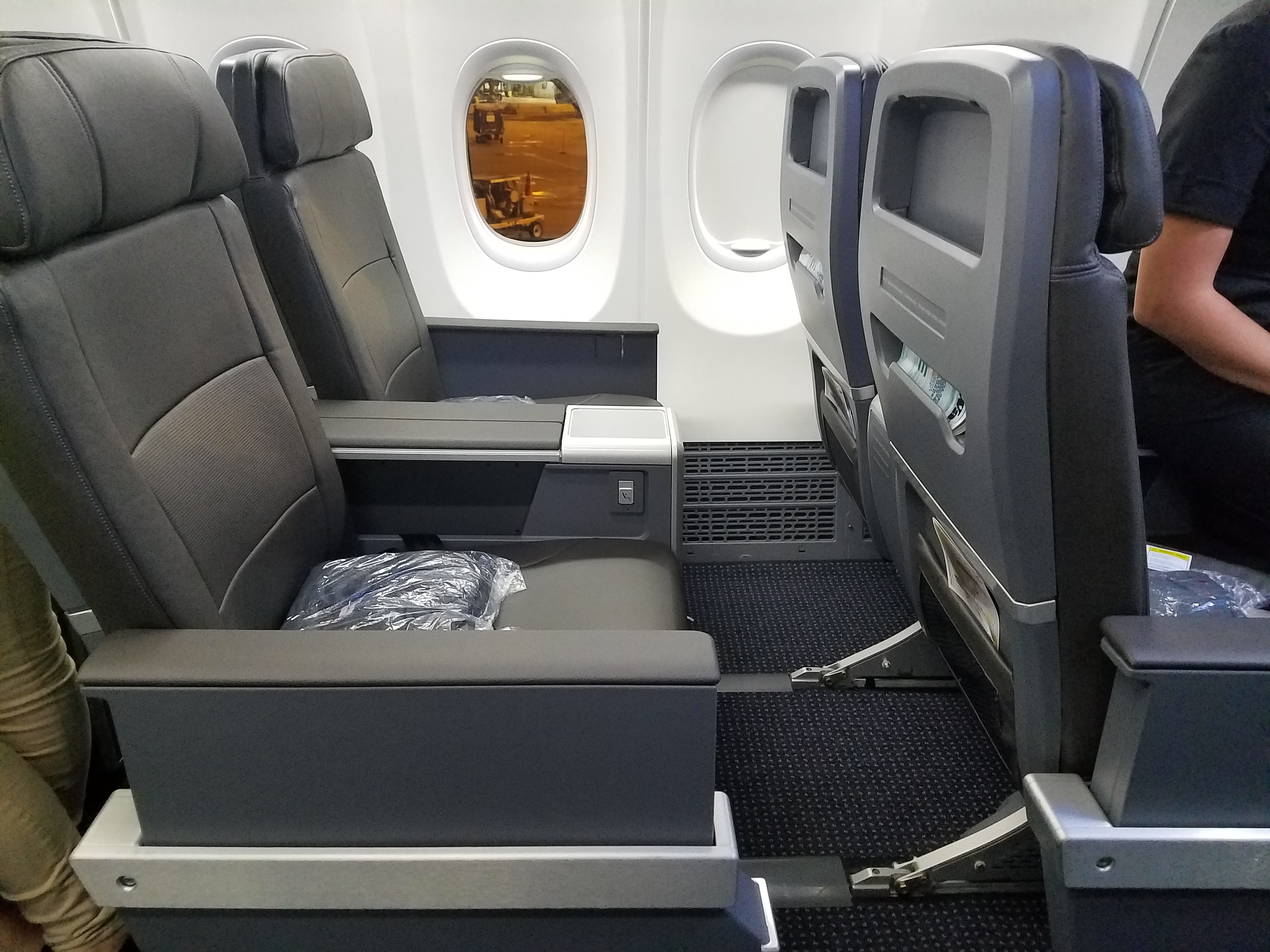
Most major airlines have internal policies regarding "Unaccompanied Minors" (UM). Typically, a child is considered an unaccompanied minor if they are traveling without a guardian aged 15 or 18 or older. However, a "hidden" gray area exists when the guardian is on the same aircraft but in a different cabin.
- Supervision Requirements: Many airlines require children under a certain age (usually 12 to 15) to be in the same cabin as their guardian. If a parent is in economy and the child is in first class, the child is effectively "unaccompanied" in that specific section of the plane.
- Flight Attendant Duties: Flight attendants are safety professionals, not childcare providers. Placing children in a separate cabin often forces crew members to spend a disproportionate amount of time monitoring them, which can detract from their primary safety duties and service to other paying passengers.
- Emergency Procedures: In the event of an emergency, a parent in economy would be unable to reach their children in first class quickly due to the physical barrier of the cabin curtain and the likelihood of a crowded aisle.
The Department of Transportation (DOT) has recently pushed for "Family Seating" legislation, which aims to ensure that children aged 13 or younger are seated next to an accompanying adult at no extra cost. However, this legislation is intended to protect families from being separated by airline algorithms, not to facilitate upgrades or cabin-jumping strategies.
Psychological and Social Implications of Premium Cabin Parenting
The choice to place children in first class while the parent remains in coach has drawn commentary from child psychologists and travel experts. Some suggest it may be a manifestation of "intensive parenting," where the child’s comfort is prioritized above all else, including social norms. Others view it through the lens of the "P.S.D." (Poor, Smart, with a Deep Desire to become rich) philosophy mentioned by former Bear Stearns chairman Ace Greenberg. Greenberg argued that over-pampering children can stifle their drive to succeed. By placing children in first class, a parent may be inadvertently creating a sense of entitlement that does not align with the realities of the professional world.
Conversely, some argue that the father may have used frequent flier miles to upgrade his daughters, but lacked enough for himself, and simply hoped for the "kindness of strangers." However, in the context of a five-hour flight, the "kindness" requested equates to a gift of several hundred dollars, which most travelers are unwilling to grant.
Public Reaction and the "Gate-Louse" Phenomenon
The reaction from the traveling public has been overwhelmingly critical. On social media, the incident was categorized alongside other "entitled" behaviors, such as "gate-lousing" (crowding the boarding area before one’s group is called) and "seat-stealing."
"This is a five-hour flight. You should have booked yourself in first class too if you wanted to be next to your kids," noted the original poster, @the_P_God. This sentiment reflects a growing fatigue among frequent fliers who feel that the flying experience is being degraded by passengers who refuse to plan ahead or pay for the services they desire, instead relying on the discomfort of others to get their way.
Travel etiquette experts suggest that the only appropriate time to ask for a seat swap is when the move is "lateral or downward" for the person being asked. For example, offering a first-class seat to an economy passenger is almost always accepted, but asking an economy passenger to move to a middle seat from an aisle is generally considered rude. Asking a first-class passenger to move to economy is widely viewed as a breach of social decorum.
Broader Impact on the Aviation Industry
This incident may prompt airlines to tighten their policies regarding cabin-separated families. As airlines continue to unbundle fares and charge for every amenity, the value of a premium seat has never been higher. Carriers like Delta and United have already begun implementing technology to better identify family groups and keep them together, but these systems are designed for the same cabin.
Future implications of this event may include:
- Strict Cabin Restrictions: Airlines may implement a rule that children under 15 must be in the same cabin as their legal guardian, regardless of ticket class.
- Enhanced Crew Training: Flight attendants may receive more specific instructions on how to deny seat-swap requests that involve cabin downgrades, protecting the "premium" nature of the first-class experience for those who paid for it.
- Dynamic Pricing Adjustments: Increased awareness of these "hacks" may lead airlines to adjust how upgrades are processed for minors traveling with adults in different cabins.
In conclusion, the October 11 incident serves as a stark reminder of the complexities of modern air travel. While the desire to provide the best for one’s children is a fundamental parental instinct, the execution of that desire within the rigid economic and safety structures of an aircraft requires a level of planning and respect for fellow passengers. As the "seat-swap" debate continues to evolve, the consensus remains clear: the responsibility for seating arrangements lies with the passenger at the time of booking, not with the generosity of strangers at 35,000 feet.