Delta Air Lines is approaching a significant milestone in its international network expansion with the scheduled launch of nonstop service between Hartsfield-Jackson Atlanta International Airport (ATL) and King Khalid International Airport (RUH) in Riyadh, Saudi Arabia. Set to commence in late October 2025, the route represents a cornerstone of Delta’s burgeoning partnership with Riyadh Air, the nascent Saudi carrier backed by the Public Investment Fund (PIF). However, as the inaugural flight nears, internal data and public seat map availability suggest a stark discrepancy between the airline’s typical performance metrics and the current demand for the Riyadh service.
According to industry benchmarks and recent disclosures from Delta executives, the carrier’s long-haul network generally maintains a booking profile of 50% to 60% approximately 90 days prior to departure. With the October 23, 2025, inaugural flight less than three months away, the Atlanta-to-Riyadh route is reportedly seeing a fraction of that volume. Analysis of seat assignments for the first eight non-inaugural flights indicates an average of only one assigned seat per flight. While seat maps are not an absolute mirror of an airline’s load factor—as passengers may book without selecting a seat or hold tickets through group blocks—the visible lack of activity suggests a historically low uptake for a major transcontinental service.
Strategic Context and the Riyadh Air Partnership
The launch of the Atlanta-Riyadh route is not merely a point-to-point expansion but a strategic maneuver designed to integrate Delta into the Saudi Arabian aviation ecosystem. In mid-2024, Delta and Riyadh Air signed a Strategic Cooperation Memorandum of Understanding (MoU). This agreement aims to provide Delta passengers with access to a vast array of domestic Saudi destinations and regional Middle Eastern points, while offering Riyadh Air passengers a gateway into Delta’s extensive North American network via its primary hub in Atlanta.
Delta CEO Ed Bastian has been a vocal proponent of the partnership, citing Saudi Arabia’s rapid transformation and its potential as a premier global tourism and business destination. This sentiment aligns with "Saudi Vision 2030," the Kingdom’s ambitious framework to diversify its economy and reduce its dependence on oil. A central pillar of this vision is the expansion of the aviation sector, with the goal of attracting 100 million annual visitors by the end of the decade.
For Delta, the partnership offers a chance to challenge the dominance of the "ME3" carriers—Emirates, Qatar Airways, and Etihad Airways—which have long controlled the flow of traffic between North America and the Middle East. By establishing a direct link to the Saudi capital, Delta positions itself as a primary Western partner for the Kingdom’s new flagship carrier before Riyadh Air even begins full-scale operations.
Chronology of the Route Development
The timeline for the Atlanta-Riyadh service reflects an accelerated push to capitalize on Saudi Arabia’s opening to international markets:
- June 2024: Delta Air Lines and Riyadh Air formally announce their strategic partnership at a signing ceremony in Riyadh.
- Late 2024: Delta officially confirms plans to launch nonstop service from Atlanta to Riyadh, marking the first time a U.S. carrier has served the Saudi capital directly from a major U.S. hub in several years.
- Early 2025: Marketing campaigns for the route commence, targeting corporate travelers in the energy, technology, and defense sectors, as well as the growing luxury tourism market.
- July 2025: Booking data 90 days out from the launch shows significantly lower-than-average load factors, prompting industry speculation regarding the route’s viability.
- October 23, 2025: The scheduled inaugural flight is set to depart Atlanta.
Analyzing the Booking Disparity
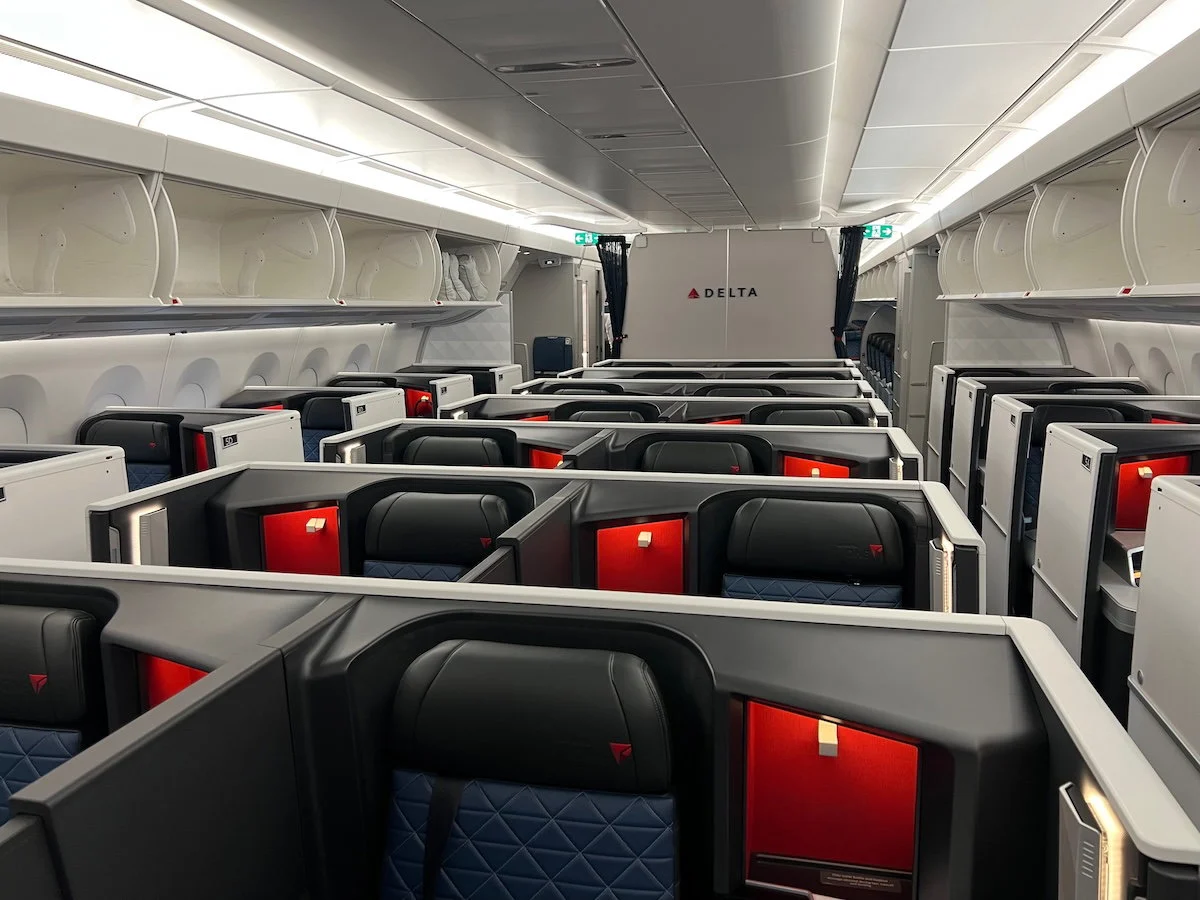
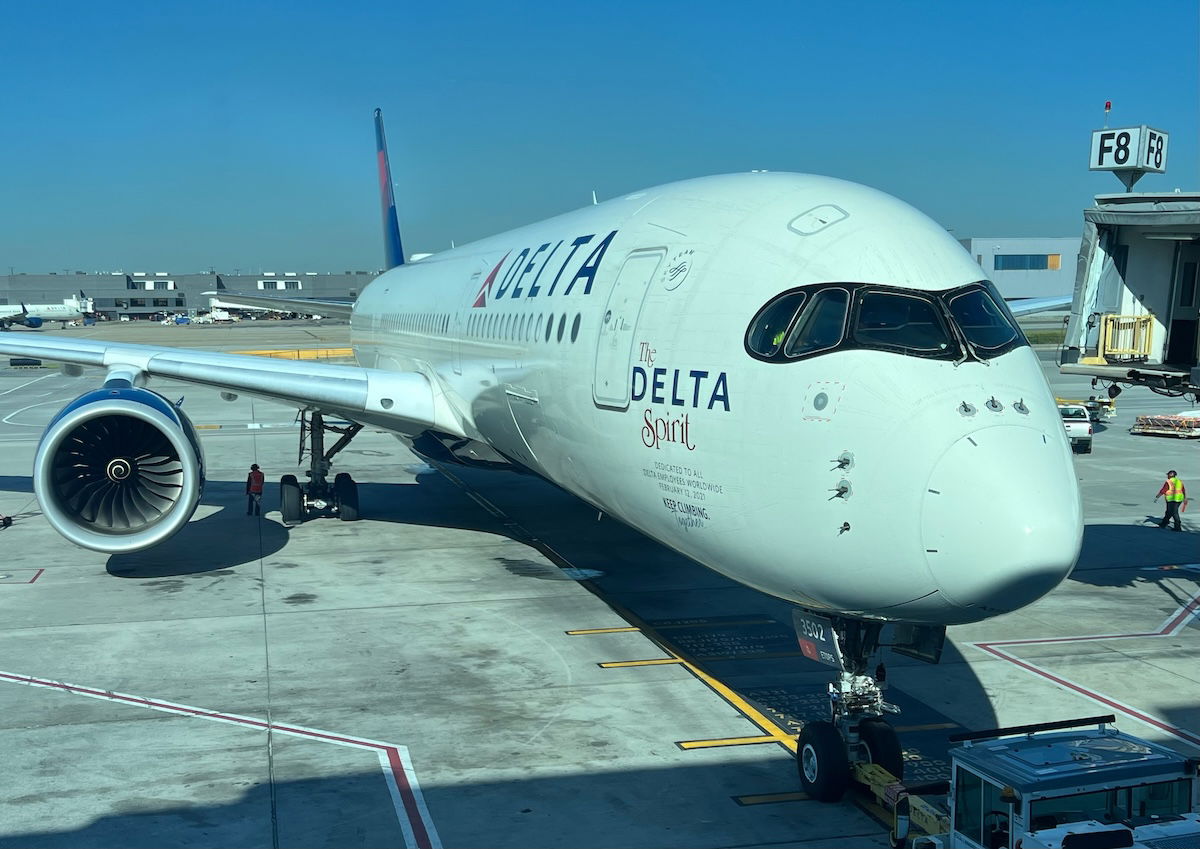
The observation that the first eight non-inaugural flights have an average of one seat assigned per flight is anomalous for an airline of Delta’s scale. On long-haul international routes, Delta typically utilizes the Airbus A350-900 or the Airbus A330-900neo, both of which feature over 280 seats across Delta One (Business Class), Delta Premium Select, and Economy cabins. An average of one passenger per flight represents a load factor of less than 0.5%.
Several factors may contribute to this initial lack of demand. First, the route is entirely new, and brand awareness for Riyadh as a destination is still maturing in the American market. Second, the partnership with Riyadh Air is in its infancy; until Riyadh Air is fully operational with its own fleet and connecting schedules, the "hub-to-hub" synergy remains theoretical. Third, the current geopolitical climate in the Middle East has created a general softening of demand for travel to the region, although Riyadh remains geographically removed from the primary zones of recent conflict compared to hubs like Doha or Dubai.
Despite these headwinds, industry analysts note that seat maps can be deceptive. Corporate contracts often involve "opaque" bookings that do not appear on seat maps until closer to the date of travel. Furthermore, if Delta is utilizing the route for cargo capacity—transporting high-value goods between the U.S. and the Kingdom—the passenger load factor may be secondary to the flight’s overall economic contribution.
The Role of the Saudi Air Connectivity Program
A critical element in Delta’s decision to proceed with the Riyadh route despite low initial bookings is the Saudi Air Connectivity Program (ACP). Established in 2021, the ACP is a government initiative designed to incentivize international airlines to establish new routes to the Kingdom. The program provides financial subsidies and risk-sharing mechanisms to offset the initial losses often associated with launching unproven long-haul markets.
By subsidizing the operating costs—including fuel, landing fees, and marketing—the ACP allows airlines like Delta to operate flights that would otherwise be economically unfeasible. This "subsidy-backed" model is essential for achieving the goals of Vision 2030, as it ensures that the necessary infrastructure and connectivity exist even before organic demand fully catches up.
For Delta, the ACP acts as a financial safety net. Even if a flight departs with a nearly empty cabin, the subsidies may cover a significant portion of the operating expenses, which for a 14-hour flight can exceed $200,000 in fuel and labor alone. This raises the possibility that Delta may proceed with the launch as planned, viewing the initial phase as a subsidized "soft launch" to establish the operational corridor.
Geopolitical Considerations and Market Positioning
The Middle East aviation market is currently navigating a complex landscape. While regional tensions have impacted travel patterns, Saudi Arabia has positioned Riyadh as a stabilizing center for commerce. From a tactical standpoint, Delta’s presence in Riyadh allows it to capture "Origin and Destination" (O&D) traffic—passengers traveling specifically between the U.S. and Saudi Arabia—without forcing them to transit through third-country hubs.
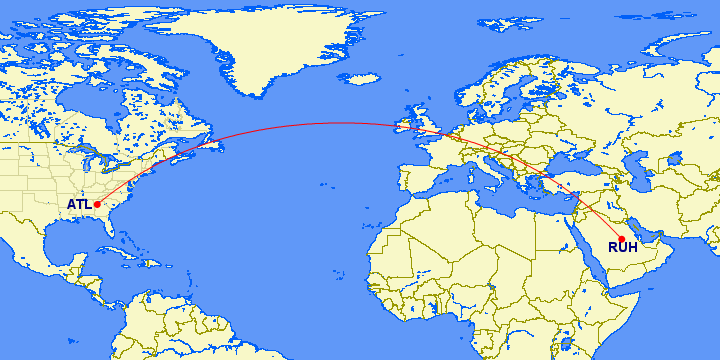
Moreover, the Atlanta hub provides Delta with a unique advantage. As the world’s busiest airport, ATL offers hundreds of domestic connections. For a traveler in a secondary U.S. city like Charlotte, Nashville, or Birmingham, a single stop in Atlanta to reach Riyadh is significantly more efficient than connecting through European hubs like London or Frankfurt, or Middle Eastern hubs like Dubai.
Potential Outcomes: Launch or Postponement?
As the 90-day window closes, Delta faces a strategic choice. There are two primary scenarios:
- Proceeding with the Launch: Delta may honor the October 23 start date, relying on ACP subsidies to weather the initial period of low demand. This would signal a long-term commitment to the Saudi government and Riyadh Air, strengthening a partnership that Delta views as vital for its future in the region.
- Delaying the Service: If the projected losses exceed the value of the subsidies and the strategic goodwill, Delta could postpone the launch until the spring of 2026. This would allow more time for Riyadh Air to mature and for regional tensions to potentially stabilize. However, a delay could be seen as a lack of confidence in the Saudi market, potentially straining the relationship with the PIF.
Broader Impact on Global Aviation
The situation surrounding Delta’s Riyadh route is emblematic of a broader trend in global aviation: the rise of state-sponsored connectivity. As nations in the Gulf and Central Asia compete to become global transit hubs, the traditional economic models of airlines are being reshaped by government incentives.
If Delta successfully navigates the launch of the Riyadh route, it may provide a blueprint for other U.S. and European legacy carriers to enter emerging markets through similar subsidy-backed partnerships. Conversely, if the route fails to gain traction despite heavy government support, it may serve as a cautionary tale regarding the limits of "induced demand" in the aviation sector.
As of late 2025, the industry remains focused on Delta’s next move. Whether the planes fly full or nearly empty, the Atlanta-to-Riyadh service represents a high-stakes bet on the future of Saudi Arabia as a global crossroads. The coming months will determine if the "empty" seat maps are a temporary hurdle or a sign that the market is not yet ready for a direct link between the American South and the heart of the Arabian Peninsula.