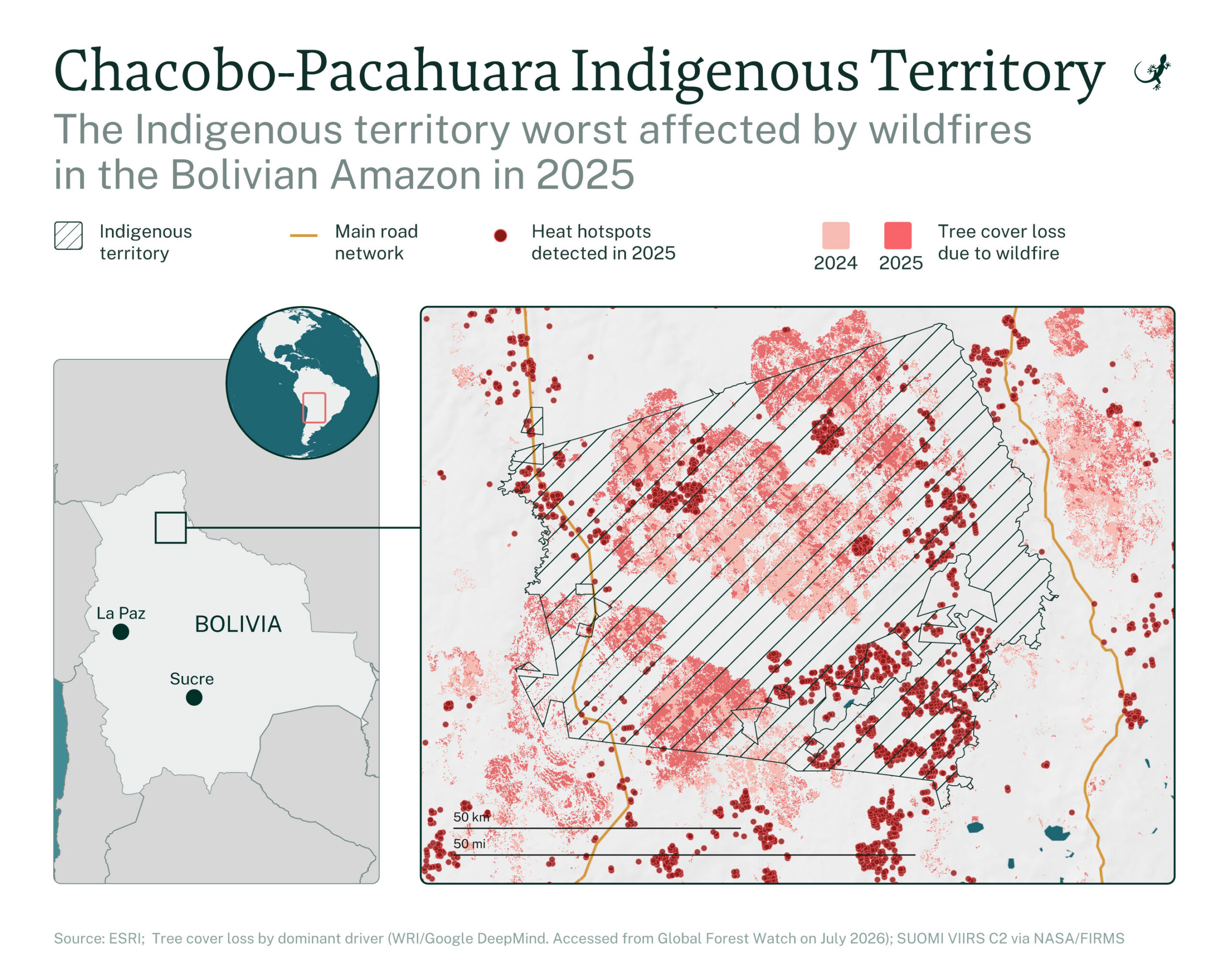
The Chacobo-Pacahuara Indigenous territory, a vital ecological and cultural bastion in the Beni department of northern Bolivia, has been pushed to the brink of an environmental catastrophe following a series of relentless wildfires. Throughout September and October 2025, satellite imagery and reports from the ground have confirmed that thousands of hectares of primary forest and tropical savanna have been reduced to ash. These fires, which experts believe originated from illegal land-clearing practices in adjacent cattle pastures, represent the third consecutive year of record-breaking fire activity in a region traditionally known for its high biodiversity and its role as a sanctuary for some of the world’s most vulnerable human populations.
The scale of the destruction has moved beyond ecological loss, evolving into a humanitarian crisis for the Chácobo and Pacahuara peoples. As the flames breached the borders of the legally protected Indigenous territory, they consumed essential subsistence crops, destroyed family homes, and disrupted the delicate balance of an ecosystem that provides the primary source of food and water for the local population. Perhaps most distressing to community leaders is the fate of isolated Indigenous groups who live in voluntary isolation within these forests, whose current status remains unknown as their ancestral hunting grounds and "forest islands" have been incinerated.
A Three-Year Escalation of Environmental Crisis
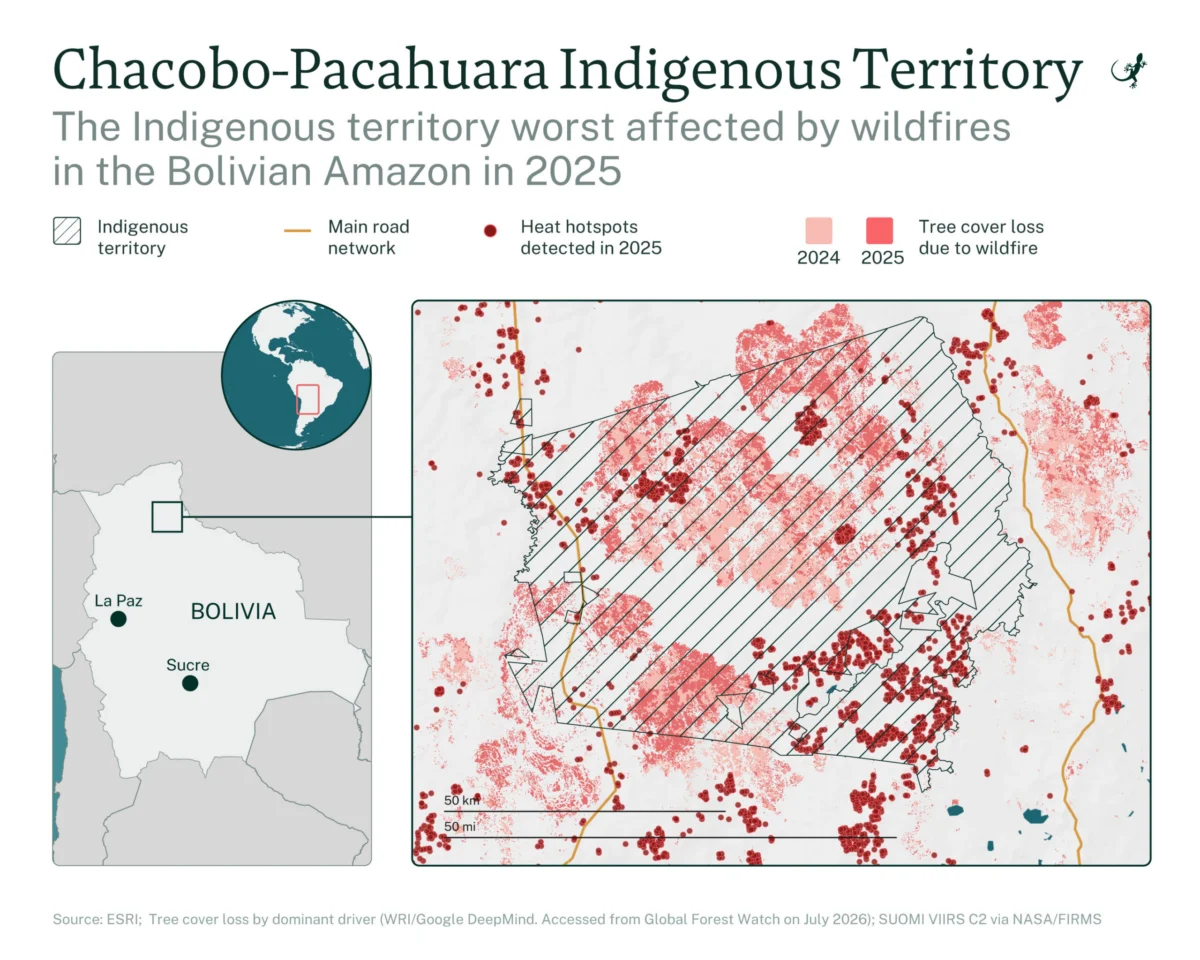
The 2025 fire season has solidified a dangerous trend for the Chacobo-Pacahuara territory. Data analyzed by Global Forest Watch and the Center for Legal Studies and Social Research (CEJIS) indicates that the frequency and intensity of fires in this region have moved far beyond historical norms. Prior to 2023, the territory maintained a relatively stable profile with low fire activity, largely due to the traditional forest management practices of the Indigenous inhabitants. However, the landscape began to shift dramatically two years ago.
In 2024, the situation reached a previous zenith when CEJIS reported that approximately 47% of the entire territory—roughly 228,348 hectares (564,260 acres) out of a total 485,260 hectares—was scorched by fire. The 2025 season appears to be following a similarly destructive trajectory. Between January 1 and September 12, 2025, monitoring systems recorded 1,141 heat hotspots within the territory. This was followed by a sharp spike between late September and mid-October, during which an additional 845 hotspots were identified.
This surge aligns with the peak of the Bolivian Amazon’s dry season, a period when the lack of precipitation turns the dense undergrowth and savanna grasses into a tinderbox. However, the sheer volume of hotspots suggests that these are not merely natural occurrences but are driven by external human factors and exacerbated by a changing regional climate.
The Threat to Isolated Indigenous Communities
The most harrowing aspect of the current wildfire crisis is the potential impact on Indigenous groups living in voluntary isolation. The Chacobo-Pacahuara territory is one of the few remaining areas in the Bolivian Amazon where uncontacted or "isolated" relatives of the settled Chácobo people are known to roam. These groups rely entirely on the integrity of the forest for their survival, possessing no immunity to outside diseases and no modern infrastructure to combat large-scale disasters.
Constantino Toledo Ortiz, a prominent leader of the Chácobo people, has sounded the alarm regarding the safety of these "relatives." In communications from the region, Ortiz expressed a profound sense of dread, noting that the "forest islands"—elevated patches of forest within the savanna where these groups often reside—have been completely overrun by fire. There are growing fears that if these groups survived the initial heat and smoke, they may have been forced to flee across the border into Brazil, potentially leading to territorial conflicts or accidental contact with outsiders that could prove fatal.
The loss of these forest islands is not just a loss of habitat; it is the destruction of a cultural and physical refuge. For groups in voluntary isolation, the forest is not just a home but a shield. When that shield is burned away, they are exposed to the myriad threats of the modern world, from which they have actively chosen to remain separate.
Destruction of Subsistence Livelihoods and Biodiversity
For the settled Chácobo communities, the fires have struck at the heart of their food security. The traditional agricultural system, known as the "chaco," involves small-scale, controlled clearing for diverse crops. These plots have been overwhelmed by the uncontrollable "mega-fires" encroaching from the outside.
Ortiz reported that the communities have lost their primary staples: cassava, banana, corn, and rice. "Everything burned completely," he stated, describing a landscape where the very means of survival have been erased. The destruction of these crops means that many families will face severe food shortages in the coming months, as the soil—now depleted and scorched—will require significant time and rain to recover.
The toll on local fauna has been equally devastating. The Chacobo-Pacahuara territory is home to iconic Amazonian species, including tapirs, wild pigs (peccaries), monkeys, and a vast array of tropical birds. These animals are central to the Indigenous diet and spiritual life. Reports from the ground describe a silent forest where the usual chorus of wildlife has been replaced by the smell of smoke. The slow-moving species, particularly younger animals and those nesting, had little chance of escaping the fast-moving fire fronts that swept through the savanna and into the canopy.
The Source of the Flames: Cattle Ranching and "Chaqueo"
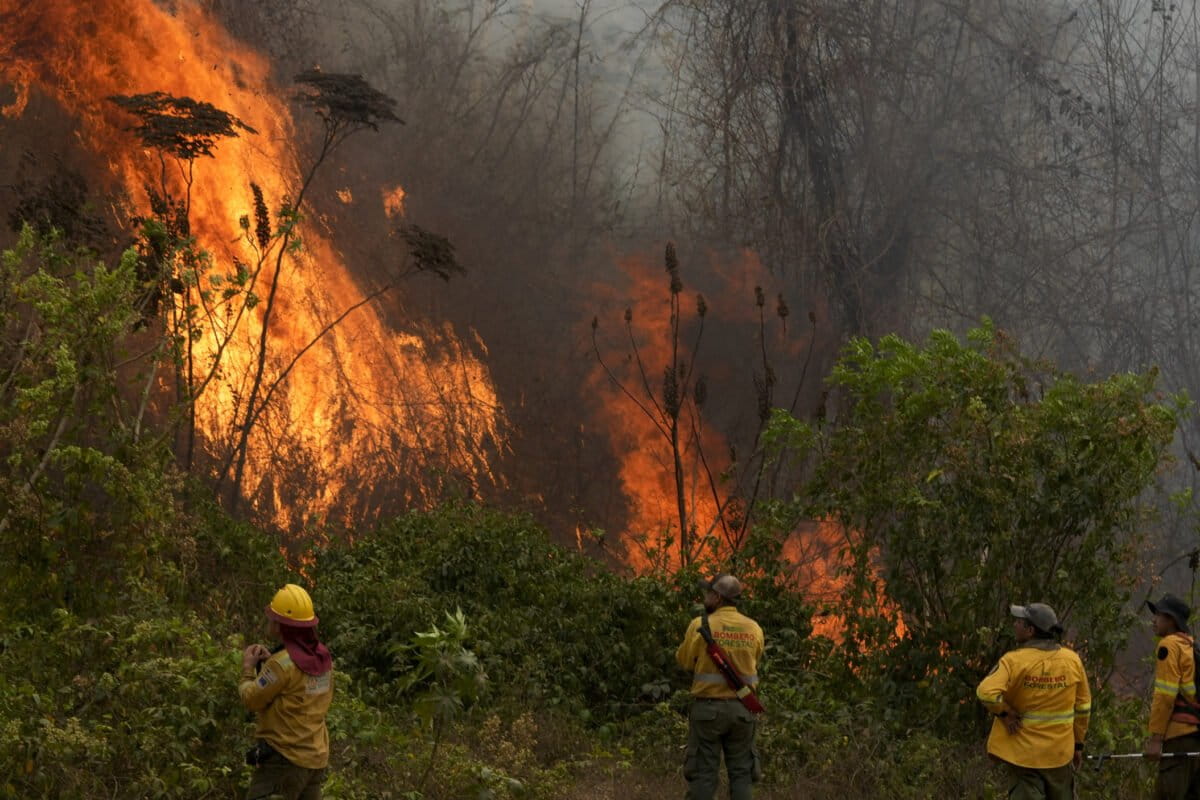
The genesis of these fires is a point of significant contention and political weight. According to Indigenous leaders and satellite mapping, the fires did not start within the Indigenous territory. Instead, they originated in the surrounding private cattle pastures. In Bolivia, the practice of "chaqueo"—using fire to clear land for cattle grazing or industrial soy farming—is a common, though often illegal or poorly regulated, agricultural tool.
During the dry season, these controlled burns frequently escape their intended boundaries due to high winds and the extreme dryness of the vegetation. In the case of the Chacobo-Pacahuara territory, the fires moved from the "frontier" of agricultural expansion into the heart of the protected Indigenous land. This phenomenon is part of a broader trend across the Bolivian Amazon, where the "agricultural frontier" is aggressively pushing into Indigenous territories and protected areas, often with the tacit approval of regional economic interests.
The transition of the territory from a low-fire zone to a high-fire zone over the last three years directly correlates with the intensification of cattle ranching in the Beni department. As the demand for beef exports grows, the pressure to clear more land increases, leading to a cycle of annual burning that is now spiraling out of control.
A Pattern of Governmental Inaction
Despite the scale of the disaster, Indigenous leaders claim they have been left to fight the flames with little to no support from the state. Constantino Toledo Ortiz noted that reports were filed with municipal leaders in Riberalta, the departmental governor of Beni, and the national Forest and Land Control and Social Authority (ABT). However, as of late 2025, no substantial aid, firefighting equipment, or humanitarian relief had been dispatched to the affected Chácobo communities.
This lack of response highlights a systemic issue in Bolivia’s environmental governance. While the country has robust laws on paper regarding the rights of Indigenous peoples and the protection of "Mother Earth," the enforcement of these laws often falters when they conflict with the interests of the powerful agro-industrial sector. The ABT, responsible for monitoring and penalizing illegal burns, is frequently criticized for being underfunded and politically constrained.
Requests for comment from the Beni departmental government and the Riberalta municipal authorities went unanswered, a silence that local leaders interpret as a lack of political will to address the grievances of Indigenous minorities.

Broader Implications and the Path Forward
The situation in the Chacobo-Pacahuara territory is a microcosm of the environmental crisis facing the entire Amazon basin. As climate change leads to longer and more severe droughts, the "lungs of the planet" are becoming increasingly flammable. When combined with aggressive land-use changes, the result is an ecosystem in "dieback," where the forest can no longer generate its own rainfall, leading to a permanent shift from rainforest to degraded savanna.
The implications for Bolivia are profound. The loss of Indigenous territories like Chacobo-Pacahuara undermines the country’s climate goals and threatens the survival of unique cultures that hold centuries of ecological knowledge. Furthermore, the smoke from these fires often blankets major Bolivian cities, creating a public health crisis that affects millions of people far from the fire line.
To address this recurring nightmare, environmental advocates and Indigenous organizations are calling for several urgent interventions:
- Repeal of "Incendiary Laws": Critics argue that several national laws passed over the last decade have incentivized land clearing and must be overturned to prevent annual fire disasters.
- Territorial Surveillance: Providing Indigenous communities with the technology and legal authority to monitor and defend their borders against illegal encroachment.
- Humanitarian Aid: Immediate delivery of food, water, and medical supplies to the Chácobo and Pacahuara peoples to compensate for the loss of their subsistence crops.
- Protection of Isolated Groups: Establishing a transboundary task force with Brazil to monitor the movement and safety of uncontacted tribes affected by the fires.
As the embers of the 2025 fire season continue to smolder, the Chácobo and Pacahuara people face an uncertain future. Without a fundamental shift in how the Bolivian state manages its agricultural frontiers and respects Indigenous land rights, the "serious ordeal" described by Constantino Toledo Ortiz may become a permanent state of existence for the guardians of the northern Amazon.