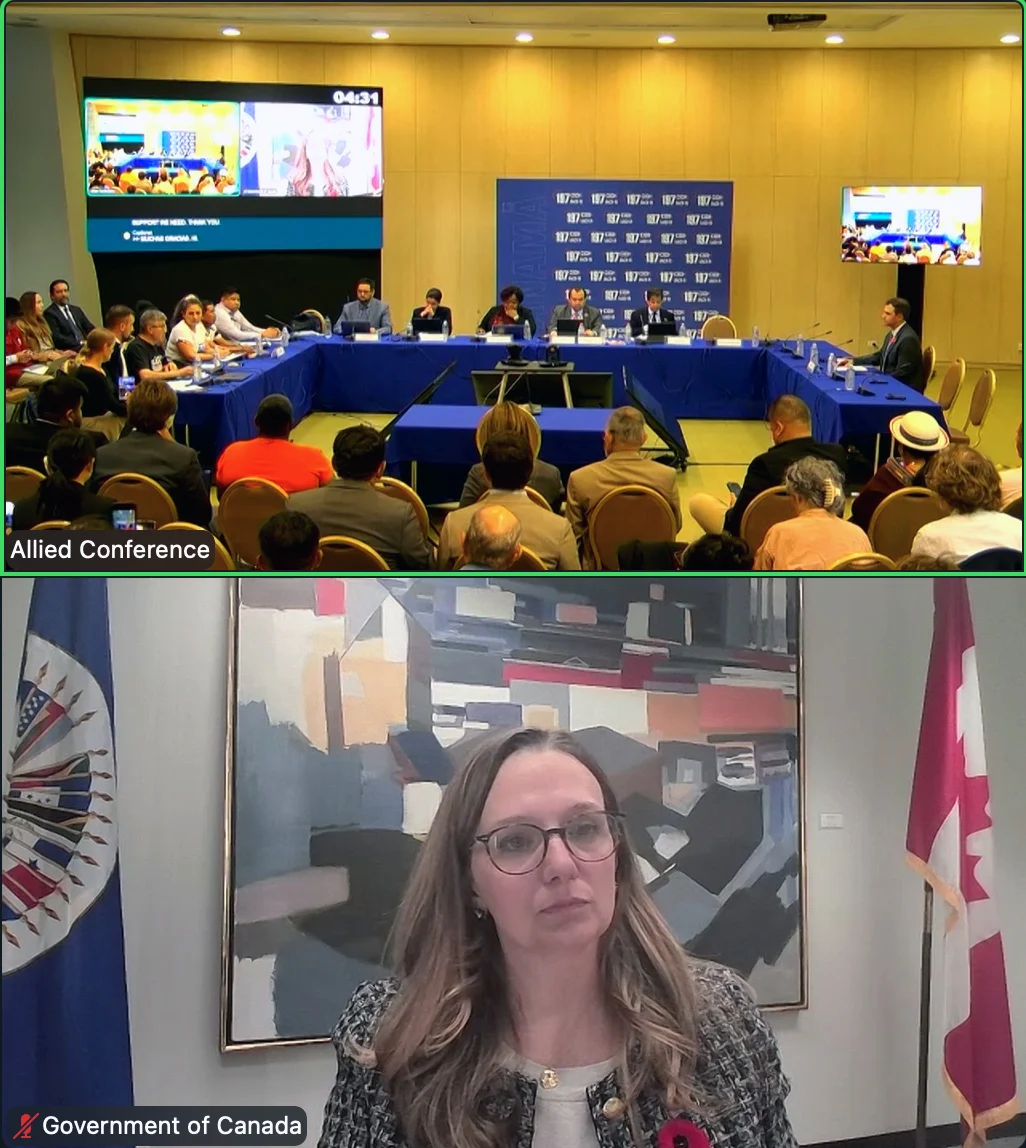
PANAMA CITY — The Inter-American Commission on Human Rights (IACHR) convened a pivotal regional hearing to examine the extraterritorial impacts of extractive industries, focusing squarely on the conduct of Canadian mining corporations operating throughout Latin America. Representatives from six nations delivered harrowing testimony detailing severe environmental degradation, systemic criminalization, and physical attacks against local environmental defenders. The proceedings underscore a deepening international crisis regarding corporate accountability, governance gaps, and the safety of land defenders in the world’s most perilous region for environmental activism.
The hearing brings to the forefront longstanding tensions between global capital investment and local human rights protection. Canada holds a commanding position in the global mining sector, serving as the corporate home to approximately half of the world’s publicly listed mining and mineral exploration companies. While these corporations drive substantial economic activity abroad, local communities and human rights advocates have spent decades documenting a trail of ecological devastation, community displacement, and violent reprisals.
Voices from the Frontlines of Extraction
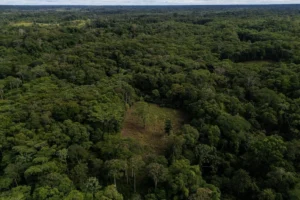
The testimonies delivered in Panama City illustrated the human and ecological toll borne by vulnerable communities. Marco Manobanda, an Indigenous fish-farmer from Las Naves, Ecuador, provided a stark account of the destruction unfolding in his homeland. Manobanda detailed how the El Domo copper and gold mine—owned jointly by Vancouver-based firms Silvercorp Metals Inc. and Salazar Resources Ltd.—has triggered widespread deforestation and severe water contamination, threatening both the local ecosystem and his traditional livelihood.
"If this mining continues, they’re going to keep polluting our water, and we’ll run out of resources," Manobanda testified before the commission. "And since we make our living from that land and its resources, where are we supposed to go?"
Manobanda’s testimony highlighted not only environmental degradation but also intense state-corporate crackdowns on dissent. According to local advocates, the Ecuadorian military and police deployed tear gas and rubber bullets in June 2025 to disperse a peaceful community protest, injuring multiple residents to safeguard corporate mining interests. Manobanda reported that local residents continue to endure aggressive military presences, persistent threats, harassment, and home raids. More than 30 individuals have faced criminal charges, with several handed multi-year prison sentences—a pattern that has drawn direct condemnation from United Nations Special Rapporteurs.

The situation in Colombia mirrors these systemic concerns. Mayerly López testified before the commission regarding the escalating threats faced by communities attempting to protect the Santurbán páramo from gold mining activities spearheaded by Aris Mining Corporation through its Soto Norte project. The high-altitude páramo ecosystem is a fragile, biodiverse region that serves as a vital freshwater source for approximately two million Colombians.
López pointed to a rollback of environmental protections by the Colombian government and described an alarming campaign of social stigmatization against resistance leaders. She noted that the faces of environmental defenders have been splashed across pamphlets distributed locally and circulated online, falsely linking them to illegal armed groups.
"It’s important to bring this to the Inter-American Commission so that it calls on the Colombian government to protect Santurbán, but also on Aris Mining to fulfill its obligations, and for Canada to demand that Aris Mining comply with its obligations," López stated.
Global Witness, a U.K.-based nongovernmental organization that has tracked violence against land defenders for over a decade, identifies Latin America as the deadliest region globally for environmental activism every single year since 2012. In its most recent findings, Global Witness documented that Colombia remains the world’s most dangerous country for land and environmental defenders, recording 39 killings in the preceding year alone, nearly half of which targeted Indigenous individuals.
Chronology of Regulatory Retreat in Canada
The IACHR hearing took place against a backdrop of mounting alarm regarding the Canadian federal government’s dismantling of its corporate oversight mechanisms. Just four months prior to the proceedings, the Canadian government eliminated the office of the Canadian Ombudsperson for Responsible Enterprise (CORE). Established to investigate complaints regarding human rights abuses and environmental harm linked to Canadian companies operating abroad in the mining, oil and gas, and garment sectors, the CORE’s sudden closure left accountability advocates stunned and stripped communities of a primary investigative avenue.
Legal scholars and human rights experts argue that Canada’s failure to maintain robust, independent investigative bodies constitutes a direct breach of its international human rights obligations. Charis Kamphuis, a Canadian lawyer and member of the Justice and Corporate Accountability Project (JCAP), testified that Ottawa has consistently failed to meet these standards despite nearly three decades of documented evidence linking Canadian extractive projects to overseas abuses.

JCAP emphasized in a submission to the commission that the elimination of the CORE effectively foreclosed the possibility of international human or environmental rights complaints against Canadian corporations undergoing administrative review at home.
In the wake of the CORE’s dissolution, Global Affairs Canada—the federal department overseeing the office—asserted that it was streamlining oversight functions into Canada’s National Contact Point (NCP), an office operating under the guidelines of the Organisation for Economic Co-operation and Development (OECD).
However, civil society organizations and labor watchdogs have roundly criticized the NCP as wholly inadequate for addressing severe human rights violations. Arturo Ezquerro-Cañete, Latin America program coordinator with MiningWatch Canada, dismissed the office as lacking structural enforcement power.
"The position actually completely lacks teeth," Ezquerro-Cañete said, pointing out that NCP recommendations are entirely non-binding and the office possesses no legal authority to compel the disclosure of documents or issue definitive findings of fact. "It’s very much geared towards continuing dialogue between the groups but not resolving issues when there’s been very serious documented cases of human rights violations. So, it’s totally, uh, unequipped."
Data compiled by Mongabay highlights the meager track record of Canada’s NCP, revealing that only three out of 33 cases handled by the office since the year 2000 have culminated in formal joint agreements. Critics argue the mechanism serves as a diplomatic shield rather than an effective judicial remedy.
Official Responses and Institutional Limitations
During the IACHR proceedings, Canadian officials defended the nation’s regulatory framework. Gillian Gillard, Canada’s representative to the Organization of American States (OAS) in Washington, D.C., pointed to the NCP as a robust tool capable of addressing community grievances.

"The work of the NCP aims to support early resolution, prevent escalation, and strengthen corporate due diligence," Gillard testified. She acknowledged that no regulatory framework can entirely eliminate risk, adding, "However, Canada expects companies to identify, prevent, mitigate, and address adverse impacts associated with their operations and business relationships."
When pressed by commissioners for specific details on how the Canadian government independently investigates allegations of human rights abuses and verifies corporate compliance abroad, Gillard did not provide a direct answer, instead enumerating a broader list of related and unrelated government initiatives. Global Affairs Canada declined to respond to media inquiries regarding criticisms that its oversight mechanisms fail to prevent harm or secure adequate remedies for affected populations.
Furthermore, corporate entities named during the testimonies—including Silvercorp Metals, Salazar Resources, and Aris Mining Corp.—were contacted for comment by journalists prior to publication but failed to provide responses.
Broader Implications and Civil Society Demands
Because Canada has not ratified the American Convention on Human Rights—unlike many of its OAS counterparts—the IACHR lacks the jurisdiction to refer Canada to the Inter-American Court of Human Rights, which holds the authority to mandate binding legal remedies. Nevertheless, the commission retains the power to issue influential, non-binding recommendations that carry significant diplomatic and moral weight.
Leveraging this platform, civil society witnesses and human rights coalitions have outlined a comprehensive agenda for reform. They are formally petitioning the IACHR to recommend that the Canadian government:
- Enact mandatory human rights and environmental due diligence legislation, legally compelling parent companies to prevent abuses throughout their global supply chains and operations.
- Reinstate and strengthen independent accountability mechanisms equipped with investigative powers, document subpoena capabilities, and enforcement authority.
- Improve access to judicial redress in Canadian courts for victims of overseas corporate harms, removing procedural barriers that shield multinational corporations from liability.
- Condition public financing, export credits, investment support, and state-backed insurance for Canadian corporations strictly upon verifiable compliance with human rights and environmental safeguards.
- Enhance transparency mandates regarding the socio-environmental risks associated with international mineral exploration and extraction.
As extraction demands rise to feed global green-energy transitions, the tension between international resource procurement and local human rights governance remains a critical flashpoint. The IACHR hearing in Panama City has amplified calls for rigorous, legally binding oversight, sending a clear message that the social license of transnational mining capital can no longer bypass accountability to the communities bearing its deepest costs.