
For nearly forty years, the United States federal government has operated a vital yet complex initiative aimed at removing vulnerable populations from harm’s way before disaster strikes. Known formally as the Hazard Mitigation Grant Program and administered by the Federal Emergency Management Agency (FEMA), this mechanism allocates federal funds to state and local governments to purchase properties in recurring disaster areas—primarily floodplains—and permanently return the land to open space. Since its inception, the program has funneled more than $6 billion into acquiring upwards of 53,000 properties nationwide.
While the fundamental logic behind property buyouts has always centered on fiscal responsibility and human safety, the empirical reality of how these programs function on the ground has long remained obscured by a lack of comprehensive tracking data. A landmark study published in the journal Science Advances sheds critical new light on this federal adaptation strategy. Authored by Rachel Young, an environmental economist at the University of Minnesota, the research provides a sweeping national assessment of who participates in buyouts, where they move, and whether the substantial public investment achieves its stated goals.
The findings present a nuanced picture: while the program is remarkably effective at successfully relocating households to safer, higher-income areas and largely pays for itself through avoided future disaster payouts, its benefits are starkly uneven. Deep racial and economic disparities permeate the entire framework, raising urgent questions about climate justice, structural inequality, and the future of managed retreat in an era of intensifying global climate change.
Historical Context and Economic Rationale
To understand the mechanics of the FEMA buyout program, one must examine the unsustainable financial trajectory of repeatedly rebuilding in disaster-prone locations. Established in the wake of various catastrophic weather events and formalized over subsequent decades, the Hazard Mitigation Grant Program was designed to break the costly cycle of repetitive loss.
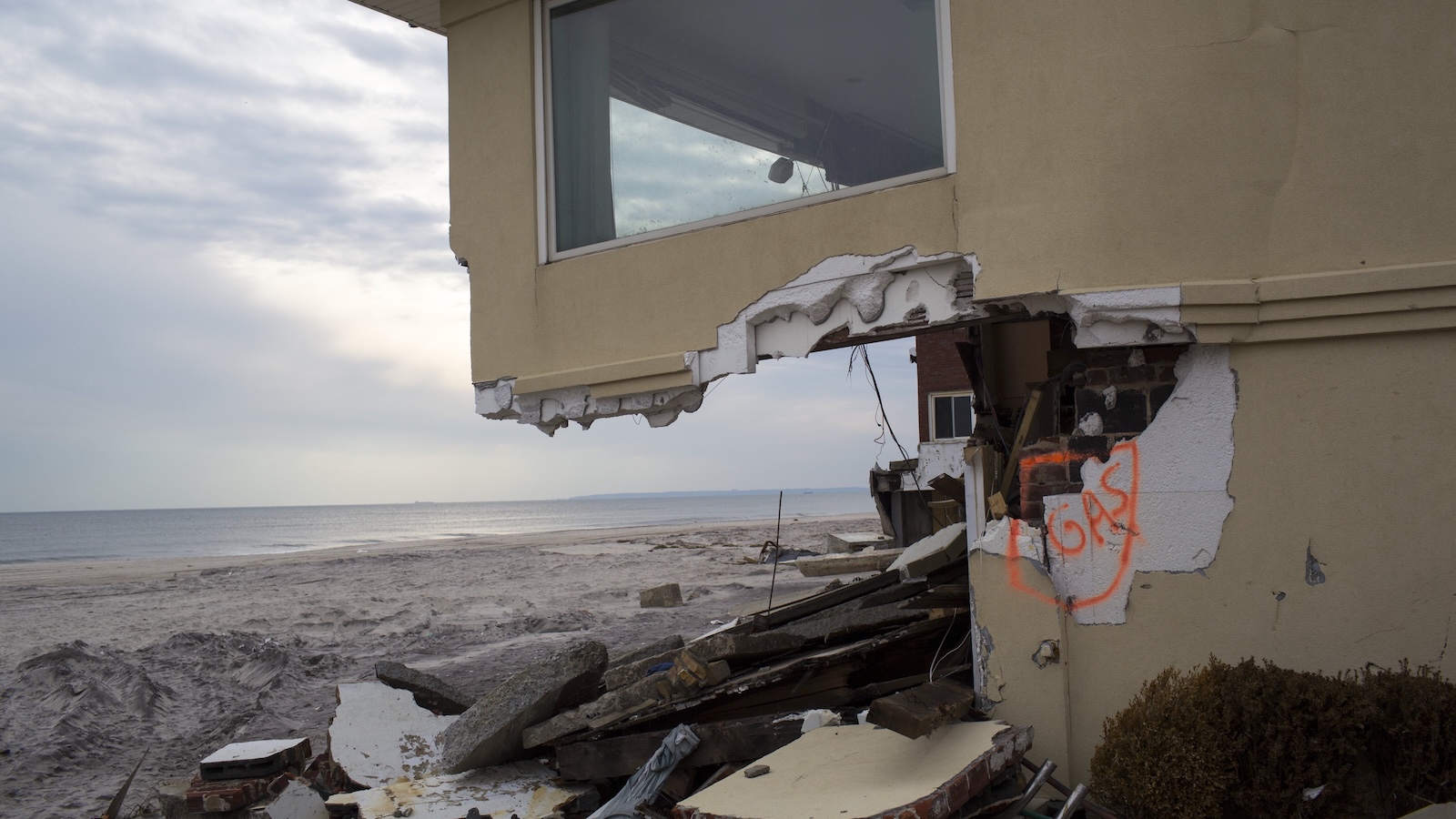
When a natural disaster strikes, affected property owners can apply through their local municipal or state governments for federal assistance to rebuild. However, when properties flood repeatedly, the cumulative cost of federal disaster relief, emergency rescue operations, and National Flood Insurance Program (NFIP) payouts can exponentially exceed the original value of the home itself.
In one of the most extreme documented instances highlighted by investigative reporting from ProPublica, a single home in northeast Houston, Texas, received 18 separate federal flood insurance payouts totaling $1.8 million—an astonishing figure roughly 15 times the actual market value of the property. Such staggering fiscal inefficiencies illustrated the urgent need for a proactive approach: rather than continuously subsidizing rebuilding efforts in high-risk zones, the federal government sought to permanently buy out homeowners, demolish the structures, and prevent future development on the vulnerable land.
The mechanics of the program involve a collaborative financial structure. Typically, FEMA provides a grant covering up to 75 percent of a property’s evaluated cost, with state or local governments picking up the remaining balance. Homeowners apply voluntarily, and if approved, they receive an offer based on the pre-disaster market value of their home. If accepted, the homeowner relinquishes the property, which is then deed-restricted to remain undeveloped green space in perpetuity.
Key Findings of the Science Advances Study
Young’s research leveraged an innovative combination of public and private datasets to track the post-buyout trajectories of participants over extended periods, offering a national-scale evaluation previously unseen in climate adaptation literature.
The study revealed that program participants were roughly 20 percentage points more likely to successfully relocate within the first five years following a buyout compared to control groups of similarly impacted homeowners who did not receive buyouts. Impressively, this disparity in relocation probability persisted for at least 15 years. Furthermore, the empirical data demonstrated that participants tended to relocate to census tracts characterized by higher median incomes, better employment opportunities, and higher educational attainment. Additionally, participating households experienced a measurable reduction in overall debt levels, at least in the short term, pointing to improved financial stability.
From the perspective of public expenditure, the program has largely validated its cost. Young noted that when the federal government successfully targets vulnerable properties and facilitates moves to genuinely lower-risk environments, the upfront investment successfully pays for itself over time by permanently eliminating future disaster relief claims, emergency response expenditures, and repeated insurance payouts.
The Persistence of Racial and Economic Inparities
Despite these aggregate successes, the study’s most alarming revelation centers on the profound demographic disparities embedded in the buyout process. The advantages of the program are far from democratically distributed.
Households originating from high-income neighborhoods were significantly more likely to participate, relocate successfully, and transition to areas offering greater socioeconomic mobility. Conversely, households residing in majority-Black or low-income neighborhoods participated at markedly lower frequencies, experienced smaller improvements in neighborhood quality post-relocation, and often found themselves trapped in precarious financial positions.
The statistical divide is stark. According to the study’s data, the average buyout payment in majority-Black census tracts was a mere $40,583, compared to $93,977 in census tracts with high proportions of white residents. Similarly, the estimated increase in long-term relocation probability was approximately 18 percentage points in tracts with smaller Black populations, but plummeted to just 6 percentage points in majority-Black tracts.
Independent experts not involved in the research emphasize that these disparities are symptoms of structural flaws inherent in the program’s design. Jim Elliott, a sociologist at Rice University specializing in disaster inequities and recovery, noted that the core disconnect stems from a fundamental divergence in perspective between federal administrators and displaced homeowners.
"The government looks at it as a property acquisition program and a way to look out for other taxpayers," Elliott explained. "But if you’re from a damaged home, you’re looking at this as disaster recovery."
Structural Flaws in the Valuation and Timeline
The operational framework of FEMA buyouts frequently exacerbates existing societal inequalities. The administrative process itself can notoriously drag on for years, leaving traumatized disaster victims in debilitating states of limbo as they await bureaucratic approvals and funding allocations.
More critically, tying buyout offers to a home’s pre-disaster market value inherently penalizes marginalized and low-income communities. Homes in economically depressed or historically marginalized neighborhoods consistently possess lower baseline market valuations. Consequently, when the government offers to purchase these properties based on market value, the resulting payout is often insufficient to purchase a comparable home in a safer, higher-income neighborhood.
In many instances, the financial gap between the buyout check and the cost of a new home in a low-risk area is insurmountable, effectively stranding vulnerable homeowners or forcing them to relocate to other high-risk, low-cost neighborhoods. This dynamic defeats the primary climate adaptation objective of moving populations away from environmental hazards.
A.R. Siders, director of the University of Delaware’s Climate Change Science and Policy Hub, praised the national scope of Young’s findings while advocating for structural reforms that have long been championed by adaptation researchers. Siders points to alternative valuation methods—such as compensating homeowners based on replacement cost rather than market value—as a vital policy adjustment that could directly empower marginalized groups to secure safe housing elsewhere.
Broader Implications and Future Outlook
As climate change accelerates, triggering more frequent and severe flooding, sea-level rise, and catastrophic weather events across the United States, managed retreat is transitioning from an experimental policy option to an absolute necessity. However, experts warn that the current federal buyout apparatus is severely under-resourced relative to the scale of the crisis.
While the $6 billion spent over four decades represents a substantial commitment, millions of Americans currently reside in highly disaster-prone homes that will eventually require relocation. Elliott describes current mitigation efforts as a temporary stopgap: "This is important, but it is insufficient. It’s buying us some time."
Furthermore, political shifts and administrative priorities heavily influence the trajectory of federal climate programs. Past executive administrations have frequently scrutinized or constrained federal spending on climate resilience initiatives, creating uncertainty for local municipalities seeking long-term funding streams. To address these shortcomings, researchers suggest looking internationally to nations like New Zealand and various European countries, which have pioneered more holistic, community-centered approaches to managed retreat.
A glaring systemic deficiency highlighted by the researchers is the federal government’s historic failure to track or evaluate the long-term outcomes of buyout participants. Young emphasized that FEMA currently undertakes virtually no formal tracking to assess where families relocate after receiving funds, leaving academic researchers to independently uncover the socioeconomic implications of federal policies.
"The federal government doesn’t do anything to assess where people go after the program," Young observed. Elliott echoed this critique, calling the current dynamic backward: "It was sort of left to us to figure out what the implications of the policy are. That’s backwards."
Ultimately, the study serves as both a validation of the federal buyout program’s core economic utility and a sobering indictment of its equity shortcomings. As policymakers grapple with an uncertain climatic future, experts agree that reforming FEMA’s Hazard Mitigation Grant Program to prioritize equitable valuations, streamlined timelines, and post-relocation tracking will be essential to ensuring that climate adaptation leaves no vulnerable community behind.