The legacy of legendary nature photographer Ansel Adams extends far beyond his monochromatic masterworks of Yosemite National Park and the Sierra Nevada. While he is celebrated for his technical precision and the dramatic luminosity of his landscape photography, his role as a staunch conservationist remains a cornerstone of his historical significance. Adams’ lifetime of advocacy—culminating in poignant warnings about the fragility of the American West—serves as a critical touchstone for modern environmental discourse. His haunting question, “Will you leave a world to your descendants without easy access to the extraordinary wonder of nature?” has transitioned from a rhetorical plea to a central challenge for contemporary policymakers, climate scientists, and global citizens grappling with the accelerating loss of biodiversity and the degradation of ecosystem services.
The Evolution of a Conservationist
Ansel Adams (1902–1984) was not merely a documentarian of nature; he was an active participant in the legislative battles that shaped American land management. His involvement with the Sierra Club, where he served on the Board of Directors from 1934 to 1971, provided him with a platform to translate his aesthetic appreciation of the wilderness into political action. During the 1930s and 40s, Adams was instrumental in lobbying for the protection of Kings Canyon, which was eventually established as a national park in 1940. His photographs were used as visual evidence in the halls of Congress, demonstrating that the preservation of wild spaces was not just a sentimental pursuit but a national imperative.
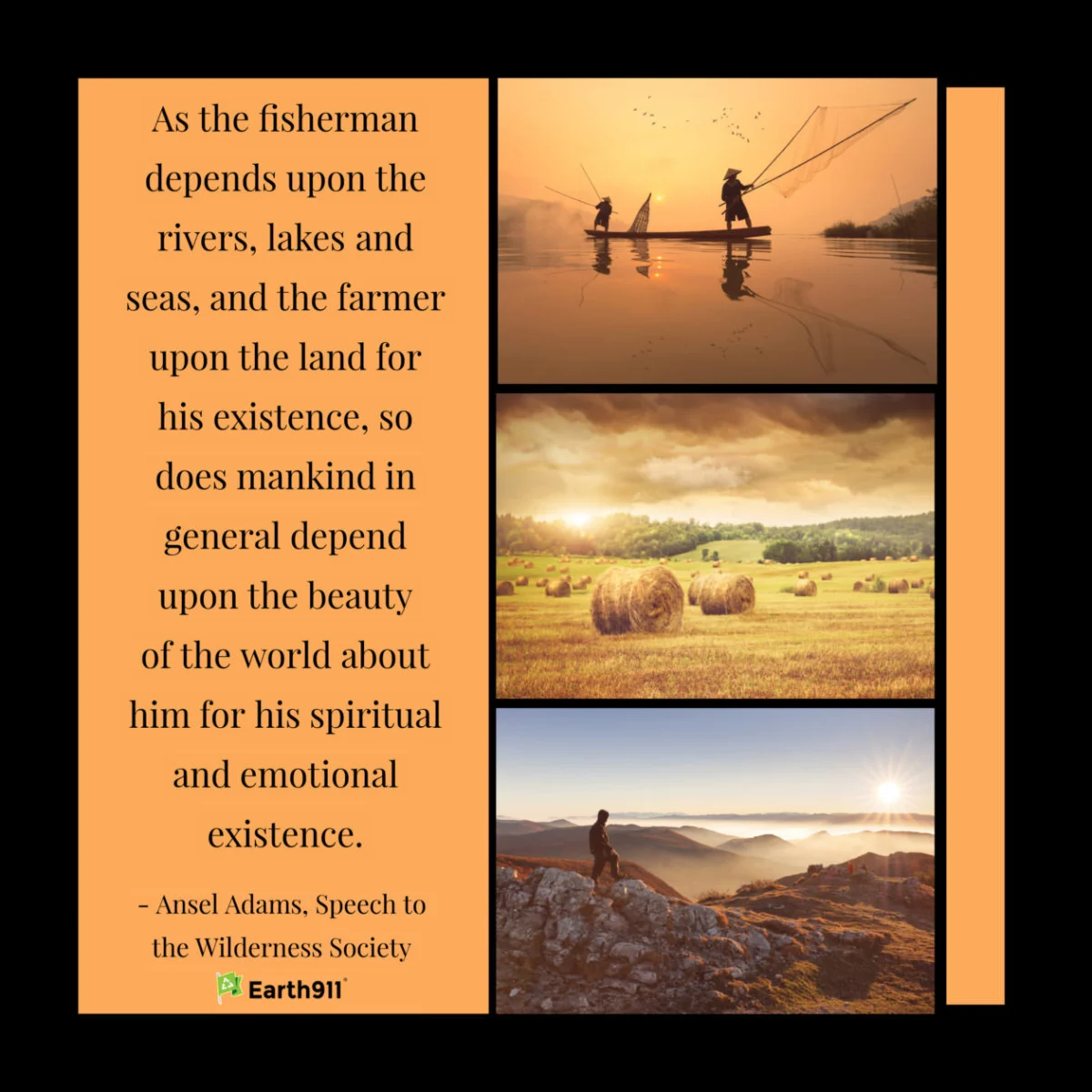
Adams’ philosophy was rooted in the concept that human existence is fundamentally tethered to the natural world. He recognized that nature provides "ecosystem services"—the myriad benefits that humans obtain from the environment, including air purification, water filtration, climate regulation, and mental well-being. His warning to the Wilderness Society regarding the "destruction of nature’s beauty" reflects an early understanding of the Anthropocene, a geological epoch characterized by significant human impact on Earth’s geology and ecosystems.
A Chronology of Environmental Advocacy
To understand the weight of Adams’ rhetoric, one must contextualize it within the timeline of 20th-century American environmentalism.
- 1930s–1940s: Adams begins his active tenure with the Sierra Club, utilizing his photography to advocate for the expansion of the National Park system.
- 1964: The Wilderness Act is passed, a landmark piece of legislation that Adams strongly supported. It created the legal definition of "wilderness" and protected 9.1 million acres of federal land.
- 1970: The first Earth Day is celebrated, marking a shift toward mass-market environmental awareness. Adams’ imagery becomes synonymous with the movement, appearing in posters and educational materials nationwide.
- 1980: President Jimmy Carter awards Adams the Presidential Medal of Freedom, the nation’s highest civilian honor, specifically citing his efforts to preserve the American wilderness.
- 1984: Following his death, the Ansel Adams Wilderness, an area of over 230,000 acres in the Sierra Nevada, is designated in his honor.
- 2019–Present: Organizations like Earth911 continue to utilize Adams’ archival quotes to bridge the gap between historical conservation and current climate crises, highlighting the persistent relevance of his message.
Supporting Data: The Current State of Biodiversity
The urgency of Adams’ warning is supported by contemporary data regarding the state of global ecosystems. According to the Intergovernmental Science-Policy Platform on Biodiversity and Ecosystem Services (IPBES), approximately one million animal and plant species are now threatened with extinction, many within decades. This rate of extinction is estimated to be at least tens to hundreds of times higher than the average over the past 10 million years.
Furthermore, the World Wildlife Fund’s "Living Planet Report" indicates an average decline of 69% in the relative abundance of monitored wildlife populations between 1970 and 2018. The loss of these species directly threatens the "extraordinary wonder" Adams cherished, but more importantly, it destabilizes the natural systems upon which human agriculture, health, and economic stability rely. When biodiversity is lost, the resilience of ecosystems—such as their ability to withstand droughts or recover from extreme weather events—is significantly diminished.
Perspectives from the Environmental Community
Modern environmentalists and organizational leaders often point to Adams’ work as a prototype for "visual advocacy." By capturing the sublime beauty of the American West, Adams made remote landscapes accessible to a public that might otherwise never have seen them. Today, this strategy is employed by groups such as the National Parks Conservation Association and the Nature Conservancy, which utilize high-definition imagery to galvanize public support for protected land designation.
Dr. Elena Vance, an environmental sociologist, notes: "Adams understood that data alone rarely drives public policy. It requires a narrative. By positioning nature as a source of inspiration rather than just a resource for extraction, he fundamentally changed how the American public perceived federal lands. His legacy is the institutionalization of the idea that access to nature is a human right, not a luxury."
Implications: The Economic and Psychological Value of Nature
The implications of failing to protect the natural world extend into the economic sphere. The "natural capital" approach to economics suggests that nature is a productive asset. For example, the pollination services provided by wild insects contribute billions of dollars annually to the global agricultural economy. Beyond economics, the psychological implications of "nature-deficit disorder"—a term coined by author Richard Louv—have gained traction in medical circles. Research consistently shows that time spent in natural environments lowers cortisol levels, reduces blood pressure, and improves mental health outcomes.

When Adams asked if we would leave a world to our descendants without access to nature, he was highlighting a permanent loss. Unlike a damaged building that can be reconstructed, the destruction of ancient ecosystems—such as old-growth forests or complex wetlands—is often irreversible within a human timeframe. The restoration of these ecosystems, while possible, requires a commitment to conservation that often clashes with the immediate demands of industrial expansion and population growth.
A Call for Persistent Stewardship
In the contemporary era, the call to "think of the planet first" has evolved into a multi-faceted approach involving carbon sequestration, sustainable urban planning, and the transition to renewable energy. Adams’ work serves as a reminder that the motivation for this shift must be rooted in an appreciation for the intrinsic value of the environment.
As climate change accelerates, the "extraordinary wonder" mentioned by Adams is increasingly under threat from wildfires, prolonged droughts, and rising sea levels. The management of these threats requires the same level of political courage that Adams displayed in the 20th century. His legacy suggests that while individual actions—such as recycling, reducing waste, and personal conservation—are necessary, they must be coupled with a broader commitment to systemic change.
The preservation of the natural world is a legacy project. Just as the generation before us acted to protect the areas that now constitute the American National Park system, current generations are tasked with safeguarding the remaining wilderness for the future. The question remains: as the human footprint continues to expand, what will be left of the "extraordinary wonder" that inspired a generation of artists, scientists, and citizens to protect the Earth? The answer lies not in the words of the past, but in the policy and lifestyle decisions made today. As we move further into the 21st century, the photograph of a mountain range by Ansel Adams serves as more than just art; it is a benchmark, a challenge, and a reminder of what is at stake.