
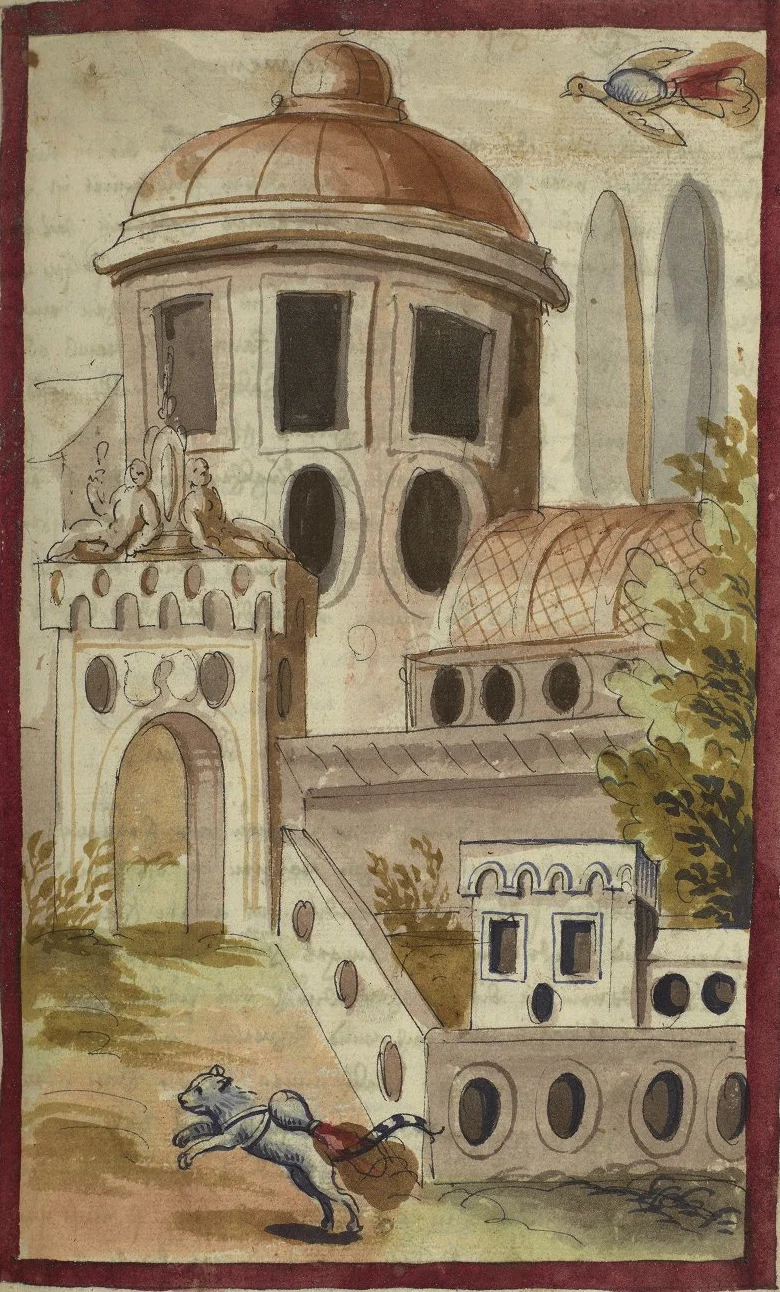
The discovery of a 16th-century military manuscript has brought to light one of the more bizarre and harrowing chapters in the history of early modern siege warfare. Digitized by the University of Pennsylvania’s Schoenberg Institute for Manuscript Studies, the treatise, authored by artillery master Franz Helm of Cologne, details a series of unconventional tactical suggestions, most notably the use of "rocket cats" and incendiary pigeons to breach fortified cities. While the illustrations of felines with flaming apparatuses strapped to their backs may appear fantastical or even satirical to the modern eye, historians suggest they represent a serious, if highly impractical, attempt to innovate within the evolving landscape of 16th-century ballistics and psychological warfare.
Franz Helm, a renowned artillery specialist who served under several Holy Roman Empire commanders, wrote his manual, Buch von den probierten Künsten (Book of the Proved Arts), around 1530. During this period, the transition from medieval fortification to early modern gunpowder warfare was in full swing. Commanders were increasingly seeking ways to bypass the formidable stone walls of castles and walled towns that could often withstand lengthy conventional sieges. Helm’s manual reflects the era’s fascination with "firework" technology—a term then used to describe any explosive or incendiary device used in combat.
The Mechanics of the Incendiary Animal
The specific strategy involving cats was rooted in a primitive understanding of animal behavior and homing instincts. According to the translated text researched by University of Pennsylvania historian Mitch Fraas, Helm’s instructions were chillingly methodical. The manual advises that if a commander wishes to set fire to a town or castle that remains unreachable by traditional artillery, they should "seek to obtain a cat from that place."
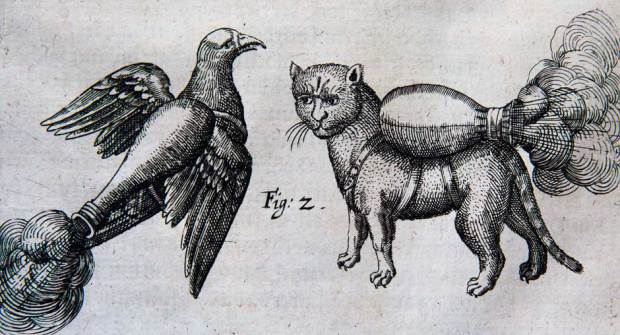
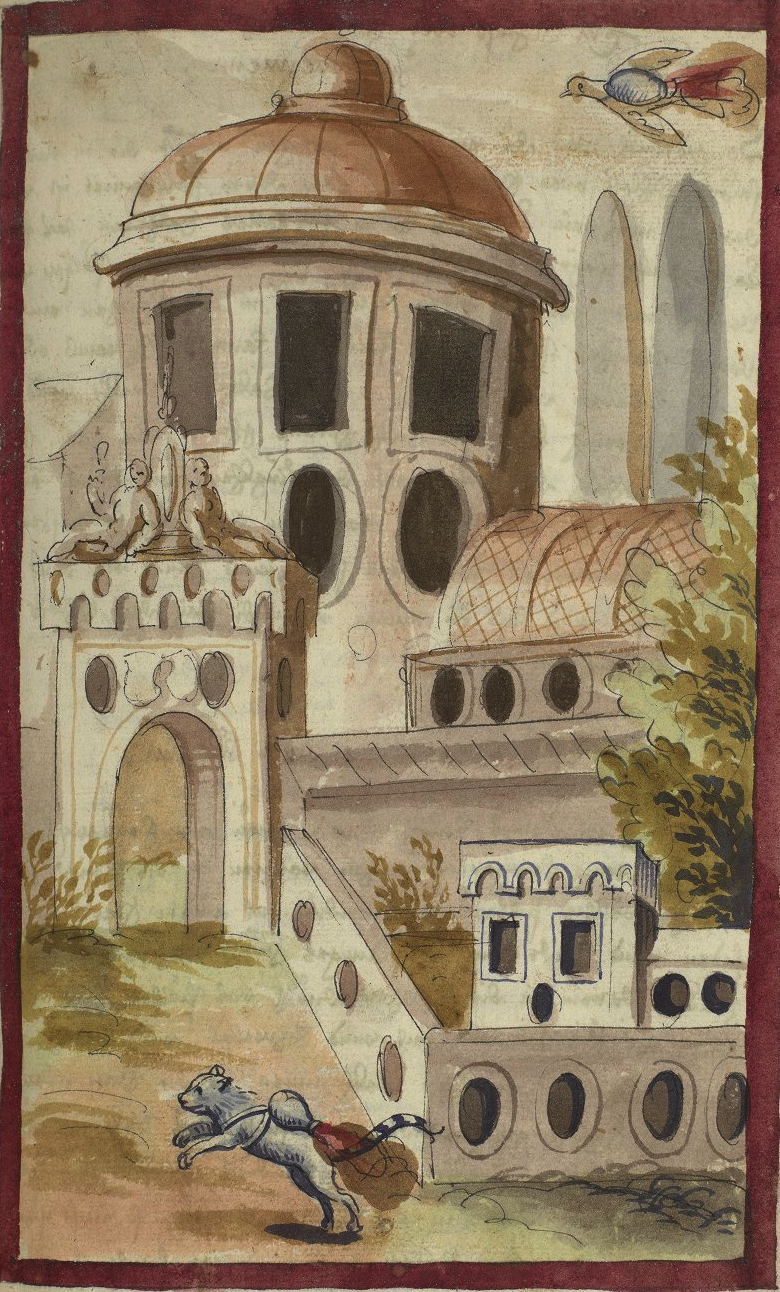
The logic was that a cat captured from a besieged city would, upon being released, instinctively attempt to return to its home. Helm directed that a small sack, filled with incendiary material and functioning like a "fire-arrow," should be bound to the animal’s back. Once the fuse was ignited, the terrified cat would be released. Helm hypothesized that the animal, seeking a place to hide from the heat and noise of the sputtering flame, would retreat to the most familiar and secluded spot it could find: typically a barn, a hayloft, or a thatched roof within the city walls. The resulting fire would then spread through the settlement, creating chaos and forcing a surrender.
A similar tactic was proposed for pigeons. Helm suggested capturing birds that nested in the target city, attaching small incendiary devices to their legs or bodies, and releasing them to fly back to their nests under the eaves of houses. Unlike the cats, which would have to navigate ground-level defenses, pigeons offered an aerial delivery system that was virtually impossible to intercept with the weaponry of the time.
Historical Context and Precedents
While Helm’s manual is perhaps the most visually striking record of such tactics, the concept of using animals as delivery systems for fire is not unique to 16th-century Germany. Historians have noted several instances in ancient and medieval texts where similar strategies were described, though their veracity is often debated.
One of the earliest literary references is found in the biblical Book of Judges, which describes Samson tying torches to the tails of 300 foxes and releasing them into the grain fields of the Philistines. In the 13th-century Secret History of the Mongols, a similar legend attributes a victory to Genghis Khan, who allegedly demanded a tribute of 1,000 cats and 10,000 swallows from a besieged city. He then ordered his troops to tie tufts of wool soaked in oil to the animals, set them ablaze, and release them, leading to the city’s destruction.
By the time Franz Helm was writing in the 1530s, the "science" of artillery was becoming increasingly professionalized. Helm himself was a veteran of many campaigns against the Ottoman Empire and was considered an expert in the composition of gunpowder and the casting of cannons. His inclusion of "rocket cats" in a manual otherwise filled with technical data on bore diameters and chemical mixtures suggests that even the most experienced military minds of the Renaissance were willing to entertain fringe theories to gain a tactical advantage.
The Manuscript: LJS 450
The specific manuscript that gained viral attention is identified as LJS 450 in the University of Pennsylvania’s collection. It is a mid-16th-century copy of Helm’s work, likely produced in the 1580s. The illustrations are notable for their vivid colors and the almost surreal expressions on the faces of the animals. The "rocket cats" are depicted mid-stride, with sparks and smoke trailing behind them from backpacks that resemble modern jetpacks.
Mitch Fraas, who first highlighted the "rocket cat" phenomenon on the University of Pennsylvania’s "Unique at Penn" blog, emphasizes that there is no historical evidence to suggest these tactics were ever successfully employed on a significant scale. "The idea was likely more of a theoretical ‘thought experiment’ or a desperate last resort than a standard operating procedure," Fraas noted in his research. The practical hurdles—most notably the extreme unpredictability of a panicked, burning animal—would have made the tactic as dangerous to the user as to the target.
Tactical Limitations and Ethical Considerations
The primary reason for the failure of incendiary animals in actual warfare was the lack of control. A cat with a burning fuse on its back is just as likely to run back into the camp of the army that released it as it is to run toward the enemy. In the cramped, tent-filled environment of a 16th-century military encampment, a single "rocket cat" could inadvertently cause a catastrophic fire among the besiegers’ own gunpowder supplies.
Furthermore, the logistical challenge of capturing a cat specifically from the target city was significant. In a state of siege, stray animals were often consumed as food by the starving populace, making them a scarce resource. The manual’s insistence on using an animal "from that place" indicates Helm’s understanding of the homing instinct, but it ignores the difficulty of procurement during active hostilities.
From a modern perspective, the use of animals in this manner is viewed as an act of extreme cruelty. However, in the 16th century, the ethical framework surrounding animal welfare was non-existent in a military context. Animals were viewed as tools of war, no different from horses used in cavalry charges or oxen used to haul heavy cannons. The focus of military manuals like Helm’s was purely on the efficiency of destruction.
Broader Impact on Military Theory
Despite the impracticality of the rocket cat, Helm’s work contributed to the broader evolution of incendiary warfare. His experiments with "fire-pots," "fire-balls," and various chemical compositions paved the way for more reliable forms of indirect fire. The transition from using animals to using specialized projectiles marked a turning point in military engineering.
The 16th century saw the birth of the "trace italienne" or star fort, a style of fortification designed specifically to counter gunpowder artillery. As defenses became more sophisticated, the pressure on artillery masters to find "creative" solutions grew. While the rocket cat remained a curiosity of the manuscript world, the underlying desire to project fire over obstacles led directly to the development of mortars and howitzers, which could loft explosive shells over walls with mathematical precision.
Chronology of the "Rocket Cat" Narrative
- Circa 1530: Franz Helm of Cologne writes the original Buch von den probierten Künsten, including the incendiary animal tactics.
- Mid-to-late 16th Century: Multiple copies of Helm’s manual are produced and circulated among German-speaking military elites.
- 1584: The specific manuscript currently held by the University of Pennsylvania (LJS 450) is created, featuring the famous "rocket cat" illustrations.
- 20th Century: Military historians begin to catalog Helm’s work, often noting the strange animal illustrations as outliers in early modern ballistics.
- 2013-2014: Historian Mitch Fraas at the University of Pennsylvania digitizes the manuscript and publishes a blog post that brings "rocket cats" to global public attention.
- 2026: Continued digital humanities research provides deeper insights into the chemical compositions Helm recommended for his incendiary devices.
Conclusion and Legacy
The "rocket cats" of Franz Helm serve as a window into a period of military history characterized by both rapid technological advancement and a lingering reliance on medieval folklore. They represent a moment when the boundaries of the possible were being tested in the crucible of war. While the image of a cat propelled by gunpowder remains a bizarre footnote, it underscores the lengths to which historical innovators would go to solve the age-old problem of the siege.
Today, the manuscript LJS 450 remains a prized item in the University of Pennsylvania’s digital archives, serving as a primary source for students of both military history and the history of art. It stands as a testament to the human imagination’s capacity for both ingenuity and cruelty in the pursuit of victory. Ultimately, the "rocket cat" was a failure of engineering but a triumph of illustrative curiosity, surviving through the centuries as one of the most unusual artifacts of the Renaissance.










Leave a Reply