
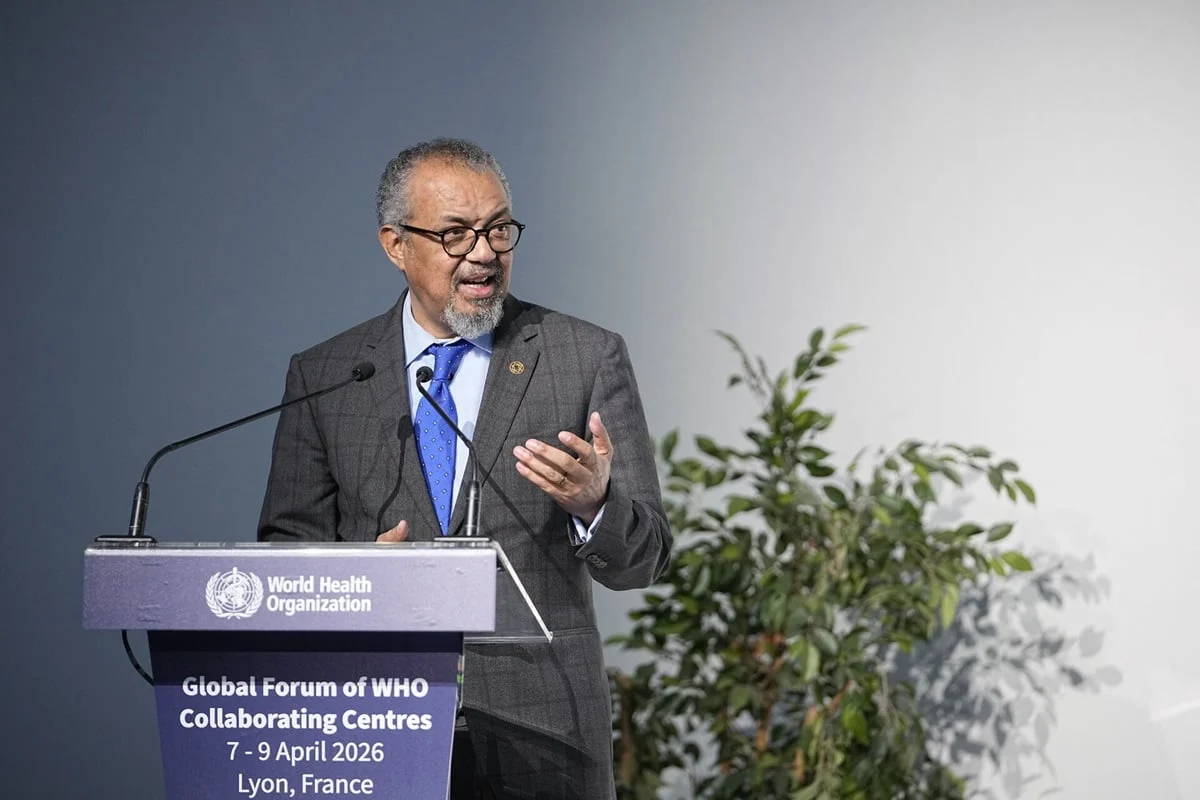
Geneva, Switzerland – In a landmark gathering that underscores the critical importance of global scientific collaboration, the World Health Organization (WHO) has successfully concluded its inaugural Global Forum of Collaborating Centres. This historic event brought together an unprecedented assembly of over 800 institutions designated as WHO Collaborating Centres (CCs) from more than 80 countries, representing one of the world’s most extensive and diverse public health networks. The forum, held against a backdrop of increasing global health fragmentation and emerging threats, served as a crucial platform for scientists and public health leaders to address pressing challenges and identify innovative pathways toward enhanced global health security.
The forum’s proceedings were marked by candid discussions on the complex health threats confronting the international community in an increasingly interconnected yet often fractured world. Participants acknowledged that these challenges demand urgent, coordinated action but also present significant opportunities to galvanize efforts and develop more robust and effective health solutions. The summit concluded with a palpable sense of renewed commitment among the vast network of centers, signaling a strategic shift from siloed, rigid scientific projects towards more agile, integrated, and collaborative partnerships designed to respond swiftly and effectively to evolving health landscapes.
Genesis and Evolution of the WHO Collaborating Centres Network
The establishment and expansion of the WHO Collaborating Centres network are deeply rooted in the Organization’s foundational principles. As far back as 1949, the Second World Health Assembly recognized the imperative for WHO to advance global health research not by establishing its own vast infrastructure, but by strategically coordinating, supporting, and amplifying the existing scientific expertise dispersed across the globe. This visionary approach has since become a cornerstone of WHO’s operational strategy, allowing it to leverage the collective knowledge and resources of leading institutions worldwide.
Over the past 77 years, the network has burgeoned into a formidable alliance, now encompassing many of the world’s preeminent public health bodies, academic institutions, cutting-edge research facilities, and technical agencies. This expansive network continues to serve as a powerful asset for WHO, playing a pivotal role in strengthening global norms and standards, fostering innovation through collaborative research, and building critical capacity in nations around the world. Ultimately, its mission is to translate groundbreaking scientific knowledge into tangible, life-saving actions that benefit populations globally.
A Vital Resource for Global Health
The significance of this network was underscored by Dr. Tedros Adhanom Ghebreyesus, WHO Director-General, who stated, "WHO’s network of collaborating centres is an immensely valuable but under-utilized resource for global health. It brings together the world’s leading institutions to translate evidence into action to support countries, strengthen health systems, and protect populations. Collaborating centres are a powerful demonstration of international cooperation, and what it means to stand with science."
His remarks highlight the dual role of the CCs: not only as repositories of scientific expertise but also as active agents in translating that expertise into actionable strategies for public health. The forum provided a critical opportunity to move towards a more proactive and integrated utilization of this extensive resource, ensuring that scientific advancements are swiftly deployed where they are most needed.
Alignment with Global Health Initiatives and World Health Day
The Global Forum’s timing and agenda were deliberately aligned with broader international health efforts. It leveraged the momentum generated by the international One Health Summit, which convenes leaders from the human, animal, and environmental health sectors to address interconnected health challenges. This synergy is particularly relevant as many emerging health threats, such as zoonotic diseases, span across these domains.
Furthermore, the forum served as a central event leading up to the World Health Day 2026 campaign, themed "Together for health. Stand with science." This thematic alignment emphasizes the WHO’s unwavering commitment to evidence-based public health interventions and the indispensable role of scientific collaboration in achieving global health goals. The campaign aims to foster a collective understanding and appreciation for the power of science in safeguarding and improving health for all.
The Indispensable Role of Science in Public Health
Dr. Sylvie Briand, WHO Chief Scientist, articulated the fundamental importance of scientific rigor and collaboration in public health. "Science is at the heart of everything we do to protect and improve health," she stated. "The global network of WHO collaborating centres represents an extraordinary concentration of scientific expertise and public health leadership. Together, they form a powerful force for knowledge, innovation, and action. At a time of growing global health challenges, this spirit of trusted scientific collaboration is not only valuable – it is indispensable to protecting lives and shaping a healthier future for all."
Her statement resonates with the urgency of the current global health landscape, where novel pathogens, climate change impacts, and antimicrobial resistance pose persistent and evolving threats. The collective intelligence and coordinated efforts of the CC network are therefore not merely beneficial but essential for navigating these complex challenges.
Preparing for Disease X: The CORC Initiative
In a significant development announced at the forum, WHO is proactively expanding its global community of CCs to confront emerging health threats with enhanced strength and unity. A key initiative in this endeavor is the establishment of the CORC – Collaborative Open Research Consortia. These consortia are designed to bring together leading research institutions and thousands of scientists worldwide under focused collaborative frameworks.
The mission of CORC is ambitious yet critical: to accelerate the development of vaccines, diagnostics, and treatments for "Disease X." This term refers to an unknown pathogen with the potential to cause a future pandemic. By uniting researchers and pooling resources through CORC, WHO aims to build a robust scientific readiness framework that will be crucial for a rapid and effective global response when such an eventuality arises. This proactive approach represents a significant investment in future pandemic preparedness, moving beyond reactive measures to a state of strategic anticipation.
Addressing Funding Gaps and Strengthening Global Cooperation
Participants at the Global Forum also voiced concerns regarding the impact of reductions in global health financing. They emphasized that strong international cooperation remains paramount, especially in the face of diminishing financial resources for public health initiatives. The consensus was that coordinated global responses, collective investment, and sustained collaboration are not only desirable but critical to preventing localized health crises from escalating into widespread global emergencies. This highlights the economic and strategic imperative of investing in global health security as a shared responsibility.
The discussions reinforced the understanding that collaborative platforms like the Global Forum are essential for fostering dialogue, building trust, and mobilizing resources effectively, particularly when traditional funding streams may be strained. The interconnectedness of global health means that a crisis in one region can rapidly impact others, underscoring the need for a united front.
Looking Ahead: The Future of Global Collaboration
The inaugural Global Forum has laid a strong foundation for future collaboration. WHO has announced that the next Global Forum will be convened in 2027, signaling a commitment to further strengthen this historic collaborative platform. This regular cadence of meetings will ensure that the network remains agile, responsive, and continuously evolves to meet the ever-changing demands of global public health. The continuity of such forums is vital for maintaining momentum, sharing best practices, and adapting strategies in response to new scientific evidence and emerging health challenges.
Supporting Data and Context
The WHO Collaborating Centres network is not a new concept, but its formalization and the convening of a global forum represent a significant step forward. The network, which began with a handful of designated institutions in the mid-20th century, has grown exponentially. For instance, by 2020, the network comprised over 800 centres. The distribution of these centres is global, with significant representation across all WHO regions: Africa, the Americas, Eastern Mediterranean, Europe, South-East Asia, and Western Pacific. This geographical diversity ensures that global health efforts are informed by a wide range of contexts and challenges.
The types of institutions designated as WHO Collaborating Centres are diverse, including:
- Research Institutes: Focusing on specific diseases (e.g., influenza, HIV/AIDS, cancer), public health issues (e.g., mental health, non-communicable diseases), or scientific disciplines (e.g., virology, epidemiology).
- Academic Institutions: Universities and schools of public health contributing to training, research, and policy development.
- Governmental Agencies: National public health laboratories, regulatory bodies, and ministries of health providing technical expertise and implementation support.
- Non-Governmental Organizations (NGOs): International and national NGOs working on specific health programs and advocacy.
These centres contribute to WHO’s work in various ways, including:
- Providing technical expertise: Assisting WHO in developing guidelines, standards, and policy recommendations.
- Conducting research: Undertaking collaborative research projects to address critical health issues.
- Building capacity: Training health professionals and supporting the development of health systems in member states.
- Disseminating information: Sharing scientific knowledge and best practices globally.
The historical context of the Second World Health Assembly’s resolution in 1949 is crucial. At a time when global health governance was nascent, WHO’s strategic decision to harness existing scientific power rather than build its own parallel infrastructure was a forward-thinking move. This approach has allowed WHO to remain lean and agile while drawing upon the vast intellectual capital of the global scientific community. The network’s expansion mirrors the increasing complexity of global health challenges, from the eradication of smallpox and the fight against polio to the ongoing battles against chronic diseases and emerging infectious diseases.
Broader Impact and Implications
The outcomes of the Global Forum are poised to have profound implications for global health security. The emphasis on dynamic and integrated partnerships suggests a move away from project-specific collaborations towards more systemic, long-term engagements. This shift is crucial for tackling complex, multifaceted challenges that require sustained effort and interdisciplinary approaches.
The creation of the CORC initiative, specifically targeting "Disease X," represents a significant proactive measure against future pandemics. By fostering pre-emptive research and development, the world can potentially shorten the response time to novel pathogens, saving countless lives and mitigating the devastating socio-economic impacts of pandemics. This forward-looking strategy aligns with the recommendations from previous global health crises, emphasizing the need for robust preparedness.
Moreover, the forum’s call for renewed international cooperation in the face of potential funding reductions underscores the vital role of collaboration in maximizing the impact of limited resources. By pooling expertise, sharing infrastructure, and coordinating efforts, countries can achieve more with less, ensuring that essential public health functions are maintained and strengthened even in challenging economic climates.
The commitment to holding regular Global Forums signals a sustained dedication to fostering a vibrant and responsive network. This institutionalization of high-level dialogue and collaboration ensures that the WHO Collaborating Centres remain at the forefront of global health innovation and action. The lessons learned from this inaugural forum, combined with the established expertise within the network, provide a powerful impetus for a more resilient and equitable global health future. The message is clear: in an era of unprecedented health challenges, scientific collaboration and solidarity are not just desirable, but indispensable.










Leave a Reply