
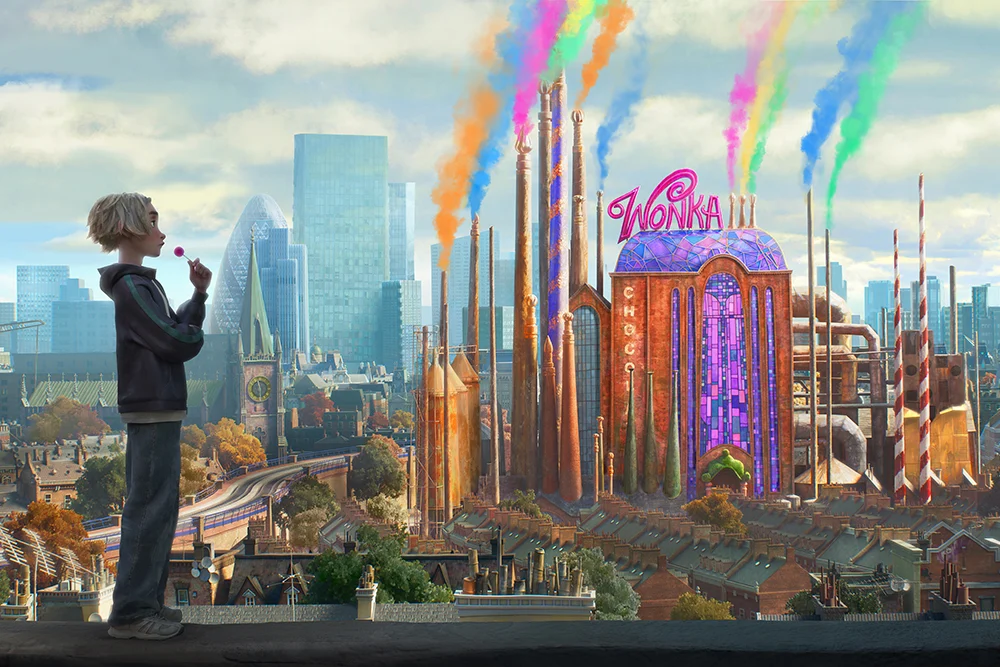
Three years after "Wonka" delved into the whimsical origins of Roald Dahl’s beloved chocolatier, Netflix is charting a new course, propelling the narrative beyond the pages of the original novels with an ambitious new animated feature. Titled "Charlie vs. The Chocolate Factory," this project marks a significant expansion of the streaming giant’s foray into the rich tapestry of Dahl’s literary world. The film is a collaboration with Sony Pictures Imageworks, the Oscar-winning studio responsible for Netflix’s most-watched film to date, "Kpop Demon Hunters," signaling a commitment to high-caliber animation for this fresh interpretation of the classic children’s story.
Set against the vibrant backdrop of modern-day London, "Charlie vs. The Chocolate Factory" promises a contemporary twist on the timeless tale. The directorial helm is steered by the accomplished duo of Jared Stern, known for his writing contributions to "The Lego Batman Movie," and Elaine Bogan, who previously helmed the acclaimed "Trollhunters: Tales of Arcadia." Lending their vocal talents to this reimagined universe are Taika Waititi, who steps into the iconic shoes of Willy Wonka, and Kit Connor, whose role as the young protagonist is anticipated to bring a fresh dynamic to the narrative. Waititi also holds a producer credit, underscoring his integral involvement in shaping the film’s vision.
The narrative arc of "Charlie vs. The Chocolate Factory" takes an intriguing turn, positioning Willy Wonka in a post-incarceration era. Having served time for the infamous transgression of transforming a child into a blueberry – a pivotal event from the original "Charlie and the Chocolate Factory" – Wonka emerges with a renewed, albeit perhaps still eccentric, determination to infuse a jaded world with a touch of sweetness. However, his philanthropic confectionery ambitions are met with an unexpected challenge from a new generation of London’s youth. Leading this charge is the pragmatic teenager Charlie Paley, portrayed by Connor, and his circle of friends. Facing the imminent threat of eviction from their homes, this cohort of "rotten" kids devises a daring plan to infiltrate Wonka’s legendary factory, with the objective of absconding with a coveted Wonka Bar and securing the future of their community. Their audacious heist, however, promises to be far more than a simple act of pilfering, as they are poised to encounter the fantastical and often bewildering wonders that have ensnared countless others within the factory’s magical confines.
The creative team behind "Charlie vs. The Chocolate Factory" has expressed palpable enthusiasm for the project. Directors Stern and Bogan shared their excitement, stating, "Having been raised on the delightfully twisted world of Willy Wonka, it’s a privilege to bring his continued adventures to life as twisted adults. And how sweet to do it like never before via the magic of animation, creating a ‘Charlie vs. the Chocolate Factory’ that’s more deliciously unhinged than your wildest imagination. If we do a rotten job, you can throw us down a rubbish chute!" This statement hints at a playful, daring approach to the source material, embracing the darker, more anarchic elements that are characteristic of Dahl’s writing.
Kit Connor, reflecting on his involvement, was captivated from the outset by the film’s early concept art and its overarching vision. He elaborated, "The film captures the spirit and heart that made the original story so special, whilst imbuing it with something so fresh and unique." This sentiment suggests a careful balance between honoring the legacy of the beloved characters and introducing novel elements that will resonate with contemporary audiences.
Taika Waititi, a celebrated filmmaker known for his distinctive comedic sensibility and imaginative storytelling, conveyed his personal connection to the character of Wonka. He remarked that the character is "so special" to him, adding, "the opportunity to voice such an iconic, eccentric candy genius – if a little mischievous at times – is hugely exciting." Waititi’s involvement as both voice actor and executive producer indicates a deep commitment to bringing his unique brand of humor and heartfelt storytelling to the character.
The production of "Charlie vs. The Chocolate Factory" is overseen by seasoned industry veterans Aron Warner, an Oscar winner recognized for his work on the "Shrek" franchise, and Timothy Yoo, whose animation credits include "Back to the Outback" and "Green Eggs and Ham." Their experience in crafting successful animated features is expected to be instrumental in bringing this ambitious project to fruition.
Hannah Minghella, Head of Feature Animation and Family Film at Netflix Animation Studios, lauded the directorial vision, stating, "With their singular comedic and visual flair, Jared and Elaine have concocted a delightful adventure that remains true to the spirit of Dahl’s beloved novel while imagining a brand new story that introduces this world to a new generation. We can’t wait for audiences around the world to experience the magic and mayhem for themselves when the film comes out next year." This endorsement highlights Netflix’s strategic investment in the Roald Dahl IP and its confidence in the creative team’s ability to deliver a compelling narrative for a global audience.
A Deepening Dive into the Roald Dahl Universe at Netflix
The development of "Charlie vs. The Chocolate Factory" is part of a broader, ambitious strategy by Netflix to cultivate and expand the Roald Dahl literary estate. Since acquiring the Roald Dahl Story Company in 2021, Netflix has embarked on a multi-faceted approach to bringing Dahl’s works to life across various platforms. This acquisition granted the streaming giant access to the author’s entire catalog of intellectual property, paving the way for a sustained presence in the beloved children’s author’s imaginative realms.
The journey into Dahl’s universe has already seen several notable releases. In the past year, Netflix premiered "The Twits," an animated feature that serves as a spin-off from one of Dahl’s most mischievous books. Prior to that, 2023 witnessed the release of Wes Anderson’s critically acclaimed short film "The Wonderful Story of Henry Sugar," a testament to the diverse interpretations being explored. Looking back to 2022, Netflix launched "Matilda the Musical," a vibrant adaptation of Dahl’s classic tale.
Looking ahead, Netflix’s commitment to the Dahl universe extends beyond animated features. The company is also developing a competition series titled "The Golden Ticket," which draws inspiration from the iconic "Charlie and the Chocolate Factory." This multifaceted approach underscores Netflix’s intention to engage audiences with Dahl’s stories through a variety of formats, catering to different preferences and age groups.
The Enduring Legacy of "Charlie and the Chocolate Factory"
The enduring appeal of "Charlie and the Chocolate Factory" cannot be overstated. Roald Dahl’s masterpiece has captivated readers for generations, transcending cultural and linguistic barriers. The book has been translated into nearly 60 languages and stands as the best-selling Roald Dahl book in over 25 countries worldwide. This global reach attests to the universal themes of imagination, morality, and the allure of wonder that are woven into the fabric of the story.
The original novel, first published in 1964, introduced readers to the enigmatic Willy Wonka and the humble Charlie Bucket, whose lives intersect through a magical golden ticket. The story’s exploration of themes such as greed, gluttony, and the consequences of bad behavior, juxtaposed with the power of kindness and perseverance, has resonated deeply with both children and adults. The subsequent film adaptations, including the 1971 classic "Willy Wonka & the Chocolate Factory" and Tim Burton’s 2005 rendition, "Charlie and the Chocolate Factory," have further cemented the story’s place in popular culture, each offering distinct interpretations of the fantastical world.
Implications and Future Prospects
The strategic expansion of Netflix into the Roald Dahl universe, particularly with ambitious projects like "Charlie vs. The Chocolate Factory," signals a significant investment in intellectual property with proven global appeal. By reinterpreting established narratives and exploring new facets of these beloved worlds, Netflix aims to solidify its position as a premier destination for family entertainment and critically acclaimed animated content.
The collaboration with Sony Pictures Imageworks, a studio with a proven track record of delivering visually stunning and emotionally resonant animated films, suggests a commitment to high production values. The involvement of established talent like Taika Waititi and Kit Connor, coupled with the directorial vision of Jared Stern and Elaine Bogan, further bolsters expectations for a compelling cinematic experience.
The success of "Charlie vs. The Chocolate Factory" could have far-reaching implications for Netflix’s animation division. It could pave the way for further ambitious adaptations of Dahl’s works and inspire similar large-scale investments in other beloved literary properties. Furthermore, by engaging with both existing fans and introducing these stories to new generations through contemporary storytelling and animation techniques, Netflix is poised to foster a sustained and vibrant appreciation for Roald Dahl’s enduring legacy. The film’s contemporary setting and introduction of new characters suggest an effort to contemporize the narrative, making it relevant to a modern audience while retaining the core charm and cautionary undertones of the original. The "vs." in the title also hints at a more dynamic conflict, potentially exploring themes of generational differences or societal challenges within the fantastical framework of Wonka’s world. The success of this venture will undoubtedly be a key indicator of Netflix’s long-term strategy in the competitive landscape of animated feature films and its ability to effectively leverage iconic literary franchises.







Leave a Reply