
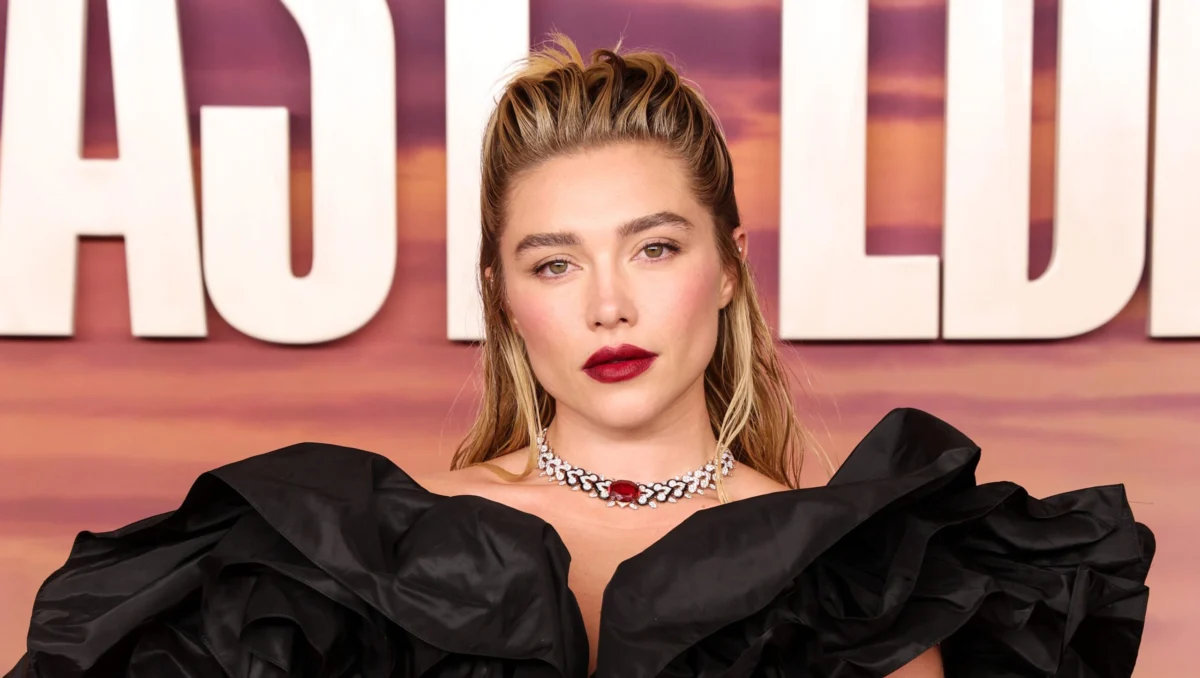
Academy Award-nominated actress Florence Pugh has addressed the professional and personal fallout she experienced after voicing her public support for Palestine, revealing that the decision cost her hundreds of thousands of social media followers. In a wide-ranging cover story for Vanity Fair, the British star opened up about her outspoken advocacy, the widespread reluctance of public figures to address the crisis, and the profound psychological dissonance of navigating celebrity culture while humanitarian suffering continues unabated across the globe.
The controversy surrounding Pugh’s digital presence and public engagements stems from her active stance on the ongoing Israel-Hamas conflict. Last September, Pugh stepped onto the stage at the Together for Palestine event, using her platform to deliver a pointed message regarding global accountability. Addressing the audience, she remarked that "silence in the face of such suffering is not neutrality, it is complicity, and empathy should not be this hard and it should have never been this hard."
Despite facing an immediate backlash online—resulting in a sharp decline in her digital audience—Pugh maintained that she never experienced fear or hesitation regarding her stance. Speaking with Vanity Fair, the East of Eden star expressed bewilderment at the broader reluctance within the public sphere to engage with the humanitarian tragedy.
"I don’t know why it took so long for people to start talking and for people to actually feel sympathy," Pugh told the publication. "But no, I was never scared of it." She added that the active avoidance of the topic by many of her peers only solidified her conviction, noting that the widespread silence made her feel "even more confused — and kind of probably even more in the right to talk about it."
A Closer Look at the Timeline of Advocacy and Production
The intersection of Pugh’s activism and her demanding Hollywood career highlights the logistical challenges faced by modern celebrities when balancing personal convictions with high-profile film shoots. Last autumn, as international debates surrounding the humanitarian crisis in Gaza intensified, Pugh made the deliberate choice to align her public platform with relief efforts and advocacy organizations.
Her appearance at the Together for Palestine event required careful coordination. According to reports from the event and subsequent interviews, Pugh’s attendance directly conflicted with the rigorous production schedule of Marvel Studios’ upcoming blockbuster, Avengers: Doomsday. However, the actress has emphasized that her management and professional team never discouraged her from speaking out. Unlike many public figures who face aggressive advisement from public relations agencies to maintain political neutrality, Pugh’s team reportedly offered no pushback, and she expressed deep gratitude for the support staff who assisted her in managing her schedule so she could attend the advocacy event.
The emotional toll of sustaining a high-profile career while witnessing global conflict has also weighed heavily on the actress. During her interview, Pugh pointed to the stark contrast between the fast-paced, glamorous nature of the entertainment industry and the grim reality documented daily on social media feeds.
"It’s still happening, though," Pugh noted. "Babies are still dying. Mothers are still in pain. It’s really horrible to be watching such pain when so much of our lives just seem to be moving forward. I think that’s what I’ve found so difficult about social media as well: How can I say I’m having a really good time when literally one scroll up, I’m looking at a baby that’s motherless and fatherless?"
The Broader Context of Celebrity Activism in the Digital Age
Pugh’s experience reflects a larger, ongoing shift in the relationship between public figures, social media platforms, and geopolitical discourse. In recent years, actors, musicians, and athletes have faced intense scrutiny over their willingness—or refusal—to comment on major international crises. The demand for digital accountability has created a polarizing landscape where high-profile statements frequently trigger coordinated campaigns, boycotts, or follower attrition.
For actors with massive international fanbases, speaking on polarizing topics often carries tangible commercial risks. Major studios and corporate brands frequently monitor the public sentiment surrounding their lead actors, making outward political stances a delicate negotiation between personal integrity and career management. Yet, despite the loss of hundreds of thousands of followers, Pugh’s willingness to absorb the digital fallout highlights a growing faction of artists who prioritize humanitarian discourse over audience metrics.
The phenomenon of follower loss following political statements is well-documented in the entertainment industry. Artists who speak out on sensitive international conflicts frequently experience short-term algorithmic penalties and audience churn, though such actions can simultaneously galvanize niche support and solidify an artist’s reputation for authenticity. In Pugh’s case, her steadfast refusal to self-censor aligns with an established public persona defined by directness and candor.
Upcoming Projects and Career Momentum
Even as she navigates the complexities of global politics and public discourse, Pugh’s professional trajectory in Hollywood remains exceptionally robust. The actress is currently preparing for a major autumn and winter release schedule that showcases her versatility across high-end television adaptations, comic book blockbusters, and sprawling science fiction epics.
On October 1, Pugh is set to lead Netflix’s highly anticipated television adaptation of John Steinbeck’s classic novel, East of Eden. The project has generated considerable industry buzz, positioning Pugh at the forefront of prestige drama programming.
Following her return to television, Pugh will transition back to the cinematic universe with a pair of high-profile December releases. On December 18, she will appear in Marvel Studios’ Avengers: Doomsday, a tentpole production crucial to the ongoing narrative arc of the Marvel Cinematic Universe. Notably, that same day marks the theatrical release of Denis Villeneuve’s Dune: Part Three, in which Pugh reprises her role as Princess Irulan.
This convergence of high-profile releases underscores Pugh’s status as one of the most sought-after and bankable talents of her generation. Her ability to command prominent roles across vastly different genres—from gritty literary adaptations and epic science fiction to superhero blockbusters—grants her a unique degree of professional security.
Implications for the Industry and Future Public Engagement
As Hollywood continues to grapple with the intersection of art, commerce, and global politics, the precedent set by artists like Florence Pugh carries notable implications. The willingness of a prominent, Oscar-nominated actress to absorb quantifiable professional and digital consequences in exchange for the freedom to speak on humanitarian issues challenges the traditional industry playbook of strategic silence.
While public relations strategies in the past heavily favored risk-averse neutrality to protect box office returns and global market appeal, shifting consumer expectations among younger demographics increasingly value authenticity and moral clarity. Pugh’s candid reflections in Vanity Fair suggest that for a segment of modern artists, the internal conflict of maintaining silence far outweighs the external cost of speaking out.
As Pugh prepares for a demanding press and release schedule ahead of her upcoming autumn and winter projects, her dual focus on cinematic achievement and international advocacy demonstrates that her platform extends far beyond the screen. Whether her openness will inspire broader dialogues within the entertainment community regarding global humanitarian crises remains to be seen, but her refusal to be silenced marks a distinct chapter in her evolving public career.






Leave a Reply