
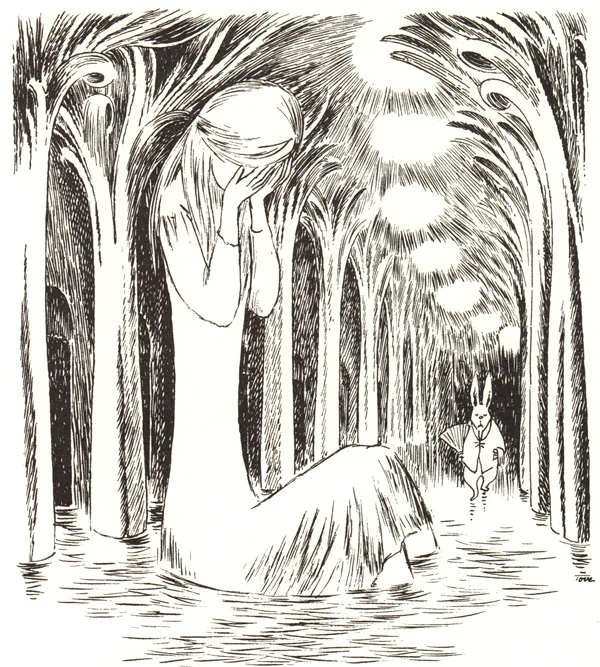
The quest for self-actualization remains one of the most enduring challenges in human intellectual history, a pursuit that demands not only introspection but the courage to confront existential discomfort. In 1873, a young Friedrich Nietzsche, then approaching his thirtieth year, published a seminal essay that would redefine the pedagogical relationship between the individual and their potential. Titled Schopenhauer as Educator, this work served as the third of his four Untimely Meditations, a series of polemical essays designed to challenge the cultural complacency of 19th-century Germany. As contemporary voices like Elizabeth Gilbert continue to frame creativity as a form of "big magic," the historical foundations laid by Nietzsche offer a rigorous, albeit demanding, framework for understanding how one might extract the "treasures" of the self from the weight of societal expectations.
Historical Context and the Genesis of Untimely Meditations
During the 1870s, Nietzsche was emerging from a period of academic disillusionment. Having been appointed a professor of classical philology at the University of Basel at the age of 24, he quickly found the traditional academic apparatus stifling. His Untimely Meditations were conceived as a critique of German culture, which he perceived as being increasingly homogenized and obsessed with state-sponsored conformity.
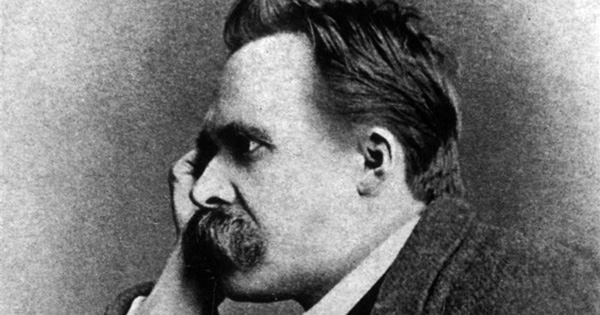
The specific essay, Schopenhauer as Educator, was not a traditional biographical account of Arthur Schopenhauer. Instead, it was an appropriation of Schopenhauer’s philosophy as a vehicle for Nietzsche’s own evolving existentialism. At the time of writing, the German Empire had recently been unified (1871), and the fervor of nationalistic pride was beginning to drown out individualistic intellectual pursuits. Nietzsche argued that this environment was antithetical to the development of the "genius" or the authentic self, proposing that true education must be a process of liberation from, rather than integration into, the masses.
The Mechanics of Self-Discovery: A Chronology of Thought
Nietzsche’s methodology for self-discovery is structured around the rejection of comfort. His chronology of personal growth begins with the "call"—a moment of awakening where the individual realizes that their current desires and thoughts are mere projections of societal pressure.
- The Recognition of Inauthenticity: The initial stage involves an acknowledgment that one is living a "sham" life, guided by the opinions of others. Nietzsche posited that the fear of social ostracization acts as a shackle, preventing the individual from reaching their potential.
- The Bridge of Life: Following this recognition, Nietzsche emphasizes the necessity of independent action. He famously argued that no mentor, institution, or "demigod" can provide the bridge across the river of life; the individual must build it themselves.
- The Excavation of the Self: By the mid-1870s, Nietzsche began advocating for a specific diagnostic tool: the examination of one’s past joys. He suggested that by identifying what has truly "uplifted" and "delighted" the soul, one can discern a "fundamental law" of their own nature.
- Liberation through Education: In the final stage, the role of the educator is redefined. Rather than acting as an architect who molds a student, the educator acts as a gardener, clearing the "weeds" and "rubble" that prevent the individual’s natural, unique genius from flourishing.
Data and Philosophical Implications
The sociological implications of Nietzsche’s work were significant for his time and remain relevant in the era of digital conformity. Nietzsche’s assertion that "the masses" make life easy by removing the necessity for individual moral or creative choice finds parallels in modern psychological data regarding "decision fatigue" and "social proof."

Research in behavioral psychology has consistently shown that individuals under the influence of strong group dynamics (the Asch conformity experiments) often suppress their own perceptions to align with the consensus. Nietzsche’s early philosophical observation that "there is no drearier, sorrier creature in nature than the man who has evaded his own genius" acts as an early precursor to the modern psychological concept of "cognitive dissonance"—the distress experienced when one’s actions do not align with their internal values.
Furthermore, the economic and cultural cost of this "evasion" of genius is vast. In a 2014 study on workplace creativity, researchers noted that environments prioritizing "cultural fit" over individual innovation often see a 30% decline in unique problem-solving capabilities. Nietzsche’s warning against the "artificial limbs" of traditional education—those standardized markers of success that do not represent genuine development—mirrors contemporary critiques of educational systems that prioritize rote memorization over critical inquiry.
Expert Analysis and Historical Reactions
The publication of the Untimely Meditations met with mixed reactions in the 1870s. The academic establishment in Germany, particularly the philological circles, viewed Nietzsche’s shift toward cultural criticism as a betrayal of his scholarly duties. However, later thinkers, including 20th-century philosophers like Martin Heidegger and social critics like Parker Palmer, have re-evaluated the work as a foundational text for existential pedagogy.

Palmer, in his own work on the "spirituality of education," noted that the primary hurdle for the student is not a lack of information, but a lack of courage. The "hazard" Nietzsche described—the risk of causing injuries to the self that no doctor can heal—is interpreted by modern analysts as the vulnerability required for authentic self-reflection. When one "skins" their own ego, they risk exposing raw insecurities, a process that is psychologically taxing but necessary for the shedding of false personas.
Broader Impact on Modern Creative Philosophy
The enduring influence of Schopenhauer as Educator lies in its insistence that self-discovery is an active, ongoing process rather than a destination. In comparing the process of self-actualization to the act of artistic creation, Nietzsche bridges the gap between philosophy and life-as-art. Picasso’s later observation that "to know what you’re going to draw, you have to begin drawing" is an operationalization of Nietzsche’s dictate: "Where does it lead? Don’t ask, walk!"
This philosophy has permeated modern literature and self-help literature, albeit often stripped of its darker, more rigorous edges. While modern discourse often frames "finding yourself" as a path to happiness, Nietzsche’s original text emphasizes that it is a path to "liberation," which may include agony and isolation.

Conclusion: The Legacy of the Untimely Meditations
Friedrich Nietzsche’s 1873 essay remains a cornerstone of individualistic philosophy. By stripping away the expectations of 19th-century society, he provided a blueprint for the "sovereign individual." The implications for the 21st century are clear: in an age of hyper-connectivity and pervasive, algorithmically-driven opinion, the task of "becoming oneself" is perhaps more difficult, and more necessary, than ever.
As Nietzsche concluded in his meditation, the best method for waking up from the "anesthesia" of modern life is to reflect deeply on one’s own educators and cultivators—not to emulate them, but to recognize them as the agents who cleared the weeds from our own paths. By assembling the "revered objects" of our past loves and joys, we do not merely look backward; we identify the "ladder" upon which we are currently climbing. In the final assessment, the "true self" is not a static object to be discovered, but a trajectory to be built, one step of the bridge at a time, across the river of our own singular, unrepeatable existence.








Leave a Reply