
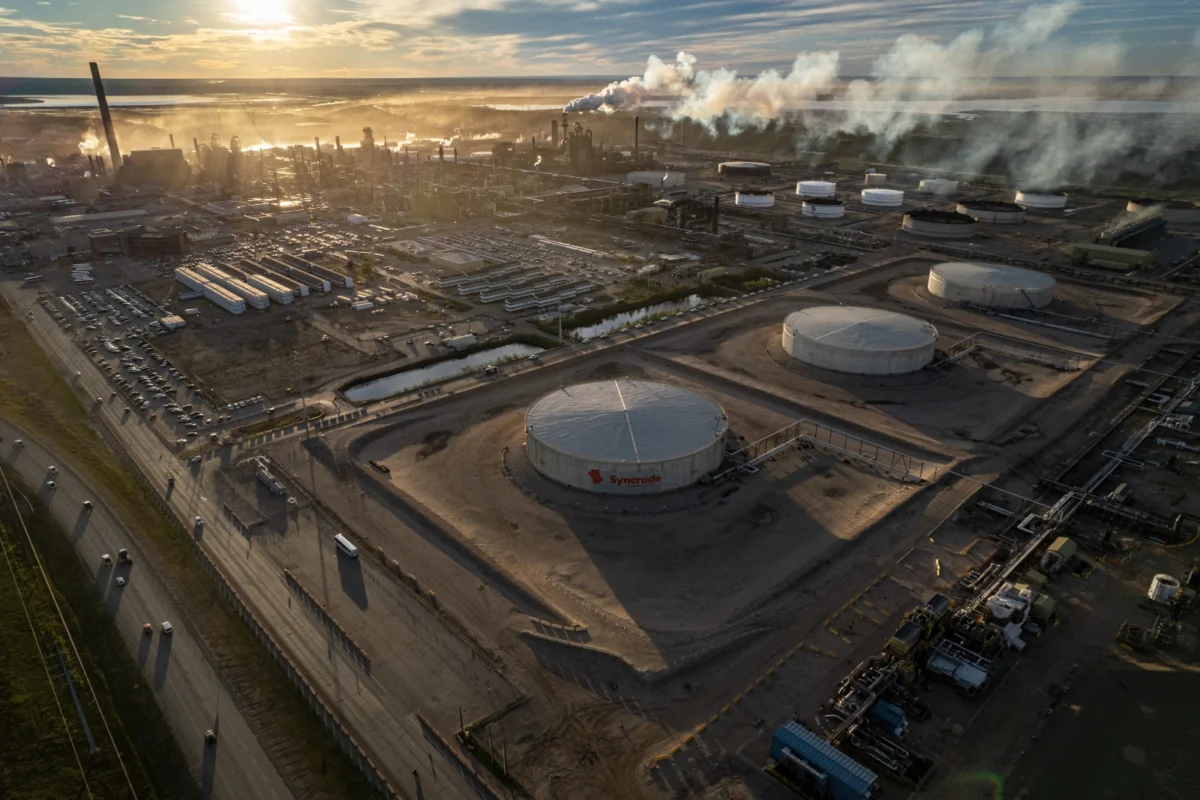
The political landscape of Canada has undergone a seismic shift as Prime Minister Mark Carney, once a global icon of green finance and climate-conscious capitalism, pivots the nation toward a strategy centered on fossil fuel expansion and industrial pragmatism. This reversal, occurring just a year into his tenure after succeeding Justin Trudeau, represents a fundamental departure from the previous administration’s aggressive decarbonization agenda. While Carney’s background as the former Governor of the Bank of England and a leader at Brookfield Asset Management suggested a continuation of Canada’s transition toward a net-zero economy, the pressures of geopolitical instability, trade tensions with the United States, and internal threats to Canadian federalism have forced a radical recalibration of the country’s energy policy.
The Strategic Reversal and the Grand Bargain
The centerpiece of this new direction is what has been dubbed the "Grand Bargain," a comprehensive agreement struck between the federal government and the province of Alberta. Announced last week alongside Alberta Premier Danielle Smith, the deal aims to resolve long-standing tensions between Ottawa’s environmental goals and the economic realities of Canada’s most resource-rich province. Under the terms of the agreement, the Carney government has officially removed a proposed hard cap on carbon emissions for the oil and gas sector. In exchange, Alberta has agreed to a long-term, albeit slower, increase in industrial carbon pricing.
The agreement also includes a federal commitment to expedite the permitting process for a new pipeline to the Pacific Coast, a project viewed as essential for Alberta’s landlocked oil sands. To facilitate this, the Prime Minister has established a $25 billion development fund, the "Canada Strong Fund," designed to de-risk infrastructure projects that enhance national economic security. In a nod to environmental concerns, oil producers have conceptually agreed to invest in a massive carbon capture and storage (CCS) network, though critics note that the scope of this project has been significantly reduced and lacks a firm timeline for implementation.
Dismantling the Trudeau-Era Climate Framework
The pivot is not limited to the Alberta deal. Over the past twelve months, Prime Minister Carney has systematically dismantled several pillars of the Trudeau government’s climate strategy. Chief among these was the elimination of the federal consumer carbon tax, a policy that had become a lightning rod for political opposition amid rising inflation and energy costs. By removing the surcharge on gasoline and home heating, Carney sought to provide immediate relief to households, though at the cost of removing a primary incentive for individual behavioral change.
Furthermore, the federal mandate for electric vehicles (EVs) has been scrapped. While the previous administration had set ambitious targets for 100% of new light-duty vehicle sales to be zero-emission by 2035, Carney has replaced these mandates with a system of voluntary incentives. This move was framed as a necessity to protect the Canadian automotive sector from the disruptive trade policies of the Trump administration, which has signaled a preference for traditional internal combustion engine manufacturing and potential tariffs on cross-border supply chains.
The only major climate policy left standing is the industrial carbon price, which levies fees on large emitters. However, even this has been modified. The rate of the price increase has been slowed by approximately 75%, a concession that climate advocates argue renders the tax "toothless." Julia Levin, associate director for national climate policy at Environmental Defence, noted that under the previous trajectory, the tax amounted to roughly 50 cents per barrel—comparable to the price of a "Timbit" donut hole. With the recent changes, Levin argues that major oil companies face little to no financial pressure to decarbonize for at least the next decade and a half.
Economic Necessity and the Trump Factor
Prime Minister Carney has defended these shifts not as a rejection of climate science, but as a response to an unprecedented "economic emergency." Canada currently faces significant headwinds from the United States, its largest trading partner. The disruptive trade agenda of President Donald Trump, characterized by threats of universal tariffs and the renegotiation of trade agreements, has created a climate of extreme uncertainty for Canadian exports.
By doubling down on oil and gas, Carney is betting on Canada’s traditional strengths to provide a fiscal buffer. Oil currently accounts for more than 15% of Canada’s total export volume, and the revenue generated from Alberta’s oil sands is a critical component of the federal budget. Carney has argued that a prosperous Canada, fueled by resource exports, is better positioned to eventually invest in green technology than a Canada mired in an economic depression.
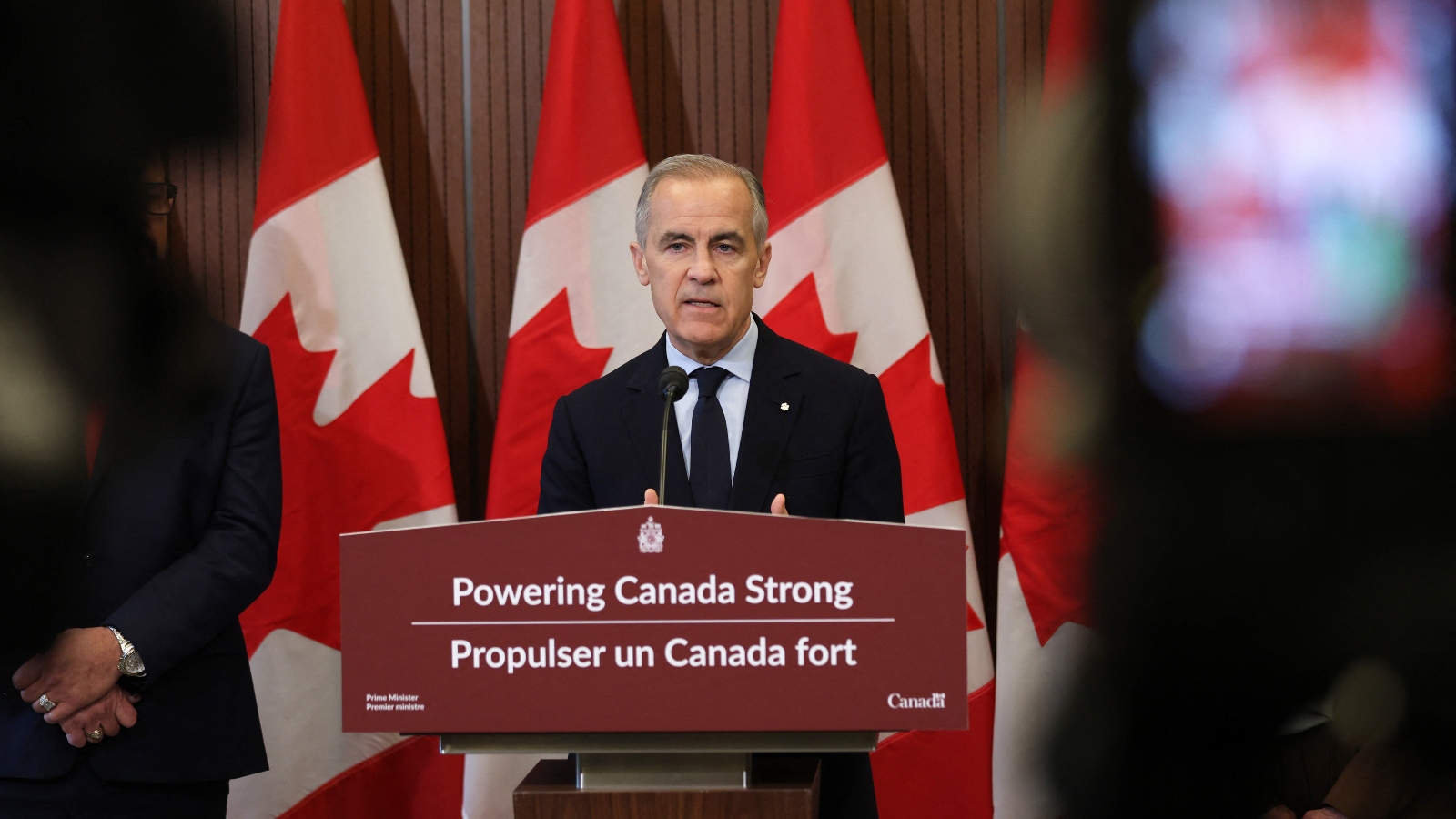
"It is an opportunity for Canada to be a reliable supplier for partners across the globe, and to do so in a manner that makes Canada more prosperous and independent," Carney stated during the announcement of the National Electricity Strategy. This rhetoric aligns with a broader global trend where energy security is increasingly prioritized over immediate decarbonization in the wake of the war in Iran and volatile global energy markets.
The National Electricity Strategy: A Hybrid Future
In tandem with the Alberta deal, the federal government unveiled a "National Electricity Strategy" aimed at doubling the capacity of the Canadian power grid by 2050. While the plan includes significant investments in wind, solar, and provincial transmission lines, it breaks from previous goals by explicitly including natural gas as a long-term component of the energy mix.
Canada already derives the vast majority of its electricity from non-emitting sources, specifically hydroelectricity and nuclear power. However, the Carney administration argues that the rapid growth of electricity-intensive industries—such as artificial intelligence data centers, critical mineral mining, and liquefied natural gas (LNG) export facilities—requires the baseload reliability that natural gas provides. The strategy posits that natural gas, when paired with emerging carbon capture technology, is a "bridge fuel" that ensures Canada remains competitive in the global race for industrial investment.
Political Fallout and Internal Dissent
The Prime Minister’s shift has caused significant friction within his own Liberal Party and the broader scientific community. The resignation of Steven Guilbeault, the high-profile Minister of Environment and Climate Change and a former activist, signaled a deep rift in the cabinet. Guilbeault’s departure was followed by the resignation of two key members of the government’s independent climate advisory panel, who argued that the new policy direction makes it mathematically impossible for Canada to meet its international obligations under the Paris Agreement.
Simon Donner, a climate scientist at the University of British Columbia and former chair of the federal climate policy advisory board, expressed profound disappointment in the administration’s direction. "The problem is we’re defaulting back to what Canada’s known how to do in the past, rather than what the world’s going to need in the future," Donner said. He warned that by incentivizing long-term fossil fuel infrastructure, Canada risks creating "stranded assets"—facilities that may become economically unviable as the rest of the world eventually transitions away from hydrocarbons.
The Challenges of Implementation: First Nations and Industry Skepticism
Despite the "Grand Bargain," significant hurdles remain for Carney’s vision. The proposed Pacific Coast pipeline faces fierce opposition from indigenous groups. Marilyn Slett, president of the Coastal First Nations, has stated unequivocally that no offer of equity or ownership will change their opposition to the project. Under British Columbia’s provincial laws and various Supreme Court of Canada rulings, First Nations have robust consultation and treaty rights. Securing a path for a pipeline without tribal consent remains a legal and political minefield that could stall the project for years.
Furthermore, the oil industry itself remains divided. While some executives welcome the easing of regulations, others, such as the leadership at Cenovus, have called for the total abolition of the carbon tax, arguing that even the modified version hinders global competitiveness. On the other end of the spectrum, the separatist movement in Alberta remains active. Leaders of the "Wexit" and similar secessionist campaigns argue that the federal government’s concessions are too little, too late, and that Alberta would be better served as an independent entity capable of setting its own environmental and trade policies.
Conclusion: A High-Stakes Gamble
Prime Minister Mark Carney’s pivot represents one of the most significant shifts in Canadian public policy in decades. By moving away from the "climate-first" approach of the Trudeau era and embracing a "resource-led" economic strategy, Carney is attempting to navigate a path between environmental responsibility and national survival.
The success of this strategy depends on a series of volatile variables: the future of U.S. trade policy, the global demand for Canadian crude, the viability of carbon capture technology, and the government’s ability to maintain social license among indigenous communities and an increasingly polarized electorate. As Canada prepares for its next federal election, the central question remains whether Carney’s pragmatism will provide the economic security he promises, or if it will leave Canada behind in a rapidly changing global economy that is increasingly defined by the transition away from the carbon era. For now, the "Green Banker" has decided that the safest bet for Canada’s future is the oil of its past.










Leave a Reply